Est. 1927 · DeFeo Family Murders 1974 · Lutz Family Account 1975-76 · The Amityville Horror Book and Film Franchise · Modern American Paranormal Folklore
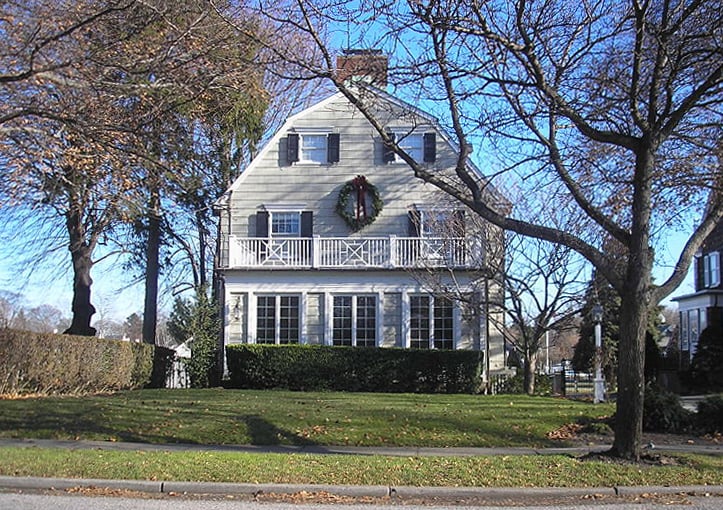
The five-bedroom Dutch Colonial at 112 Ocean Avenue in Amityville, New York, was built in 1927. The DeFeo family — Ronald Sr., Louise, and their five children — purchased the home in 1965 and named it High Hopes.
In the early morning hours of November 13, 1974, Ronald 'Butch' DeFeo Jr., the eldest son, used a .35-caliber Marlin rifle to shoot and kill his parents and four siblings (Dawn, 18; Allison, 13; Marc, 12; and John Matthew, 9) as they slept. All six victims were found face-down in their beds. DeFeo was arrested within 24 hours and ultimately confessed. He stood trial in 1975, was convicted of six counts of second-degree murder, and was sentenced to six consecutive sentences of 25 years to life. He died in prison in March 2021. The motive remains contested; DeFeo's accounts varied across decades, including claims of voices and malevolent commanding presences that defense investigators consistently rejected.
In December 1975, George and Kathleen Lutz purchased the home for $80,000 with their three children. They departed on January 14, 1976, after 28 days, leaving most of their possessions behind. The Lutzes subsequently described elaborate paranormal phenomena: green slime on walls, swarms of flies in midwinter, levitation, possession by a porcine entity named Jodie, and physical assaults by unseen forces. Their account, related through writer Jay Anson, became the 1977 book The Amityville Horror: A True Story, which sold more than ten million copies and spawned a film franchise that continues to release new entries.
The Lutz claims have been substantively disputed since their first publication. DeFeo's defense attorney William Weber later stated that he and the Lutzes had developed the haunting narrative together 'over many bottles of wine.' Subsequent owners of the property — the Cromarty family (1977 to 1987), the O'Neill family, and others — have publicly stated they experienced no paranormal phenomena during their tenancy. The Cromartys filed and won lawsuits related to trespassers drawn by the franchise.
The house has been substantially renovated since the 1970s. The distinctive quarter-moon attic windows visible in original 1970s photographs were removed during the Cromarty ownership. The street address was officially changed from 112 to 108 Ocean Avenue in 1977 to deter visitors. The property has changed hands several times in the decades since, most recently for approximately $605,000 in 2017. It remains a private single-family residence.
Sources
- https://en.wikipedia.org/wiki/The_Amityville_Horror
- https://allthatsinteresting.com/amityville-horror-house
- https://www.aetv.com/articles/inside-amityville-horror-house-and-long-island-town-where-it-still-stands-today
- https://psi-encyclopedia.spr.ac.uk/articles/amityville-hoax/
- https://www.oxygen.com/martinis-murder/amityville-horror-hoax-the-true-crime-story-behind-lutz-family-famous-haunted-house
ApparitionsPhantom smellsObject movementTouching/pushingDoors opening/closingDisembodied laughterPoltergeist activityIntelligent haunting
The Amityville Horror narrative, as recorded by Jay Anson based on the Lutzes' account, describes a sustained 28-day pattern of escalating phenomena beginning shortly after the family moved in. Phenomena reported by the Lutzes included green slime emerging from walls and ceiling fixtures, swarms of houseflies in upper rooms during December and January, a porcine entity named Jodie appearing to the youngest daughter, levitation of family members, the smell of unexplained perfume and excrement, a door blown from its hinges in a basement room dubbed the Red Room, and Kathy Lutz being assaulted and physically marked by an unseen force.
The Lutzes departed on January 14, 1976, abandoning most of their belongings. Their account formally entered popular culture through Anson's 1977 book and the 1979 film The Amityville Horror, with James Brolin and Margot Kidder in the lead roles. The franchise has produced more than thirty subsequent films across five decades, the majority loosely connected to the original incidents.
The veracity of the Lutz account has been contested from the outset. William Weber, DeFeo's defense attorney, stated in interviews from the 1980s onward that he and the Lutzes had developed the haunting narrative collaboratively, with explicit commercial intent. Paranormal investigators Ed and Lorraine Warren spent a night in the house in February 1976 and reported phenomena consistent with the Lutz account; the Warrens' independent credibility has been challenged in other contexts. Researchers including Stephen and Roxanne Kaplan and journalist Ric Osuna have published extensive critiques of the Lutz claims.
Subsequent owners — beginning with the Cromartys in 1977 — have publicly and consistently stated that they experienced no paranormal phenomena while living at 108 Ocean Avenue. James Cromarty testified during a related civil case that the only persistent disturbance was foot traffic from tourists, paranormal investigators, and would-be ghost hunters drawn by the franchise. The Cromartys won a 1979 lawsuit against the Lutzes, Anson, and the book's publisher for invasion of privacy.
The academic consensus, where one exists, treats the Amityville case as a textbook example of late 20th-century paranormal narrative construction — a real and traumatic violent crime, followed by a brief and contested residential haunting claim, packaged through a commercially successful book and film franchise into a self-reinforcing folkloric tradition. The house itself remains a quiet residential property on a Long Island canal, viewable from the public street only.
Notable Entities
Jodie the PigRed Room Entity
Media Appearances
- The Amityville Horror (1979 film)
- The Amityville Horror (2005 remake)
- My Amityville Horror (2012 documentary)
- Multiple Amityville franchise sequels
- The Amityville Horror by Jay Anson (1977)
- Amityville: An Origin Story (MGM+ four-part docuseries) (2023)