Early Indiana Settlement · Crabbite Religious Sect · Morgan-Monroe State Forest
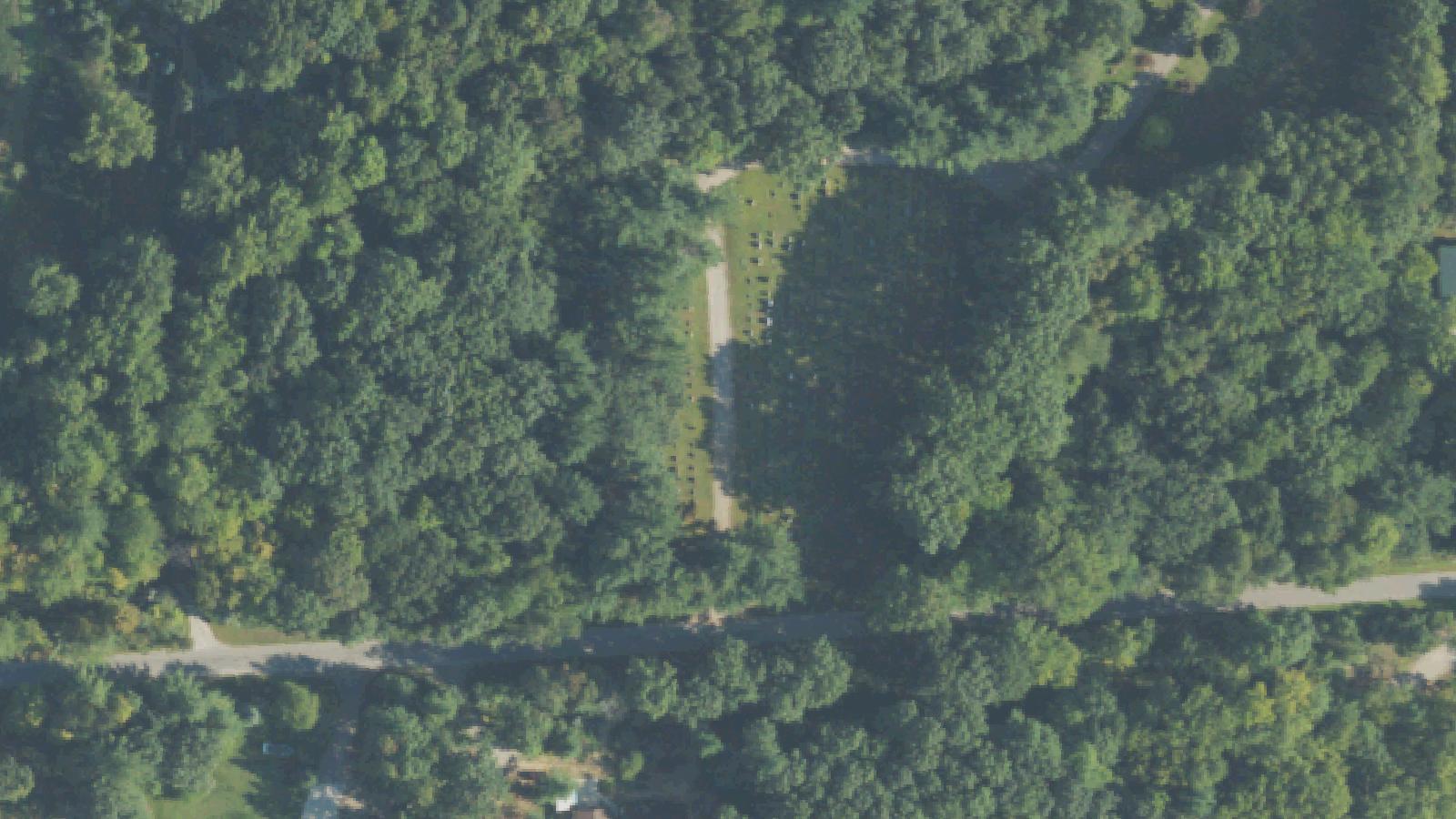
Stepp Cemetery occupies a small wooded clearing within the boundaries of Morgan-Monroe State Forest, north of Bloomington in Monroe County, Indiana. Local historians describe it as one of Monroe County's earliest pioneer cemeteries, with the oldest gravestone probably that of Isaac Hartsock, a veteran of the War of 1812 who died in 1851. Roughly 114 marked graves remain visible within the clearing.
Local historical research has tied the cemetery to the Crabbites, a regional fundamentalist religious group active in the early-to-mid nineteenth century. The group's reputation for unusual practices, including snake handling and night-meeting worship, contributed to outside suspicion of the surrounding rural community and to later folklore attached to the site. Subsequent absorption of the surrounding land into Morgan-Monroe State Forest in the 1930s preserved the cemetery while leaving it surrounded by working forest rather than active settlement.
The cemetery's most-referenced single burial is that of Reuben (Baby) Lester, an infant who died in 1937. The stone has become a focal point for visitors who leave coins, small toys, and handwritten notes. Forest staff periodically clear the offerings to maintain the site as a working historic cemetery rather than a shrine.
Indiana University publications and the Monroe County Historical Society have documented the cemetery as a small but well-preserved example of an early pioneer-era rural Hoosier burying ground. The site appears on regional ghost tours and student urban-legend lists, though the underlying historical record is straightforward.
Sources
- https://en.wikipedia.org/wiki/Stepp_Cemetery
- https://monroehistory.org/wp-content/uploads/2015/11/SteppCOM.pdf
- https://www.ipm.org/2018-10-26/stepp-a-small-rural-cemetery-that-looms-large-in-hoosier-lore
- https://astonishinglegends.com/astonishing-legends/2019/3/12/stepp-cemetery
- https://hauntpedia.com/haunted-places/state/indiana/stepp-cemetery-haunted-cemetery-in-bloomington-indiana/
ApparitionsCold spotsPhantom voicesDisembodied laughter
The Lady in Black appears in central-Indiana oral tradition as a woman who lost both her husband and her daughter in quick succession and was thereafter seen sitting on an old tree stump at Stepp Cemetery, speaking to her family at length. Variants describe her husband's death in a quarry dynamite explosion and her daughter's death in an automobile accident, after which the woman became a daily visitor to the cemetery until her own burial there. The tree stump tradition predates the most popular versions of the story.
A second strand of the legend treats the Lady in Black as a witch tied to the Crabbite community and describes her as guarding the cemetery against intruders. A third frames her as a benevolent guardian of Baby Lester's grave, which has accumulated decades of left offerings. The variants share the same physical anchor: a stump at the cemetery's western edge.
Students from Indiana University have generated much of the cemetery's reputation through nighttime visits, particularly in the 1960s and 1970s. The Indiana Memory project preserves several student-collected folklore submissions about the site, including reports of black shapes seen seated on the stump, of audible weeping near Baby Lester's grave, and of cold spots concentrated in the western quadrant of the clearing.
Indiana University folklorists have generally treated the Stepp tradition as a well-developed example of community legend rather than as a documented haunting. Daytime visits remain quiet and respectful; the cemetery's reputation derives from its setting and its dense layer of oral tradition rather than from contemporary investigation findings.
Notable Entities
The Lady in BlackBaby Lester