Est. 1841 · U.S. National Register of Historic Places (2004) · New Hampshire State Register of Historic Places (2003) · Victorian Garden Cemetery · 19th-Century Cholera Mass Burials
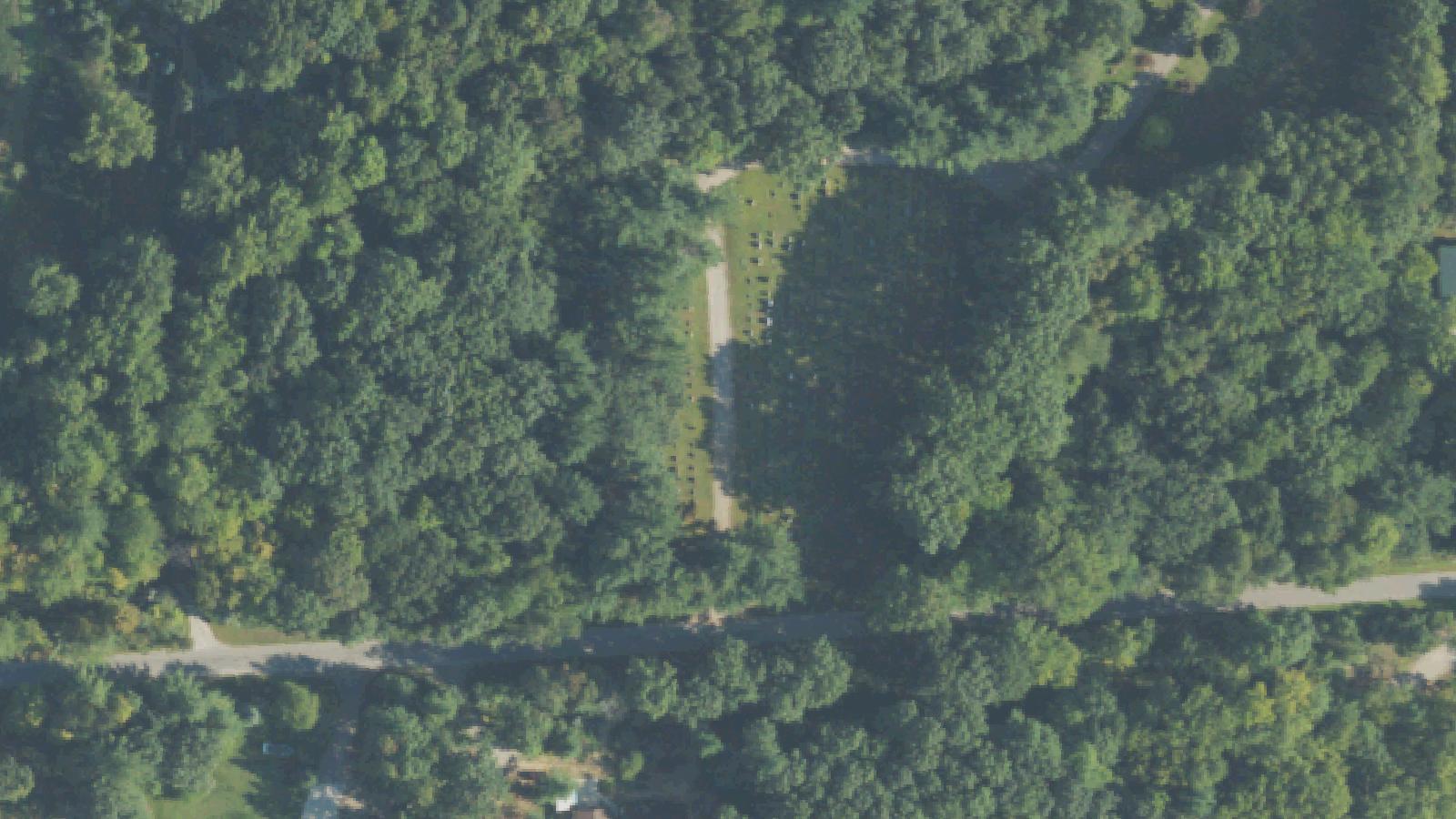
Valley Cemetery occupies a 20-acre rectangle in downtown Manchester, bounded by Pine, Auburn, Willow, and Valley Streets. The land was donated to the city in 1840 by the Amoskeag Manufacturing Company — the textile concern that built much of industrial Manchester — for use as a public burial ground, and the city formally created the cemetery in 1841.
The design followed the Victorian garden-cemetery model then sweeping the United States, in which a burial ground was meant to double as a public park where the living could stroll along walkways, carriage paths, and bridges among the dead. Many of the original landscape features survive today, and the cemetery was listed on the New Hampshire State Register of Historic Places in 2003 and on the U.S. National Register of Historic Places in 2004.
The most prominent above-ground structure is the Frederick Smyth Mausoleum, built in 1885 in white marble with Greek columns. It sits at the edge of the steep valley slope and is one of the most photographed features of the grounds. Frederick Smyth was a former mayor of Manchester and governor of New Hampshire.
A pauper's section near the back of the cemetery is the final resting place of victims of cholera outbreaks that swept Manchester in the mid-19th century. According to Find a Grave and other genealogical sources, many of the cholera dead were buried in mass graves without individual markers, contributing to the cemetery's reputation as a place of unresolved loss.
The cemetery is owned and managed by the City of Manchester's Department of Cemeteries.
Sources
- https://en.wikipedia.org/wiki/Valley_Cemetery
- https://www.manchesternh.gov/departments/cemeteries/valley-cemetery
- https://nutfieldgenealogy.blogspot.com/2017/07/historic-valley-cemetery-manchester-new.html
- https://www.unionleader.com/news/history/valley-cemetery-garden-for-the-living-in-the-land-of-the-dead/article_9fe9f912-300d-11ef-a80f-37dd3b46c682.html
Cold spots and sudden gustsStatic-electricity sensationsEquipment malfunctions (camera batteries)Disembodied metallic clanging from inside the Smyth MausoleumApparitions near the mausoleum
According to local paranormal lore documented on The Occasional New Hampshire Tourist blog and a firsthand 2009 visit by the Untamed Taphophile blogger, the Frederick Smyth Mausoleum is the focal point of the cemetery's haunted reputation. The mausoleum is said to be home to two spirits — an old man perpetually described as ill-tempered and emitting heavy negative energy, and a young woman more often described as present near the steps and giving off a softer, almost fearful presence. Some accounts suggest the woman is afraid of the old man.
A widely-repeated local legend, recorded in the same blog accounts, holds that a prostitute was thrown to her death from the Smyth tomb during the late 19th or early 20th century. The story is presented in oral-tradition form rather than tied to a documented news event, and HauntBound treats it as folklore rather than verified history.
The Untamed Taphophile blogger's firsthand account from August 2009 describes a sudden brief gust of cool air on a hot August afternoon while climbing the mausoleum steps, a static-electricity sensation along the arms, dying camera batteries, and a metallic clang heard from inside the sealed marble structure. Subsequent visitor accounts repeat similar reports.
The broader hauntings of the cemetery are sometimes attributed to the unmarked mass graves in the pauper's section, where victims of mid-19th-century cholera outbreaks were buried without individual markers. The combination of a steep valley site, a prominent classical mausoleum, and a documented mass-burial section has made Valley Cemetery a staple of Manchester ghost lore for decades.
Notable Entities
The Angry Old Man of the Smyth MausoleumThe Young Woman near the Smyth Tomb