Est. 1878 · Victorian Gothic Architecture · National Historic Landmark · Pauper's Burying Ground · Samuel Hannaford Design
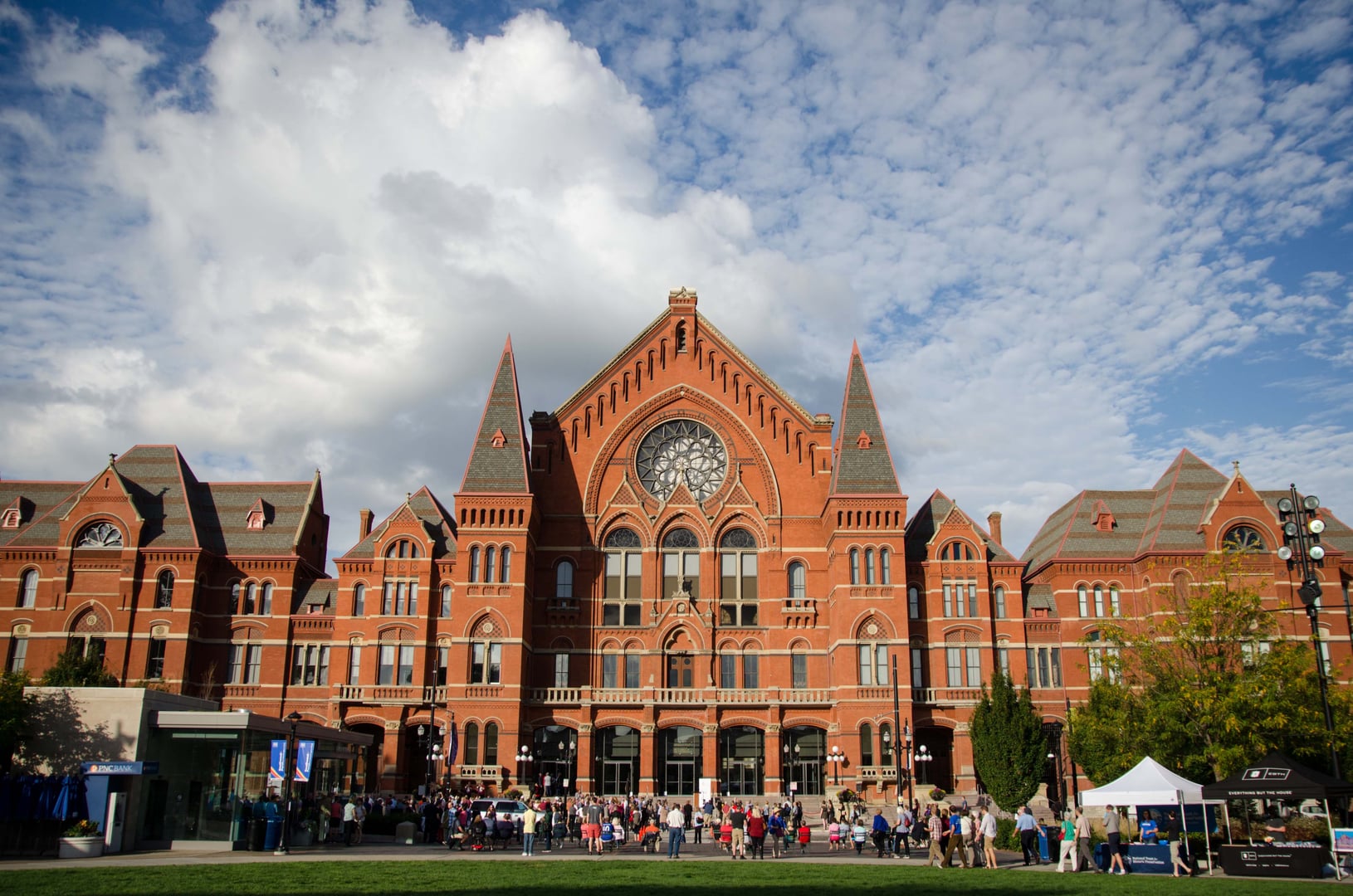
Cincinnati Music Hall was completed in 1878 to a design by Cincinnati architect Samuel Hannaford in the High Victorian Gothic style. The building was funded by industrialist Reuben Springer, who provided $125,000 on the condition that the city and other private donors match the gift. The Springer Auditorium occupies the central block; matching exposition halls flank the auditorium north and south.
The site itself had been used for institutional and unclaimed-pauper burials for much of the early nineteenth century. An 1830 map identifies a potter's field on the block, used for immigrants and indigent residents who died without identification or family. Estimates of the number of burials in the field over the period it was active range from 6,000 to 10,000, with additional remains tied to the Cincinnati Orphan Asylum and the Commercial Hospital cemetery on adjacent blocks. In 1838, the steamer Moselle exploded just off the Cincinnati wharf killing roughly two hundred people; contemporary newspaper accounts indicate that unidentified victims were buried in the public cemetery, which is widely believed to be the Elm Street potter's field.
Human remains have surfaced repeatedly during the building's renovations. In 1927, workers excavating an elevator shaft found three coffins, including one identified as belonging to Scottish immigrants and dated to 1831. In May 1988, another elevator-shaft renovation uncovered 207 pounds of human bones encased in concrete. During the comprehensive 2017 restoration, contractors checking soil for asbestos discovered additional remains beneath the orchestra pit, and work in the north carriageway uncovered wood coffins containing further bones. Cincinnati Magazine has tracked the discoveries across multiple renovation campaigns.
The restored building was reopened in 2017 after a $143 million renovation. Music Hall received National Historic Landmark designation in 1975 and continues as one of the most architecturally significant late-Victorian concert halls in the United States.
Sources
- https://friendsofmusichall.org/cincinnati-music-hall-history/features-of-music-hall/is-music-hall-haunted/bones-discovered-under-music-hall/
- https://friendsofmusichall.org/cincinnati-music-hall-history/features-of-music-hall/is-music-hall-haunted/
- https://www.cincinnatimagazine.com/citywiseblog/how-did-cincinnatis-music-hall-get-so-haunted/
- https://theghostinmymachine.com/2021/01/25/haunted-road-trip-cincinnati-music-hall-and-the-ghosts-of-potters-field-ohio/
ApparitionsPhantom footstepsPhantom soundsDoors opening/closingLights flickering
Cincinnati Music Hall's paranormal reputation is grounded directly in the documented history of the site as an antebellum pauper's burying field and the repeated discovery of human remains during renovation campaigns in 1927, 1988, and 2017. The Friends of Music Hall organization maintains an extensive archive of staff and visitor accounts, organized by location within the building.
Reported phenomena cluster in several areas. The fourth-floor ballroom is associated with the sound of a piano playing when no instrument is present and figures glimpsed in mirrors. The Corbett Tower stairwells have generated multiple reports of footsteps with no apparent source, particularly after evening performances. Custodial staff have described doors locking and unlocking, lights cycling, and the impression of being watched from balcony seats in the otherwise-empty Springer Auditorium.
The Travel Channel has featured Music Hall on multiple paranormal-themed programs. Cincinnati Opera and Friends of Music Hall now jointly produce the seasonal Apparitions and Arias evening tour, which combines vocal performances with the building's documented institutional and burial history. The programming treats the accounts as cultural-historical artifact rather than confirmed haunting and emphasizes the underlying nineteenth-century social context: a public concert hall built directly atop the unmarked graves of the city's poorest residents.
Media Appearances
- Travel Channel paranormal programming
- Apparitions and Arias (Cincinnati Opera)