Est. 1908 · Landmark Disability Rights Case (Halderman v. Pennhurst) · Institutional Abuse Documentation · Deinstitutionalization Movement
The Pennsylvania Legislature authorized a new institution for 'the feeble-minded and epileptic' in 1903, and a commission selected a rural site in Chester County outside Spring City. Construction proceeded on what would eventually become a 1,400-acre campus. Patient Number One was admitted on November 23, 1908.
Within four years of opening, Pennhurst was overcrowded. The facility had been designed with a specific custodial philosophy — residents would be housed, fed, and kept from public life — rather than a treatment orientation. As the twentieth century progressed and the institution's population grew beyond 3,500 at peak capacity, the gap between this philosophy and humane practice became increasingly severe.
The reckoning came from a single family. Terri Lee Halderman had been a resident at Pennhurst, and following multiple episodes of abuse that left her with unexplained bruises, she and her family filed a class-action lawsuit in 1974. Philadelphia attorney David Ferleger represented current and former residents.
In 1977, U.S. District Judge Raymond J. Broderick ruled that conditions at Pennhurst violated residents' constitutional rights — specifically the Eighth Amendment prohibition on cruel and unusual punishment and the Fourteenth Amendment's due process protections. The courts found the facility unsanitary, inhumane, and dangerous. The legal process continued through multiple appeals, including proceedings before the U.S. Supreme Court, before the landmark 1984 settlement.
The settlement required the discharge of all Pennhurst residents into community living arrangements. The institution closed December 9, 1987, after 79 years of operation. The 1,156 people living there at the time of the final court order moved into small group homes.
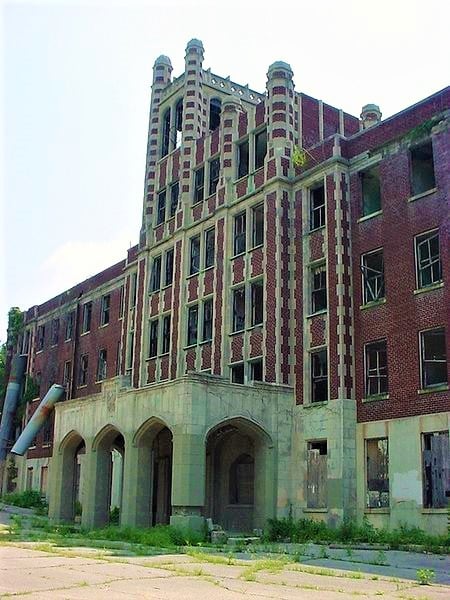
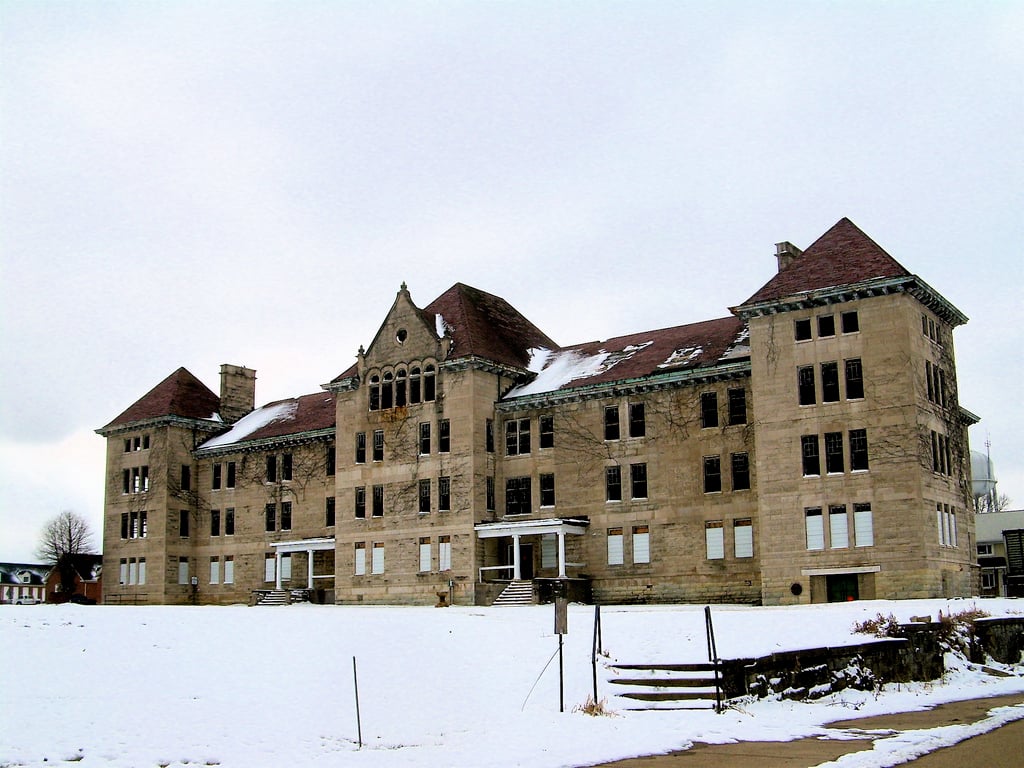
The campus — 110 acres of the original property with multiple surviving buildings including Mayflower Hall — was adapted in subsequent decades for commercial paranormal investigation use. A 2019 A&E documentary, World's Biggest Ghost Hunt: Pennhurst Asylum, brought an investigative team to the grounds for a two-week investigation.
Sources
- https://en.wikipedia.org/wiki/Pennhurst_State_School_and_Hospital
- https://pennhurstasylum.com/tours-events/
- https://philadelphiaencyclopedia.org/essays/pennhurst-state-school-and-hospital/
Shadow figuresPhantom voicesPhantom soundsEVPDoors opening/closingCold spotsEquipment malfunctionBattery drain
Investigation accounts from Pennhurst describe a building that does not behave passively. The disembodied voices captured in Mayflower Hall are among the most documented phenomena at the site: recordings include what investigators interpret as instructions — 'go away,' 'I'll kill you,' 'we're upset,' 'I'm scared' — distinct sentences rather than the ambient noise that investigators often record and interpret as speech.
The sound of old gurneys moving in corridors, pushed by nothing visible, is reported consistently by separate investigation groups. The underground tunnels — which connected multiple buildings for the movement of residents and supplies across the campus — produce what investigators describe as an intensified version of the atmospheric heaviness found elsewhere on the property.
Investigation teams have documented shadow figures moving in doorways, sudden temperature drops in specific rooms, and what they characterize as simultaneous equipment failures across multiple devices. Several investigators report feeling physically ill in certain areas of Mayflower Hall, which they attribute to environmental causes rather than simply psychological response.
The Mayflower Building generates the most documentation because it is the primary access point for investigation events. Investigators describe hearing music-box tones coming from empty rooms, doors slamming in unoccupied sections of the building, and the sound of vomiting from spaces that are visually confirmed empty.
The weight of the site's history — not supernatural in origin but intensely human — shapes how investigators describe their experience. The specific knowledge of what happened to residents at Pennhurst, documented in court records and journalistic investigations, provides a framework that investigators bring with them into the building.
Media Appearances
- Ghost Adventures
- Paranormal Lockdown
- World's Biggest Ghost Hunt: Pennhurst Asylum (A&E, 2019)
- Ghost Hunters: Pennsylvania Asylum (S7) (2011)
- Portals to Hell: Pennhurst Asylum (S2) (2021)
- Ghost Asylum: Pennhurst Asylum (S2E10) (2015)