Est. 1915 · Women's History · Conservation History · National Park Service
Alice Mabel Gray was born March 25, 1881, in Chicago. She graduated from the University of Chicago in 1903 with honors in astronomy, mathematics, Greek, and Latin, later working for the U.S. Naval Observatory before growing disillusioned with urban wage labor.
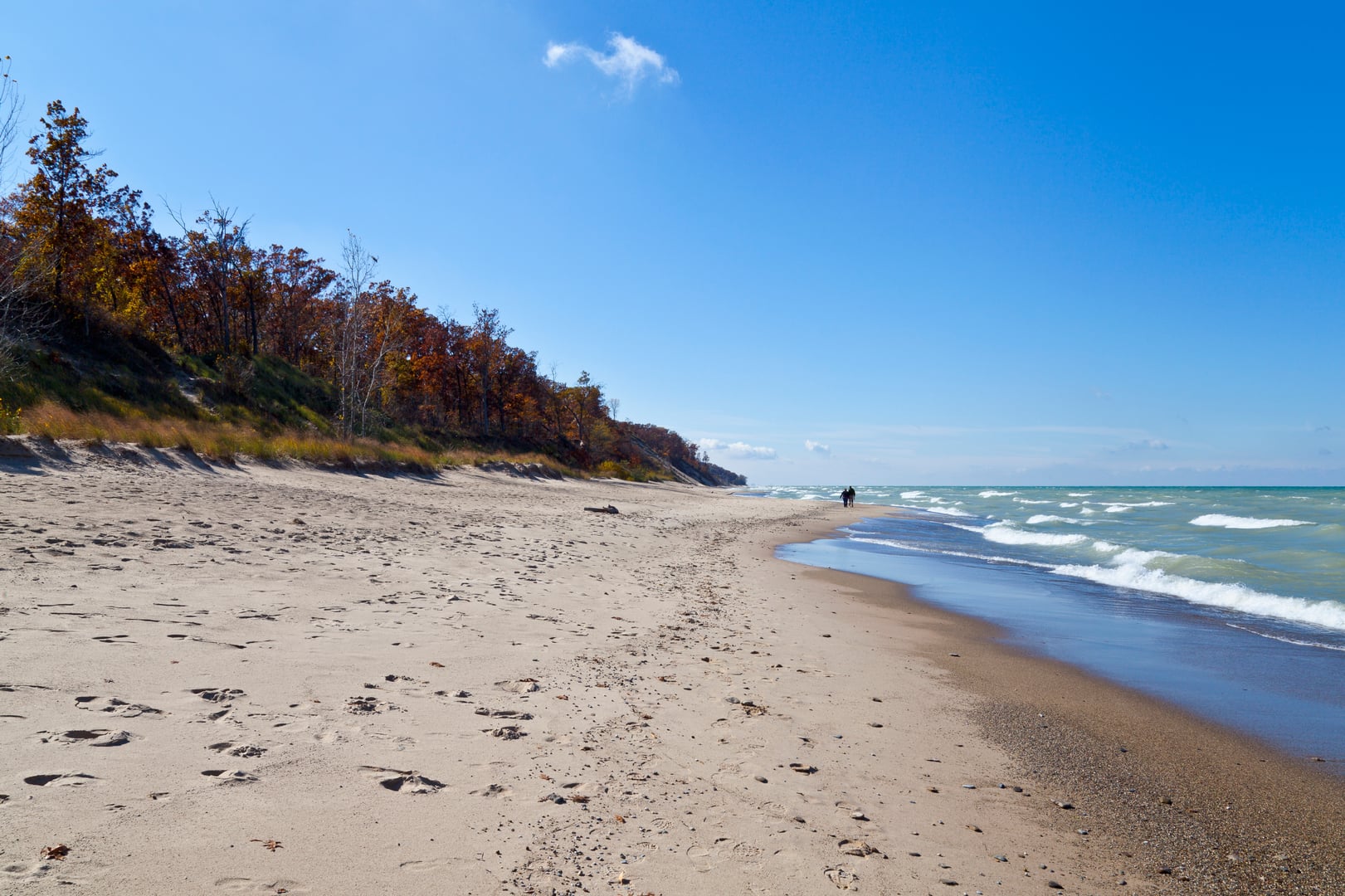
In October 1915, she moved to the Indiana Dunes and took up residence in an abandoned fishing shack she named 'Driftwood,' living alone for several years along the Lake Michigan shoreline near what is now Porter, Indiana. Local journalists, discovering a young woman living independently near the shore, dubbed her 'Diana of the Dunes' — a name she reportedly disliked. Her presence near the water, combined with press descriptions of her bathing in the lake, sparked both admiration and scandal in turn-of-the-century Midwest culture.
Around 1920-21, Gray began a relationship with Paul Wilson, a fisherman and carpenter. They lived together in a second shack they named 'Wren's Nest.' Although her gravestone reads 'Alice Gray Wilson,' no marriage certificate has been located. The couple attracted ongoing press attention; Wilson was arrested in connection with a murder investigation unrelated to Gray, though he was not convicted.
Gray was diagnosed with kidney disease and died on February 9, 1925, at age 43, from uremia. She is buried at Oak Hill Cemetery in Gary, Indiana.
Her story became significant beyond its romantic dimensions: her advocacy for dune preservation, and the national attention she drew to the Indiana shoreline, contributed to the decades-long public pressure that eventually produced Indiana Dunes National Park, designated in 2019. The National Park Service named the Diana of the Dunes Dare — a one-mile interpretive trail at West Beach — in her honor.
Sources
- https://en.wikipedia.org/wiki/Diana_of_the_Dunes
- https://www.nps.gov/indu/planyourvisit/diana-s-dare.htm
- https://www.nps.gov/people/alice-gray.htm
- https://dailyyonder.com/visiting-dunes-on-a-dare-ghost-story-of-nature-loving-recluse-inspires-a-challenge-in-the-national-park/2021/10/01/
- https://odhistory.org/diana-of-the-dunes-myth-and-reality/
- https://yesterdaysamerica.com/the-true-story-of-diana-of-the-dunes/
- https://www.ghostresearch.org/Investigations/diana.html
Apparitions
The ghost associated with the Indiana Dunes shoreline is among the region's more melancholic figures. Visitors have reported a pale woman near the waterline — walking, sometimes standing, occasionally disappearing mid-step into the dark water. The figure is identified as Alice Gray, whose nine years of solitary dune life left an impression that apparently outlasted the physical structures she occupied.
Gray's relationship with the landscape was documented during her lifetime: naturalist observations, letters to her University of Chicago contacts, and accounts of her daily routines at Driftwood and Wren's Nest. After her death in 1925, the shacks decayed. The dunes shifted. But the shore's character, shaped in part by her documented presence and advocacy, remained.
The ghost story follows a simple arc: Diana walks where she walked in life, near the waterline, at dusk or just after dark. She carries no lantern, speaks to no one, makes no demands. Some accounts place her near the West Beach area where the interpretive trail now commemorates her story; others situate her further along the undeveloped shoreline.
Local paranormal investigators have documented accounts from visitors, though no organized investigation has produced physical evidence. The National Park Service leans into the legend: the Diana of the Dunes Dare, its interpretive hiking challenge, is threaded through with her story at every waypoint.
Notable Entities
Diana of the DunesAlice Gray