Haunted South Carolina

113 haunted destinations cataloged across South Carolina, spanning 43 counties. The collection features cemetery, outdoor, and museum — every listing verified with family ratings, accessibility info, and practical visit logistics.

113 locations 43 counties 12 classifications 43 wheelchair accessible

Featured in South Carolina

Top 6
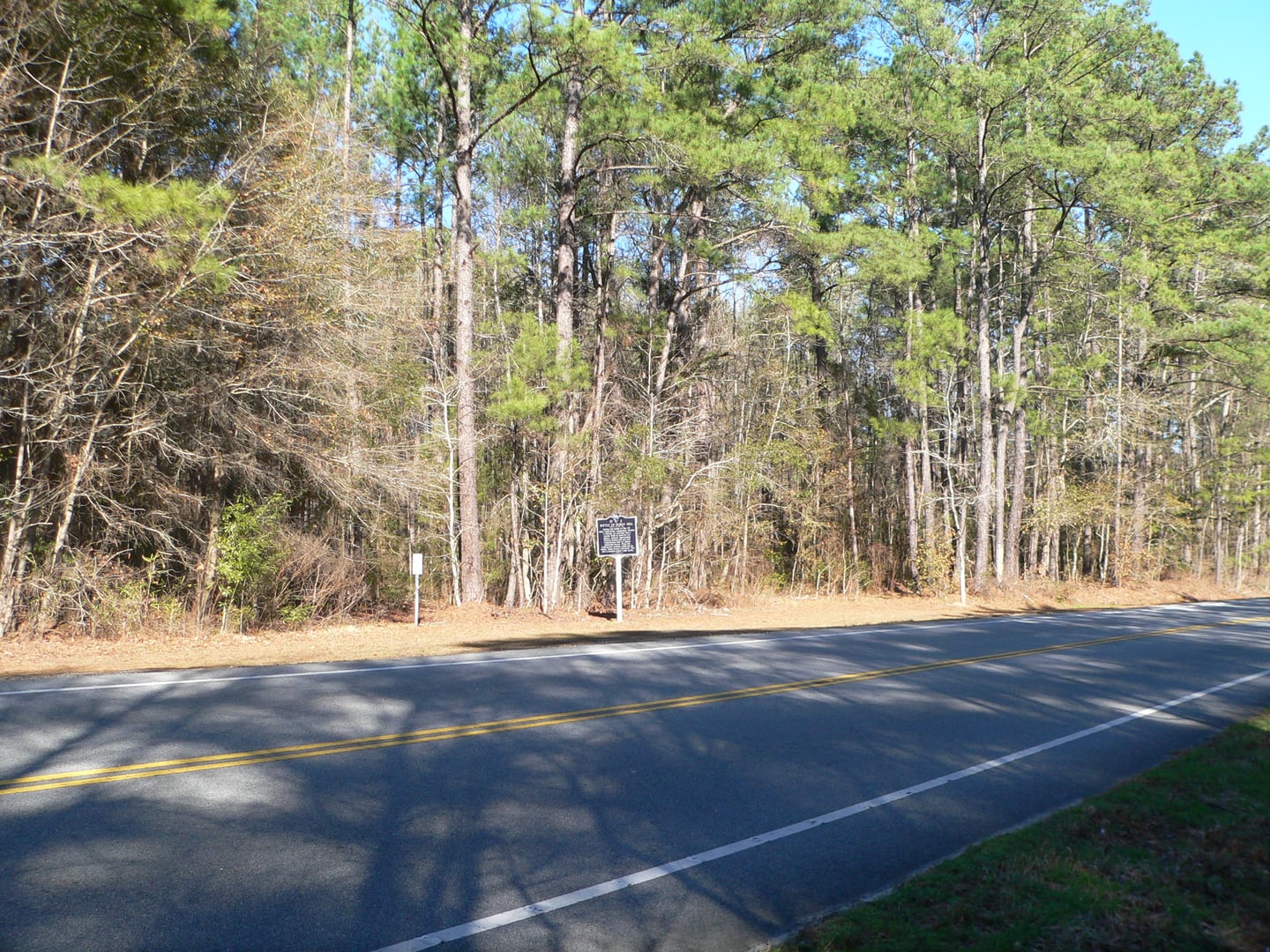
Honey Hill battlefield historical marker on South Carolina Highway 336 east of Ridgeland in Jasper County, commemorating the November 1864 Civil War engagement
Battlefield / Military Site

Honey Hill-Boyd's Neck Battlefield

Ridgeland, SC

The Battle of Honey Hill, fought November 30, 1864, in present-day Jasper County, South Carolina, was the third engagement of the Savannah Campaign. A Union expedition under Brig. Gen. John P. Hatch attempted to sever the Charleston and Savannah Railroad in support of Sherman's advance and was repulsed by entrenched Confederates under Col. Charles J. Colcock.

$ All Ages Family: Moderate
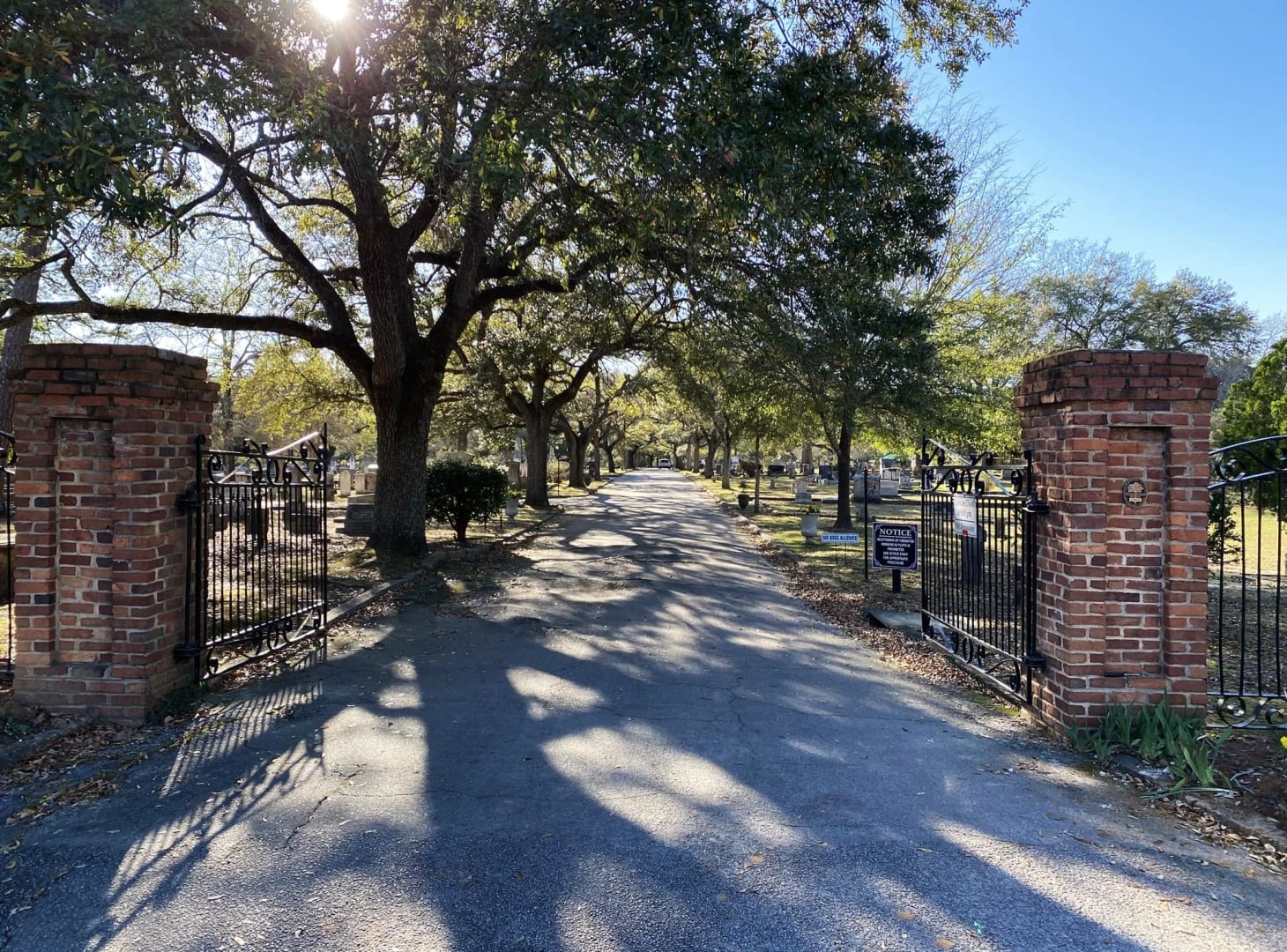
Aerial survey view of Badwell Cemetery
Aerial survey · USDA NAIP
Cemetery / Burial Ground

Badwell Cemetery

McCormick, SC

Badwell Cemetery in McCormick County holds the remains of the Petigru family and other French Huguenot settlers who established Badwell Plantation in the mid-to-late 18th century. The site is tied to New Bordeaux, the last of seven French Huguenot colonies in South Carolina, founded in 1764 by the Reverend Jean Louis Gibert. The Sumter National Forest acquired the property in the 1970s and has collaborated with local historical organizations to restore the site since 2009.

$ All Ages Family: Moderate
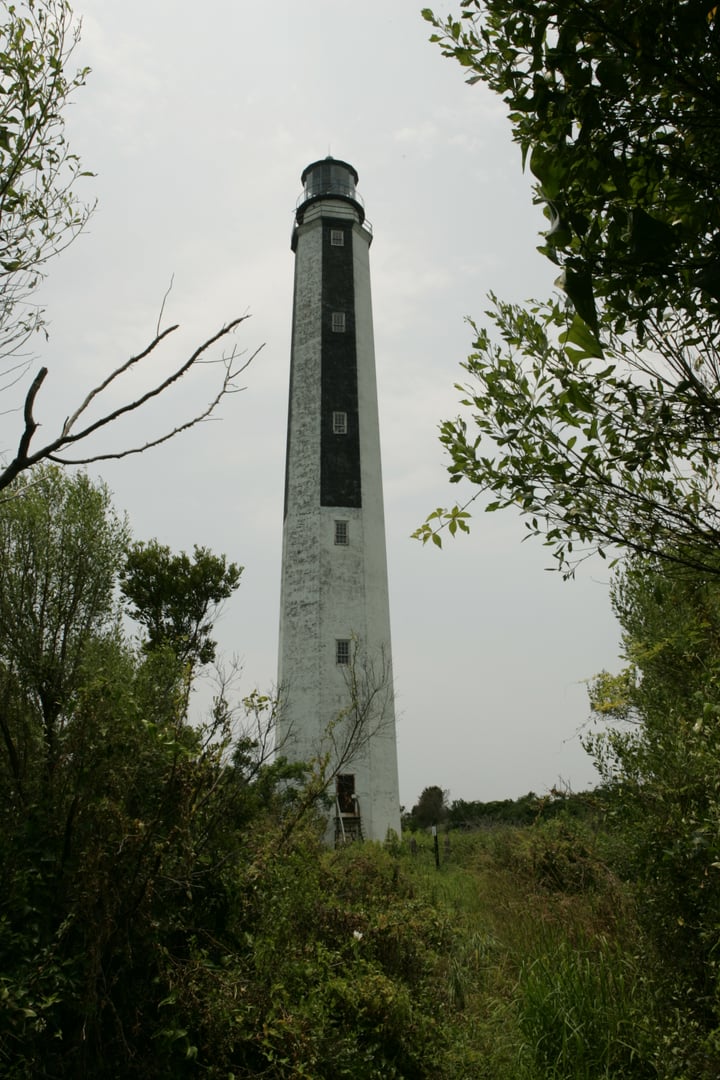
Cape Romain 1857 octagonal black-and-white brick lighthouse rising over marshland in Charleston County, South Carolina
Outdoor / Natural Site

Cape Romain Lighthouses

McClellanville, SC

The Cape Romain lighthouses on Lighthouse Island, within the Cape Romain National Wildlife Refuge in South Carolina, comprise an 1827 65-foot tower and an 1857 150-foot replacement built using enslaved labor. The 1857 tower has been visibly leaning for more than a century due to foundation settling. The site is accessible only by boat.

$$ All Ages Family: Moderate
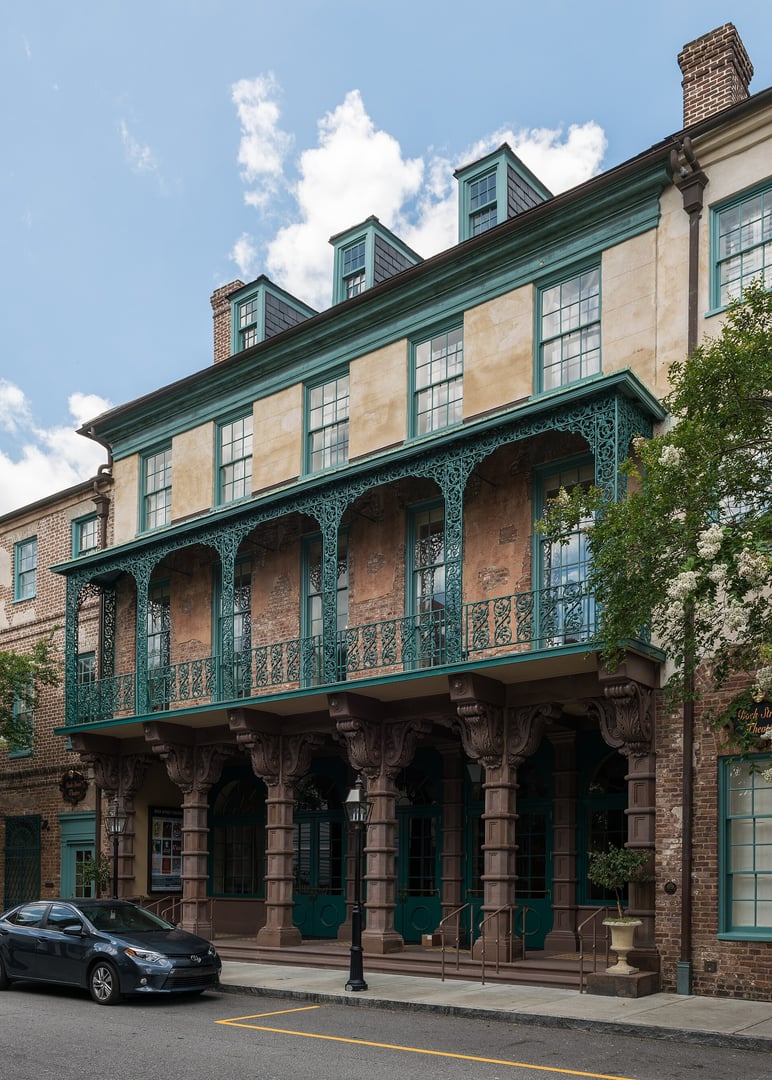
Exterior facade of the Dock Street Theatre on Church Street in Charleston, South Carolina, with its iron balcony and tall arched windows on the historic French Quarter building.
Theater / Performance Venue

Dock Street Theatre

Charleston, SC

The original Dock Street Theatre opened on February 12, 1736 on this site — the first building in America constructed purposely for theatrical performances — and was probably lost to Charleston's 1740 fire. In 1809 Alexander Calder built the Planters Hotel here; in 1936 a WPA project transformed the hotel into the present theater. The City of Charleston owns the building and leases it to Charleston Stage.

$$ All Ages Family: High
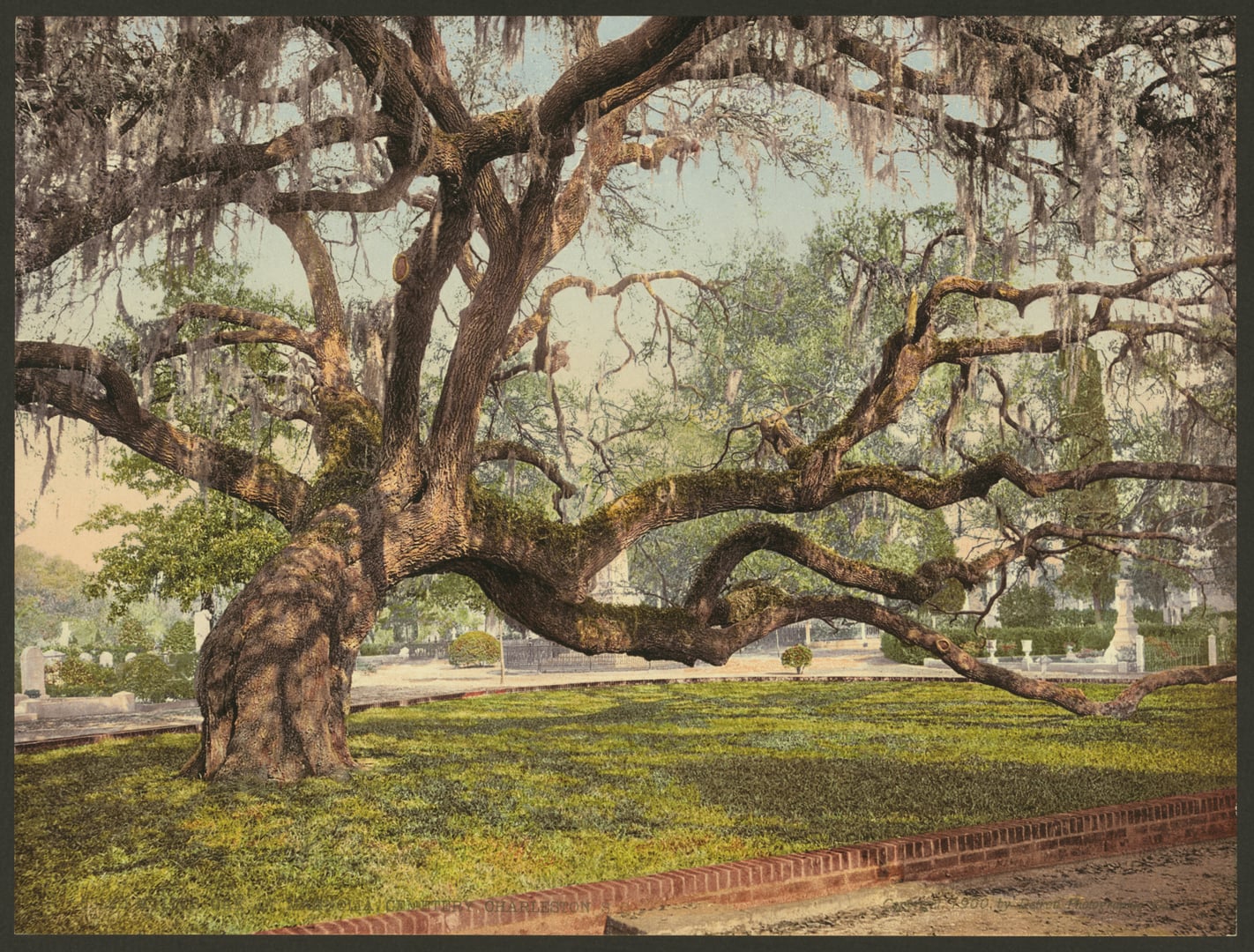
Spanish-moss-draped live oak overhanging tombstones at Magnolia Cemetery in Charleston, South Carolina, photographed circa 1900
Cemetery / Burial Ground

Magnolia Cemetery

Charleston, SC

Magnolia Cemetery was dedicated in 1850 on the grounds of the former Magnolia Umbra Plantation on the Cooper River, becoming Charleston's first rural-style cemetery. Architect Edward C. Jones designed both the landscape plan and a Gothic Revival chapel. The cemetery's Soldiers Ground became the principal Confederate burial location for Charleston during the Civil War.

$ All Ages Family: Moderate
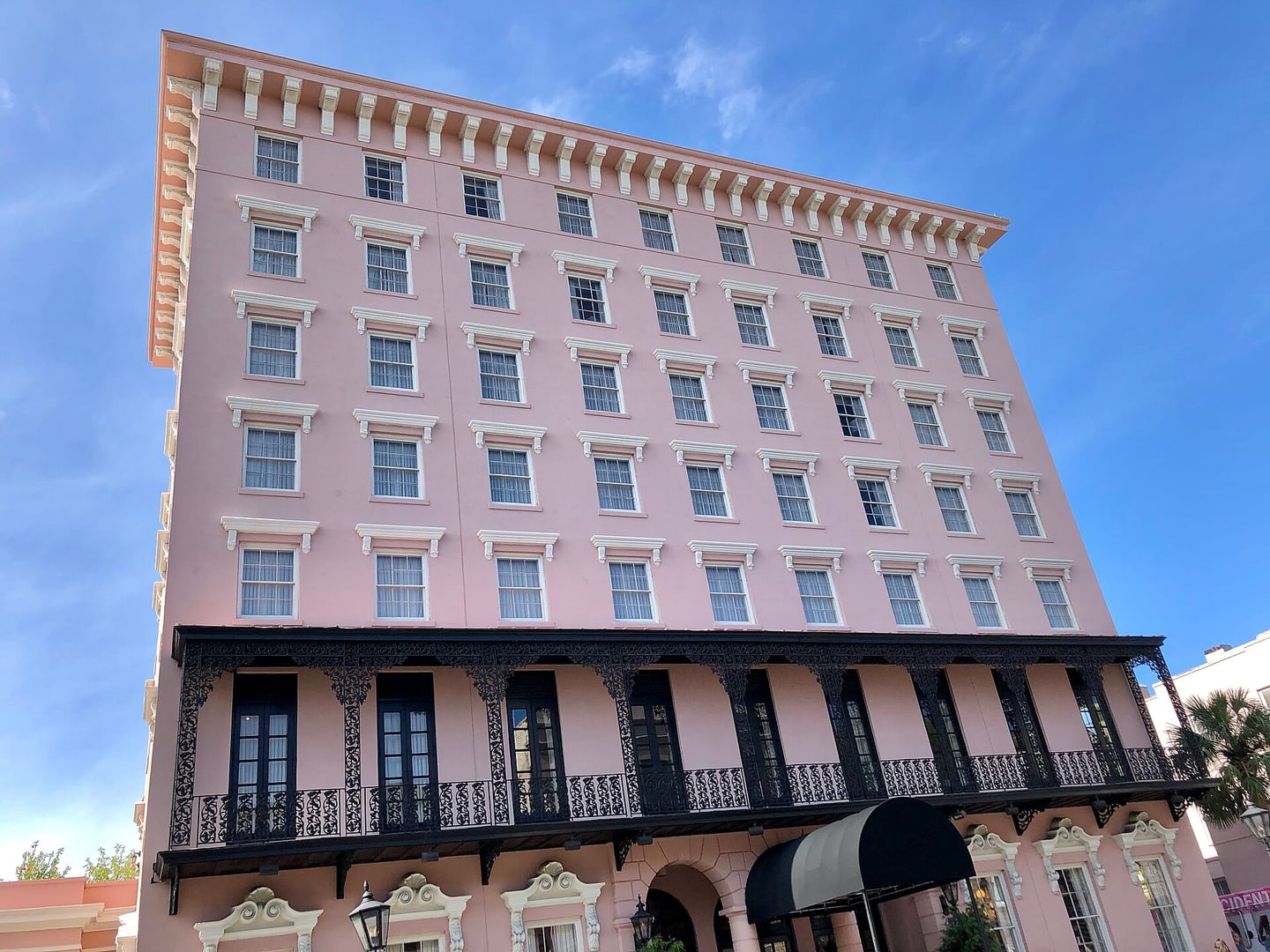
Exterior of the Mills House Hotel in Charleston, an Italianate-style building with peach stucco facade and arched windows in the city's French Quarter.
Haunted Hotel / Inn

Mills House Hotel

Charleston, SC

Local grain merchant Otis Mills opened the Mills House on November 3, 1853 at the corner of Meeting and Queen streets as a 180-room luxury hotel. It hosted Robert E. Lee during the Great Fire of December 11, 1861. The building survived the Civil War but declined by the mid-20th century. It was demolished in late 1968; a 1970 replica preserved the original ironwork and reinstalled the historic facade. The hotel now operates as Mills House Charleston, Curio Collection by Hilton.

$$$ All Ages Family: High

More in South Carolina

Charleston — 15

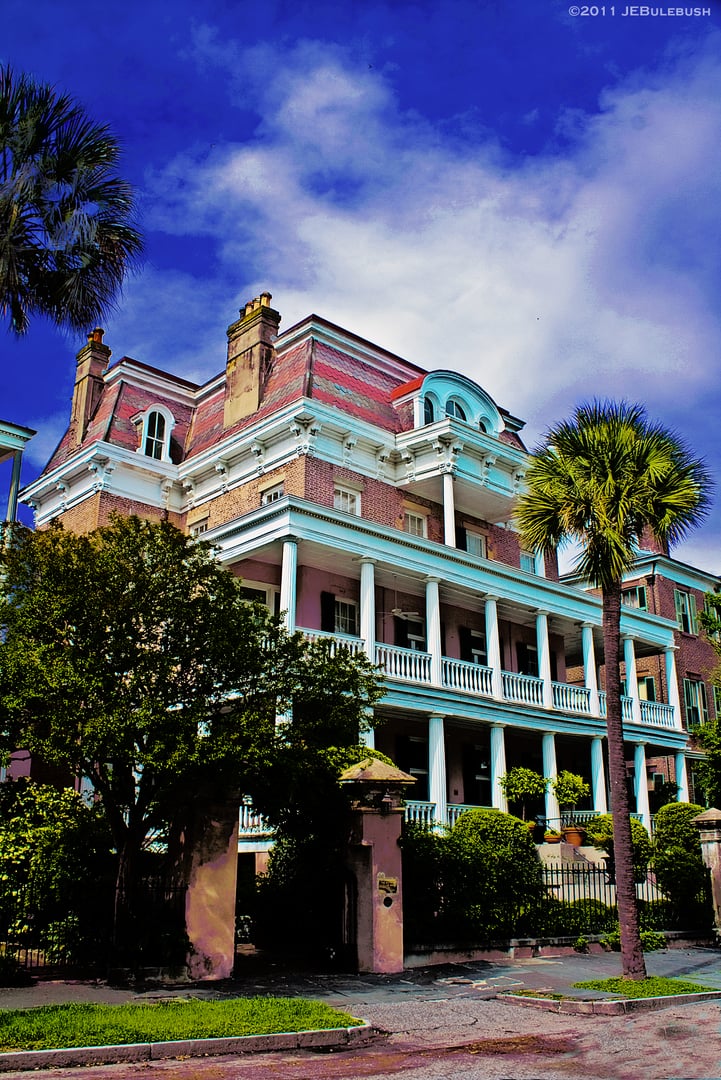
Stevens-Lathers House at 20 South Battery, Charleston SC — antebellum mansion that houses Battery Carriage House Inn
Haunted Hotel / Inn

20 South Battery (Battery Carriage House Inn)

Charleston, SC

The Battery Carriage House Inn at 20 South Battery in Charleston, South Carolina occupies an 1845 antebellum mansion steps from White Point Garden. The property survived the Civil War, duels fought nearby, and Charleston's 20th-century preservation battles. Dr. Jack Schaeffer's restoration returned the mansion to its 1800s appearance, preserving its original marble staircase and Italian mosaic floors.

$$$ All Ages Family: Moderate
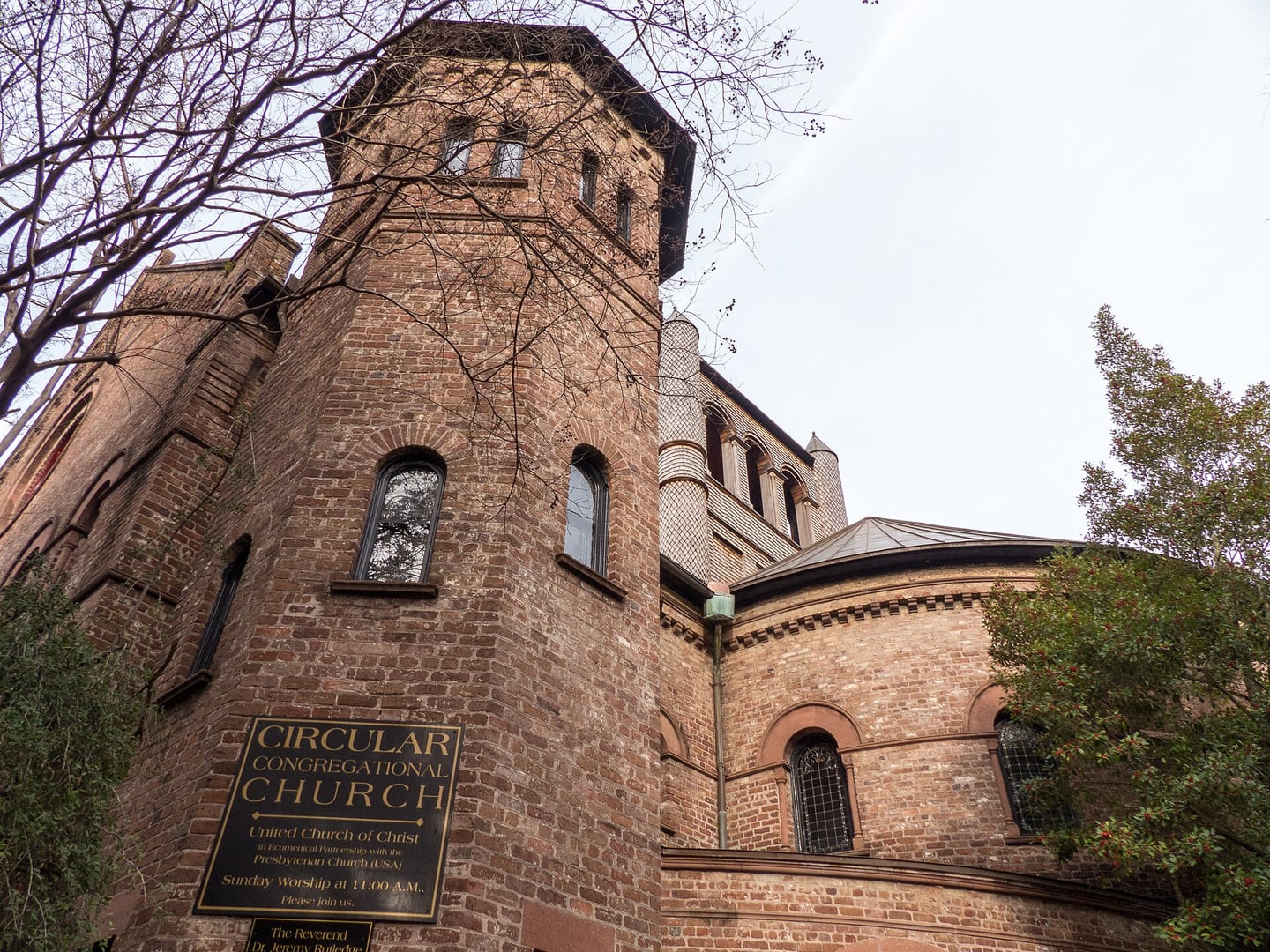
The Romanesque Revival Circular Congregational Church (1890-1892) with its adjoining 17th-century graveyard on Meeting Street in downtown Charleston, SC
Cemetery / Burial Ground

Circular Congregational Church and Graveyard

Charleston, SC

The congregation was established in 1681 with the founding of Charles Towne by English Congregationalists, Scots Presbyterians, and French Huguenots. The adjoining graveyard is the oldest English burial ground in Charleston, with some stones dating to 1695. A British cannonball burst in the graveyard during Sunday services in the 1780 siege. The earlier 1804 sanctuary was destroyed by fire in 1861; the current Romanesque Revival building was constructed 1890-1892 using salvaged brick from the predecessor.

$ All Ages Family: High
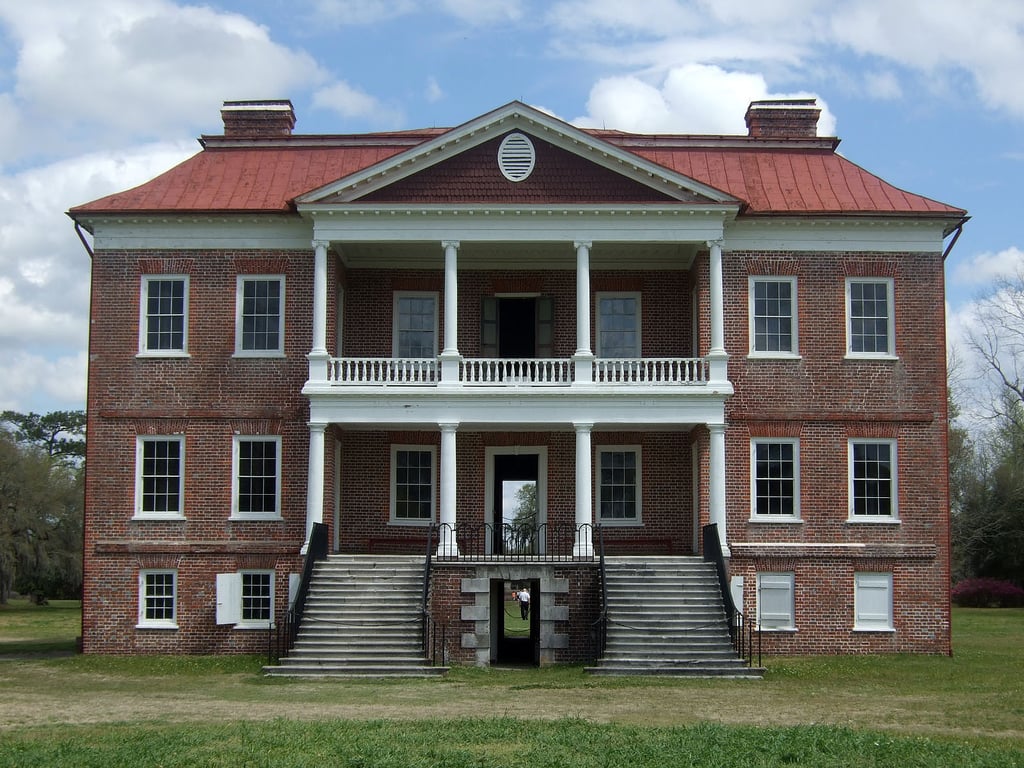
Front facade of Drayton Hall, the 1738 Georgian-Palladian plantation house preserved as a ruin near Charleston, South Carolina
Haunted House / Historic Home

Drayton Hall

Charleston, SC

Drayton Hall is an unrestored Palladian plantation house on the Ashley River outside Charleston, South Carolina, built beginning in 1738 by John Drayton Sr. It is the only Ashley River plantation house to survive intact through both the Revolutionary and Civil Wars and is preserved by the National Trust for Historic Preservation.

$$$ All Ages Family: Moderate
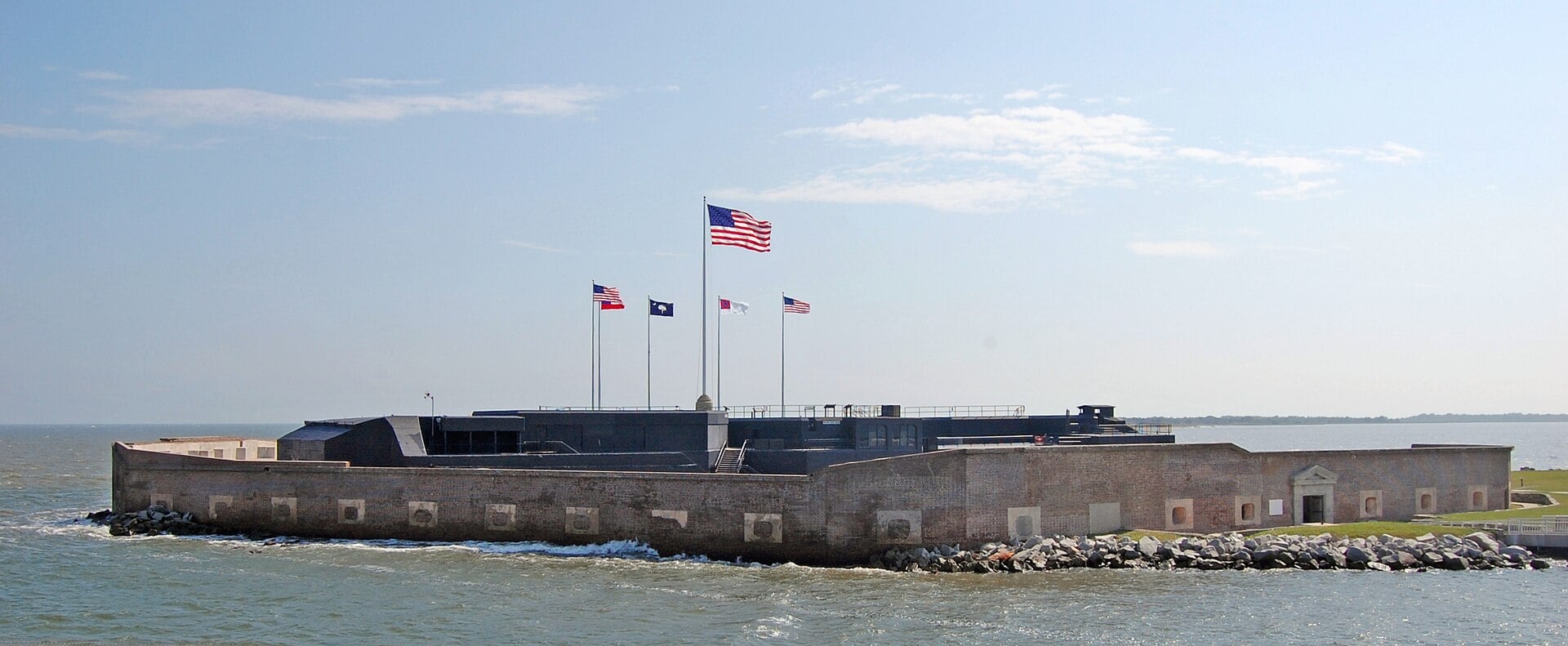
Fort Sumter, the brick island fort in Charleston Harbor where the Civil War began on April 12, 1861, U.S. flag flying over the gun emplacements
Battlefield / Military Site

Fort Sumter

Charleston, SC

Construction of Fort Sumter began in 1829 on a man-made island at the mouth of Charleston Harbor. On April 12, 1861, Confederate forces opened a 34-hour bombardment that began the Civil War, and the fort's surrender on April 14 produced the war's first fatality - Private Daniel Hough of County Tipperary, Ireland.

$$ All Ages Family: High
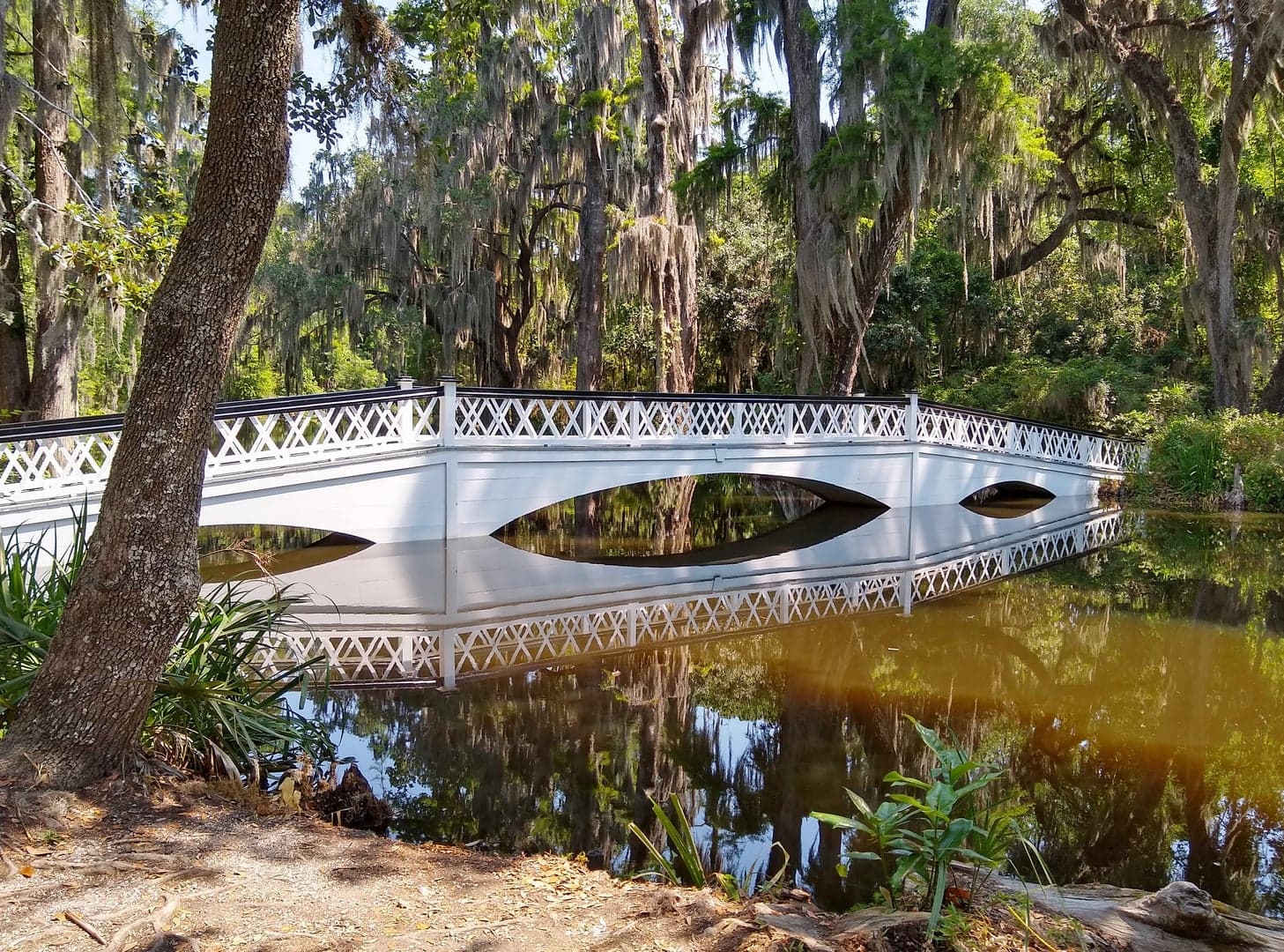
The iconic Long White Bridge spanning a reflective garden pond at Magnolia Plantation in Charleston, South Carolina
Museum / Historical Site

Magnolia Plantation and Gardens

Charleston, SC

Magnolia Plantation was established in 1676 by Thomas and Ann Drayton, English settlers from Barbados, and remains under the control of the Drayton family after fifteen generations. The plantation's wealth derived from Carolina Gold rice cultivated by enslaved Africans. Magnolia opened its gardens to the public in 1871, making it one of the oldest public gardens in the United States.

$$ All Ages Family: Moderate
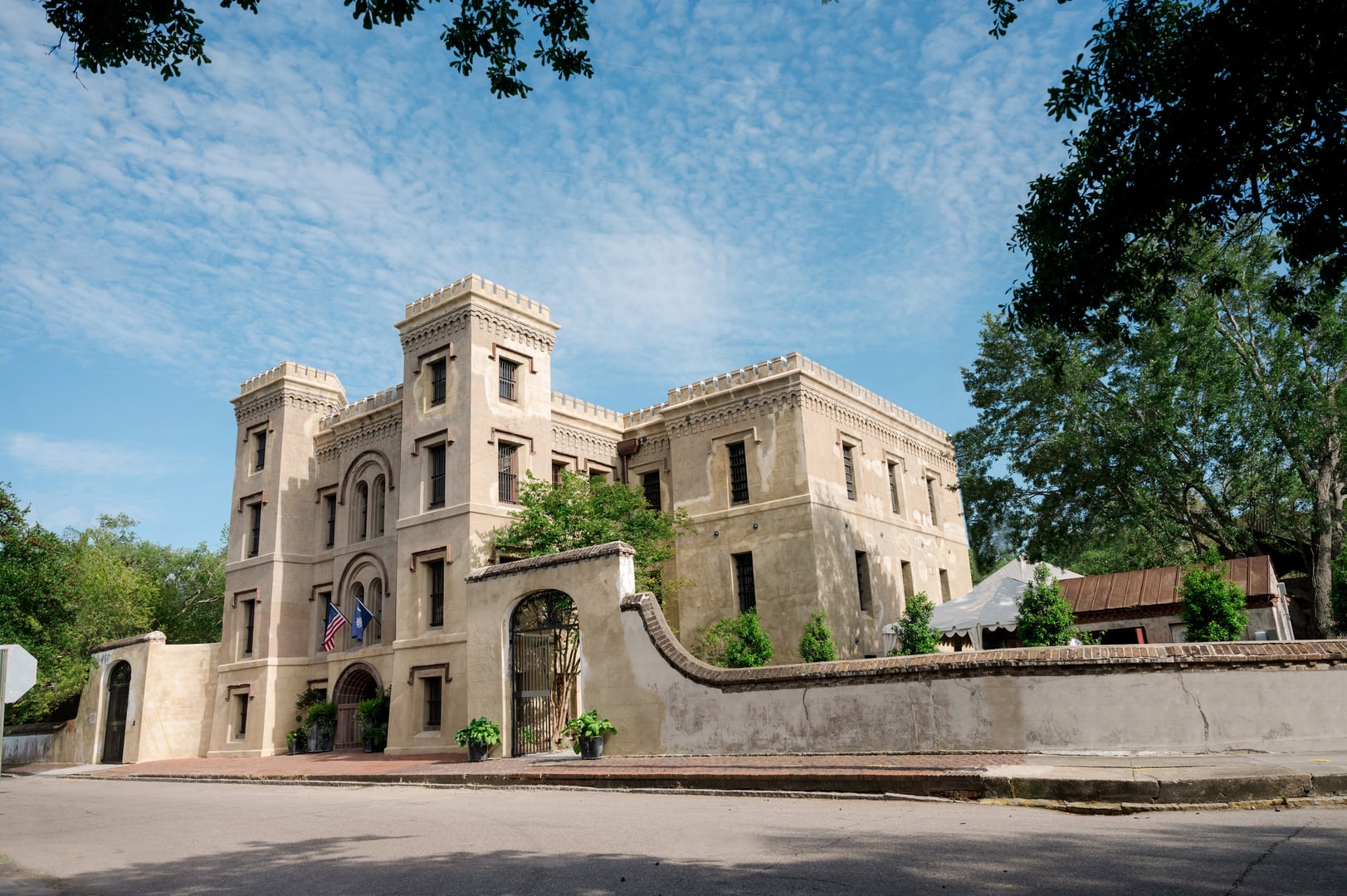
Romanesque Revival exterior of the Old Charleston Jail at 21 Magazine Street, Charleston, South Carolina
Prison / Reformatory

Old Charleston Jail

Charleston, SC

The Old Charleston Jail at 21 Magazine Street operated as the Charleston city jail from 1802 to 1939. The building held debtors, enslaved people accused of resistance, Civil War prisoners of war, and criminals awaiting execution, including Lavinia and John Fisher, who were hanged in 1820. The jail is on the National Register of Historic Places and is operated for tours by Bulldog Tours.

$$ Generally 7+ for evening tours; check Bulldog Tours for specific event policies Family: Moderate
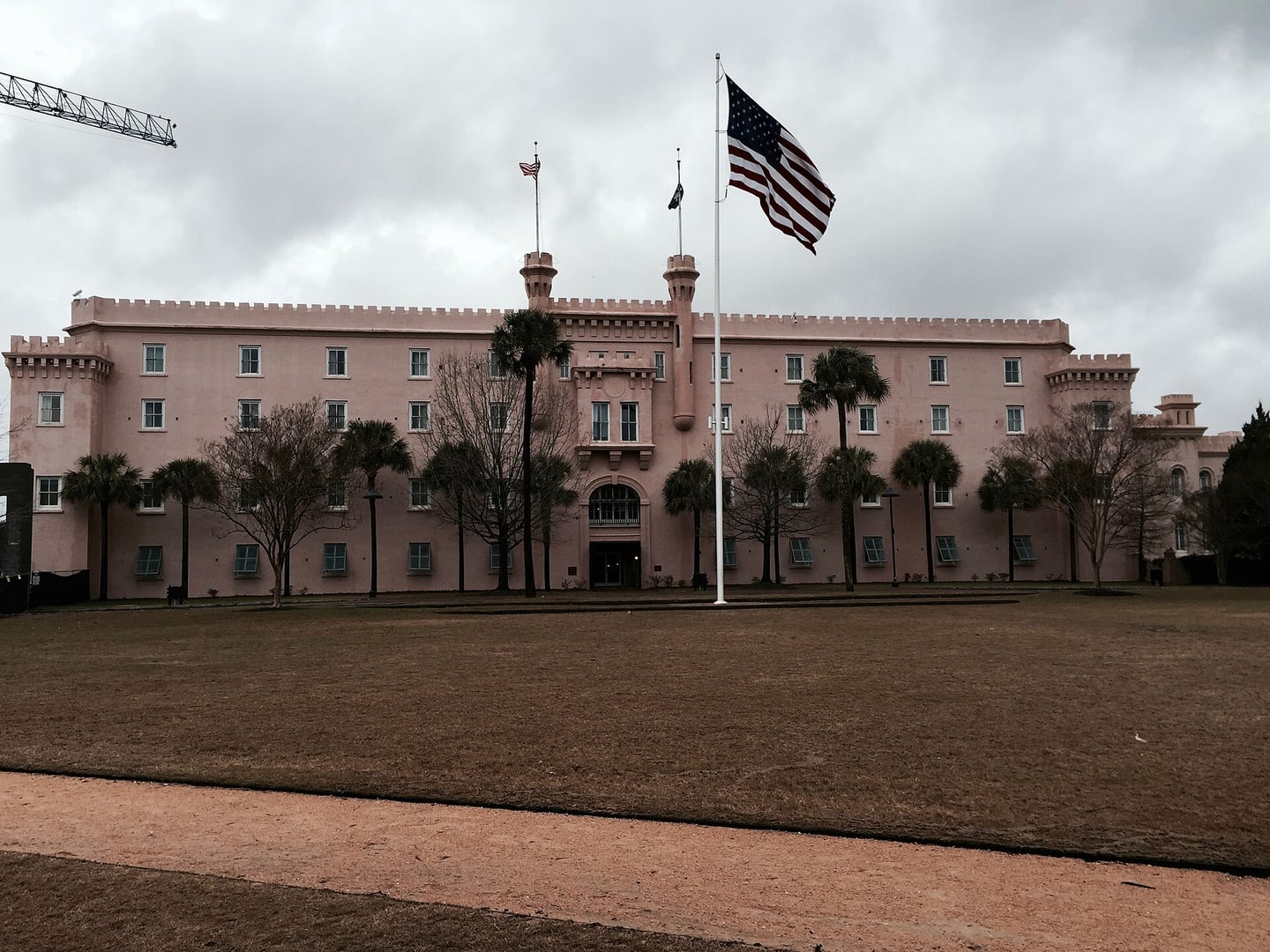
The crenellated 1829 facade of the Old Citadel (former South Carolina State Arsenal), now the Embassy Suites Charleston Historic District
Haunted Hotel / Inn

Old Citadel (Embassy Suites Charleston Historic District)

Charleston, SC

Built in 1829 as the South Carolina State Arsenal in the wake of the 1822 Denmark Vesey rebellion scare, the Old Citadel became the founding campus of The Citadel military academy in 1843 and remained the college's home until 1922. Restored in the 1990s, it now houses the Embassy Suites Charleston Historic District.

$$$ All Ages Family: Moderate
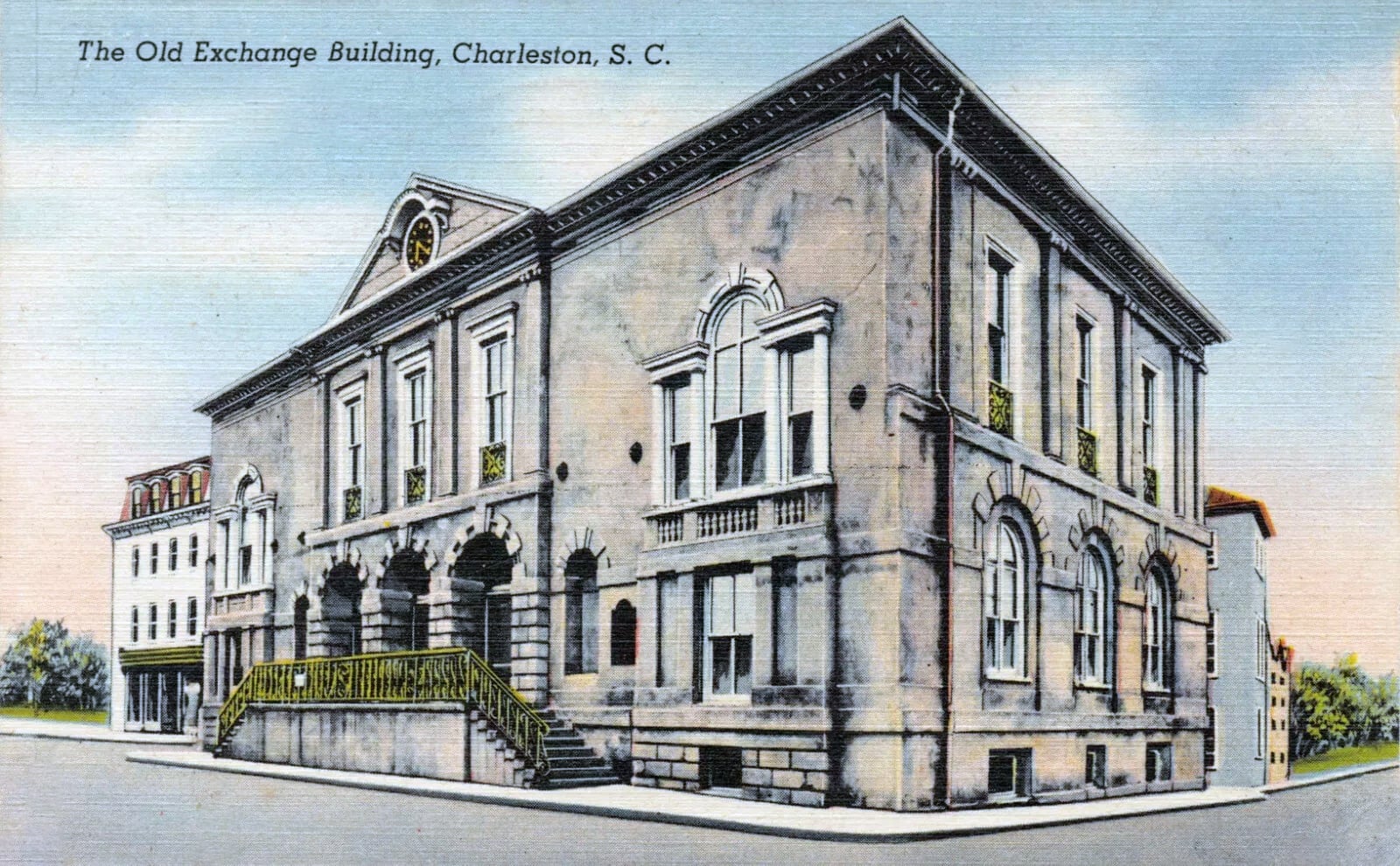
The Late Georgian facade of the 1771 Old Exchange Building at the foot of Broad Street, Charleston, South Carolina
Museum / Historical Site

Old Exchange Building and Provost Dungeon

Charleston, SC

Built 1767-1771 as Charleston's Royal Exchange and Customs House, the Old Exchange anchored the colonial port's commerce. Its basement, the Provost Dungeon, became a British military prison after Charleston's 1780 fall, holding patriots including three signers of the Declaration of Independence. The building was designated a National Historic Landmark in 1973.

$ All Ages Family: High
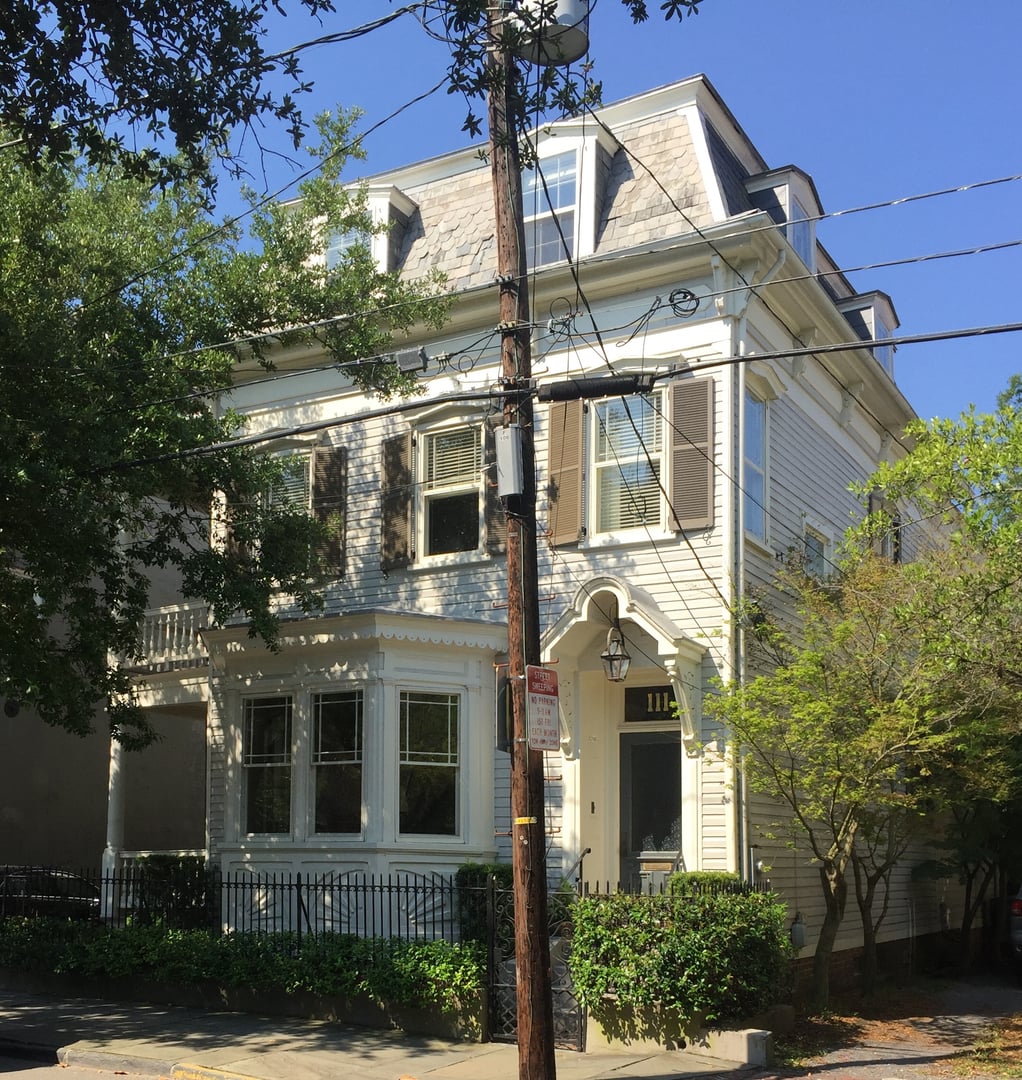
The cheery yellow 1888 Victorian house at 72 Queen Street, home of Poogan's Porch restaurant in downtown Charleston, SC
Haunted Dining / Bar

Poogan's Porch

Charleston, SC

The Victorian house was built in 1888 on Queen Street as a private residence. It served as a home into the mid-20th century — including for the St. Amand sisters, schoolteachers — and in 1976 Bobbie Ball converted it into Poogan's Porch, named for a scruffy neighborhood dog who befriended the new owners.

$$$ All Ages Family: High
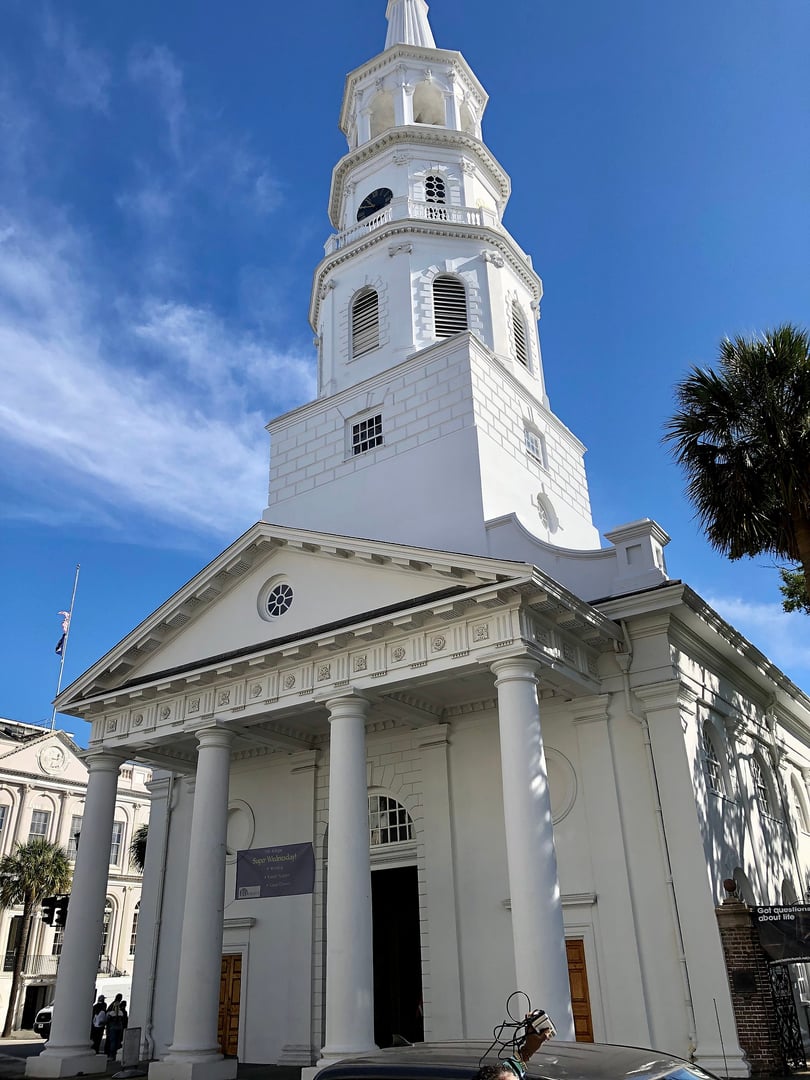
Exterior of St. Michael's Episcopal Church showing its colonial-era Tuscan portico and tall white steeple at the Four Corners of Law in Charleston's French Quarter.
Other Dark Tourism Site

St. Michael's Church

Charleston, SC

St. Michael's is the oldest surviving religious structure in Charleston. Royal governor James Glenn laid the cornerstone in February 1752, the church opened for services in 1761, and it was designated a National Historic Landmark in 1960.

$ All Ages Family: High
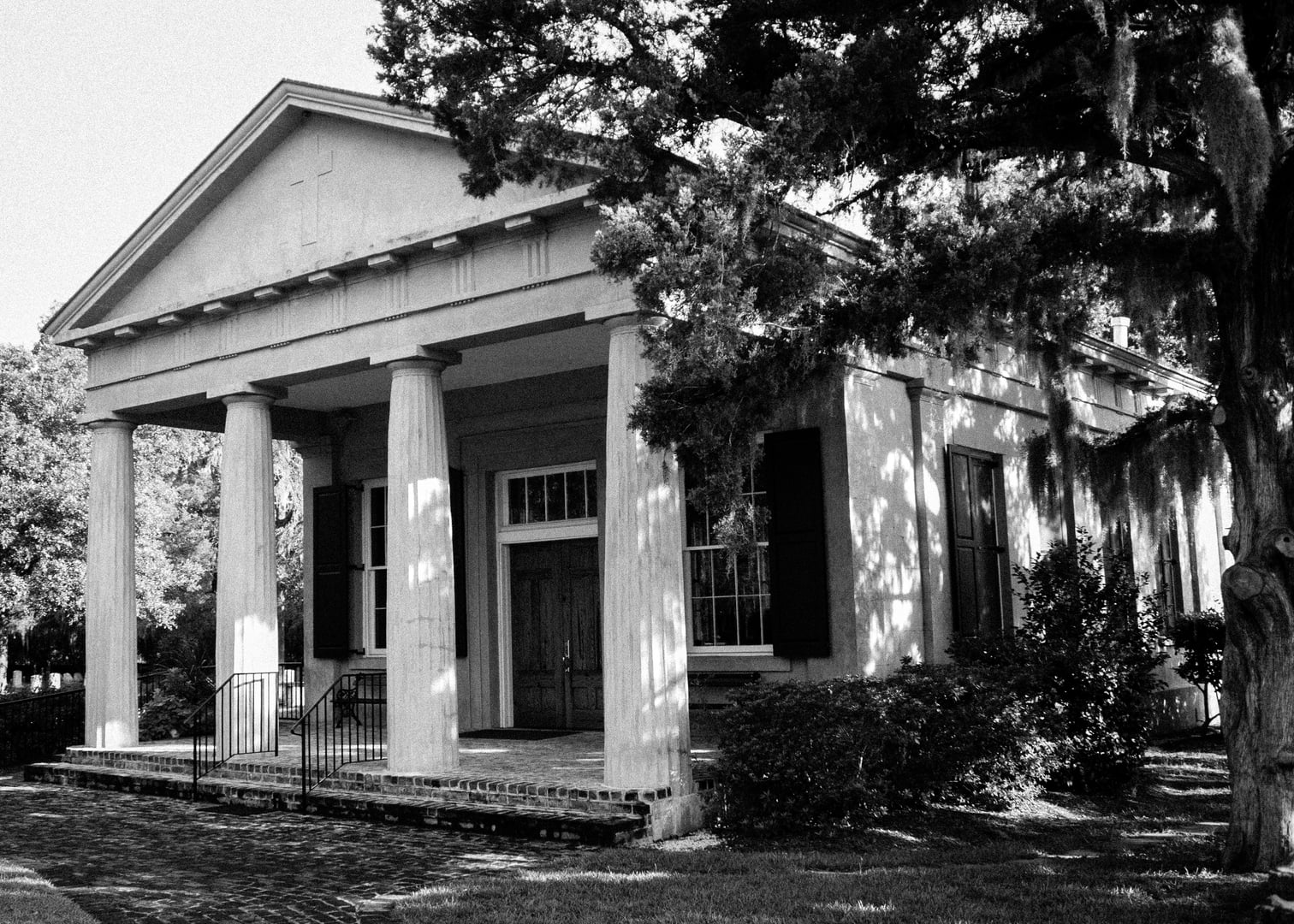
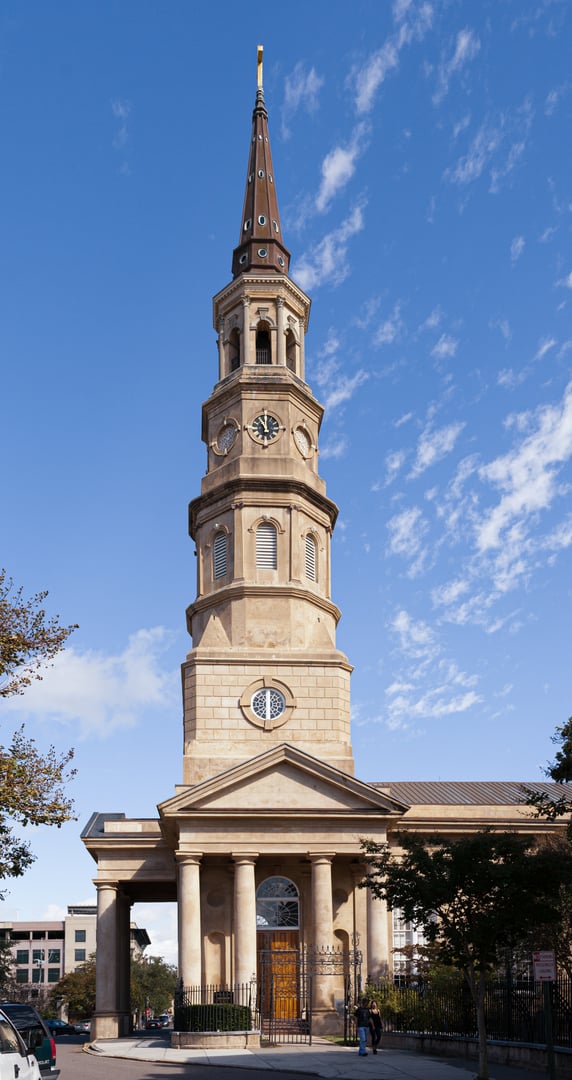
St. Philip's Episcopal Church's Greek Revival exterior and steeple on Church Street in Charleston, South Carolina
Cemetery / Burial Ground

St. Philip's Church Graveyard

Charleston, SC

St. Philip's Episcopal Church is one of the oldest religious congregations in the southern United States, founded in 1681. The present 1838 Greek Revival church on Church Street replaced an earlier 1723 building destroyed by fire. The two graveyards across Church Street contain burials from the early 18th century through the present, including signers of the Declaration of Independence and the Constitution.

$ All Ages Family: High
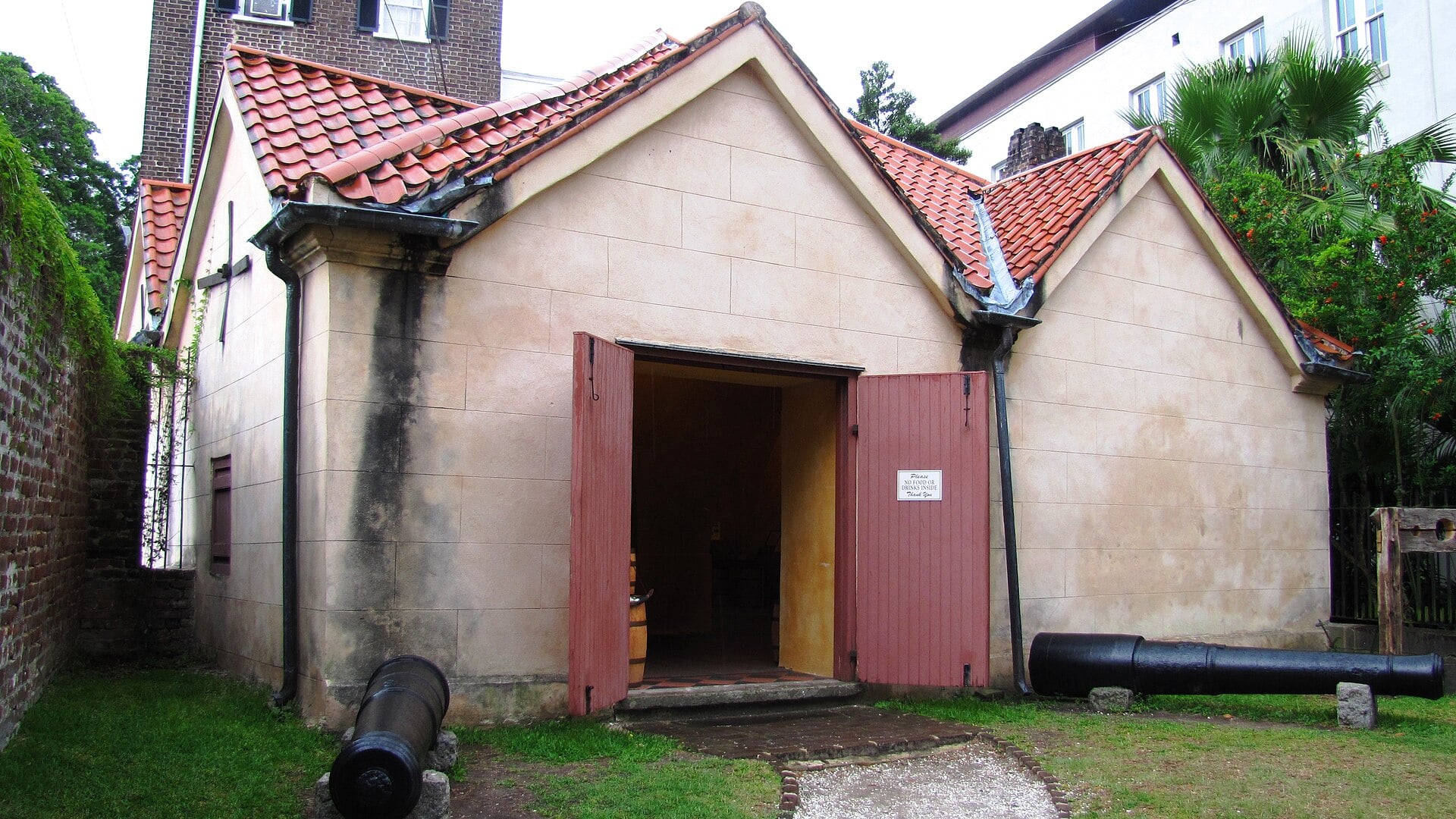
The 1713 Powder Magazine, a small brick fortress-style colonial structure with steep red tile roof on Cumberland Street, Charleston, SC
Museum / Historical Site

The Powder Magazine

Charleston, SC

Authorized by the Province of Carolina in 1703 and completed in 1713, the Powder Magazine is the oldest surviving public building in what was once the Province of Carolina. It stored gunpowder for Charleston's defense from 1713 to 1748 and again during the American Revolution. After military retirement around 1780 it served variously as a print shop, livery stable, and the Manigault family wine cellar; in 1902 the Colonial Dames acquired it and opened it as a museum.

$ All Ages Family: High
The Rutledge Victorian Bed & Breakfast on Rutledge Avenue in downtown Charleston, South Carolina
Haunted Hotel / Inn

Rutledge Victorian Bed & Breakfast

Charleston, SC

The Rutledge Victorian Bed & Breakfast is a downtown Charleston painted-lady inn on Rutledge Avenue. The building is described in inn directories and traveler reviews as having been rebuilt in the 1980s following an earlier fire, and operated as a guest house since at least 2004.

$$ All Ages Family: Moderate
Wildly overgrown cemetery grounds at the Unitarian Church in Charleston, with weathered tombstones and verdant ivy under shady trees in Harleston Village.
Cemetery / Burial Ground

Unitarian Church Cemetery

Charleston, SC

The congregation organized in 1772 as an overflow from Charleston's Congregational Church; construction began that year, was interrupted by the Revolutionary War (the building used as a barracks and stable), and was completed in 1787. The current church building was reconstructed in Gothic Revival style in the 1850s. The adjoining cemetery, established in 1772, was deliberately landscaped from the 1830s by Caroline Howard Gilman as a wildflower garden in the Mount Auburn (Massachusetts) tradition.

$ All Ages Family: High
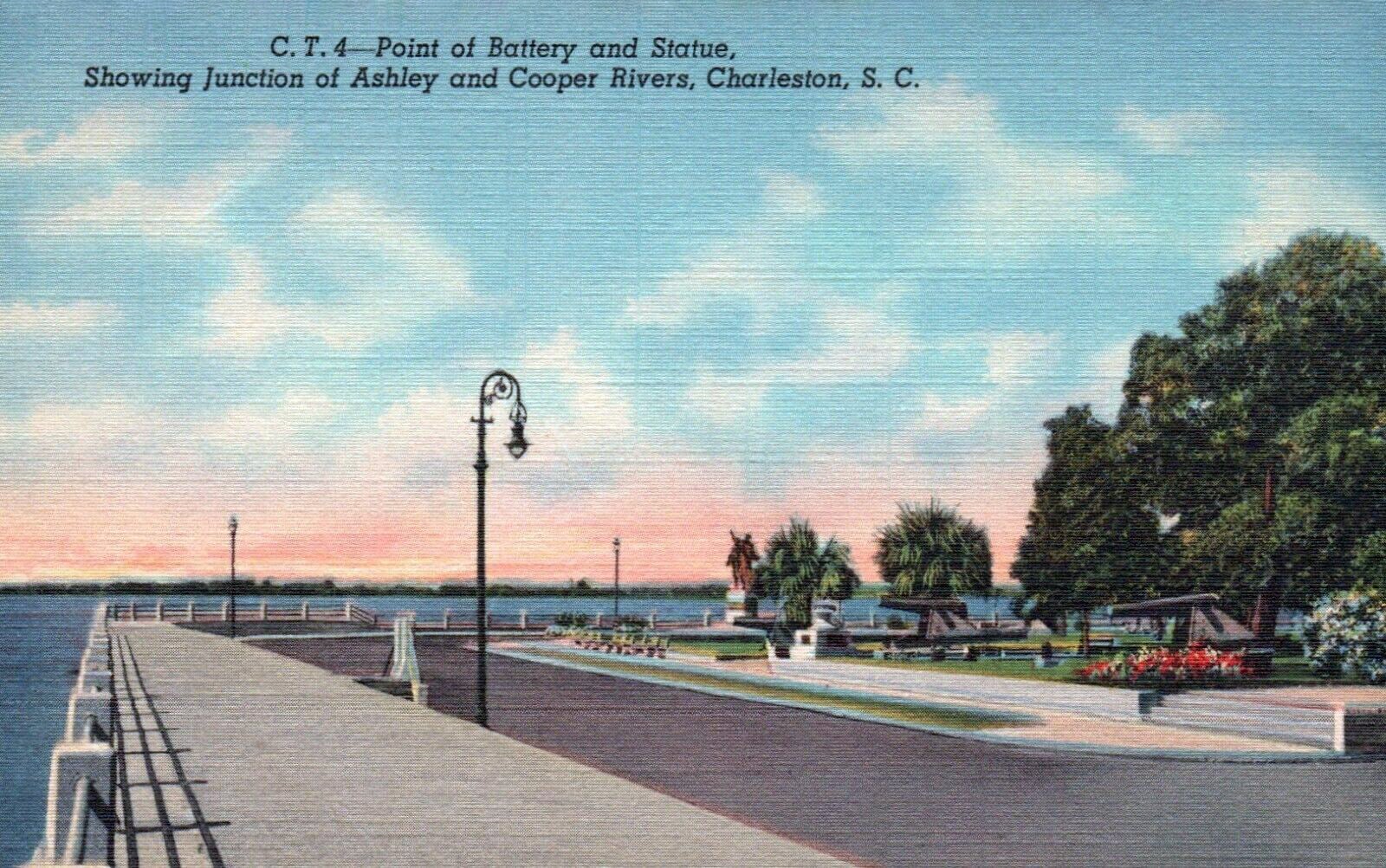
Live oak canopy and historic cannons at White Point Garden (The Battery), the 1837 park at the tip of the Charleston peninsula
Outdoor / Natural Site

White Point Garden (The Battery)

Charleston, SC

Established as a city park in 1837 on the southern tip of the Charleston peninsula, White Point Garden sits where Charleston Harbor receives the Ashley and Cooper rivers. The site is historically known as the execution ground for 49 pirates hanged between November and December 1718.

$ All Ages Family: High

Georgetown — 6

Aerial survey view of Beth Elohim Cemetery
Aerial survey · USDA NAIP
Cemetery / Burial Ground

Beth Elohim Cemetery

Georgetown, SC

Beth Elohim Cemetery on Broad Street is the second-oldest Jewish burial ground in South Carolina, containing graves of prominent Georgetown citizens including three of the town's six Jewish mayors.

$ All Ages Family: High
Haunted House / Historic Home

DuPre House

Georgetown, SC

Built around 1740, the DuPre House is one of Georgetown's older surviving colonial structures in the residential historic district. It operated as a bed-and-breakfast in recent decades before returning to private residential use. The fire-death legend attached to the property associates two figures — a woman and small child — with a 19th-century fire event, though the specific incident is not independently documented in local newspaper archives reviewed.

$ All Ages Family: High
Museum / Historical Site

Georgetown Light (North Island)

Georgetown, SC

Georgetown Light on North Island is South Carolina's oldest active lighthouse. The first light was established in 1801 at the entrance to Winyah Bay; the current brick tower dates to 1812 and remains an active navigational aid. The Tom Yawkey Wildlife Center, a South Carolina Department of Natural Resources facility, controls the island. Boat tours from Georgetown's waterfront pass the lighthouse and stop at North Island for beachcombing.

$$ All Ages Family: High
True Crime Site

Man-Doyle House and Cannon Street Dock

Georgetown, SC

The house at the corner of Front and Queen Streets, once owned by Mary Man, is the last confirmed stop of Theodosia Burr Alston before she sailed from the adjacent Cannon Street dock on December 31, 1812, and vanished at sea.

$ All Ages Family: High
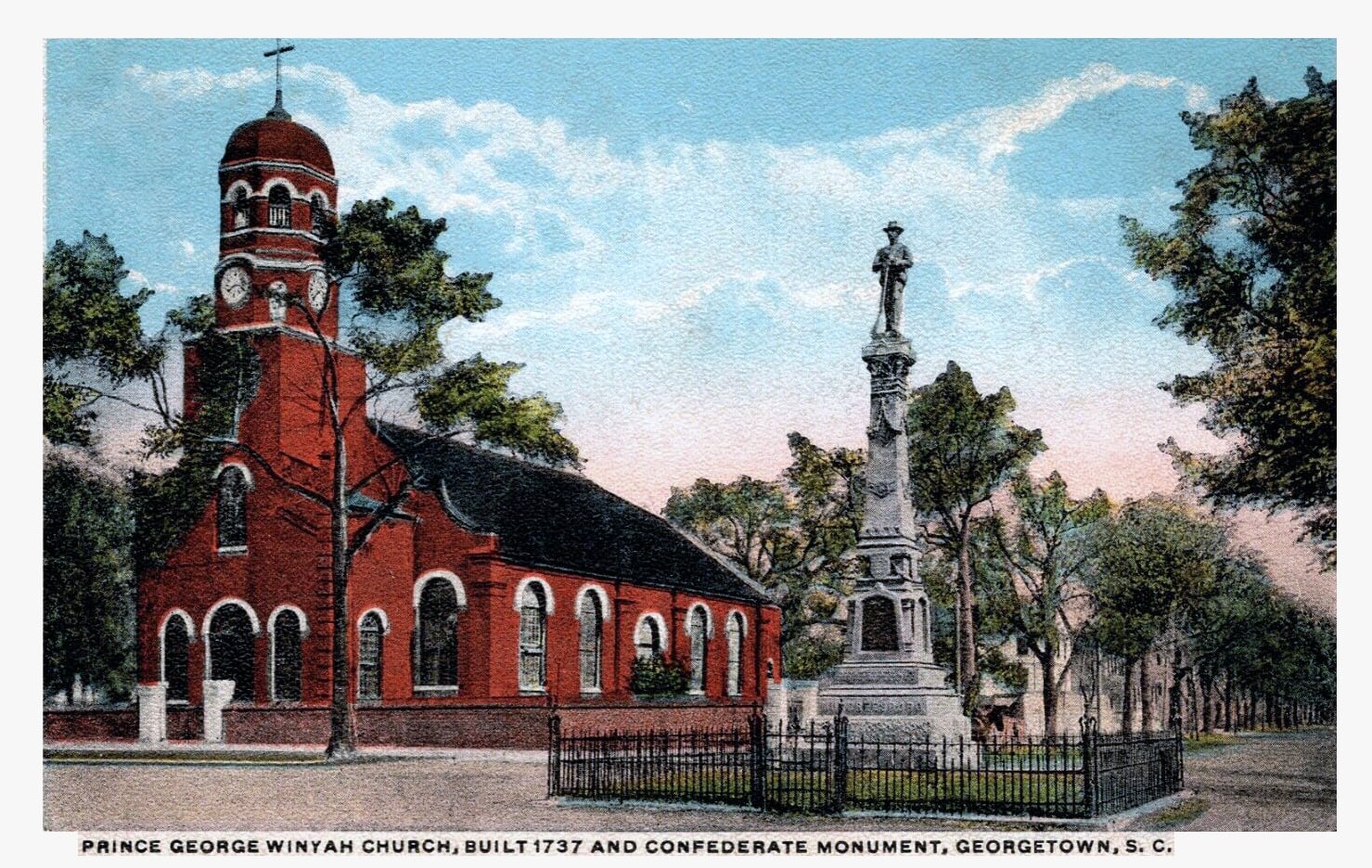
Photo of Prince George Winyah Episcopal Church and Cemetery
Cemetery / Burial Ground

Prince George Winyah Episcopal Church and Cemetery

Georgetown, SC

Established in 1721 and built in 1747, Prince George Winyah is one of the oldest Anglican congregations in continuous service in South Carolina. Its brick church and walled cemetery survive from the colonial era.

$ All Ages Family: High
Museum / Historical Site

Rice Museum (Kaminski Building)

Georgetown, SC

Built in 1842 along Georgetown's Front Street waterfront, the Kaminski Building served as a commercial mercantile space during the height of South Carolina's rice economy. It is now part of the Rice Museum complex, which documents the cultivation of rice in the Waccamaw Neck region and the enslaved people whose labor made it possible.

$ All Ages Family: High

Abbeville — 5

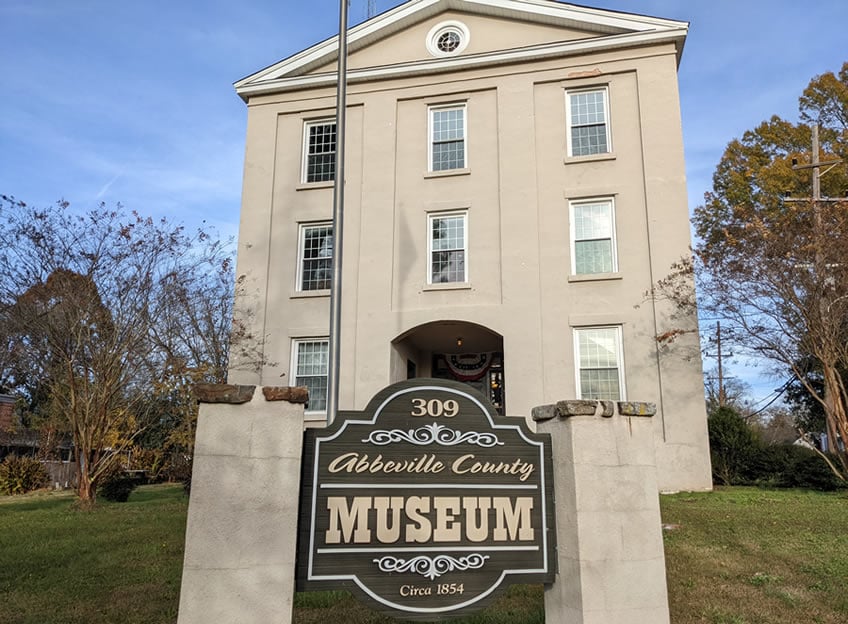
Prison / Reformatory

Abbeville County Museum (The Old Jail)

Abbeville, SC

Originally built as the Abbeville County Jail circa 1830 (some sources cite 1854), the building operated as an active jail until 1948 and now houses the Abbeville County Museum under the Historical Society.

$ All Ages Family: Moderate
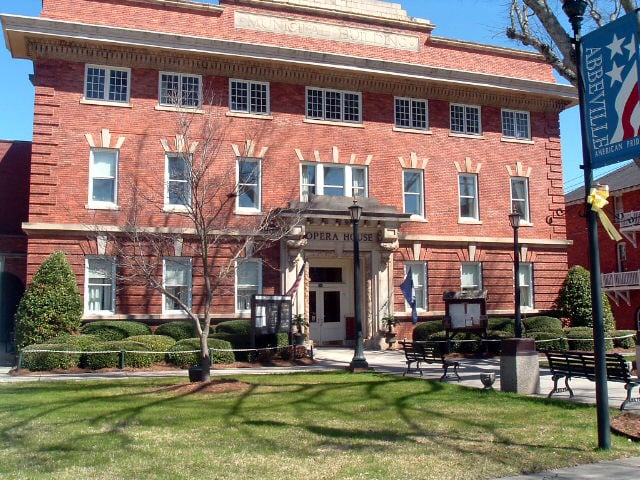
Abbeville Opera House — three-story Beaux-Arts brick theater on Court Square, Abbeville, South Carolina
Theater / Performance Venue

Abbeville Opera House

Abbeville, SC

The Abbeville Opera House opened in 1908 as part of a combined Opera House and City Hall complex on Court Square. Listed on the National Register of Historic Places, the venue once hosted touring vaudeville circuits and silent films and continues to operate as a working community theater in upstate South Carolina.

$$ All Ages Family: High
Haunted Hotel / Inn

Belmont Inn (formerly Eureka Hotel)

Abbeville, SC

The Eureka Hotel opened in 1903 to serve railroad passengers and performers at the adjacent Abbeville Opera House; later renamed the Belmont Inn, it is listed on the National Register of Historic Places and remains an operating hotel.

$$ All Ages Family: High
Haunted House / Historic Home

McGowan-Barksdale-Bundy House (The General's House)

Abbeville, SC

A Queen Anne mansion in Abbeville, South Carolina that served as the home of Confederate General Samuel McGowan following the Civil War; the Abbeville County Historical Society confirms McGowan's residence and the home's significance to local history.

$ All Ages Family: High
Aerial survey view of Trinity Episcopal Church and Cemetery
Aerial survey · USDA NAIP
Cemetery / Burial Ground

Trinity Episcopal Church and Cemetery

Abbeville, SC

Trinity Episcopal Church was built in 1842 and consecrated in 1860, designed in neo-Gothic style; it is listed on the National Register of Historic Places and served as an anchor of Abbeville's religious and social life through the Civil War era.

$ All Ages Family: High

Aiken — 5

Museum / Historical Site

Aiken County Historical Museum at Banksia

Aiken, SC

Banksia is an Aiken Winter Colony estate whose construction spans the 1840s to 1862. It now houses the Aiken County Historical Museum, making it one of the region's most historically significant surviving antebellum properties.

$ All Ages Family: High
Haunted Hotel / Inn

Annie's Inn Bed and Breakfast

Aiken, SC

Annie's Inn is a historic building in Aiken that previously served as a hospital or doctor's office before being converted to a bed and breakfast. South Carolina ETV featured it in a 2019 documentary segment on Aiken ghost legends.

$$ All Ages Family: High
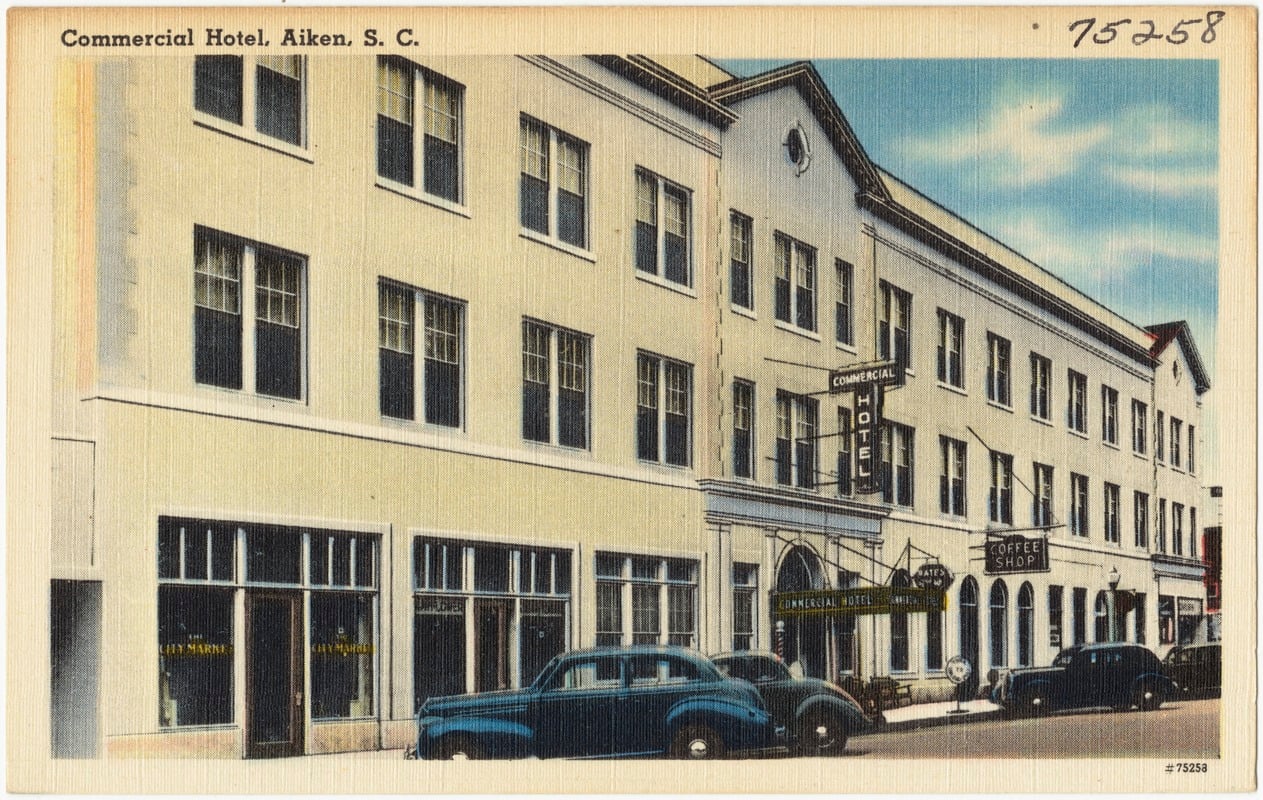
Historic postcard view of the Commercial Hotel (later Holley House / Hotel Aiken) in Aiken, South Carolina, circa 1930-1945
Haunted Hotel / Inn

Hotel Aiken (Holley House)

Aiken, SC

The hotel at the corner of Richland Avenue and Laurens Street in Aiken was built in 1898 by Henry Hahn as the Commercial Hotel. It was bought by Leonard R. Holley in 1929 and operated as the Holley House for over 70 years before becoming Hotel Aiken in 2001.

$$ All Ages Family: High
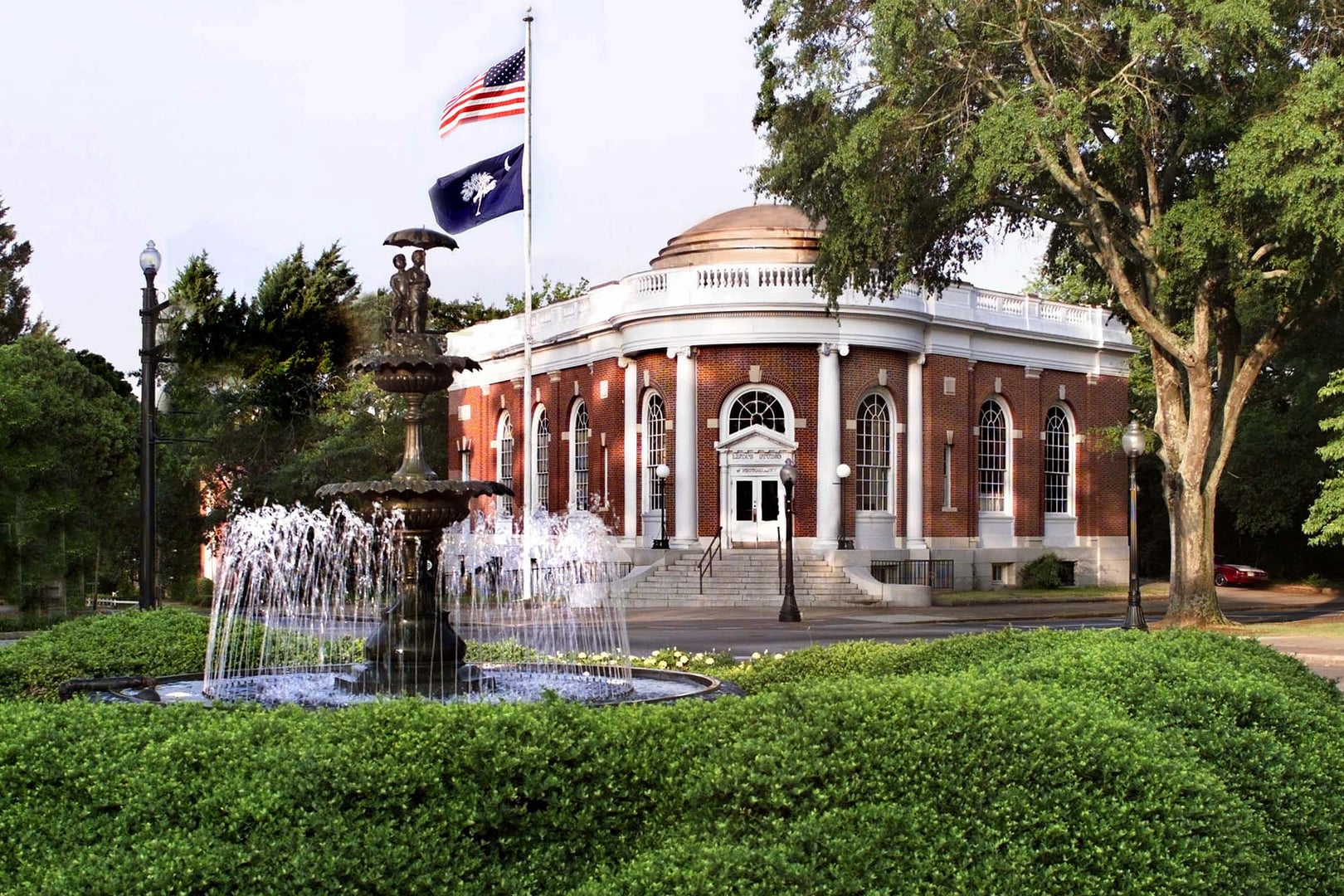
Photo of Old Aiken Post Office
Other Dark Tourism Site

Old Aiken Post Office

Aiken, SC

Built in 1912 in a Jeffersonian classical style, the building served as Aiken's federal post office until 1971. Senator Strom Thurmond later maintained an office there; it is currently occupied by Savannah River Nuclear Solutions.

$ All Ages Family: High
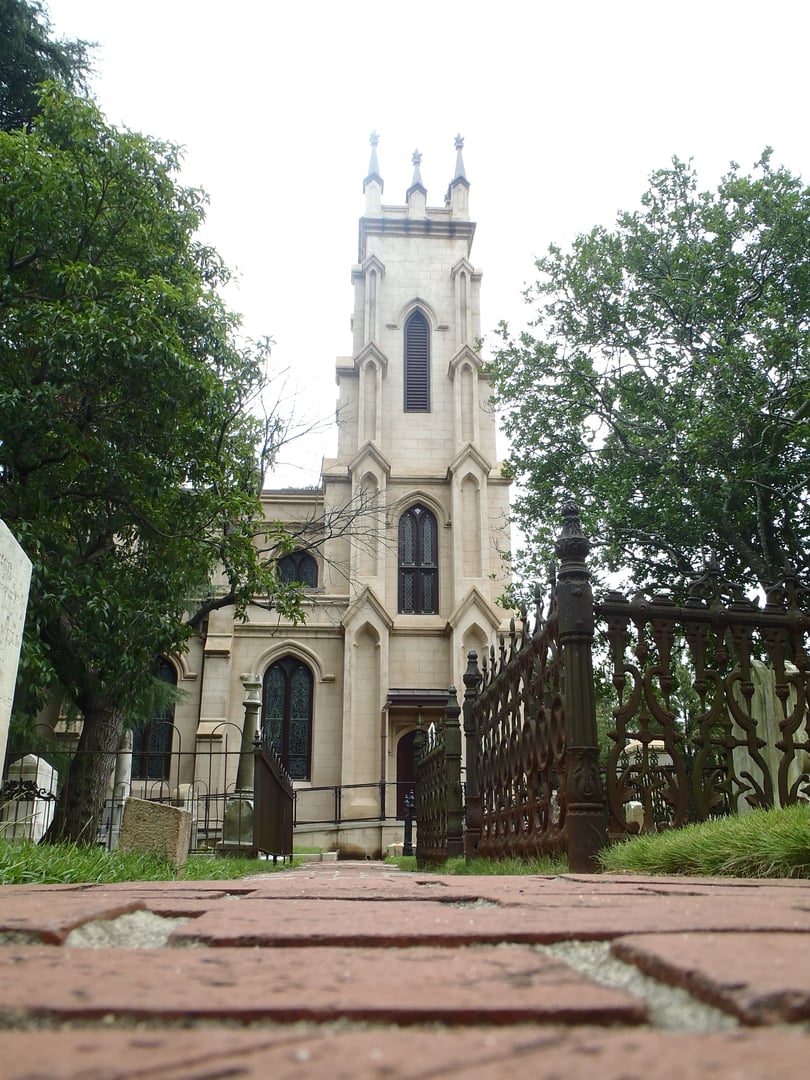
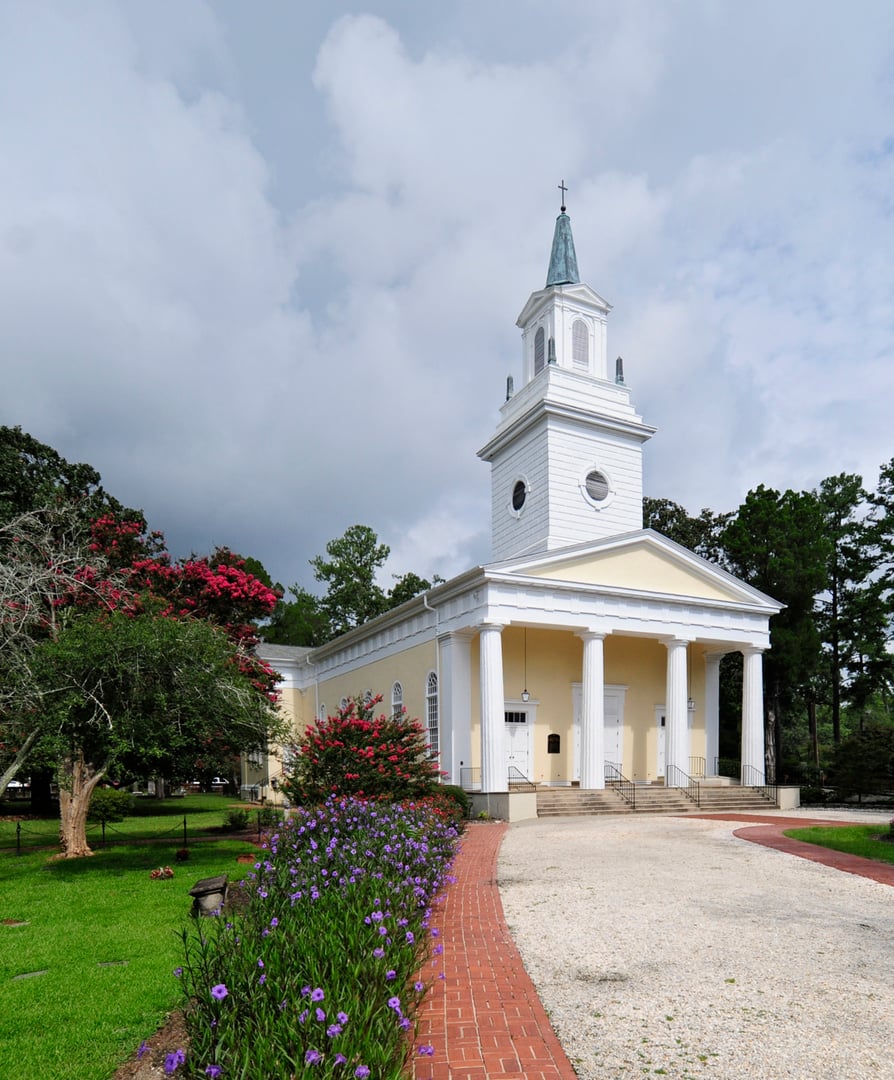
Photo of St. Thaddeus Episcopal Church and Cemetery
Cemetery / Burial Ground

St. Thaddeus Episcopal Church and Cemetery

Aiken, SC

St. Thaddeus Episcopal Church is a historic downtown Aiken congregation whose adjacent graveyard holds members of the city's founding families and is a named stop on local ghost tours.

$ All Ages Family: High

Greenville — 5

Aerial survey view of Children's Graveyard (Duncan Chapel Methodist Church Cemetery)
Aerial survey · USDA NAIP
Cemetery / Burial Ground

Children's Graveyard (Duncan Chapel Methodist Church Cemetery)

Greenville, SC

The cemetery off Old Buncombe Road near Furman University and the University Square area in Greenville, South Carolina, is the burial ground of the former Duncan Chapel Methodist Church, which dates to 1847. The church building is gone, but the graves remain, with markers reportedly ranging from the 1700s into the late 1800s. Locals have long called it the 'Children's Graveyard,' though documentation indicates it holds no unusual concentration of children's graves compared with other period cemeteries.

$ All Ages Family: Moderate
Photo of Gassaway Mansion
Haunted House / Historic Home

Gassaway Mansion

Greenville, SC

Stockbroker Walter Gassaway began construction on this 22,000-square-foot Greenville mansion in 1919 and completed it in 1924, five years before the 1929 stock market crash devastated his fortune. The Depression years that followed brought financial ruin, and Gassaway died on the front lawn of the property he could no longer sustain. The estate's scale — massive by any measure for its era and region — makes it one of the more unusual private structures in Upstate South Carolina.

$ All Ages Family: High
Aerial survey view of Herdklotz Park (Greenville Tuberculosis Hospital Ruins)
Aerial survey · USDA NAIP
Outdoor / Natural Site

Herdklotz Park (Greenville Tuberculosis Hospital Ruins)

Greenville, SC

The Greenville County Tuberculosis Hospital, also called Hopewell Sanatorium, was founded around 1930 near Paris Mountain in Greenville, South Carolina. For roughly 20 years it treated tuberculosis patients before later serving as a psychiatric facility and a site for a prisoner release program. Most of the original building was destroyed by fire in 2001 and subsequently demolished. The sealed basement and a historical marker remain, now under and adjacent to a public playground at Herdklotz Park.

$ All Ages Family: High
Photo of Springwood Cemetery
Cemetery / Burial Ground

Springwood Cemetery

Greenville, SC

Established more than 200 years ago, Springwood Cemetery is the oldest municipal cemetery in South Carolina and is listed on the National Register of Historic Places. Among those interred here is Fannie Heldmann, who drowned herself in the Reedy River in 1889; local accounts hold that her family forced her into an arranged marriage against her will. Her grave is marked by a large concrete angel.

$ All Ages Family: High
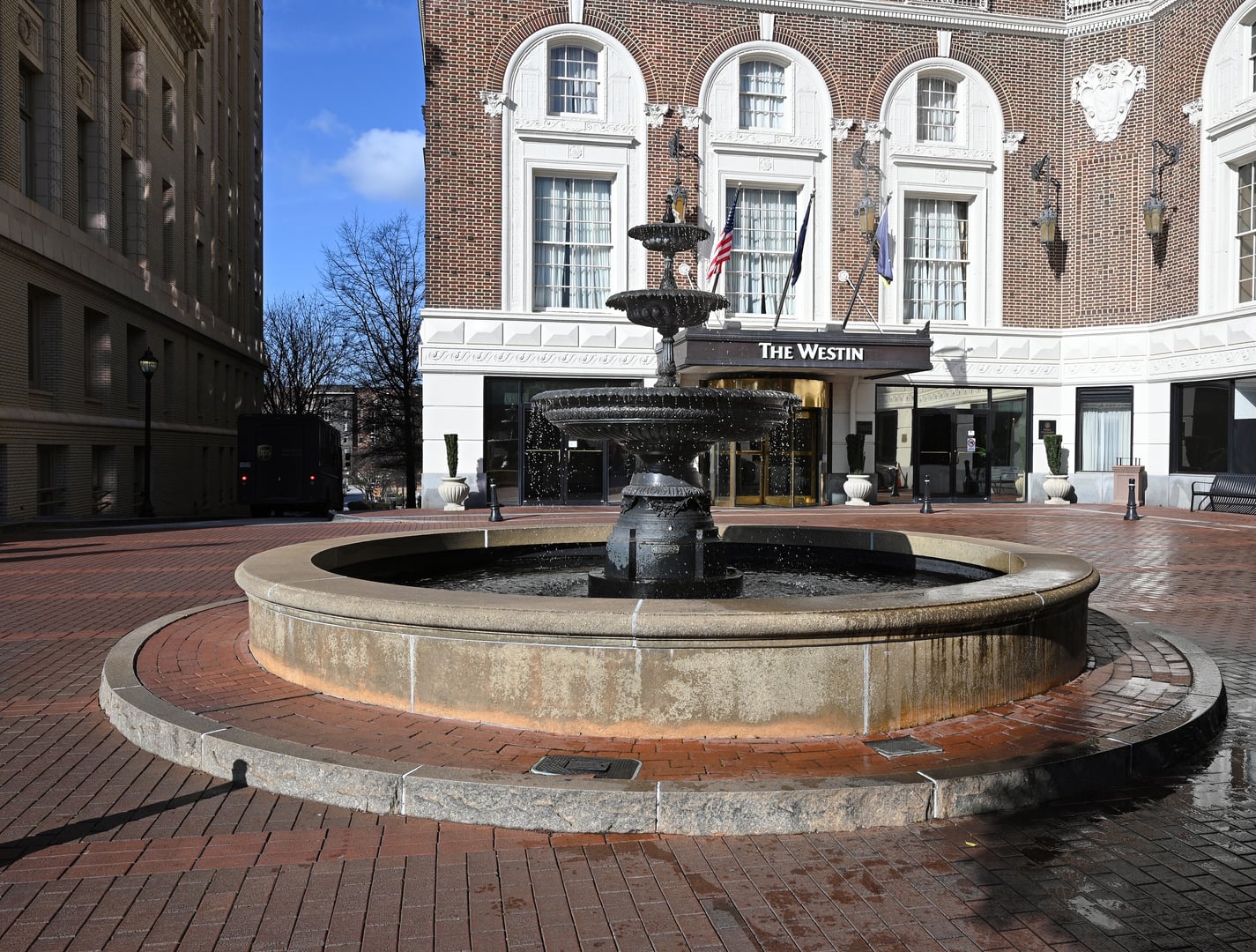
Photo of Westin Poinsett Hotel
Haunted Hotel / Inn

Westin Poinsett Hotel

Greenville, SC

The Poinsett Hotel opened in 1925 as a twelve-story downtown Greenville landmark, built on the site of the earlier Mansion House Hotel and designed by architect William Lee Stoddart. It operated as a premier South Carolina hotel through the mid-twentieth century before closing in 1987. After more than a decade of vacancy, the building was restored and reopened as the Westin Poinsett in 1999.

$$$ All Ages Family: High

Camden — 4

Haunted House / Historic Home

Cool Springs Plantation

Camden, SC

John Boykin established Cool Springs Plantation in 1832 in Kershaw County. The two-story Greek Revival house features a tiered portico with 64 Doric columns and was remodeled in the 1850s. It was added to the National Register of Historic Places in 1989. The property has passed through multiple family lines over the following century.

$ All Ages Family: High
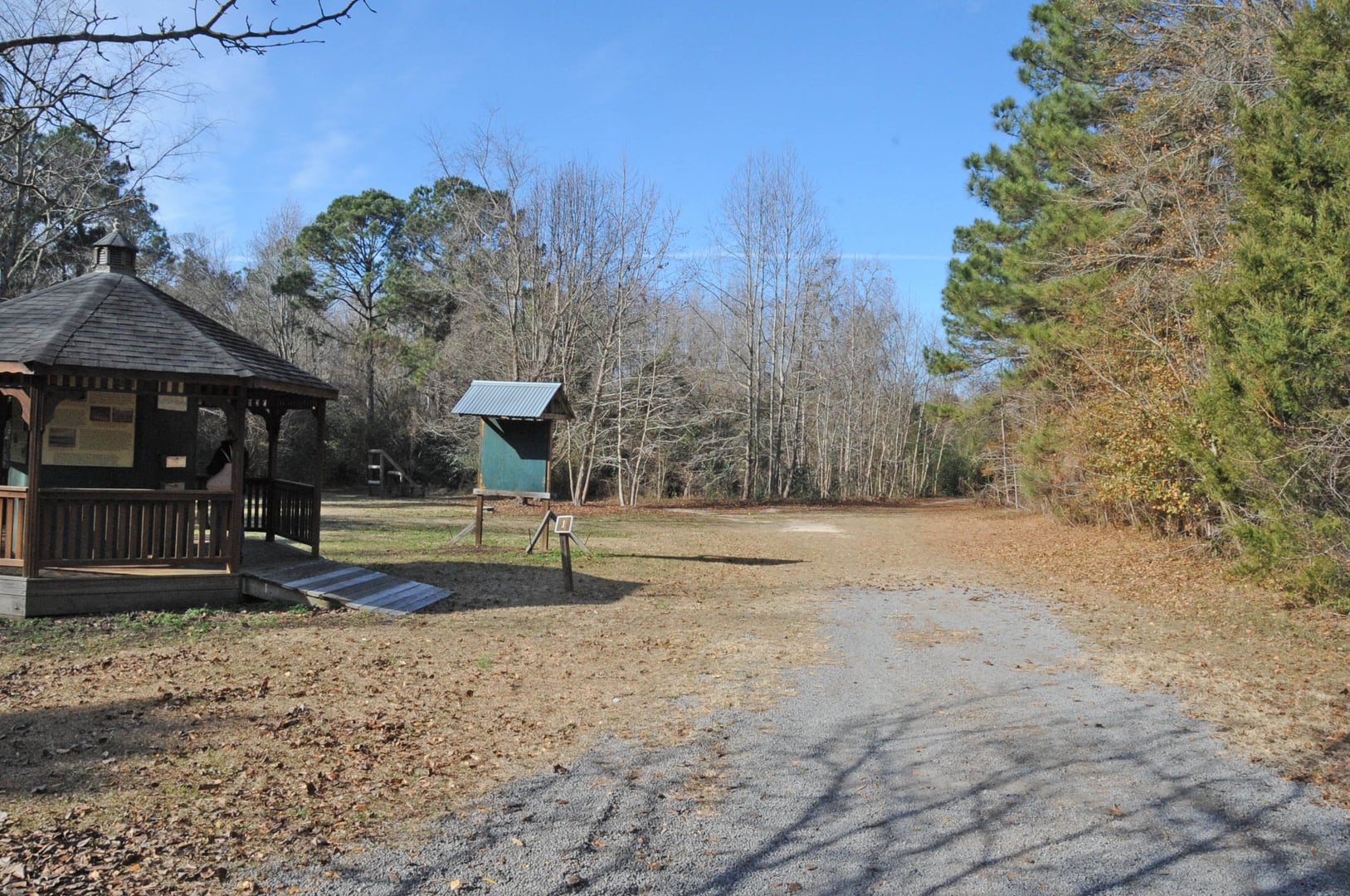
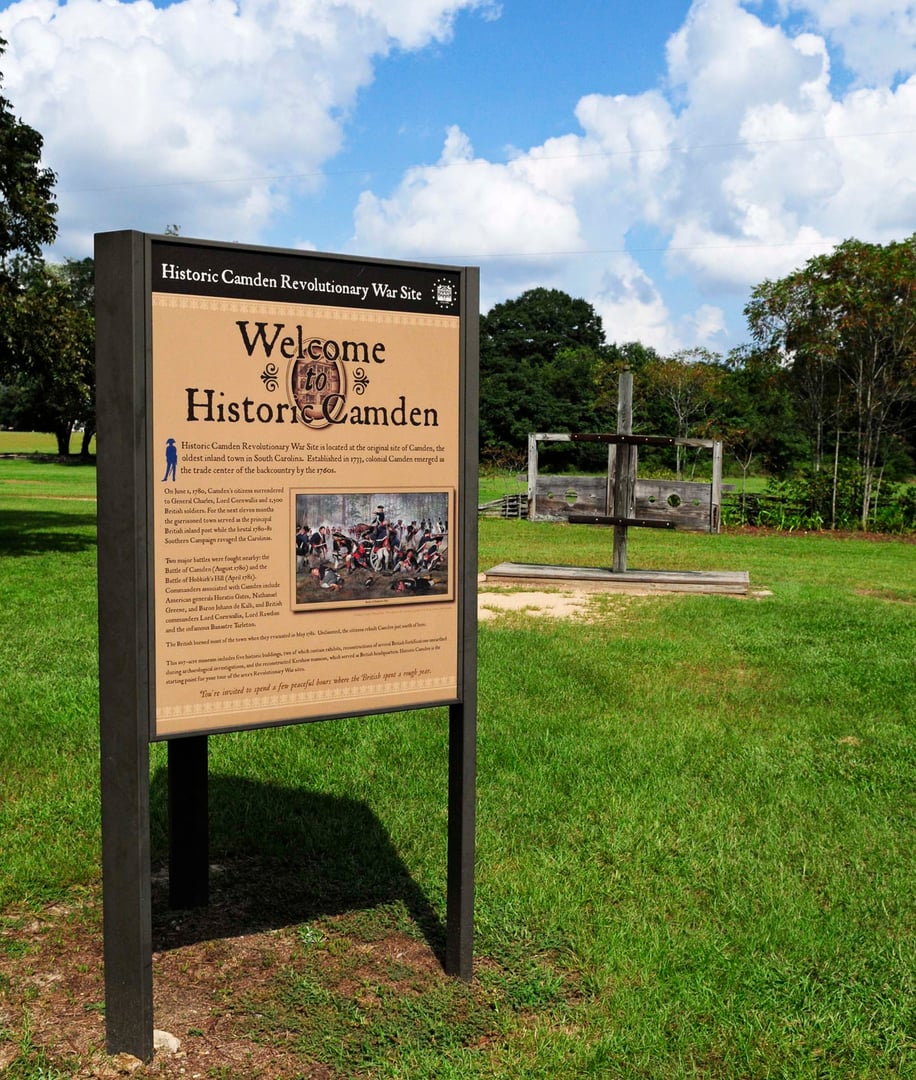
Photo of Historic Camden Revolutionary War Site
Museum / Historical Site

Historic Camden Revolutionary War Site

Camden, SC

On August 16, 1780, British forces under Lord Cornwallis routed the Continental Army under General Horatio Gates at the Battle of Camden — the worst single defeat suffered by American forces during the Revolution. Camden then served as the primary British supply depot and garrison for the Southern Campaign until the British evacuation in May 1781.

$$ All Ages Family: Moderate
Aerial survey view of Hobkirk's Hill Battlefield (Second Battle of Camden)
Aerial survey · USDA NAIP
Battlefield / Military Site

Hobkirk's Hill Battlefield (Second Battle of Camden)

Camden, SC

On April 25, 1781, Major General Nathanael Greene led roughly 1,400 Continental troops against the British garrison at Camden, commanded by Francis Rawdon-Hastings. Greene's forces briefly gained the upper hand before their lines broke, resulting in a British tactical victory. American losses included 19 killed, 113 wounded, and 89 captured; British losses were 39 killed and 210 wounded. The battle convinced Rawdon the position was untenable, and the British burned and evacuated Camden shortly after.

$ All Ages Family: Moderate
Aerial survey view of Old Quaker Cemetery (Agnes of Glasgow's Grave)
Aerial survey · USDA NAIP
Cemetery / Burial Ground

Old Quaker Cemetery (Agnes of Glasgow's Grave)

Camden, SC

Samuel Wyly conveyed four acres to the Society of Friends in 1759, establishing what became one of Camden's oldest burial grounds. The cemetery now covers roughly 50 acres and contains the graves of Revolutionary War veterans, state politicians, and war heroes. It is operated as a 501(c)(3) nonprofit.

$ All Ages Family: High

Spartanburg — 4

Aerial survey view of Broome High School
Aerial survey · USDA NAIP
Other Dark Tourism Site

Broome High School

Spartanburg, SC

Gettys D. Broome High School was constructed in 1975-1976 in Spartanburg as a result of school district consolidation, merging Cowpens and Pacolet High Schools into a single new facility. The school opened in 1976 as a modern secondary education institution serving the southwestern Spartanburg County region.

$ All Ages (exterior viewing only) Family: Moderate
Photo of Foster's Tavern
Haunted House / Historic Home

Foster's Tavern

Spartanburg, SC

Anthony Foster began building this tavern in 1801, and it is believed to be the oldest brick house in Spartanburg County. Listed on the National Register of Historic Places in 1970, the building hosted notable travelers on the post road through Upstate South Carolina, including senator and statesman John C. Calhoun and Methodist bishop Francis Asbury.

$ All Ages Family: High
Aerial survey view of Magnolia Street Cemetery
Aerial survey · USDA NAIP
Cemetery / Burial Ground

Magnolia Street Cemetery

Spartanburg, SC

Magnolia Street Cemetery is the oldest in Spartanburg. When the Seaboard Air Line Railroad expanded through the area in 1914, more than 314 bodies were exhumed here and reinterred at Oakwood Cemetery, leaving the site truncated but still active.

$ All Ages Family: High
Aerial survey view of Oakwood Cemetery (Hell's Gate)
Aerial survey · USDA NAIP
Cemetery / Burial Ground

Oakwood Cemetery (Hell's Gate)

Spartanburg, SC

Opened in 1883, Oakwood Cemetery served as Spartanburg's main public burial ground and pauper's field. In 1914, railroad expansion displaced over 314 graves from the city's older Magnolia Cemetery, which were relocated here.

$ All Ages Family: High

Union — 4

Haunted Hotel / Inn

Inn at Merridun

Union, SC

Built in 1855 by the mayor of Union, South Carolina, the property acquired the name Merridun around 1900 when the Duncan family occupied it. T.C. and Fannie Duncan are the most prominent figures associated with both the inn's history and its paranormal reputation.

$$ All Ages Family: High
Haunted House / Historic Home

Juxa Plantation

Union, SC

Built around 1828, Juxa Plantation was home to Jehu Gregory and his family. The property includes an on-site family cemetery where Gregory and his wife are interred. The plantation survived the Civil War era and has passed through multiple owners.

$ All Ages Family: Moderate
Photo of Old Union County Jail
Prison / Reformatory

Old Union County Jail

Union, SC

Built in 1823 and attributed to noted architect Robert Mills, the Union County Jail is a two-story Palladian-style structure built of granite ashlar. It was added to the National Register of Historic Places in 1974 and served as a detention facility through the Civil War era.

$ All Ages Family: High
Rose Hill Plantation Gist mansion exterior, Union South Carolina
Museum / Historical Site

Rose Hill Plantation State Historic Site

Union, SC

Rose Hill is the antebellum home of William Henry Gist, the 68th governor of South Carolina, who from this house wrote other Southern governors in 1860 urging secession. By 1860 the cotton plantation comprised more than 8,000 acres and held 178 enslaved people. The property became a South Carolina state historic site in 1960.

$ All Ages Family: Moderate

Beaufort — 3

Museum / Historical Site

Beaufort History Museum (The Arsenal)

Beaufort, SC

The Beaufort Arsenal was built in 1798 to 1799 in tabby and brick as a magazine and armory for the Beaufort Volunteer Artillery, one of the oldest militia units in South Carolina. The building served military functions through the Civil War period and was later transferred to civic use. It now houses the Beaufort History Museum.

$ All Ages Family: High
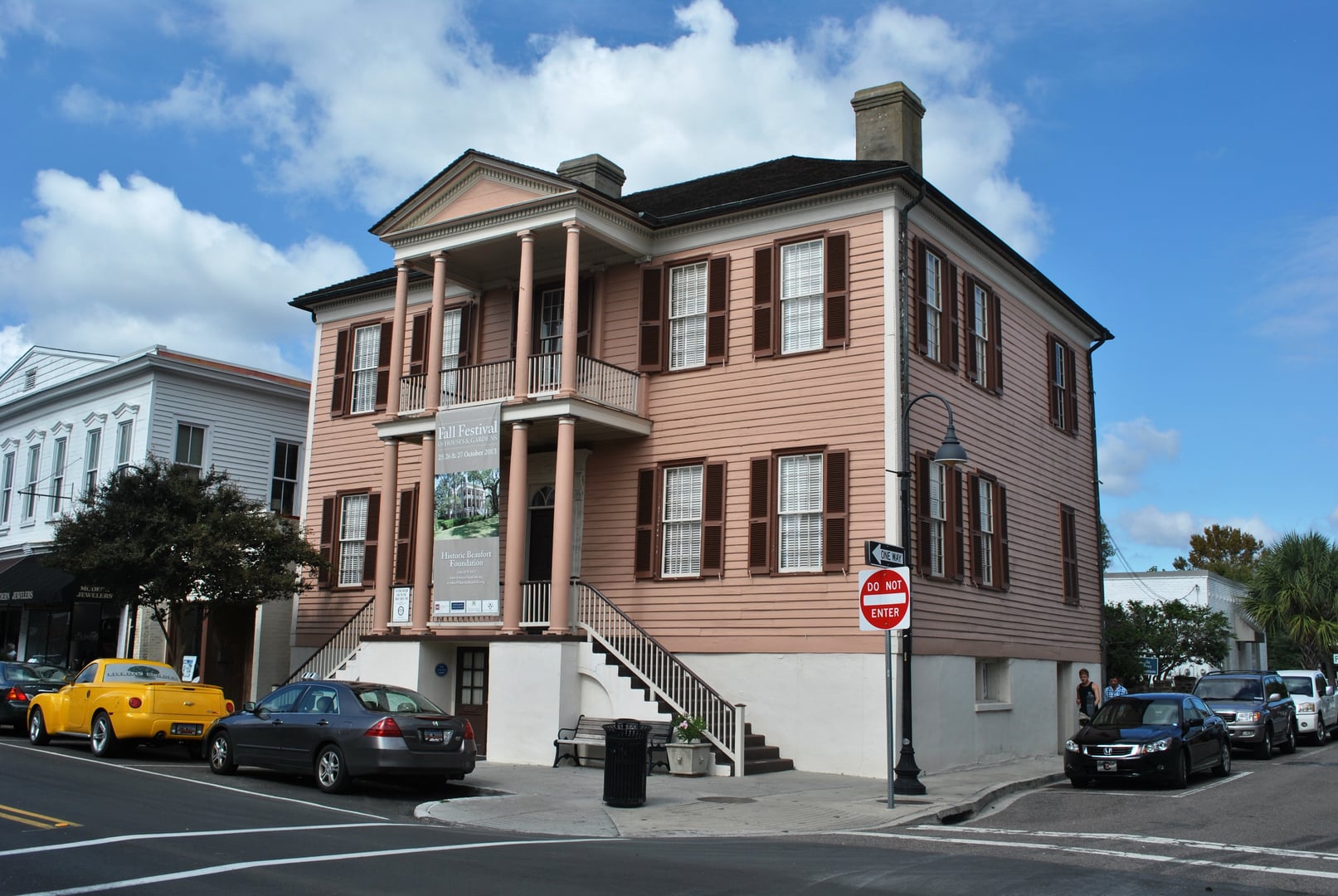
Photo of John Mark Verdier House (Lafayette Building)
Haunted House / Historic Home

John Mark Verdier House (Lafayette Building)

Beaufort, SC

Built in 1804 by Huguenot merchant John Mark Verdier, the Federal-style house on Bay Street is the only historic home in Beaufort open to the public. Verdier's counting house occupied the ground floor while the family lived above. Union forces used the building as headquarters during the 1861 occupation of Beaufort. The Marquis de Lafayette reportedly spoke from its portico during his 1825 American tour, which gave the building its alternate name.

$ All Ages Family: High
The Joseph Johnson House (The Castle), a Greek Revival mansion at 411 Craven Street in Beaufort, South Carolina
Haunted House / Historic Home

The Castle (Joseph Johnson House)

Beaufort, SC

The Castle, also known as the Joseph Johnson House, is a Greek Revival mansion in Beaufort's Point neighborhood. Construction was substantially complete in 1861 when Union troops occupied the city; the unfinished building served as a Union military hospital before the Johnson family reclaimed it after the war. The Verdier-Marshall House name in the discovery context appears to conflate The Castle with the separate John Mark Verdier House on Bay Street.

$ All Ages Family: High

Sumter — 3

Aerial survey view of Martinville Church Road
Aerial survey · USDA NAIP
Cemetery / Burial Ground

Martinville Church Road

Sumter, SC

Martinville Church Road (County Road 9) runs through the Martin Town community in rural Sumter County, South Carolina. The road passes at least two documented historic cemeteries — St. Paul Church Cemetery and New Covenant Presbyterian Church Cemetery (formerly Bethlehem Second Presbyterian Church). The road is also known as Martin Town Road, and the surrounding area is sometimes called the Martin Town Community.

$ All Ages Family: Moderate
Sumter Town Hall-Opera House at 21 N Main St, Sumter, South Carolina — an 1893 Richardsonian Romanesque landmark that survived fire and earthquake before restoration as an active performance venue.
Theater / Performance Venue

Sumter Opera House

Sumter, SC

The Sumter Town Hall-Opera House was built in 1893 in the Richardsonian Romanesque style on N Main Street in downtown Sumter, South Carolina. The building survived a major fire, the aftershocks of the 1886 Charleston earthquake, and extended periods of disrepair before being restored. It is listed on the National Register of Historic Places and continues to host performances.

$$ All Ages Family: High
Aerial survey view of Wateree River Swamp Bridge (Phantom Hitchhiker)
Aerial survey · USDA NAIP
Outdoor / Natural Site

Wateree River Swamp Bridge (Phantom Hitchhiker)

Sumter, SC

The bridge carries U.S. Highway 378 (concurrent with U.S. 76 along this stretch) across the Wateree River and its swamp between Sumter County and Richland County in the South Carolina Midlands, on the route toward Columbia. The crossing dates in legend to the 1930s, 'when the bridge was new.' The South Carolina DOT has more recently undertaken replacement of the westbound Wateree River bridge, so the physical structure has changed over time.

$ All Ages Family: Moderate

Anderson — 2

Aerial survey view of Cry Baby Bridge (High Shoals Road)
Aerial survey · USDA NAIP
Outdoor / Natural Site

Cry Baby Bridge (High Shoals Road)

Anderson, SC

The bridge on High Shoals Road in Anderson County is a two-span camelback Pratt through-truss structure fabricated in Virginia in 1919. Anderson County acquired and relocated it to its present site in 1952. It carried vehicle traffic until 1987, when it was removed from service.

$ All Ages Family: High
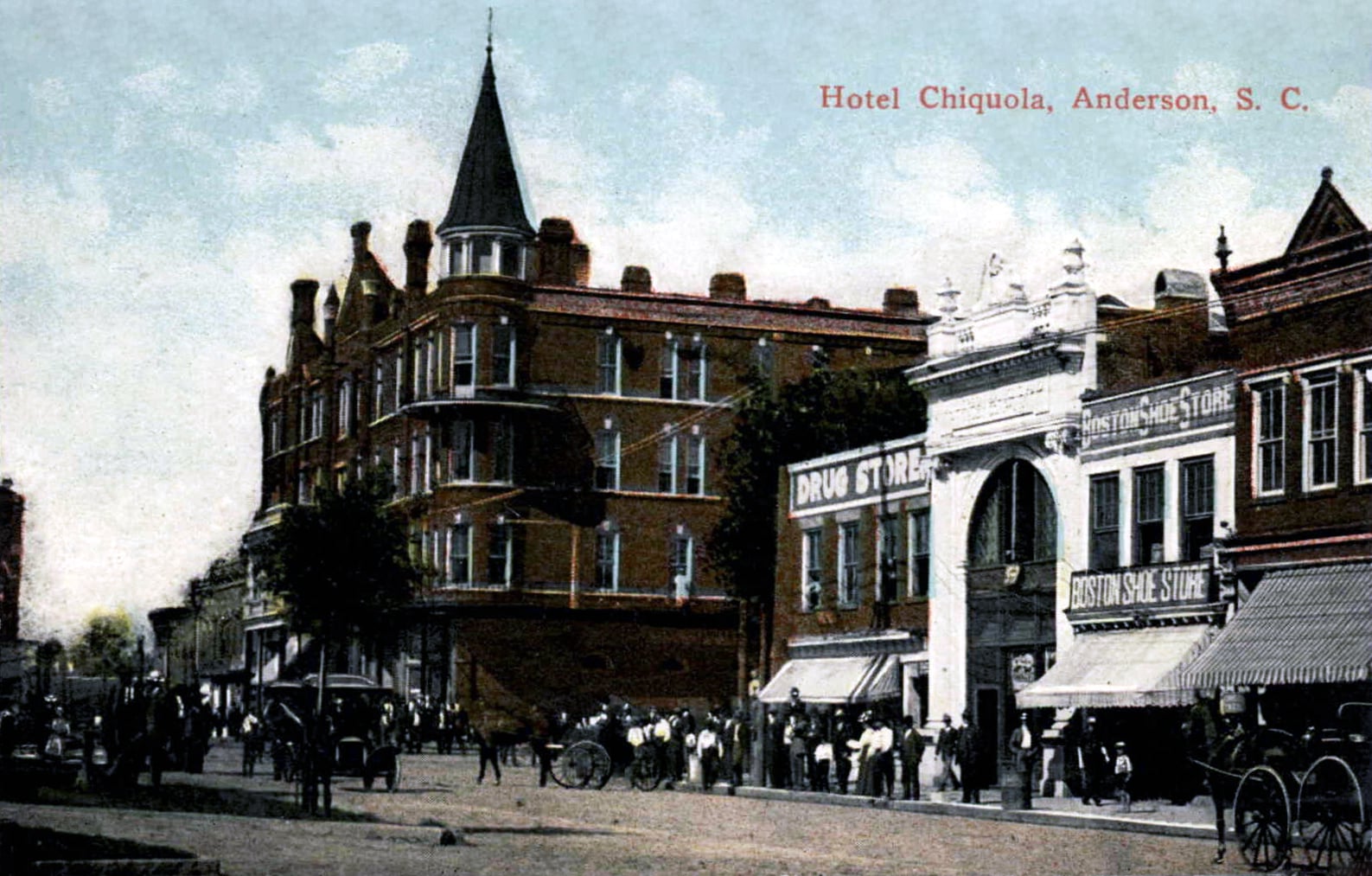
Photo of Hotel Chiquola
Haunted Hotel / Inn

Hotel Chiquola

Anderson, SC

Hotel Chiquola opened in 1888 on the site of the former Waverley House in downtown Anderson, and was among the first hotels in the South with electrical service. In January 1900, Sister Rose Lummis of the Society of the Sacred Heart arrived from New York and died of pneumonia at the hotel in March 1900.

$$ All Ages Family: High

Blacksburg — 2

Open Graph image from southcarolinaparks.com
Battlefield / Military Site

Kings Mountain State Park

Blacksburg, SC

Kings Mountain State Park in York County, South Carolina preserves the landscape adjoining the October 7, 1780 battlefield where Patriot militia defeated Major Patrick Ferguson's Loyalist force — the only British officer on the field. Thomas Jefferson described the outcome as 'the turn of the tide of success' in the Revolution. The park itself was developed by the Civilian Conservation Corps in the 1930s.

$ All Ages Family: High
Aerial survey view of Rock House Road
Aerial survey · USDA NAIP
Outdoor / Natural Site

Rock House Road

Blacksburg, SC

Rock House Road runs along the western edge of Kings Mountain National Military Park in Cherokee County, South Carolina, near Blacksburg. The road takes its name from an early nineteenth-century stone house that still stands on private property and is opened to the public only one day per year.

$ All Ages Family: Moderate

Columbia — 2

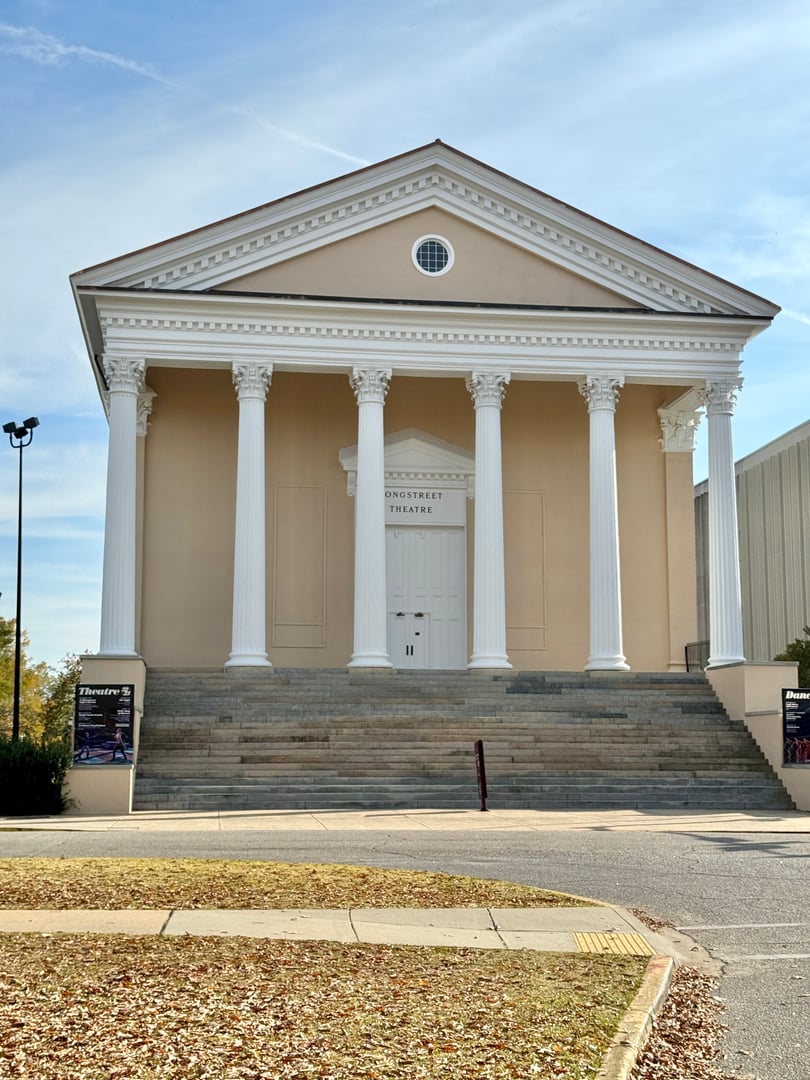
Longstreet Theatre, 1855 Greek Revival building at University of South Carolina in Columbia
Theater / Performance Venue

Longstreet Theatre

Columbia, SC

Longstreet Theatre was constructed in 1855 as a chapel and auditorium at the University of South Carolina. During the Civil War, when the university suspended operations, the building was converted into a 300-bed Confederate field hospital with a working morgue in its barrel-vaulted basement. The Department of Theatre and Dance has occupied the building since the 1970s after extensive renovation converted it into a 312-seat arena stage.

$ All Ages Family: High
The Babcock Building of the South Carolina State Hospital on Bull Street in Columbia, South Carolina — National Historic Landmark, photographed before the 2020 fire
Asylum / Hospital

South Carolina State Hospital — Babcock Building Site

Columbia, SC

The South Carolina Lunatic Asylum, established in 1821, was the second state in the nation to fund public psychiatric care. The 1857 Babcock Building — a National Historic Landmark and for over a century the nation's second-oldest surviving state mental hospital structure — became the institutional center of a campus that at its peak confined roughly 30 percent of its patient population to death annually. The Babcock Building was gutted by fire in 2020 and the site is now being redeveloped as condominiums.

$$ All Ages Family: Moderate

Edisto Island — 2

Aerial survey view of Edisto Island Presbyterian Church and Legare Mausoleum
Aerial survey · USDA NAIP
Cemetery / Burial Ground

Edisto Island Presbyterian Church and Legare Mausoleum

Edisto Island, SC

Edisto Island Presbyterian Church was established in 1685, making it one of the oldest congregations in South Carolina. Its churchyard contains the graves of many prominent lowcountry families, including the Legare family mausoleum, which became the site of one of the region's most documented premature-burial accounts in 1852.

$ All Ages Family: High
Historic Edisto Island Presbyterian Church (c.1830) on Edisto Island, South Carolina — site of the Julia Legare tomb
Cemetery / Burial Ground

Parker's Ferry Road and the Tomb of Julia Legare

Edisto Island, SC

Parker's Ferry Road on Edisto Island leads to Edisto Island Presbyterian Church and its historic cemetery. The cemetery contains the LeGare family mausoleum, focal point of a regional buried-alive legend dating to the mid-1800s. The mausoleum's stone door, repeatedly resealed, now lies on the ground beside the structure.

$ All Ages Family: Moderate

Florence — 2

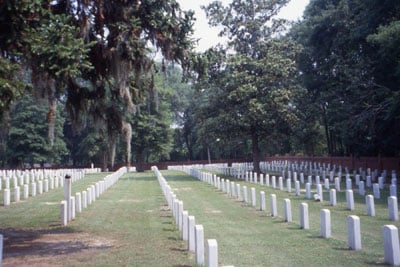
Florence National Cemetery entrance, South Carolina — the 1865 federal cemetery established on land adjacent to the Confederate Florence Stockade, where approximately 2,300 Union POWs are buried.
Cemetery / Burial Ground

Florence National Cemetery

Florence, SC

Florence National Cemetery was established in 1865 on land adjacent to the Confederate Florence Stockade prison, which had held as many as 18,000 Union prisoners of war between September 1864 and February 1865. Approximately 2,300 died and were buried in 16 mass trenches that are now preserved within the cemetery grounds. Among those interred is Florena Budwin, who had entered the Union Army disguised as a male soldier and died at Florence in February 1865; she is widely recognized as the first woman buried in a national cemetery.

$ All Ages Family: High
Florence National Cemetery, South Carolina — the grounds encompassing the former 1864 Confederate stockade where 2,802 Union prisoners are buried.
Prison / Reformatory

Florence Stockade (Confederate States Military Prison)

Florence, SC

The Florence Stockade was a Confederate open-air prison constructed in September 1864, built using enslaved labor on land near Florence, South Carolina. It held as many as 18,000 Union prisoners of war during its five-month operation. Approximately 2,802 prisoners died from disease, malnutrition, and exposure. Their remains were interred in mass trenches that are now preserved as Florence National Cemetery, listed on the National Register of Historic Places in 1980.

$ All Ages Family: High

Greenwood — 2

Aerial survey view of Brewer Middle School
Aerial survey · USDA NAIP
Other Dark Tourism Site

Brewer Middle School

Greenwood, SC

Brewer Middle School serves the Greenwood 50 School District in Greenwood County, South Carolina, educating students in grades 6-8. The school's gymnasium is a standard institutional facility hosting athletics, assemblies, and student activities. The school's documented history as an educational institution spans decades of community service.

$ All Ages (exterior viewing only) Family: Moderate
Aerial survey view of Rock Presbyterian Church Cemetery
Aerial survey · USDA NAIP
Cemetery / Burial Ground

Rock Presbyterian Church Cemetery

Greenwood, SC

Rock Presbyterian Church Cemetery in Greenwood County holds over 150 interments, with the oldest graves belonging to the Blake and Buchanan families dating to the mid-1800s. The cemetery is affiliated with a historic Scots-Irish Presbyterian congregation, one of several established in the South Carolina backcountry during the colonial period.

$ All Ages Family: High

Hilton Head Island — 2

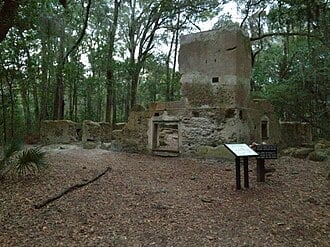
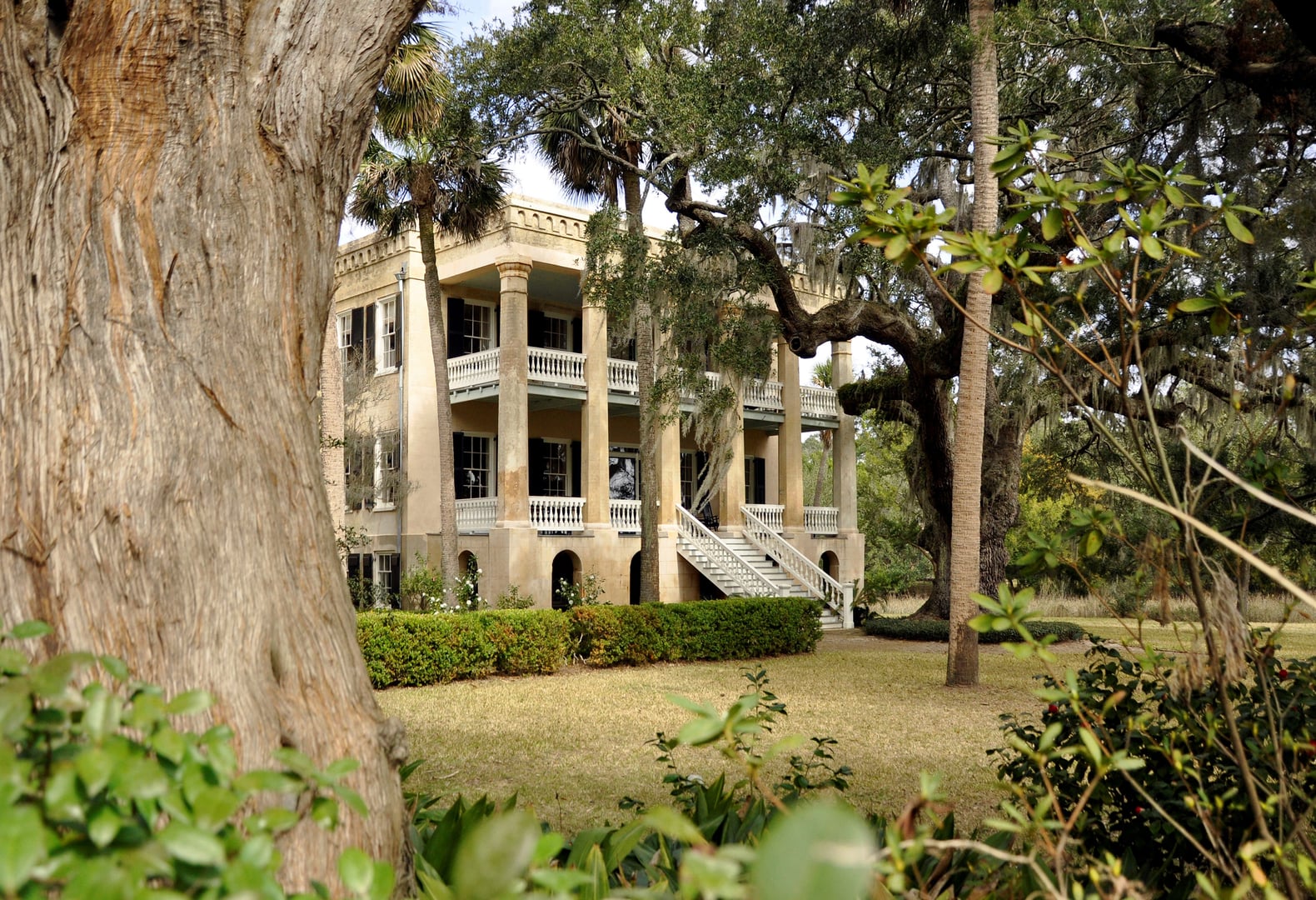
Tabby ruins of plantation main house under live oaks on Hilton Head Island
Outdoor / Natural Site

Stoney-Baynard Plantation Ruins

Hilton Head Island, SC

The Stoney-Baynard Plantation ruins on Hilton Head Island are the surviving tabby walls of a 1793 main house built by Revolutionary War captain Jack Stoney as part of the Braddock's Point Plantation. The Bank of Charleston sold the property to William E. Baynard in 1845; the plantation was raided and used as a Union headquarters during the Civil War before being burned.

$ All Ages Family: High
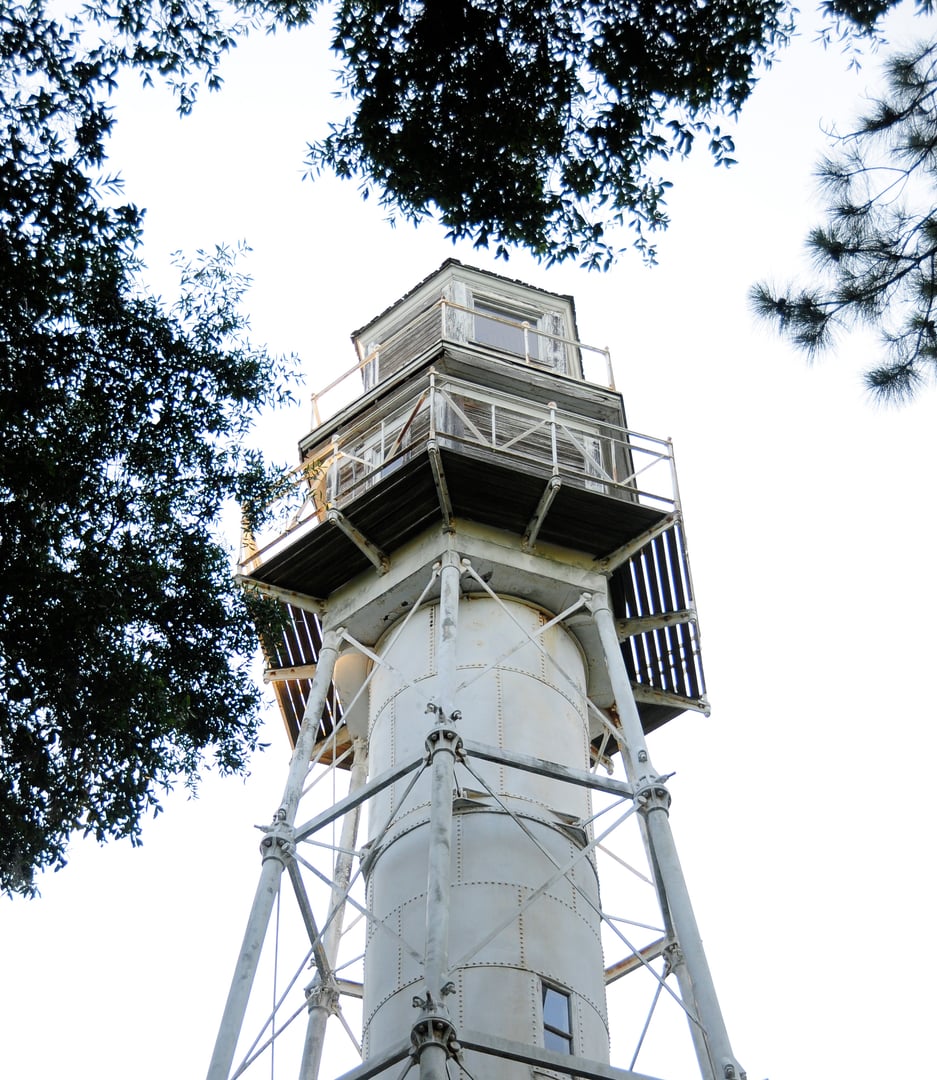
Skeletal-framed Hilton Head Rear Range Light (Leamington Lighthouse) at Palmetto Dunes, South Carolina
Outdoor / Natural Site

The Old Lighthouse (Hilton Head Rear Range Light)

Hilton Head Island, SC

The Hilton Head Rear Range Light, also called the Leamington Lighthouse, is a skeletal-framed lighthouse on Hilton Head Island, South Carolina. It is the island's only true working-era lighthouse and is preserved at Palmetto Dunes Oceanfront Resort, distinct from the better-known faux Harbour Town Lighthouse.

$ All Ages Family: High

Mount Pleasant — 2

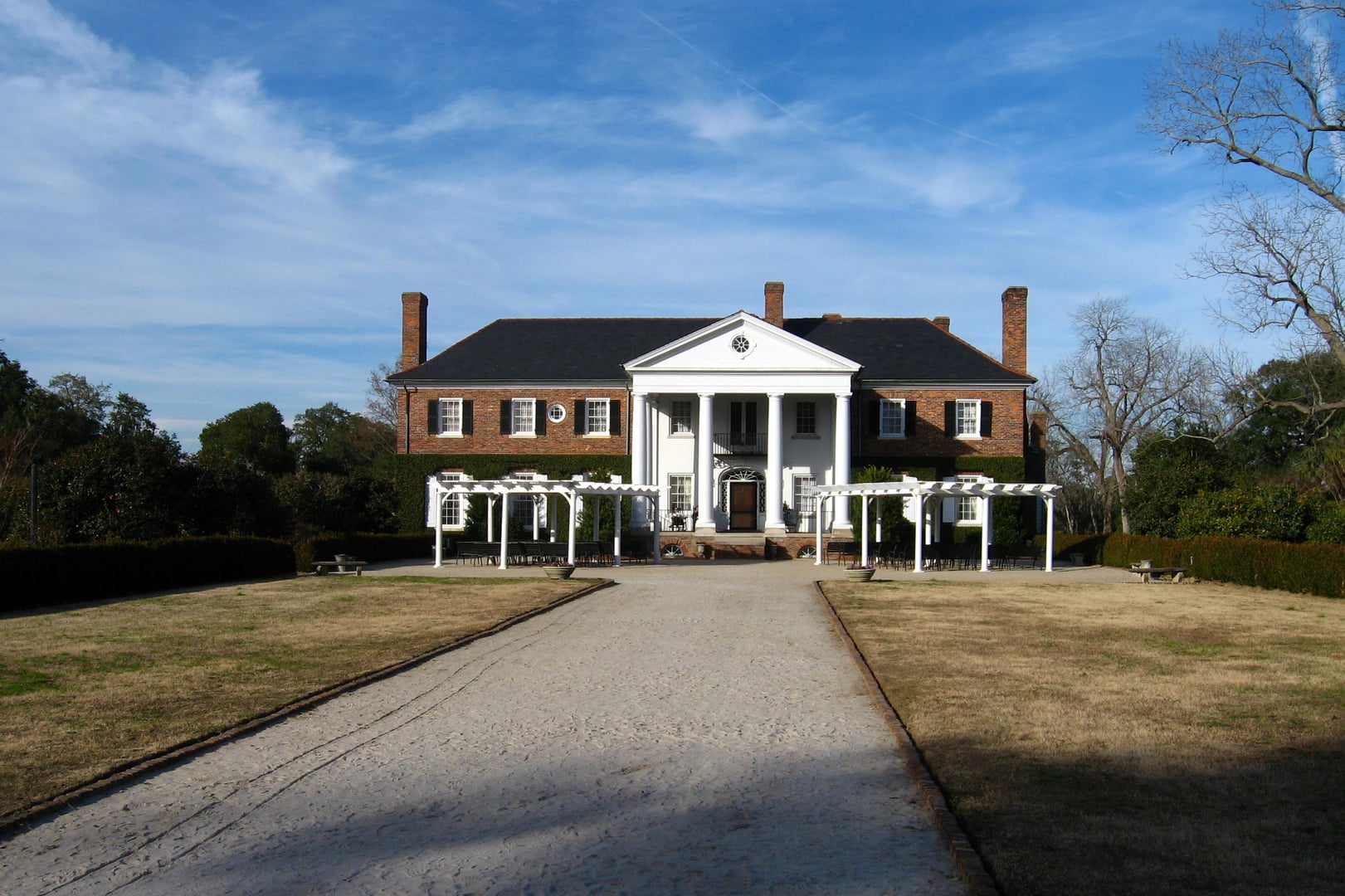
Brick plantation house at historic Boone Hall Plantation in Mount Pleasant South Carolina
Haunted House / Historic Home

Boone Hall Plantation

Mount Pleasant, SC

Boone Hall Plantation was founded in 1681 by Major John Boone and developed into America's oldest continuously operating plantation. The 738-acre estate originally produced rice using enslaved labor. In the 19th century, the plantation shifted to producing bricks and clay products through dangerous kiln operations that claimed many lives. The property has remained active through the present day.

$$ All Ages Family: Moderate
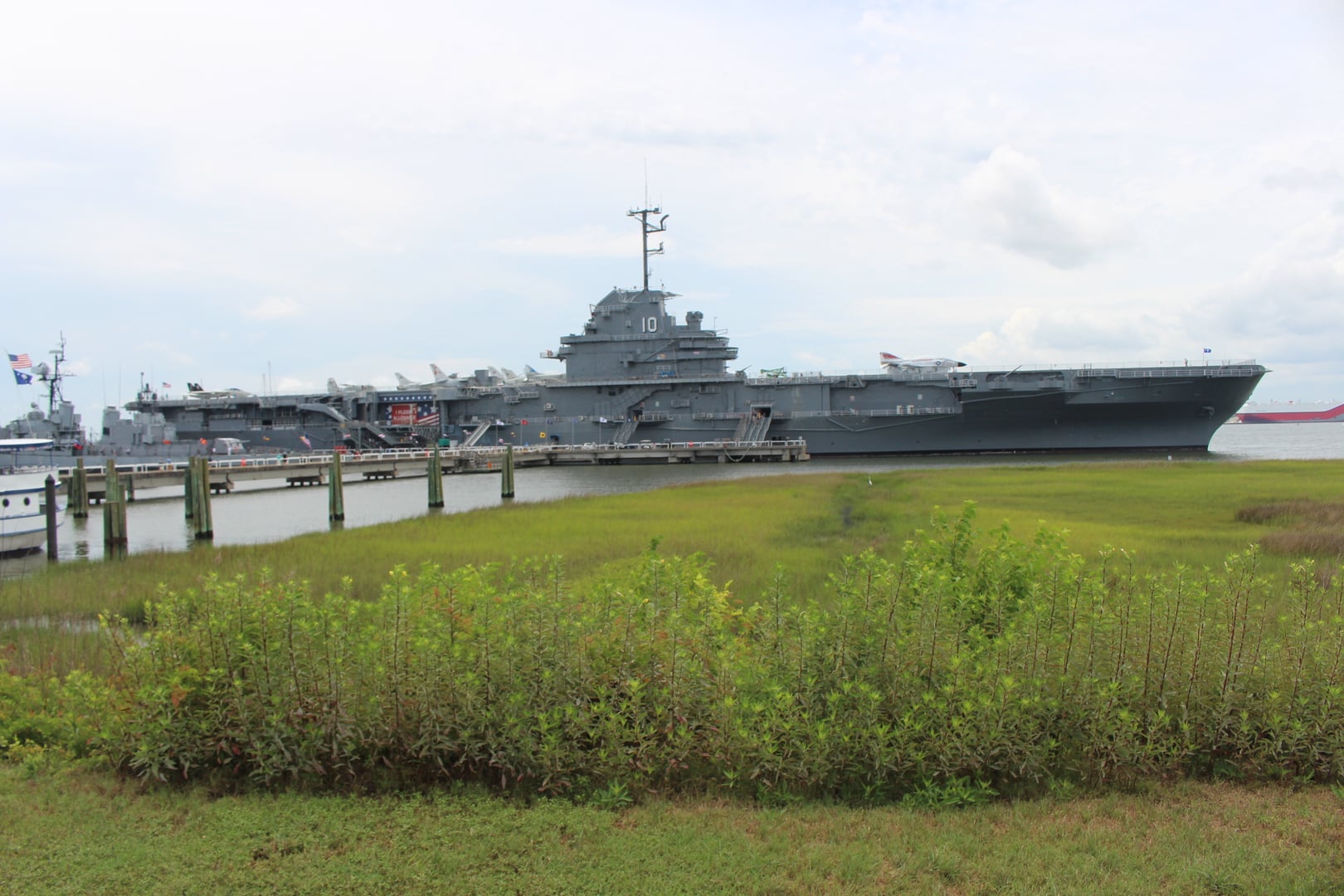
USS Yorktown (CV-10) Essex-class aircraft carrier preserved as a museum ship at Patriots Point, Mount Pleasant, South Carolina
Museum / Historical Site

USS Yorktown (CV-10)

Mount Pleasant, SC

USS Yorktown (CV-10) is an Essex-class aircraft carrier commissioned in April 1943. The carrier earned eleven battle stars in the Pacific campaign of World War II and an additional five battle stars during the Vietnam War. Yorktown was decommissioned in 1970 and donated to South Carolina in 1974; she opened to the public at Patriots Point in Mount Pleasant in 1975.

$$ All Ages (some night programs age-restricted) Family: Moderate

Pawleys Island — 2

All Saints Episcopal Church on the Waccamaw Neck near Pawleys Island, South Carolina, home parish of the Flagg family cemetery and Alice Flagg's grave marker
Cemetery / Burial Ground

Alice Flagg's Grave at All Saints Cemetery

Pawleys Island, SC

All Saints Waccamaw Parish was established in 1737 as the Anglican parish for the Waccamaw Neck rice planters of coastal South Carolina. The cemetery contains burials from prominent antebellum planting families, including the Flagg family — whose youngest daughter Alice, died of fever in 1849, has become the subject of South Carolina's most-visited folklore gravesite.

$ All Ages Family: High
The Pelican Inn on Pawleys Island, South Carolina, an 1840s beachfront inn built with cypress and hand-cut nails behind the island's highest dune
Haunted Hotel / Inn

The Pelican Inn

Pawleys Island, SC

The Pelican Inn on Pawleys Island, South Carolina, was built in the 1840s as the summer residence of Plowden Charles Jenrette Weston, owner of the Hagley Plantation on the Waccamaw River. Constructed of cypress lumber with wooden pegs and hand-cut nails, the structure has survived Hurricane Hazel (1954) and Hurricane Hugo (1989) intact, aided by its position behind the highest dune on the island. Current owners Corinne and Bruce purchased it in 2009. The inn operates as an eight-room beachfront bed and breakfast.

$$ All Ages; note all guest rooms are upstairs — no elevator Family: Moderate

Beech Island — 1

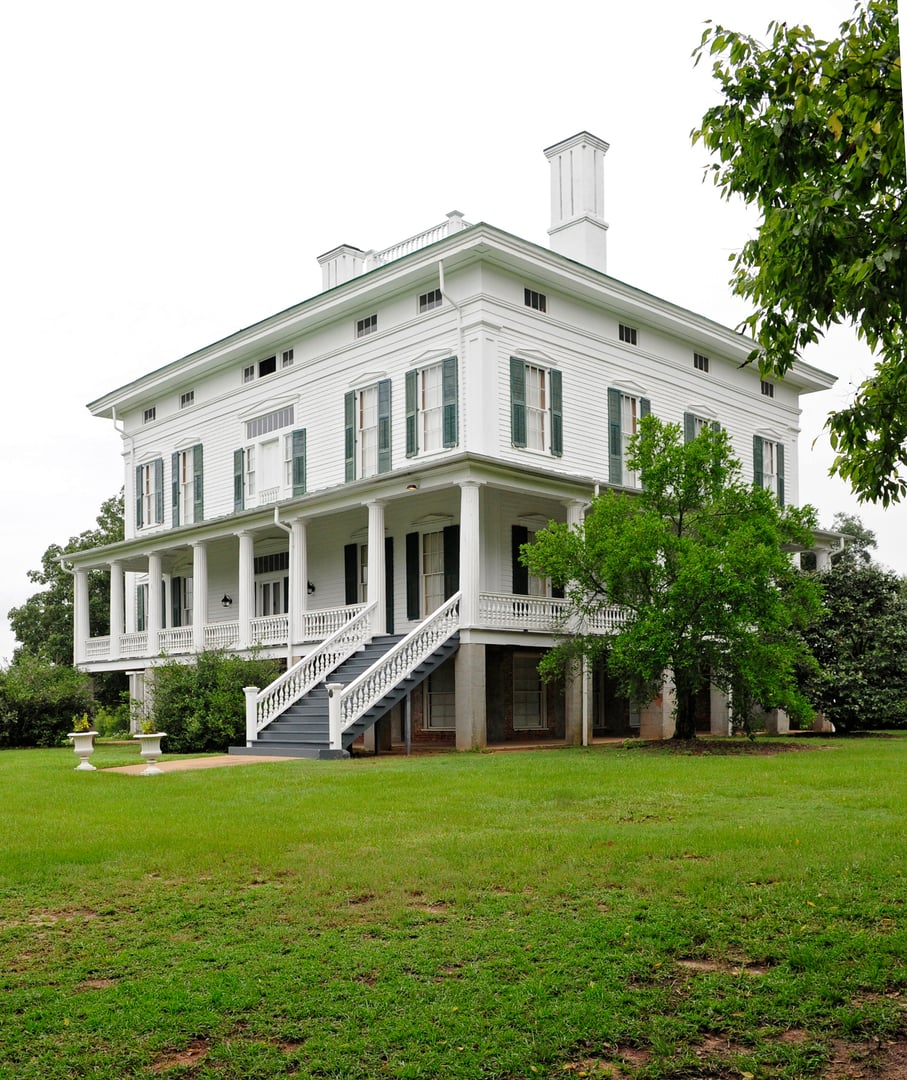
Redcliffe Plantation antebellum mansion exterior, Beech Island South Carolina
Museum / Historical Site

Redcliffe Plantation State Historic Site

Beech Island, SC

Redcliffe was built between 1857 and 1859 for South Carolina governor and U.S. senator James Henry Hammond. The transitional Greek Revival mansion served as the residence of three generations of the Hammond family before being donated to the state in 1973 by Hammond's great-grandson, John Shaw Billings, the managing editor of Time and Life magazines.

$$ All Ages Family: Moderate

Bennettsville — 1

Aerial survey view of Colonel Kolb's Tomb
Aerial survey · USDA NAIP
Battlefield / Military Site

Colonel Kolb's Tomb

Bennettsville, SC

Colonel Abel Kolb commanded the Pee Dee Regiment under General Francis Marion during the Revolutionary War. On the night of April 26–27, 1781, Tory raiders descended on his property in Marlboro County. Kolb was shot while surrendering on his own porch as his home burned around him.

$ All Ages Family: High

Cayce — 1

Aerial survey view of Busbee Middle School
Aerial survey · USDA NAIP
Other Dark Tourism Site

Busbee Middle School

Cayce, SC

Cyril B. Busbee Middle School (now Cyril B. Busbee Creative Arts Academy) is a public magnet school in Cayce, South Carolina, serving grades 6-8 as part of the Lexington County School District Two. The school specializes in arts-based education while maintaining traditional academic curriculum. The facility includes multiple instructional pods, including E-pod where the alleged accident occurred.

$ All Ages (exterior viewing only) Family: Moderate

Cheraw — 1

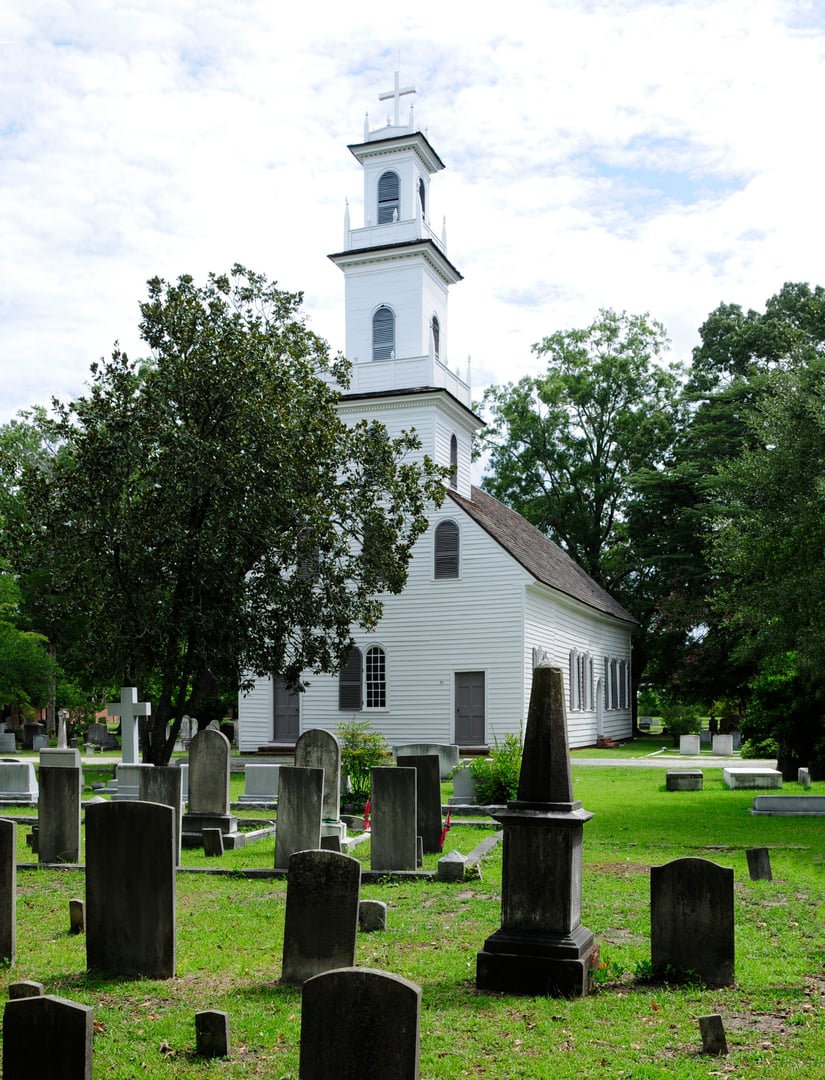
Photo of St. David's Episcopal Church and Cemetery
Cemetery / Burial Ground

St. David's Episcopal Church and Cemetery

Cheraw, SC

Construction of St. David's began in 1768 and was completed in 1774, making it the last Anglican parish established in South Carolina under the authority of King George III. The building served as a hospital for soldiers of both sides during the Revolutionary War and again during the Civil War. A mass grave at the front of the church holds British Highlanders who died of chicken pox during the Revolution.

$ All Ages Family: High

Clinton — 1

Aerial survey view of Lydia Mill Ruins
Aerial survey · USDA NAIP
Outdoor / Natural Site

Lydia Mill Ruins

Clinton, SC

Lydia Mill operated as a cotton mill in Clinton, South Carolina, with origins in the early 20th century. The mill, like many in the upstate Piedmont, supported a small village of worker housing on its grounds. The mill is no longer in operation and the surviving ruins sit adjacent to active railroad tracks.

$ All Ages Family: Moderate

Conway — 1

Aerial survey view of Lucas Bay Light
Aerial survey · USDA NAIP
Outdoor / Natural Site

Lucas Bay Light

Conway, SC

The Lucas Bay Light was a documented mystery light phenomenon observed along what is now Gilbert Road in Horry County, South Carolina for decades before approximately 1996. Following SCDOT road construction in the Lucas Bay area around that time, reports of the light ceased. The road was renamed as part of the same infrastructure work — what was Lucas Bay Road is now Gilbert Road, and the name Lucas Bay Road now applies to a different local road.

$ All Ages Family: High

Cottageville — 1

Aerial survey view of Cottageville Cemetery
Aerial survey · USDA NAIP
Cemetery / Burial Ground

Cottageville Cemetery

Cottageville, SC

Cottageville Cemetery was established in the 19th century on donated land in Colleton County, with bodies reportedly relocated in the 1880s. The oldest known marked grave belongs to infant Daisy Eleanor Ackerman.

$ All Ages Family: High

Cross Hill — 1

Aerial survey view of Bethabara Baptist Church Cemetery
Aerial survey · USDA NAIP
Cemetery / Burial Ground

Bethabara Baptist Church Cemetery

Cross Hill, SC

Bethabara Baptist Church was founded in 1794 by Elders John Waller, Richard Shackleford, and David Lilly in the rural piedmont region of South Carolina. The accompanying cemetery contains 218 graves spanning generations, including burial sites from the Civil War period when this region saw significant military activity and loss.

$ All Ages Family: High

Darlington — 1

Aerial survey view of Montrose Cemetery — Lowther's Hill Cemetery
Aerial survey · USDA NAIP
Cemetery / Burial Ground

Montrose Cemetery — Lowther's Hill Cemetery

Darlington, SC

Montrose Cemetery — also known as Lowther's Hill Cemetery — was established in 1789 on the grounds of Mount Pleasant Baptist Church in Darlington County, South Carolina. A large entrance stone records the names and dates of burial of those interred. The cemetery was reportedly moved from its original location at some point in its history.

$ All Ages Family: Moderate

Effingham — 1

Aerial survey view of Tans Bay Baptist Church
Aerial survey · USDA NAIP
Other Dark Tourism Site

Tans Bay Baptist Church

Effingham, SC

The building now housing Tans Bay Baptist Church in Effingham, Florence County, served as a private residence and schoolhouse before its conversion to a church. The structure is a modest, rural Florence County building with no documented prominent history beyond local use. The legend attached to it centers on the death of an infant on the property.

$ All Ages Family: High

Gaffney — 1

True Crime Site

Leroy's Bridge

Gaffney, SC

Lee Roy Martin, known as the Gaffney Strangler, was a serial killer active in Cherokee County, South Carolina from 1967 to 1968, murdering four women and girls. One victim, Nancy Carol Parris, was found in shallow water near People's Creek bridge in Gaffney — a location that has since become locally known as Leroy's Bridge. Martin was arrested in February 1968, convicted on four counts of murder, and died in prison in 1972.

$ 18+ Family: Not Recommended

Hartsville — 1

Aerial survey view of Coker University Memorial Hall
Aerial survey · USDA NAIP
Other Dark Tourism Site

Coker University Memorial Hall

Hartsville, SC

Memorial Hall was constructed in 1913 as a dormitory on the campus of what was then Coker College (now Coker University) in Hartsville, Darlington County, South Carolina. The building is one of the older surviving structures on campus and has housed students continuously since it opened.

$ All Ages Family: High

Indian Land — 1

Aerial survey view of Devil's Stomping Ground (Hwy 521)
Aerial survey · USDA NAIP
Outdoor / Natural Site

Devil's Stomping Ground (Hwy 521)

Indian Land, SC

The Devil's Stomping Ground is a circular area of barren earth beside Highway 521 in the Indian Land area of Lancaster County, South Carolina. The location sits in territory historically occupied by the Waxhaw and Catawba peoples. The Waxhaw, believed by some historians to be a branch of the larger Catawba nation, were present in this area when European settlers arrived and later became extinct as a distinct tribe. Lancaster County's Indian Land community takes its name from the sustained Indigenous presence here long after surrounding areas were settled by Europeans.

$ All Ages Family: Moderate

Jacksonboro — 1

Aerial survey view of Jacksonboro Light (Parker's Ferry Road)
Aerial survey · USDA NAIP
Outdoor / Natural Site

Jacksonboro Light (Parker's Ferry Road)

Jacksonboro, SC

Parker's Ferry Road follows the route of a colonial-era crossing over the Edisto River in Colleton County, where in the late 19th century a local preacher searched for his missing daughter and was killed by a train near the tracks that once crossed the road.

$ All Ages Family: High

Johns Island — 1

Front elevation of the c.1730 Georgian brick Fenwick Hall plantation house on Johns Island, South Carolina
Haunted House / Historic Home

Fenwick Hall

Johns Island, SC

Fenwick Hall is a Georgian plantation house built around 1730 on Johns Island, South Carolina. The property was acquired by the Fenwick family, served as a British headquarters during the 1780 occupation of Charleston, and functioned as a hospital during the Civil War. From 1980 to 1995 it operated as Fenwick Hall Hospital, a private addiction treatment center.

$ All Ages Family: Moderate

Latta — 1

Aerial survey view of Bingham's Light
Aerial survey · USDA NAIP
Outdoor / Natural Site

Bingham's Light

Latta, SC

The Community of Bingham is a small rural settlement in Dillon County, SC, near Latta, centered historically around a railroad line that has since been pulled up. The Bingham's Light phenomenon has been reported in the area since at least the late 19th century. Local tradition associates it with a figure — known variously as John or Bill Bingham — who died on the railroad tracks, though the historical identity of this individual has not been independently documented.

$ All Ages Family: Moderate

Lockhart — 1

Aerial survey view of Lockhart Water Tower
Aerial survey · USDA NAIP
Outdoor / Natural Site

Lockhart Water Tower

Lockhart, SC

Lockhart, South Carolina is a small mill community in Union County whose founding was tied to the first Lockhart Mill, completed in 1894. The two-mile Lockhart Canal, originally completed in 1823 and designed by state architect Robert Mills, powers the Lockhart Power Company's hydroelectric facility. The water tower serving this mill community dates to the industrial infrastructure of that era.

$ All Ages Family: High

Lyman — 1

Open Graph image from www.spartanburgparks.org
Outdoor / Natural Site

Lyman Lake

Lyman, SC

Lyman Lake is a 350-acre reservoir on the Middle Tyger River in Spartanburg County, South Carolina. The dam was commissioned in 1955 for recreational purposes and is managed by the SJWD Water District. The public park at 200 Lyman Lodge Road provides fishing and boating access.

$ All Ages Family: High

Manning — 1

Manning SC Cemetery
Cemetery / Burial Ground

Manning Cemetery

Manning, SC

Manning Cemetery in Clarendon County, South Carolina is a rural roadside burial ground in the Santee Cooper Country region. No documented historical records specific to the cemetery were located in web research beyond its presence in Find a Grave records and local ghost story collections.

$ All Ages Family: High

Mayesville — 1

Salem Black River Presbyterian Church in Mayesville, South Carolina — founded 1759, with the current brick building dating to 1846, one of the oldest church structures in the state.
Other Dark Tourism Site

Salem Black River Presbyterian Church

Mayesville, SC

Salem Black River Presbyterian Church was founded in 1759 by Scots-Irish settlers in what is now Sumter County, South Carolina. The current brick church building dates to 1846 and is one of the oldest standing church structures in the state. It is listed on the National Register of Historic Places and remains an active congregation.

$ All Ages Family: High

McConnells — 1

Forested burial ground at Historic Brattonsville with markers for enslaved community members
Cemetery / Burial Ground

Enslaved Ancestral Burial Ground at Historic Brattonsville

McConnells, SC

The Enslaved Ancestral Burial Ground at Historic Brattonsville in York County, South Carolina, holds the remains of at least 481 people of African descent enslaved at the Bratton plantation. The cemetery was formally reconsecrated in February 2025 with markers placed at each documented grave. Watt, the enslaved man whose 1780 warning enabled the Patriot victory at the Battle of Huck's Defeat, is buried here.

$$ All Ages Family: Moderate

Murrells Inlet — 1

Haunted House / Historic Home

The Hermitage

Murrells Inlet, SC

The Hermitage in Murrells Inlet, South Carolina, was constructed in 1849 as the summer home of rice planter and Methodist minister James Lynch Belin. The property subsequently became the summer residence of Dr. Allard Belin Flagg, a physician whose sister Alice spent time at the house. The Hermitage is listed as a contributing property in the Murrells Inlet Historic District on the National Register of Historic Places. It is a private residence and is not open to public visits.

$ All Ages Family: High

Myrtle Beach — 1

Panoramic view of the Myrtle Beach oceanfront with sandy shoreline and resort towers along the South Carolina coast
Outdoor / Natural Site

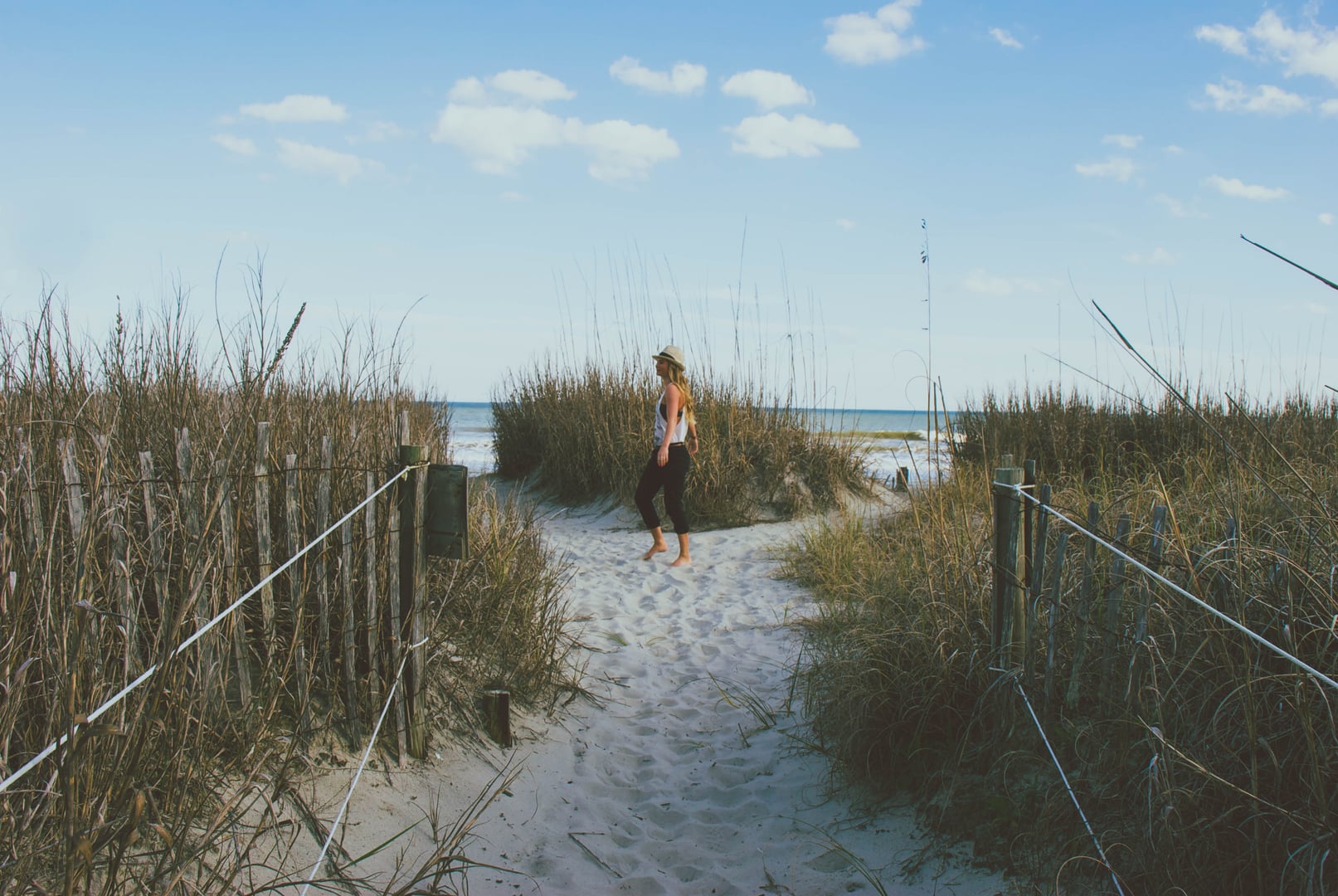
Myrtle Beach

Myrtle Beach, SC

Myrtle Beach has been a South Carolina resort destination since the early twentieth century, growing from a small community to one of the most-visited beaches on the East Coast. Its coastline and surrounding region carry centuries of maritime history — shipwrecks, pirate activity, lighthouse tragedies — that form the foundation for its substantial body of local ghost lore.

$ All Ages Family: High

Newberry — 1

True Crime Site

The Hound of Goshen (Old Buncombe Road)

Newberry, SC

The Hound of Goshen legend is attached to the historic Old Buncombe Road through the Goshen Hill section of Newberry County, South Carolina, an old route connecting Newberry and Union counties. The story is thought to have originated in the mid-1800s and is one of the most thoroughly documented ghost legends in the state, covered by South Carolina ETV, regional newspapers, and local historians.

$ All Ages Family: Moderate

Parris Island — 1

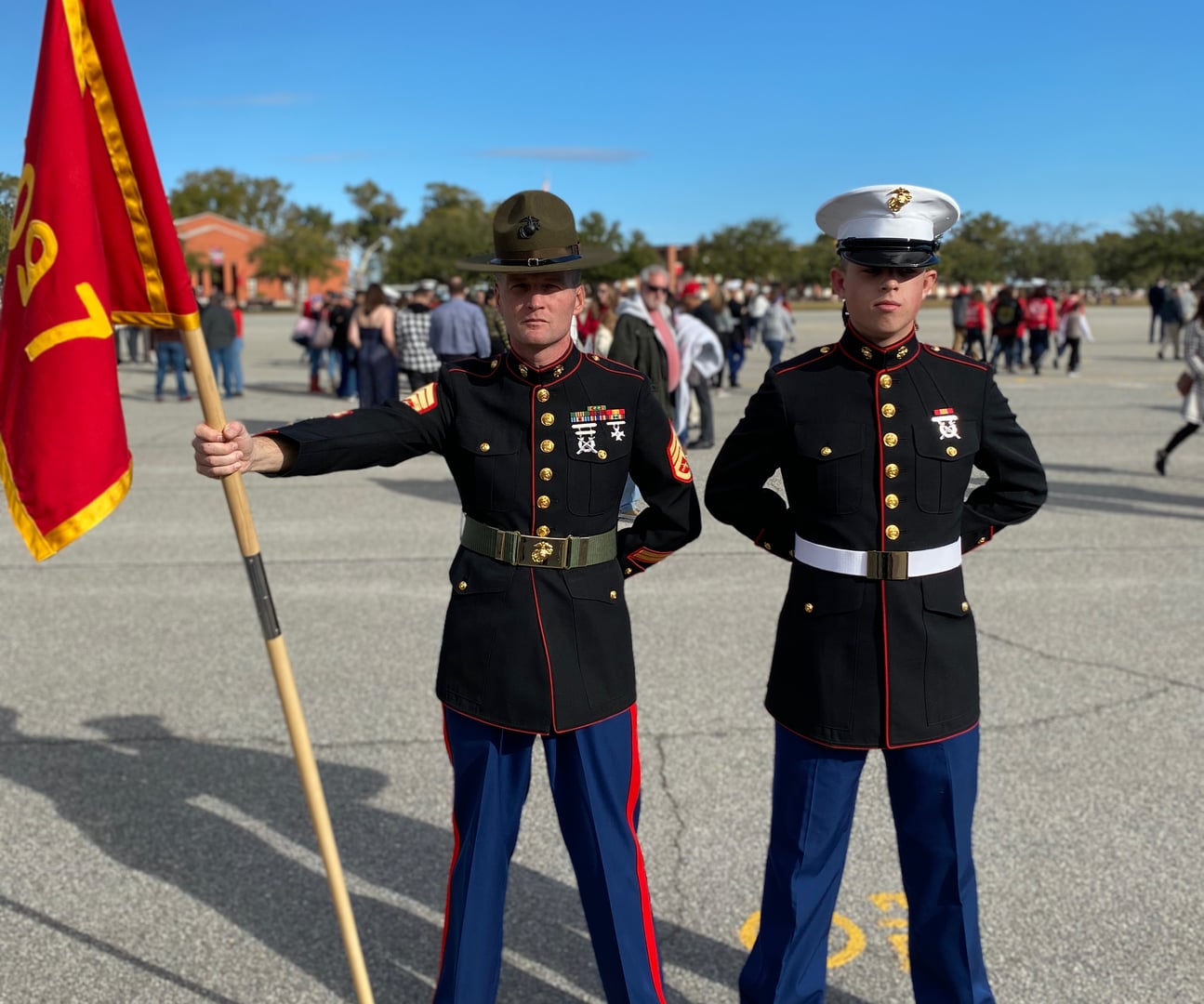
A new Marine stands with his Drill Instructor on graduation day at Parris Island. Charlie Company, Platoon 1097, December 6th, 2019.
Battlefield / Military Site

Marine Corps Recruit Depot Parris Island

Parris Island, SC

Marine Corps Recruit Depot Parris Island, established in 1915 on a South Carolina sea island, has trained Marine recruits for over a century. On April 8, 1956, Staff Sergeant Matthew McKeon marched his 74-man Platoon 71 into Ribbon Creek — a tidal swamp creek — at night. Six recruits drowned. McKeon was court-martialed and convicted of negligent homicide.

$ All Ages Family: High

Pickens — 1

Prison / Reformatory

Old Pickens County Jail (Pickens County Museum of Art and History)

Pickens, SC

Built in 1903 as a two-story crenellated brick jail and expanded in 1928, the Old Pickens County Jail served Pickens County, South Carolina for most of the twentieth century before being repurposed as an art and history museum. The building was listed on the National Register of Historic Places in 1979.

$ All Ages Family: High

Plantersville — 1

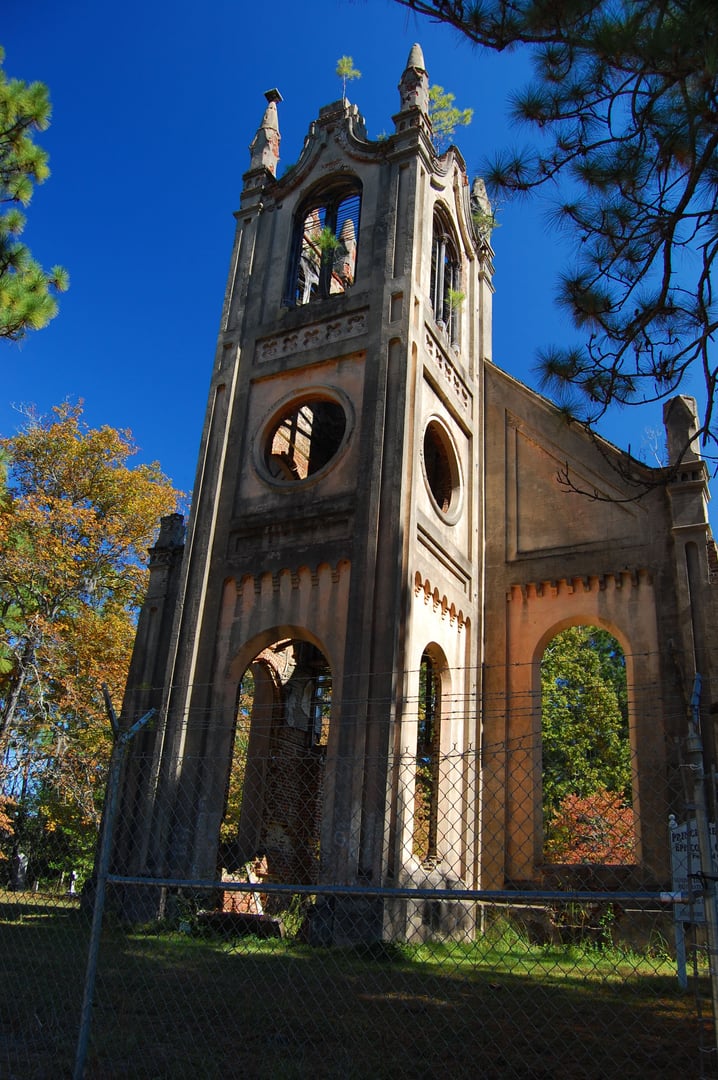
The ruins of Prince Frederick's Chapel near Plantersville in Georgetown County, South Carolina
Cemetery / Burial Ground

Prince Frederick's Chapel Ruins

Plantersville, SC

Prince Frederick's Chapel Ruins in Plantersville, South Carolina are the surviving wall and tower of a Gothic Revival church begun in 1859, interrupted by the Civil War, and completed in 1876. The chapel served Pee Dee River rice planters until the decline of the rice economy and was demolished in 1966. The ruins were listed on the National Register of Historic Places in 1974.

$ All Ages Family: High

Saint Helena Island — 1

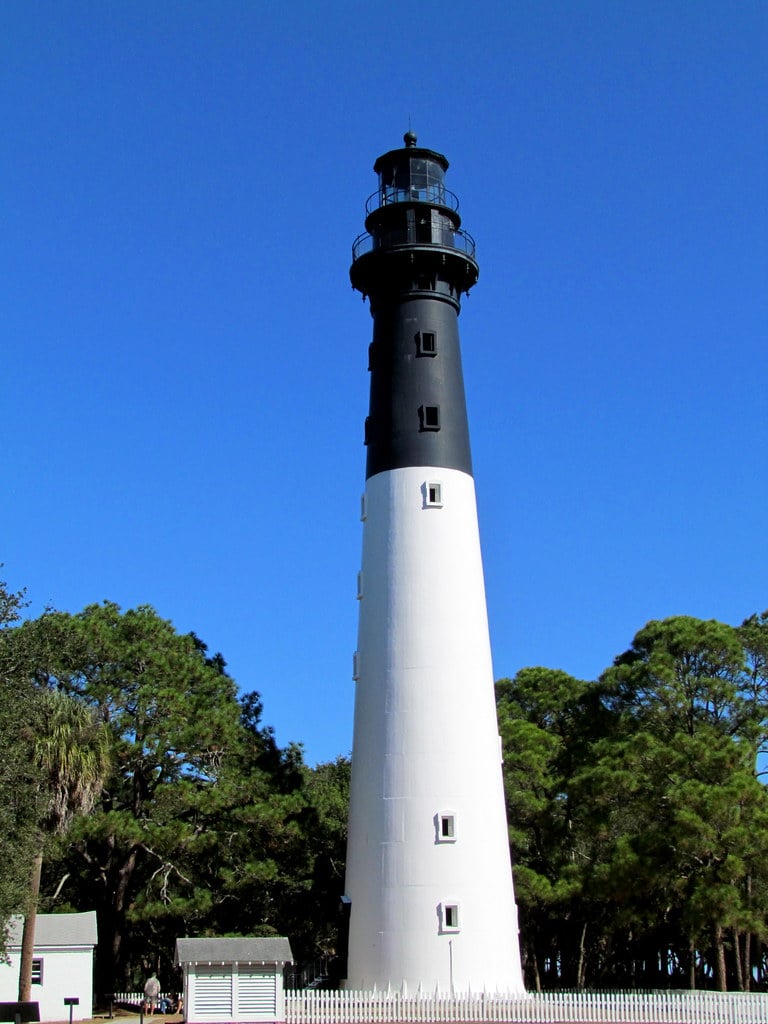
Photo of Hunting Island Lighthouse
Museum / Historical Site

Hunting Island Lighthouse

Saint Helena Island, SC

Hunting Island Lighthouse stands in a South Carolina sea island state park as the state's only publicly accessible lighthouse. The original 1859 brick structure was destroyed by Confederate forces in 1861 to obstruct Union navigation. The current cast-iron tower was built in 1875 at the island's southern tip, then physically relocated 1.25 miles inland in 1889 when beach erosion threatened to undermine it — one of the earliest lighthouse relocations in U.S. history. It was decommissioned in 1933.

$$ All Ages Family: Low

St. Helena Island — 1

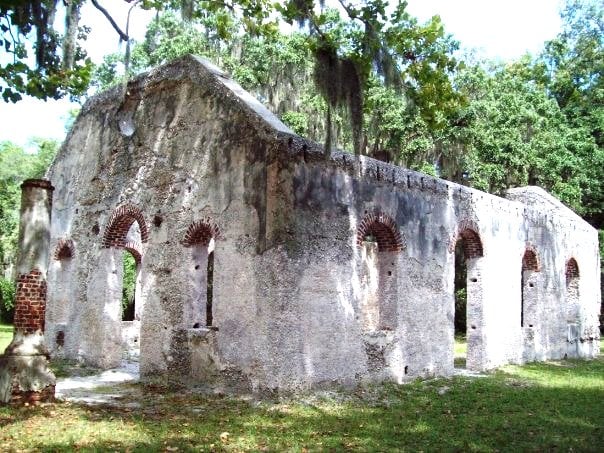
Photo of St. Helena Parish Chapel of Ease Ruins
Outdoor / Natural Site

St. Helena Parish Chapel of Ease Ruins

St. Helena Island, SC

Built around 1740 in tabby construction to serve plantation families on St. Helena Island who found the town church too far to attend weekly, the Chapel of Ease functioned until Union troops occupied the Beaufort area in 1861. Abandoned during the occupation, it burned in an 1886 forest fire. The adjacent Fripp family mausoleum, where Edgar and Eliza Fripp were interred in 1852, was broken open by Union soldiers seeking treasure. The brick seal placed over the ruined door was found removed the following day; when replaced, it was removed again. The job was abandoned.

$ All Ages Family: Moderate

Stateburg — 1

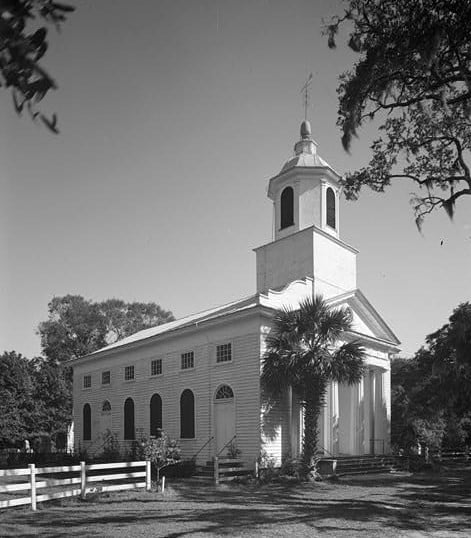
Church of the Holy Cross in Stateburg, South Carolina — a rare Gothic Revival rammed-earth structure completed in 1852 on land donated by General Thomas Sumter's family.
Cemetery / Burial Ground

Church of the Holy Cross Cemetery

Stateburg, SC

The Church of the Holy Cross in Stateburg, South Carolina, was built between 1850 and 1852 on land donated by General Thomas Sumter. It is a rare surviving example of Gothic Revival rammed-earth construction — a technique using compacted soil walls — and is listed on the National Register of Historic Places. The adjoining cemetery contains Civil War-era interments, including Confederate soldiers.

$ All Ages Family: High

Tigerville — 1

Aerial survey view of New Salem Baptist Church Cemetery
Aerial survey · USDA NAIP
Cemetery / Burial Ground

New Salem Baptist Church Cemetery

Tigerville, SC

New Salem Baptist Church Cemetery in Tigerville, South Carolina holds more than 100 interments, with the earliest dating to the early twentieth century. The cemetery is associated with an African American Baptist congregation on Highway 414 in Greenville County.

$ All Ages Family: Moderate

Travelers Rest — 1

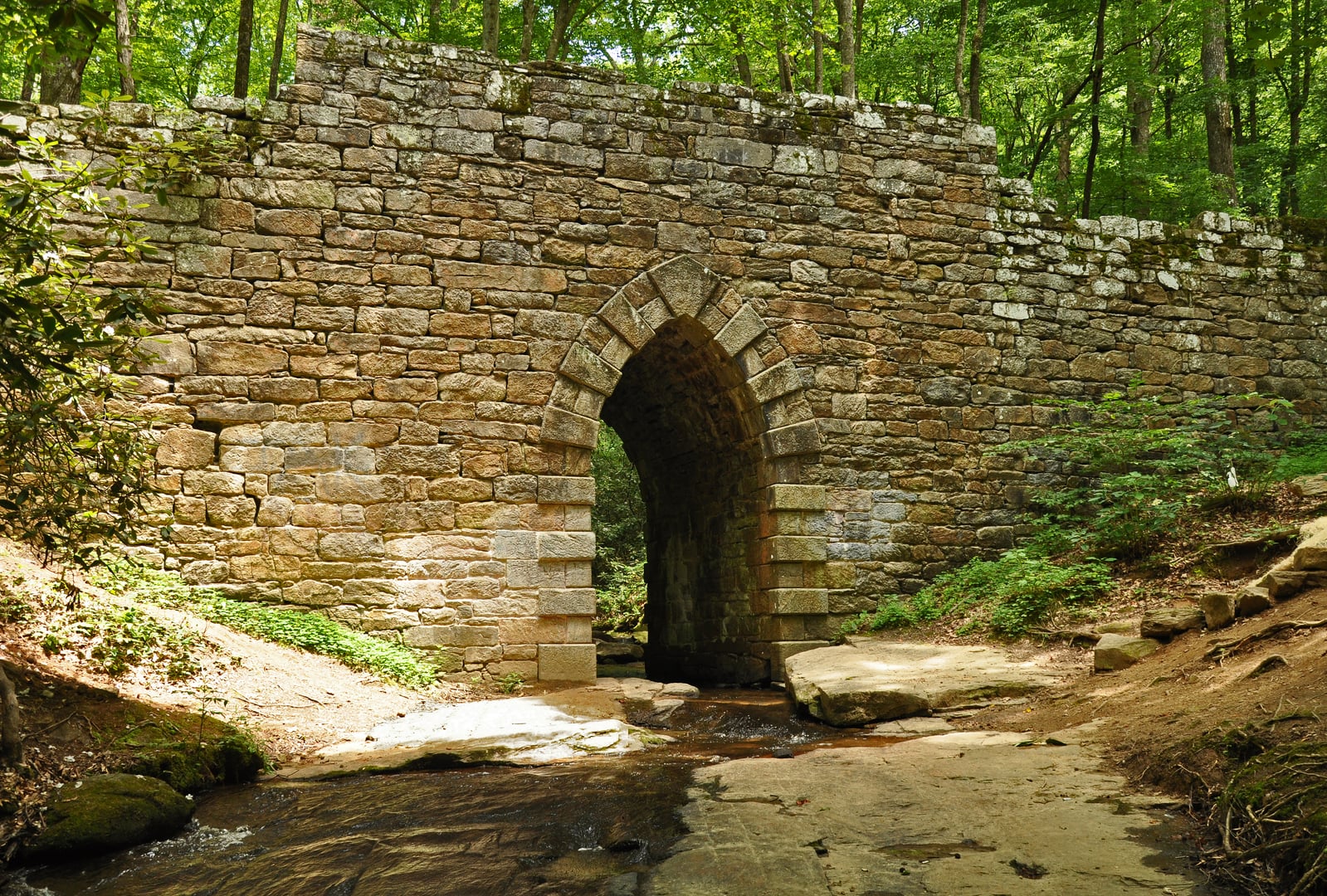
Gothic stone arch of Poinsett Bridge over Little Gap Creek in Greenville County SC
Outdoor / Natural Site

Poinsett Bridge

Travelers Rest, SC

Constructed in 1820, Poinsett Bridge is the oldest surviving stone bridge in South Carolina and potentially the oldest in the southeastern United States. The 130-foot Gothic-arch span over Little Gap Creek was built as part of the State Road connecting Columbia to the North Carolina mountains, named for Joel Roberts Poinsett, then-president of the state Board of Public Works. Added to the National Register of Historic Places in 1970, it is now the centerpiece of the 400-acre Poinsett Bridge Heritage Preserve managed by SC DNR.

$ All Ages Family: Moderate

West Columbia — 1

Aerial survey view of Airport High School
Aerial survey · USDA NAIP
Other Dark Tourism Site

Airport High School

West Columbia, SC

Airport High School was constructed and opened in 1958 in West Columbia, South Carolina, initially as Airport Junior High School to accommodate rising student enrollment in the district. The school operated as a junior high before later transitioning to a full secondary institution. The red brick modernist structure reflects post-war educational expansion in the Midlands region.

$ All Ages (exterior viewing only) Family: High

Westminster — 1

Aerial survey view of Lonely Bridge
Aerial survey · USDA NAIP
Outdoor / Natural Site

Lonely Bridge

Westminster, SC

The bridge near Westminster in Oconee County, South Carolina sits adjacent to a former sawmill site over a creek. Local accounts state that a woman drowned in the water below the bridge in the late 1950s. The site is known regionally as Lonely Bridge and is included in South Carolina paranormal folklore collections.

$ All Ages Family: Moderate

Whitmire — 1

Aerial survey view of Molly's Rock Picnic Area
Aerial survey · USDA NAIP
Outdoor / Natural Site

Molly's Rock Picnic Area

Whitmire, SC

Molly's Rock Picnic Area is a day-use recreation site within the Sumter National Forest in Newberry County, South Carolina. The picnic shelter was built by the Civilian Conservation Corps between 1936 and 1942. The site was originally the Suber Recreation Area and was renamed to honor the local Molly's Rock landmark.

$ All Ages Family: High

By type