Est. 1842 · Listed on the National Register of Historic Places · Neo-Gothic design consecrated 1860 · Contains Civil War-era family plots and Confederate-period graves · Active Episcopal congregation in Abbeville, SC
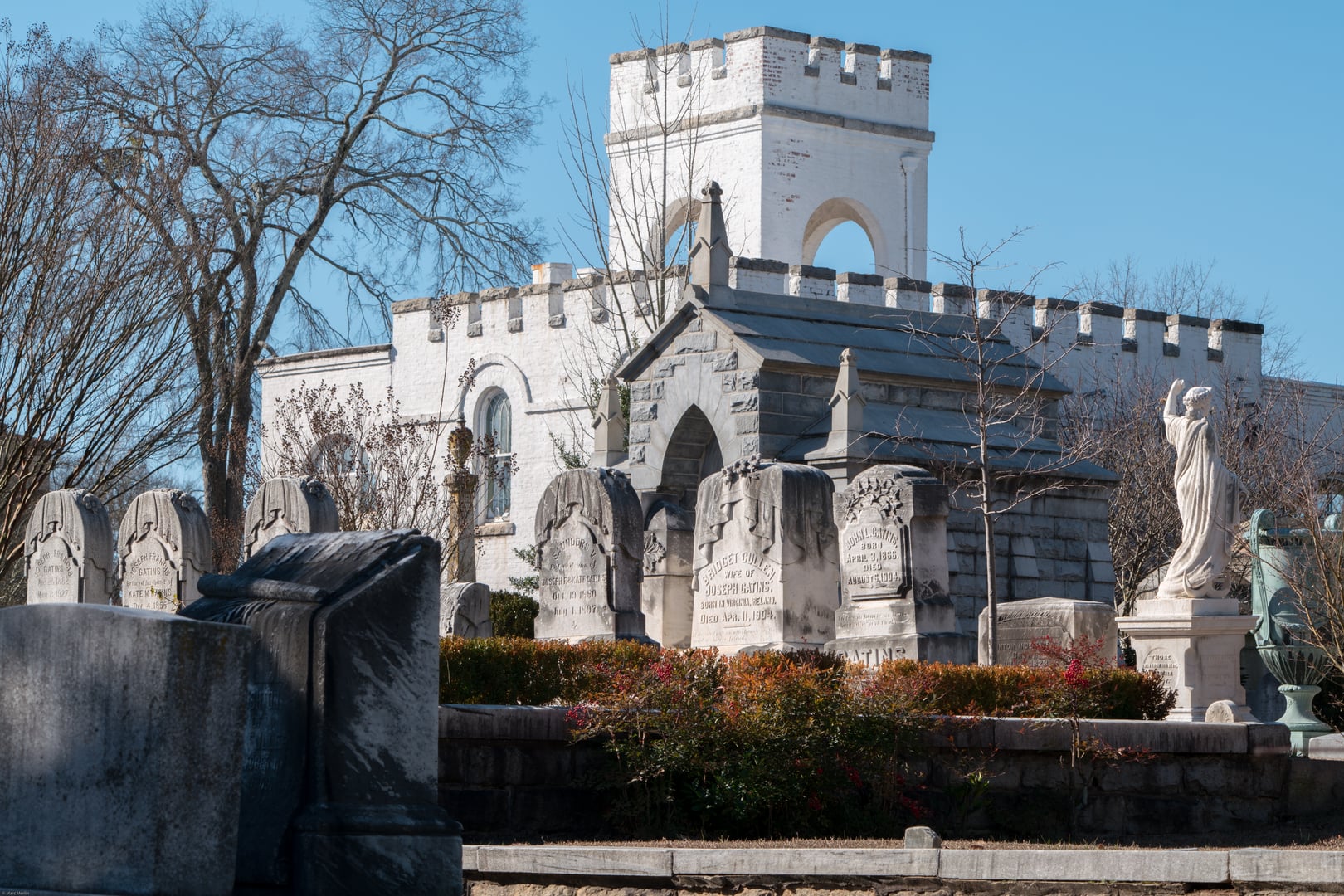
Trinity Episcopal Church in Abbeville, South Carolina was constructed in 1842 and consecrated in 1860. The building was designed in the neo-Gothic style characteristic of mid-19th century Episcopal architecture in the South, featuring pointed arch windows, a bell tower, and a churchyard cemetery that accumulated generations of Abbeville County families. Wikipedia's article on the church confirms the 1842 construction date, the National Register of Historic Places listing, and the building's significance within the town's antebellum development.
The congregation at Trinity Episcopal was closely tied to Abbeville's planter and merchant class before and during the Civil War. Abbeville itself holds a historically charged position as the location where the Confederacy was said to have been born — a secession meeting was held there in 1860 — and where Confederate President Jefferson Davis met with generals in 1865 in what is sometimes called the 'Last Council of the Confederacy.'
The cemetery adjacent to the church contains the graves of prominent Abbeville County families, including Civil War-era soldiers and their relatives. The church remains an active Episcopal congregation today.
Sources
- https://en.wikipedia.org/wiki/Trinity_Episcopal_Church_and_Cemetery
- https://www.drugstoredivas.net/haunted-abbeville-south-carolina/
- https://www.haunts.us/investigations/haunts/3299/
Female apparition in 19th-century dress weeping in front pewUnexplained sobbing sounds in empty sanctuary
The haunting at Trinity Episcopal Church centers on a female apparition described consistently as a small woman in 19th-century dress, seated in the front pew in a posture of grief. Witnesses across independent accounts describe her weeping silently and, in some cases, report hearing faint sobbing sounds in the empty sanctuary that cannot be traced to any source.
Local legend identifies this figure as Elizabeth Marshall, a widow associated with the congregation during the Civil War period. The narrative holds that her husband died at the Second Battle of Manassas in August 1862 and that she later lost a young son to mob violence — a doubly tragic account that would explain a grief-haunted presence. These specific biographical details are sourced from accounts documented in regional travel writing (drugstoredivas.net) and have not been independently confirmed against historical records for this build; the name Elizabeth Marshall and the specific circumstances are treated as legend-tradition attribution.
The church's paranormal investigation listing on haunts.us corroborates the general haunting claim in Abbeville.
Notable Entities
Elizabeth Marshall (named in tradition as Civil War-era widow)