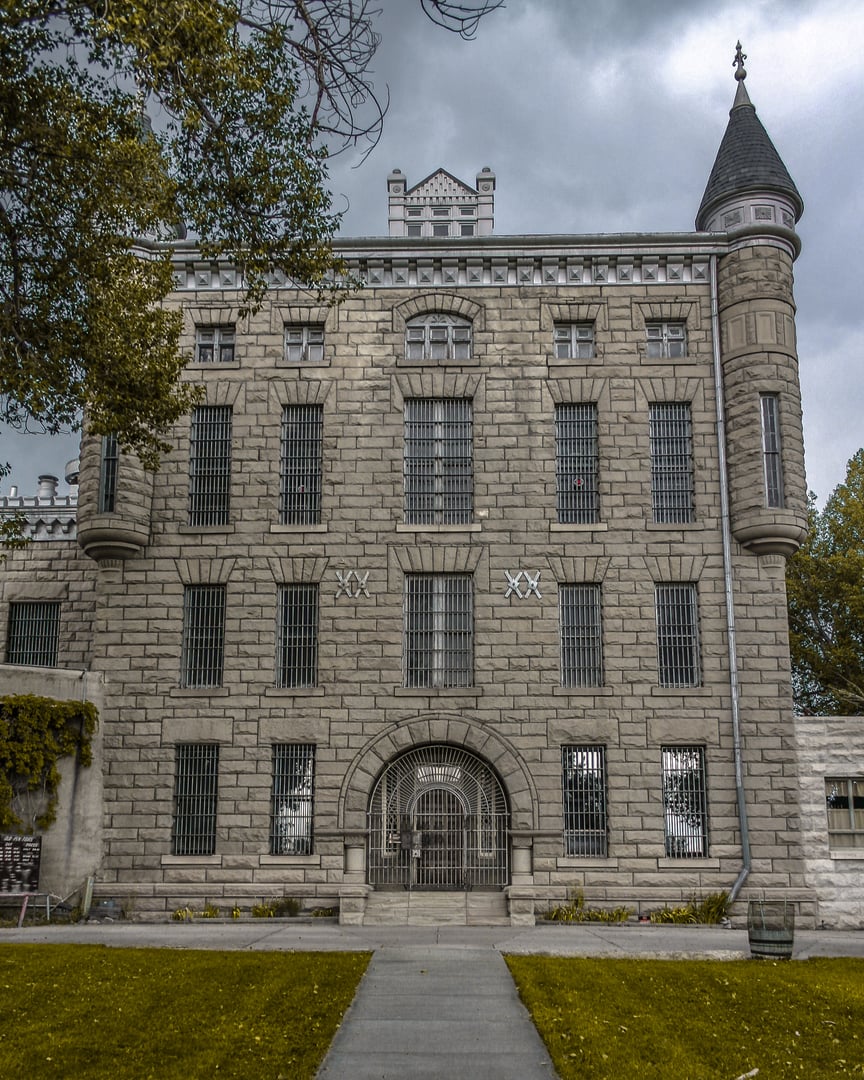
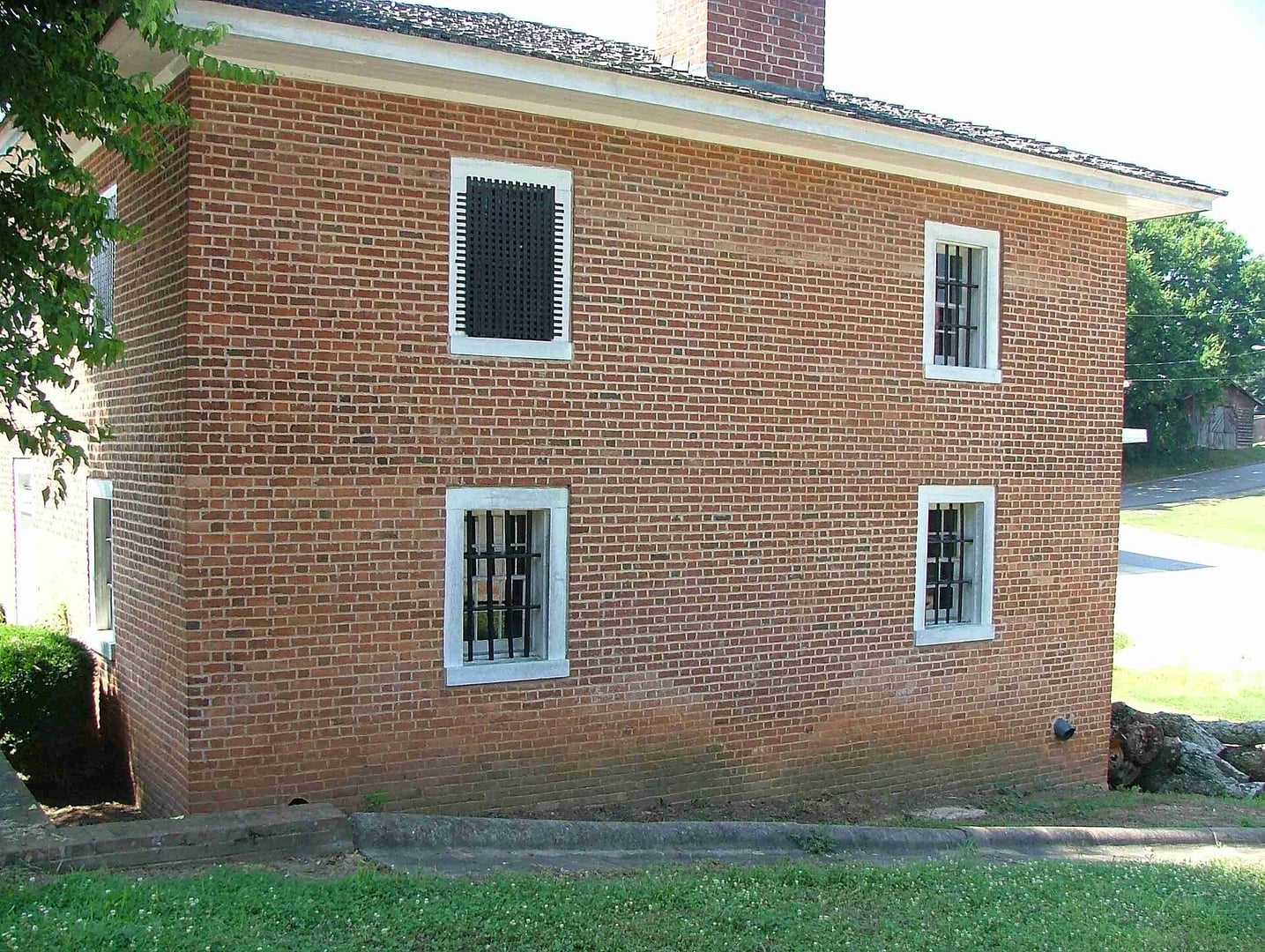
Est. 1903 · Constructed 1903 as a two-story crenellated brick county jail · Expanded 1928; served Pickens County for most of the twentieth century · Listed on the National Register of Historic Places (1979) · Now operated as Pickens County Museum of Art and History
The Old Pickens County Jail was completed in 1903 on Johnson Street in downtown Pickens, South Carolina. The two-story brick structure was built in a crenellated style — with notched battlements along the roofline — that was fashionable for institutional buildings in the late Victorian and Edwardian era and served both functional and symbolic purposes, communicating the authority of county government. An addition expanded the facility in 1928.
The building operated as the county's primary detention facility for decades, housing inmates awaiting trial and serving county sentences under the administration of successive county sheriffs. As with most Southern county jails of the period, it was the site of the full range of criminal proceedings in the county, and the conditions inside reflected the limited resources and oversight typical of small-county detention.
In 1979, the Old Pickens County Jail was listed on the National Register of Historic Places, recognizing its architectural integrity and its role in the county's institutional history. The building was subsequently adapted for use as the Pickens County Museum of Art and History, which currently occupies the structure. The museum maintains the original cell corridor and architectural features while hosting art exhibitions and local history collections. The crenellated facade remains intact and is the building's most distinctive exterior feature.
Sources
- https://en.wikipedia.org/wiki/Old_Pickens_Jail
- https://www.pickensmuseum.com/
Disembodied voice pleading innocence in cell blocksShadowy figures seen at windows from outside and insideGeneral atmospheric unease in original cell corridors
Paranormal reports at the Old Pickens County Jail have been documented by investigators and compiled in regional haunted-place accounts. The most specific recurring claim involves an auditory phenomenon: visitors and investigators in the cell block area describe hearing a disembodied voice that appears to plead innocence — a detail specific enough to suggest either a consistent experiential pattern or a piece of lore that has attached itself firmly to the building.
Shadowy figures observed at the jail windows from outside the building constitute the second class of report. These have been described by both visitors on the street and investigators inside; the figures appear in the window openings and are not attributable to reflections or occupants, according to those who report them.
Regional paranormal coverage, including a NewsOne article examining the building's haunted reputation, documents these accounts in the context of the jail's long institutional history. The building's use as an operating museum may moderate the intensity of overnight investigations, but the physical structure — original cell blocks, narrow corridors, crenellated architecture — provides the atmospheric conditions that paranormal visitors seek. No specific former inmate has been conclusively identified as the source of the reported phenomena.
Where this legend is told