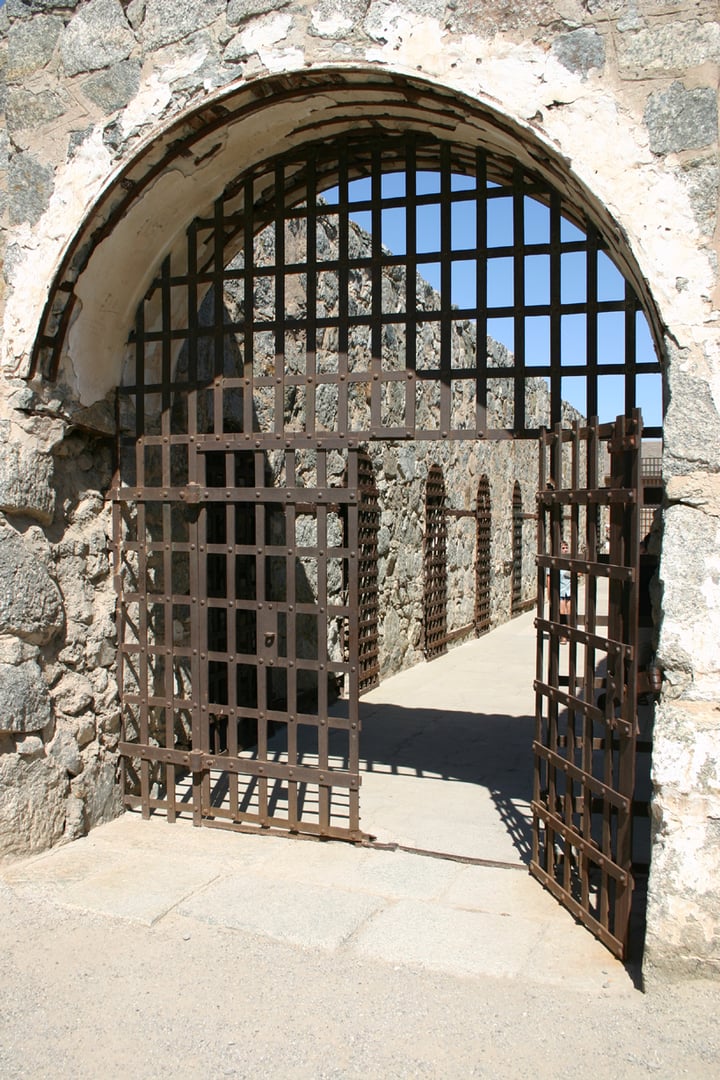
Est. 1771 · National Historic Landmark (1973) · Site where the Declaration of Independence was first read to Charleston citizens (August 1776) · Provost Dungeon held three signers of the Declaration of Independence after Charleston's 1780 fall · George Washington reception, May 1791
The Old Exchange and Custom House was constructed between 1767 and 1771 at the foot of Broad Street, terminating the city's commercial axis on East Bay. Designed in the late Georgian style, it served as a customhouse, merchants' exchange, public meeting hall, and seat of colonial government. The Declaration of Independence was read to Charleston citizens from its steps in August 1776, and South Carolina ratified the U.S. Constitution inside the building in 1788.
The vaulted brick cellar — the Provost Dungeon — predates the Exchange itself, reusing portions of a 1690s fortification wall called the Half-Moon Battery. After the British siege of Charleston ended in May 1780, the cellar was converted into a military prison. According to South Carolina historians, more than sixty Charlestonians were confined there, including the three South Carolina signers of the Declaration — Edward Rutledge, Arthur Middleton, and Thomas Heyward Jr. — who were detained briefly before transfer to St. Augustine, Florida.
The site's pirate associations run earlier still. In 1718, the 'Gentleman pirate' Stede Bonnet and approximately thirty of his men were tried in Charleston after their capture by Colonel William Rhett at Cape Fear; the crew was held at a guardhouse on this lot (the predecessor of the present Exchange), Bonnet himself was kept under guard at the provost marshal's house nearby, and they were hanged at White Point on the harbor edge.
Colonel Isaac Hayne, a South Carolina militia officer, was held in the Provost in July 1781 before his controversial execution by hanging on August 4, 1781 — a politically charged death that hardened American sentiment in the war's final year.
George Washington was hosted at a public reception in the Exchange's Great Hall in May 1791 during his Southern tour. The building survived the Civil War, the 1886 earthquake, and the 20th century, and is today owned by the City of Charleston and operated as a museum by the South Carolina chapter of the Daughters of the American Revolution.
Sources
- https://en.wikipedia.org/wiki/Old_Exchange_and_Provost
- https://www.dar.org/national-society/historic-sites-and-properties/old-exchange-and-provost-dungeon
- https://schistory.org/august-1781-colonel-isaac-hayne-executed-in-charlestown/
- https://www.postandcourier.com/columnists/hicks-column-the-long-strange-trip-of-charlestons-three-declaration-signers/article_dc245392-7ee2-11e8-bad5-e747961ea72a.html
- https://www.counton2.com/haunted-history/in-charleston-pirates-and-patriots-are-believed-to-still-haunt-the-old-exchange-building-provost-dungeon/
- https://www.counton2.com/news/local-news/haunted-history-the-old-exchange-building-and-provost-dungeon/
- https://www.scetv.org/stories/2019/ghosts-and-legends-old-exchange-ghost
Shadow figures in cellar corridorsDisembodied moans and screamsCold spots in former cell alcovesApparition in Revolutionary-era uniformDoors opening on their own
The Provost Dungeon is the most paranormally storied space in the building. According to Ghost City Tours and WCBD-TV's 'Haunted History' coverage, visitors report seeing shadow figures in the vaulted corridors, hearing distant screams or moans, and feeling unexplained cold spots concentrated around the brick alcoves once used as holding cells.
Local lore attaches the most prominent apparition to Colonel Isaac Hayne, the patriot militia officer hanged outside the city on August 4, 1781 after being held at the Exchange. A South Carolina ETV feature says his spirit is thought to visit his sister; the attribution is folkloric rather than corroborated by primary documents.
Ghost City Tours and Charleston Terrors also describe ghostly activity attributed to Revolutionary-era detainees and to the spirits of pirates from Stede Bonnet's crew; the pirate associations are well documented historically (a guardhouse on this lot held them in 1718), though paranormal claims are single-source ghost-tour lore.
Staff have reported objects moving and doors opening on their own during after-hours, per the historic-hotels and DAR-affiliated venue accounts. As with most Charleston dungeon sites, the surviving brick is conducive to dramatic acoustics, and many phenomena reported by tourists are accounts of subjective experience rather than independently verified events.
Notable Entities
Colonel Isaac Hayne (folkloric attribution)Unnamed Revolutionary-era prisonersPirate-era figures associated with Stede Bonnet's crew