Outdoor Exploration
Self-Guided Park Visit
Walk the live-oak shaded paths, view the Civil War cannons and pirate hanging memorial marker, and stand on the seawall where Ashley and Cooper rivers meet the harbor.
- Duration:
- 45 min
HauntBound archive · catalog record
Reported phenomena, as catalogued
Charleston's harbor-tip park, established as a public garden in 1837, was the 1718 hanging ground for 49 pirates including 29 of Stede Bonnet's crew - executions still echo in the live oaks.
2 Murray Boulevard, Charleston, SC 29401
Research updated May 2026
Age
All Ages
Cost
Free
Free public park.
Access
Wheelchair OK
Mostly level paved and shell-gravel paths under live oaks; some uneven ground near monuments.
Equipment
Photos OK
Est. 1837 · Site of the 1718 mass execution of 49 pirates including Stede Bonnet and 29 crew of the Revenge · Established as a public park in 1837 · Civil War harbor-defense site; cannon and memorial-monument collection on the grounds · Anchor of Charleston's Battery promenade
The park occupies the southern tip of the Charleston peninsula, where the Ashley and Cooper rivers converge into Charleston Harbor. The 'white point' originally referred to a publicly owned site of oyster shoals visible at low tide. The City of Charleston formally established the area as a public park in 1837, and through the 19th century it filled with live oaks, walking paths, monuments, and an ornamental bandstand.
The site is best known for the autumn 1718 pirate executions. On November 8, 1718, twenty-nine pirates from the crew of the Revenge - the ship of Major Stede Bonnet - were hanged near the white point as a warning to other freebooters operating in southern Atlantic waters. Bonnet himself was hanged on December 10, 1718. Later in the month, nineteen more pirates from the crew of Captain Richard Worley were executed at the same place. Over roughly five weeks, forty-nine pirates were hanged at the water's edge, and their bodies were left on display in chains. A granite memorial marker was placed near the northeast corner of White Point Garden in 1943 to commemorate the executions.
The park also saw use during the Civil War for harbor defense. Today an array of Civil War-era cannons and several memorials and monuments dot the grounds. White Point Garden remains one of Charleston's most photographed public spaces and the anchor of the Battery promenade.
Sources
Charleston's ghost-tour ecosystem treats White Point Garden as one of the city's foundational haunted sites. According to Ghost City Tours and Southern Spirit Guide, visitors most often report a heavy, watched-from-behind sensation while walking the seawall after dusk, and night strollers sometimes describe brief glimpses of dark figures swinging or standing motionless beneath the oldest live oaks - imagery tied directly to the 1718 mass hangings.
A more specific motif involves faces appearing in the harbor surface near Water Street and along the southern seawall, recounted across multiple Charleston-area paranormal sources. Disembodied screams attributed to the executed pirates and to victims of antebellum duels fought on the grounds are reported sporadically. Ghost-tour guides also point to lingering presences connected to Confederate dead from the harbor defenses.
With no central paranormal investigation organization on record at the site and the lore drawn primarily from tour-operator retellings of well-documented historical violence, the phenomena reported here are largely contemporary folk testimony rather than verified incidents. The historical anchor - the 1718 mass execution - is, however, unusually well-documented for an American haunted-site narrative.
Notable Entities
Media Appearances
Walk the live-oak shaded paths, view the Civil War cannons and pirate hanging memorial marker, and stand on the seawall where Ashley and Cooper rivers meet the harbor.
Some links on this page may earn HauntBound a small commission when you book, at no extra cost to you. Our editorial picks are independent. Full disclosure
Every HauntBound history is researched from documented sources. We clearly separate verified historical fact from paranormal folklore.
Free Guide
Verified stops across all fifty states, rated for families. Free.
One email to confirm, then the guide link. Unsubscribe anytime.
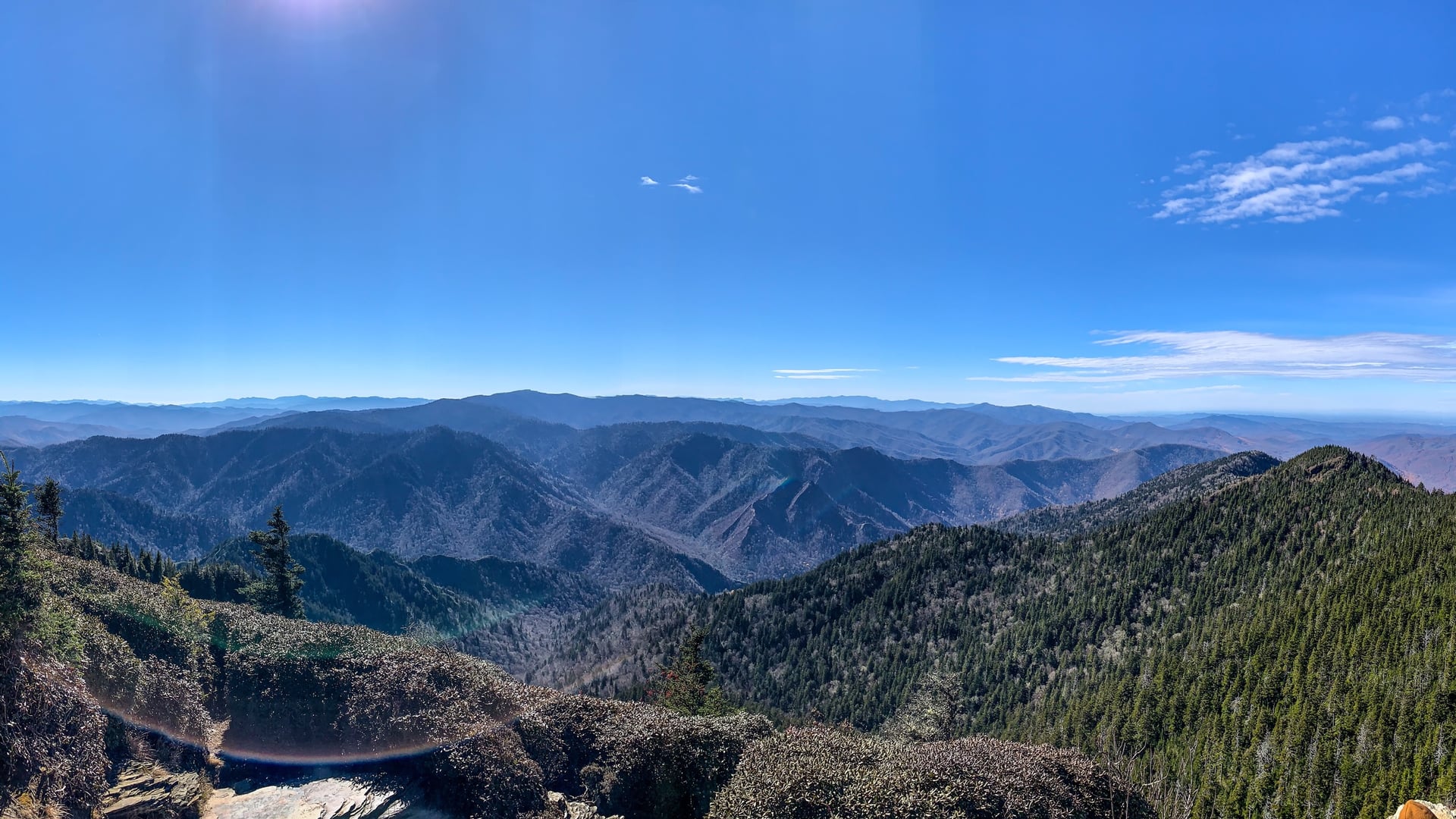
Gatlinburg, TN
Great Smoky Mountains National Park preserves 522,427 acres of southern Appalachian terrain across Tennessee and North Carolina. The land was the heart of the Cherokee Nation before forced removal in 1838 along what became the Trail of Tears, and home to Appalachian Scots-Irish and English settler communities through the early twentieth century. Congress authorized the park in 1926; it was formally dedicated by Franklin D. Roosevelt on September 2, 1940.
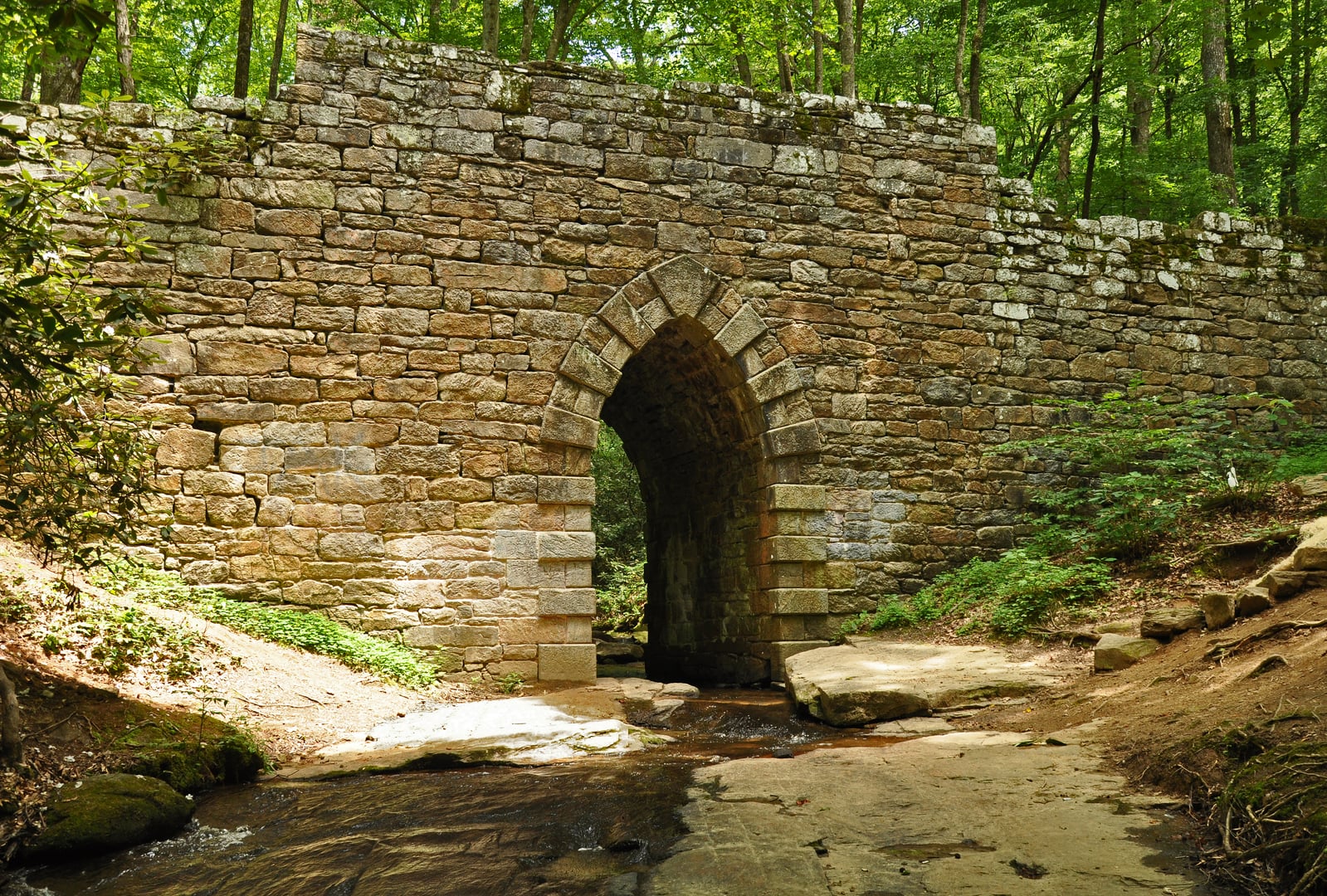
Travelers Rest, SC
Constructed in 1820, Poinsett Bridge is the oldest surviving stone bridge in South Carolina and potentially the oldest in the southeastern United States. The 130-foot Gothic-arch span over Little Gap Creek was built as part of the State Road connecting Columbia to the North Carolina mountains, named for Joel Roberts Poinsett, then-president of the state Board of Public Works. Added to the National Register of Historic Places in 1970, it is now the centerpiece of the 400-acre Poinsett Bridge Heritage Preserve managed by SC DNR.
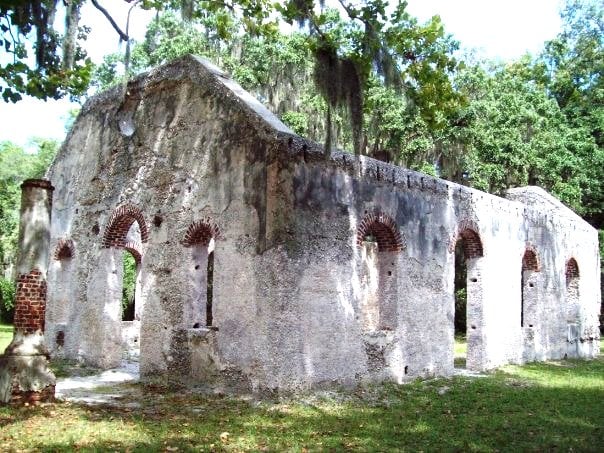
St. Helena Island, SC
Built around 1740 in tabby construction to serve plantation families on St. Helena Island who found the town church too far to attend weekly, the Chapel of Ease functioned until Union troops occupied the Beaufort area in 1861. Abandoned during the occupation, it burned in an 1886 forest fire. The adjacent Fripp family mausoleum, where Edgar and Eliza Fripp were interred in 1852, was broken open by Union soldiers seeking treasure. The brick seal placed over the ruined door was found removed the following day; when replaced, it was removed again. The job was abandoned.