Guided Tour Booking Required
Performance attendance
Attend a Charleston Stage or Spoleto Festival USA production in the restored auditorium and feel the building's antebellum-hotel-turned-theater character firsthand.
- Duration:
- 2 hr
HauntBound archive · catalog record
Reported phenomena, as catalogued
+ 1 further entry on record
Charleston's historic playhouse on the site of America's first purpose-built theater (1736); the present house wraps the 1809 Planters Hotel and is reported haunted by actor Junius Brutus Booth and the lightning-struck Nettie.
135 Church Street, Charleston, SC 29401
Research updated May 2026
Age
All Ages
Cost
$$
Performance tickets typical for Charleston Stage productions; lobby/exterior viewing is free during normal business hours
Access
Wheelchair OK
Lobby and main auditorium accessible; some balcony seating not accessible
Equipment
Photos OK
Est. 1809 · Site of America's first purpose-built playhouse (1736) · Antebellum Planters Hotel (1809) — host to Junius Brutus Booth and other notable figures · WPA-era renovation (1935-1937) transformed the hotel into a Georgian-inspired theater · National Register of Historic Places; contributing structure to Charleston Historic District NHL
The original Dock Street Theatre opened on February 12, 1736 with a production of George Farquhar's 'The Recruiting Officer.' It was the first building in the British North American colonies built exclusively for theatrical performances. The structure was probably destroyed in the Great Fire of 1740, and the lot lay reconfigured for decades.
In 1809 Alexander Calder and his wife built the Planters Hotel on the site, using earlier structures on the lot. The Planters became one of antebellum Charleston's premier inns; its Church Street facade was upgraded in 1835 with the distinctive wrought-iron balcony and sandstone columns that still front the building today. The hotel hosted prominent guests including the actor Junius Brutus Booth, father of Edwin Booth and John Wilkes Booth; a well-documented 1838 incident during a Charleston engagement has Booth striking his sleeping traveling colleague Thomas Flynn with a fireplace andiron — covered in the Charleston papers at the time — though popular retellings have sometimes transposed the target to the hotel's own manager.
The Planters declined after the Civil War, and the building suffered through the 1886 earthquake. By the 1930s, the City of Charleston owned the structure and faced a choice between demolition and renovation. As a Works Progress Administration project led by architect Albert Simons, the hotel's interior was reconfigured into a theater incorporating elements of the Royal Theatre, Bristol, England (an 18th-century model). The new Dock Street Theatre opened on November 26, 1937 with a production of 'The Recruiting Officer' — closing the loop with the 1736 inaugural performance.
The building underwent a major preservation and seismic-strengthening project from 2007 to 2010 and reopened in March 2010. It is listed on the National Register of Historic Places, is a contributing structure to the Charleston Historic District National Historic Landmark, and serves as the principal home of Charleston Stage and a key venue for Spoleto Festival USA.
Sources
The most reported apparition is Junius Brutus Booth, who according to Spoleto Festival USA's published account stayed at the Planters Hotel and was a known patron. Ghost City Tours and the Little House of Horrors podcast describe sightings of an apparition matching Booth's portraits in a balcony box second from stage right; he is also reportedly heard pacing the corridor near the green room. Booth himself was a famously volatile figure in life and the 1838 incident — in which he attacked his sleeping traveling colleague Thomas Flynn with an andiron during a stay at the hotel — is sometimes cited as the emotional anchor for the haunting.
The second principal ghost is 'Nettie,' often identified in tour-operator material as Nettie Dickerson, said to have been a Charleston working-class woman who frequented the Planters Hotel in the late 1830s. The legend — which is folkloric and not documented in any contemporary newspaper this research located — has her stepping onto the second-floor balcony during a thunderstorm in a red dress and being killed by a lightning strike. Witnesses report seeing a woman in a red dress on what is now the theater's interior balcony level. Ghost City Tours notes a peculiar detail of these sightings: she is typically seen only from the knees up, attributed by storytellers to the 1936 floor being raised about a foot from the 19th-century floor level.
Additional reports collected by tour operators include doors opening and closing on their own, footsteps in empty corridors, and unexplained drops in temperature. As with much of Charleston's antebellum ghost lore, the Junius Brutus Booth identification rests on storytelling tradition rather than documentary evidence — Booth died in 1852 aboard a Mississippi River steamboat, not at this site — but his repeated documented stays at the Planters Hotel anchor the legend.
Notable Entities
Attend a Charleston Stage or Spoleto Festival USA production in the restored auditorium and feel the building's antebellum-hotel-turned-theater character firsthand.
The wrought-iron balcony and sandstone columns on the Church Street facade (added 1835) are a Charleston walking-tour staple; viewable any daylight hour.
Some links on this page may earn HauntBound a small commission when you book, at no extra cost to you. Our editorial picks are independent. Full disclosure
This Charleston tour includes Dock Street Theatre on its route.
Every HauntBound history is researched from documented sources. We clearly separate verified historical fact from paranormal folklore.
Free Guide
Verified stops across all fifty states, rated for families. Free.
One email to confirm, then the guide link. Unsubscribe anytime.
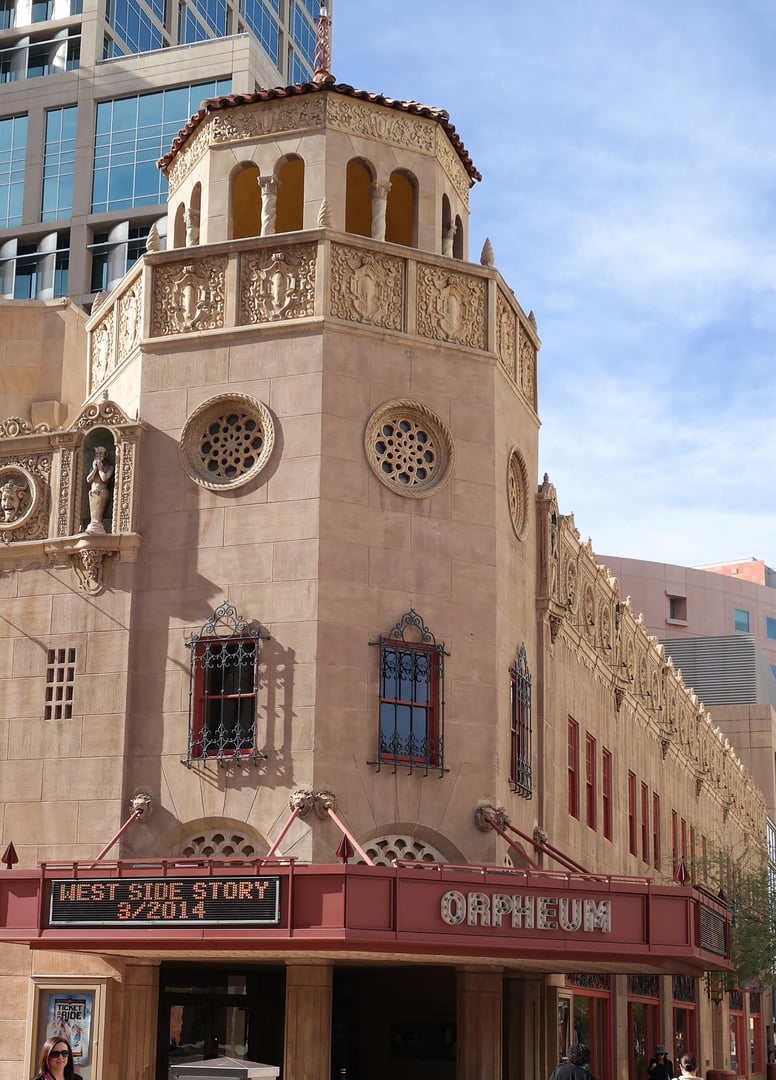
Phoenix, AZ
The Orpheum Theatre opened January 5, 1929 as a 1,800-seat vaudeville and movie palace built by partners Jo E. Richards and Harry Nace during Hollywood's golden age. Designed in Spanish Baroque Revival style with an atmospheric ceiling simulating a starlit Mediterranean sky, it operated as a movie theater under various names through the 20th century before being acquired by the City of Phoenix in 1984, restored, and reopened in 1997 as a performing arts venue. It is listed on the National Register of Historic Places.
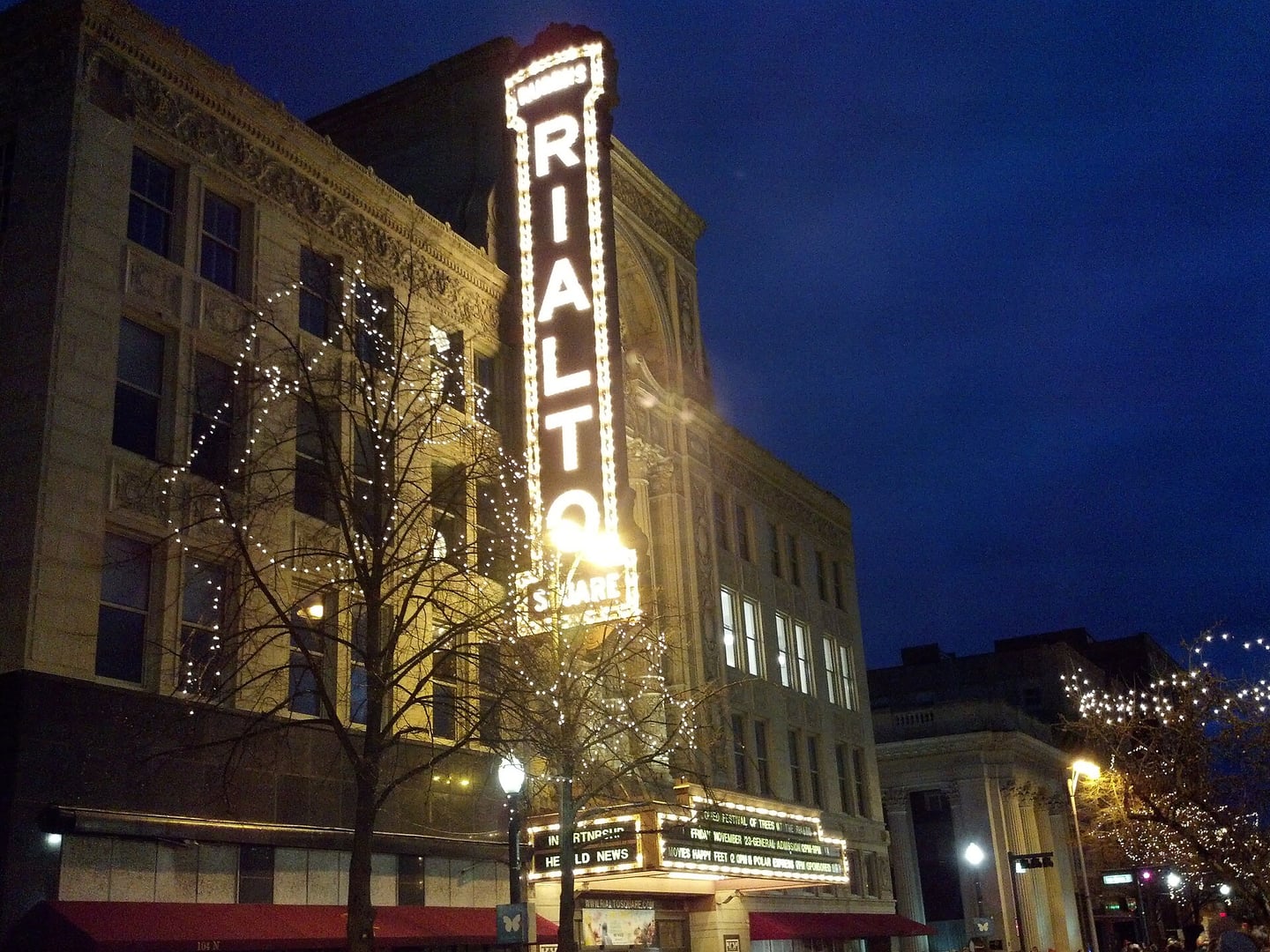
Joliet, IL
The Rialto Square Theatre opened May 24, 1926, designed by Chicago firm Rapp & Rapp for the six Rubens brothers. Its Neo-Baroque interior — modeled in part on the Hall of Mirrors at Versailles — earned it a place on the American Institute of Architects's '150 Great Places in Illinois' and a listing on the National Register of Historic Places.
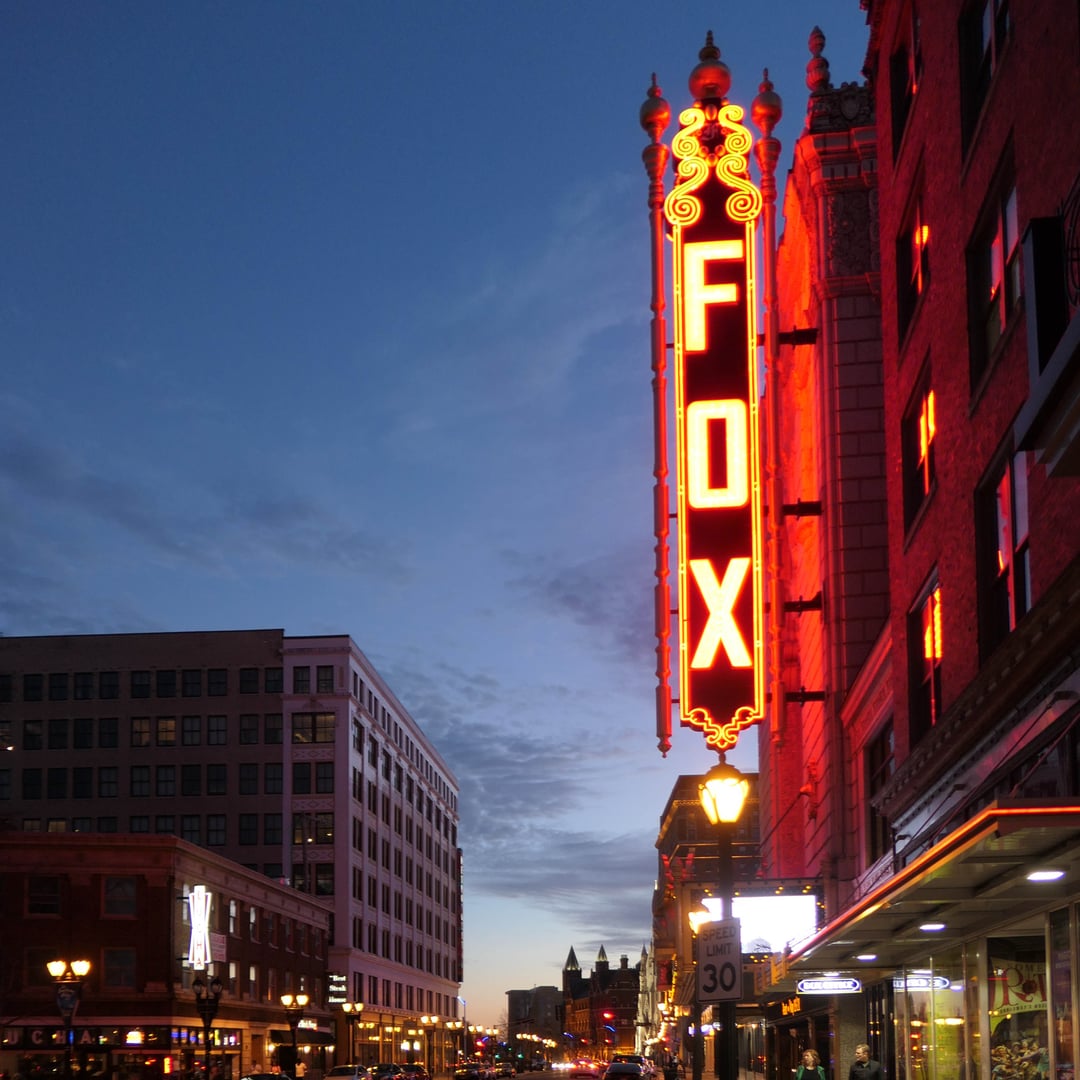
St. Louis, MO
The Fabulous Fox Theatre opened in January 1929 as one of five 'Fox' picture palaces commissioned by film magnate William Fox. Designed by C. Howard Crane in a 'Siamese Byzantine' style, the 4,500-seat auditorium was the second-largest in the United States at its opening. After decades of decline the theatre closed in 1978 and was restored by the Fox Associates beginning in 1981, reopening in 1982 as the centerpiece of Grand Center.