Overnight Stay Booking Required
Overnight Stay at the Old Citadel
Sleep inside the original 1829 Citadel campus, with gun ports preserved in the facade and exposed historic brick in many suites overlooking Marion Square.
HauntBound archive · catalog record
Reported phenomena, as catalogued
The 1829 South Carolina State Arsenal that became The Citadel military college and is now a hotel; guests report phantom boots, cold spots, and a recurring Confederate-uniformed apparition.
337 Meeting Street, Charleston, SC 29403
Research updated September 2026
Age
All Ages
Cost
$$$
Standard Embassy Suites room rates; full-service hotel with restaurant and lounge.
Access
Wheelchair OK
Modern hotel renovation with elevators and accessible rooms; historic facade retained.
Equipment
Photos OK
Est. 1829 · Built 1829 as the South Carolina State Arsenal in response to the 1822 Denmark Vesey rebellion scare · Original home of The Citadel military college (1843-1865 and 1882-1922) · Listed on the National Register of Historic Places · Crenellated brick facade with original gun ports preserved
After Charleston authorities uncovered evidence of a planned 1822 uprising led by free Black carpenter Denmark Vesey, the state legislature funded a fortified arsenal to garrison troops in the city. Construction of the South Carolina State Arsenal began in 1829 on Meeting Street facing what is now Marion Square, and the crenellated brick structure soon dominated the city's upper peninsula skyline.
In December 1842, Governor John P. Richardson and the legislature approved converting the arsenal into a state military academy. The first cadets of the new South Carolina Military Academy (soon known simply as The Citadel) arrived at the Meeting Street campus on March 20, 1843. The school remained there through the Civil War - when cadets famously fired on the Union supply ship Star of the West in January 1861 - and reopened on the site after Reconstruction in 1882.
The Citadel outgrew the Meeting Street campus and moved to its present location on the Ashley River in 1922. The original arsenal building was subsequently used for various state and military purposes before being adaptively reused in the 1990s. Today it operates as the Embassy Suites by Hilton Charleston Historic District, with the original gun ports preserved in the facade, exposed brick walls in many suites, and an atrium constructed in what was once the central parade yard. The building is listed on the National Register of Historic Places.
Sources
Multiple independent sources document the paranormal tradition at the Old Citadel. National Geographic's survey of Charleston's most haunted sites features the Embassy Suites among its eight locations, describing a partial apparition of a young man in a gray cadet's uniform — 'a half-head figure seen drifting through the mezzanine' — and quoting historian Ed Macy: 'The ghost that's been seen is a young man missing everything above his eyebrows.' Charleston Magazine's feature on haunted Charleston describes the same cadet figure ('the top of his head is missing') and notes the building was declared 'The Most Haunted Hotel in the South' by The Huffington Post, with 'stunned housekeepers' and at least one guest — described as a cardiologist — having fled the room upon an early-morning encounter. The Post and Courier describes the building as 'one of the most talked-about haunted places in Charleston,' with 'guests and staff alike' reporting boot-step sounds, temperature drops, and flickering lights. A documented paranormal investigation team conducted an on-site investigation on March 12, 2005 (paranormalinvestigators.com), obtaining EVP recordings, video clips, anomalous photos, and unexplained EMF readings, with activity concentrated in the atrium and room M113.
The most frequently retold legend involves a Confederate-uniformed apparition seen near the lobby staircase and the 'half-headed cadet' — known as 'Half Head' or 'The Lost Cadet' — who reportedly manifests in certain mezzanine-level rooms. The hotel itself does not market the property as haunted, and no named historical individual has been credibly tied to the apparition. The figure's missing cranium has been attributed in tour-operator accounts to a cannonball or hazing incident, though neither claim is documented in primary records.
Notable Entities
Media Appearances
Where this legend is told
Sleep inside the original 1829 Citadel campus, with gun ports preserved in the facade and exposed historic brick in many suites overlooking Marion Square.
Some links on this page may earn HauntBound a small commission when you book, at no extra cost to you. Our editorial picks are independent. Full disclosure
See current room rates and availability at Old Citadel (Embassy Suites Charleston Historic District).
Check rates and bookRates come from booking partners, so a small property may not be listed. Book direct with Old Citadel (Embassy Suites Charleston Historic District)
Every HauntBound history is researched from documented sources. We clearly separate verified historical fact from paranormal folklore.
Free Guide
Verified stops across all fifty states, rated for families. Free.
One email to confirm, then the guide link. Unsubscribe anytime.
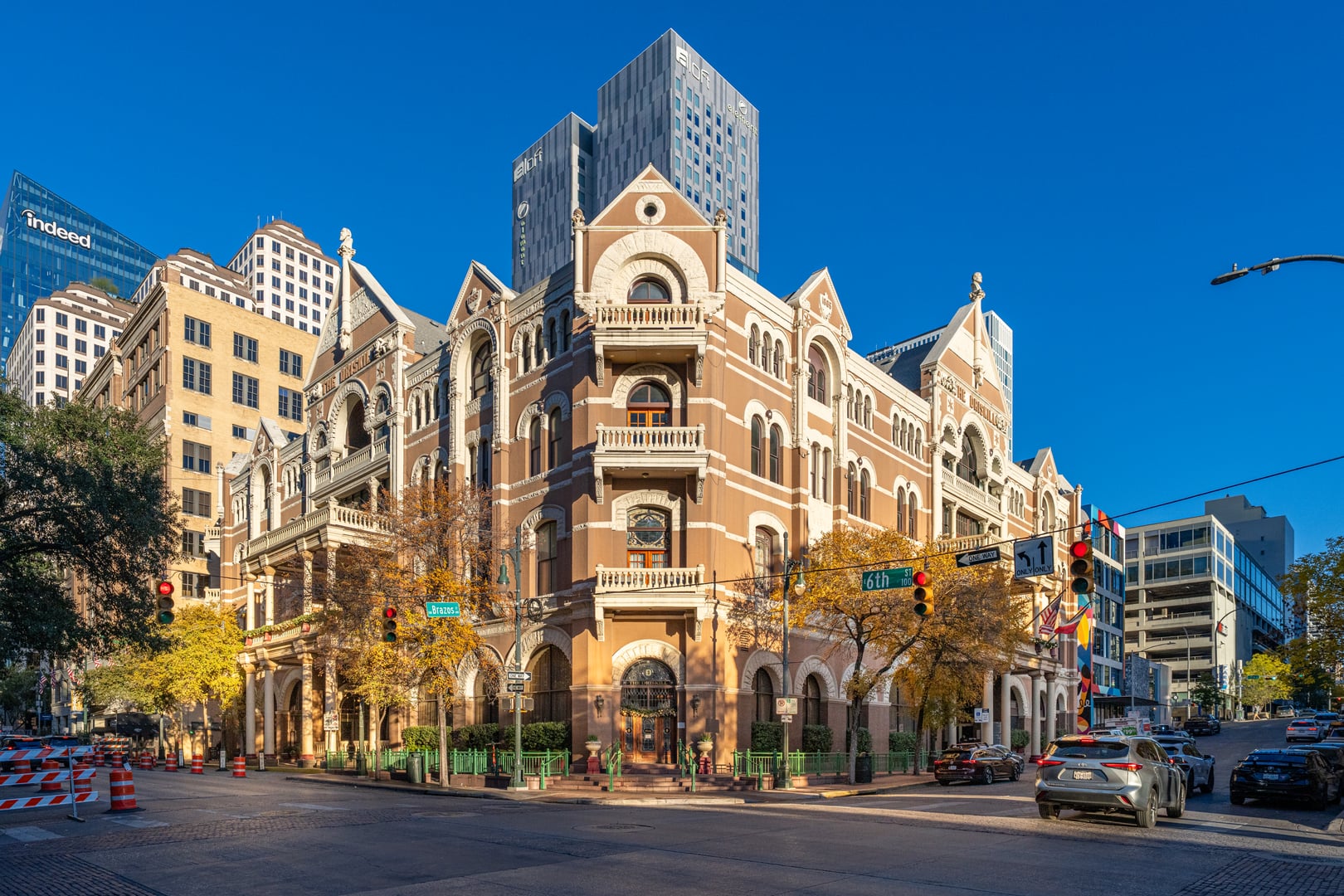
Austin, TX
Colonel Jesse Lincoln Driskill, a Tennessee-born cattle baron who supplied beef to the Confederate Army and later the Texas Rangers, opened The Driskill Hotel on December 20, 1886. Its first event, two weeks after opening, was the inaugural ball for Texas Governor Sul Ross. Driskill sold the hotel in 1888 after severe drought devastated his cattle herds and died in 1890. The hotel has hosted every Texas governor's inaugural ball since 1887.
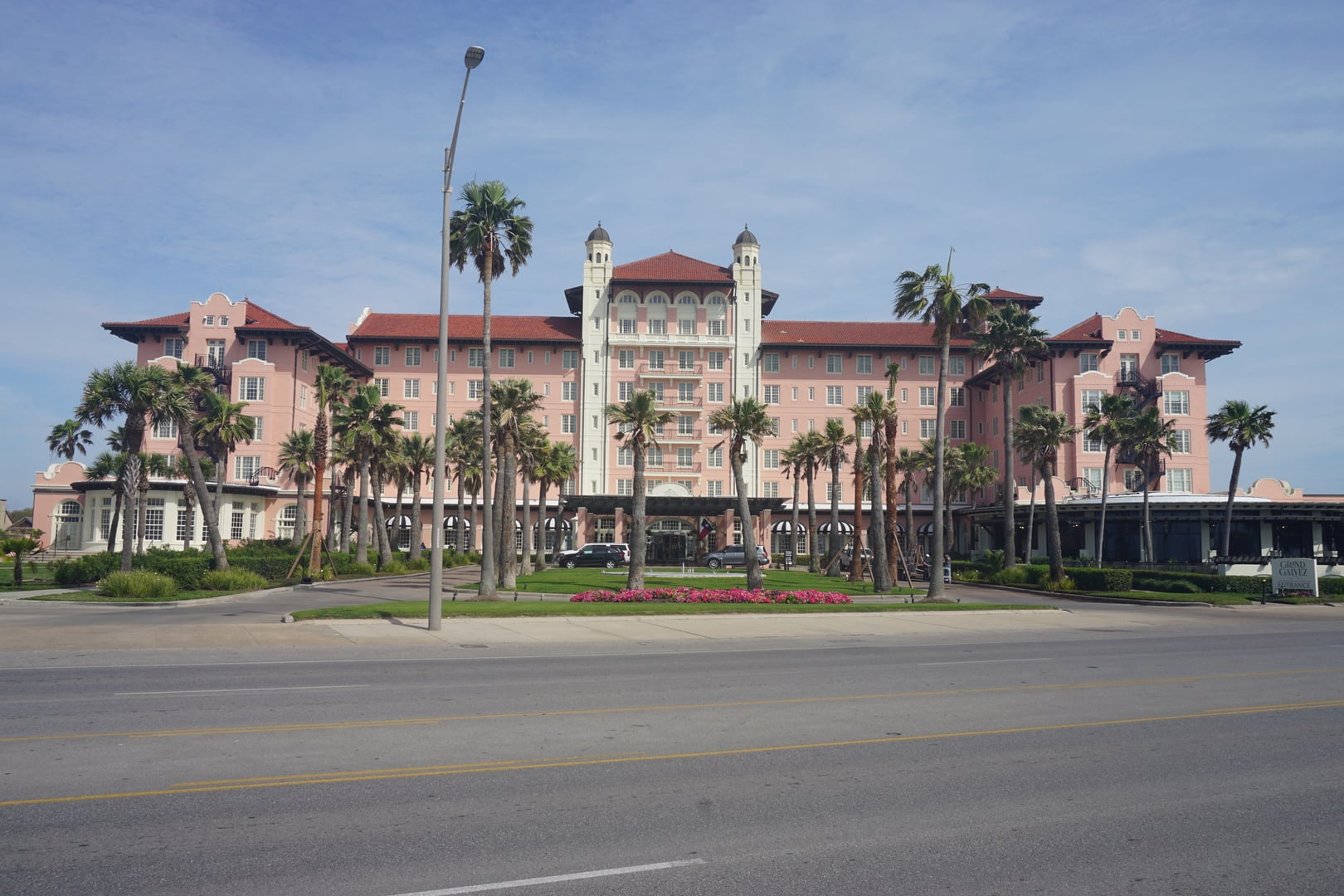
Galveston, TX
Grand Galvez, originally Hotel Galvez, opened in 1911 as part of Galveston's recovery from the catastrophic 1900 hurricane. The Spanish Colonial Revival landmark on Seawall Boulevard is the only historic beachfront hotel on the Texas Gulf Coast and now operates as part of Marriott's Autograph Collection.
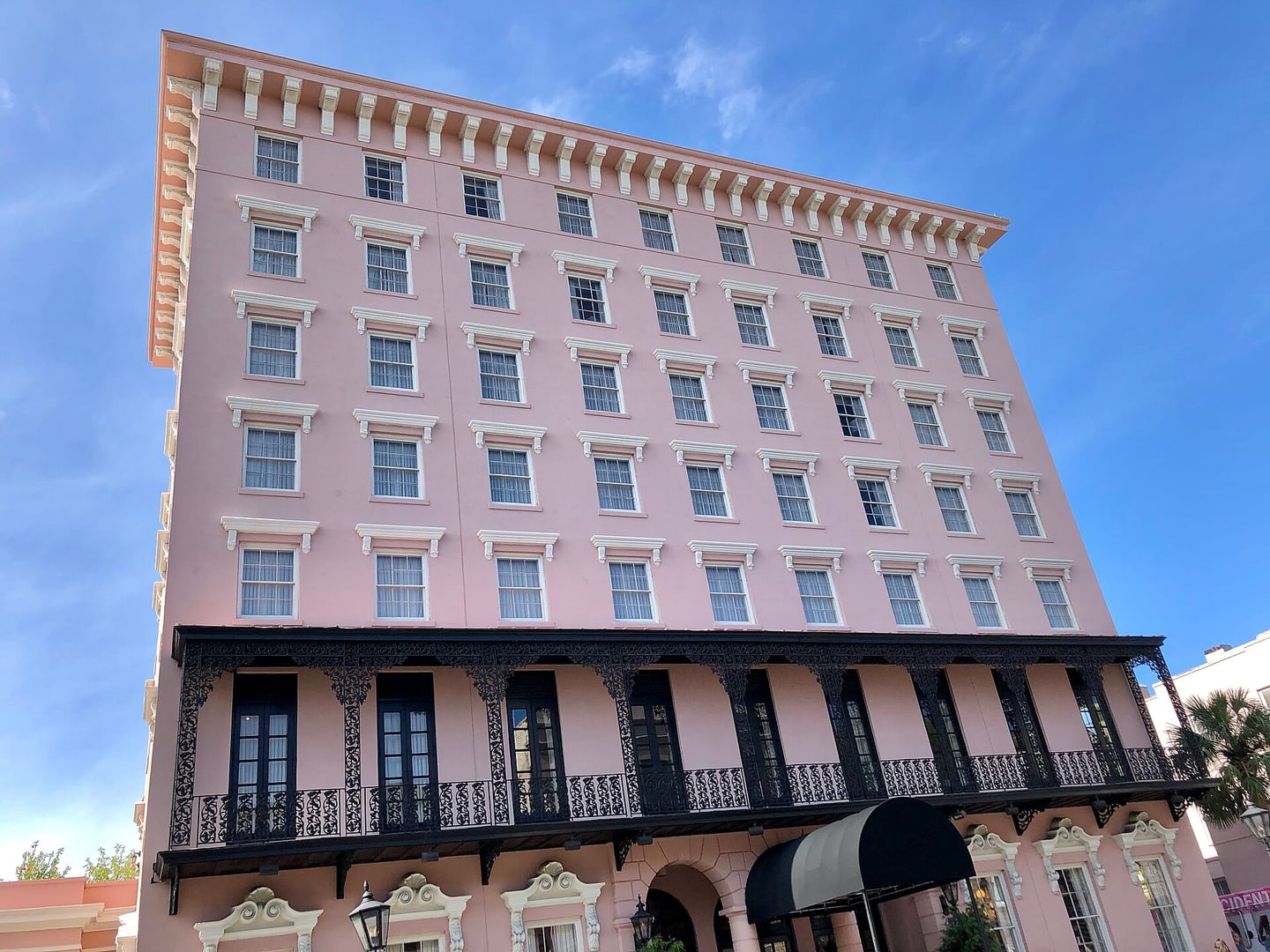
Charleston, SC
Local grain merchant Otis Mills opened the Mills House on November 3, 1853 at the corner of Meeting and Queen streets as a 180-room luxury hotel. It hosted Robert E. Lee during the Great Fire of December 11, 1861. The building survived the Civil War but declined by the mid-20th century. It was demolished in late 1968; a 1970 replica preserved the original ironwork and reinstalled the historic facade. The hotel now operates as Mills House Charleston, Curio Collection by Hilton.