Est. 1893 · Built 1893 in the Richardsonian Romanesque style · Survived a major fire and the 1886 Charleston earthquake · Listed on the National Register of Historic Places · Active performing arts venue in downtown Sumter · Combined town hall and opera house — a civic landmark
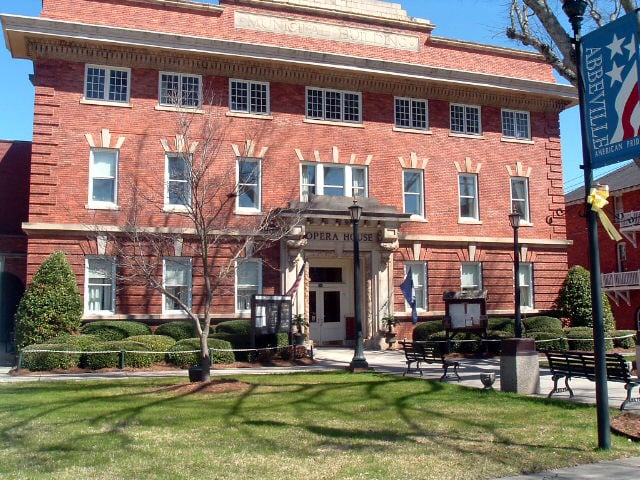
The Sumter Town Hall-Opera House at 21 N Main Street was constructed in 1893, part of the civic building wave that swept American small cities in the last decade of the nineteenth century. The design follows the Richardsonian Romanesque idiom popularized by the Boston architect Henry Hobson Richardson — heavy stone or brick masonry, rounded arches, thick tower elements, and an overall solidity that conveyed institutional permanence. Sumter's version, detailed in its Wikipedia entry, incorporated a performance hall and municipal offices in the same structure.
The building's history includes two significant threats to its survival. A fire — date not specified in available sources — damaged the structure. The 1886 Charleston earthquake, one of the most powerful seismic events in the eastern United States, also subjected Sumter to shaking, and the opera house sustained damage along with much of the town. The building endured both events and continued operating.
A later period of disuse and disrepair nearly cost the structure its existence. Restoration work brought it back to operation as a performing arts venue. The South Carolina Haunted Houses resource lists the building among South Carolina's haunted theaters, noting its long history of use and the reports of paranormal activity concentrated in the performance spaces. The building is listed on the National Register of Historic Places.
Sources
- https://en.wikipedia.org/wiki/Sumter_Town_Hall-Opera_House
- https://www.southcarolinahauntedhouses.com/real-haunts/theaters.aspx
Shadow figures moving in the theater raftersApparitions reported on the stageSpirits reported throughout the building
Paranormal accounts from the Sumter Opera House concentrate in two areas of the building: the rafters above the stage and the stage itself. Reports of shadow figures moving in the upper reaches of the theater — the fly space and catwalks — come from staff and performers who have worked in the building over the years. The shadows are described as moving with apparent purpose, crossing from one side of the rigging space to the other, before ceasing.
Stage-level reports involve apparitions: figures seen on the stage when no performance is scheduled and the house is otherwise empty. The South Carolina Haunted Houses listing includes the Sumter Opera House in its theater section, noting reports of spirits throughout the building without specifying individual identities or incidents that might have seeded the lore.
The building's history provides the atmospheric conditions that sustain ghost lore in older theaters: repeated trauma to the structure, long periods of vacancy during the disrepair years, and a performance space that retains the emotional residue of over a century of entertainment. No formal paranormal investigation with published findings has been conducted at the site.
Where this legend is told