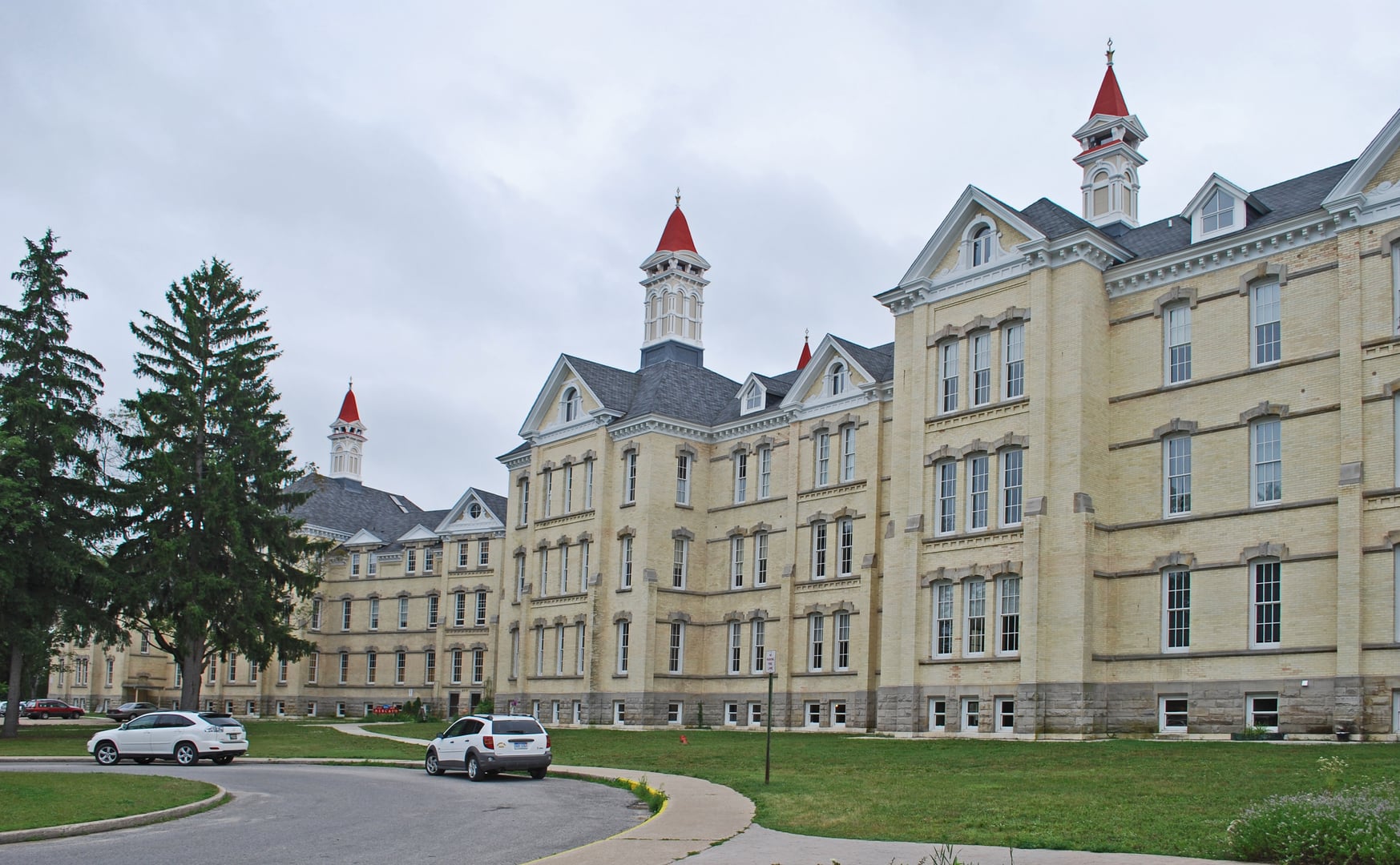
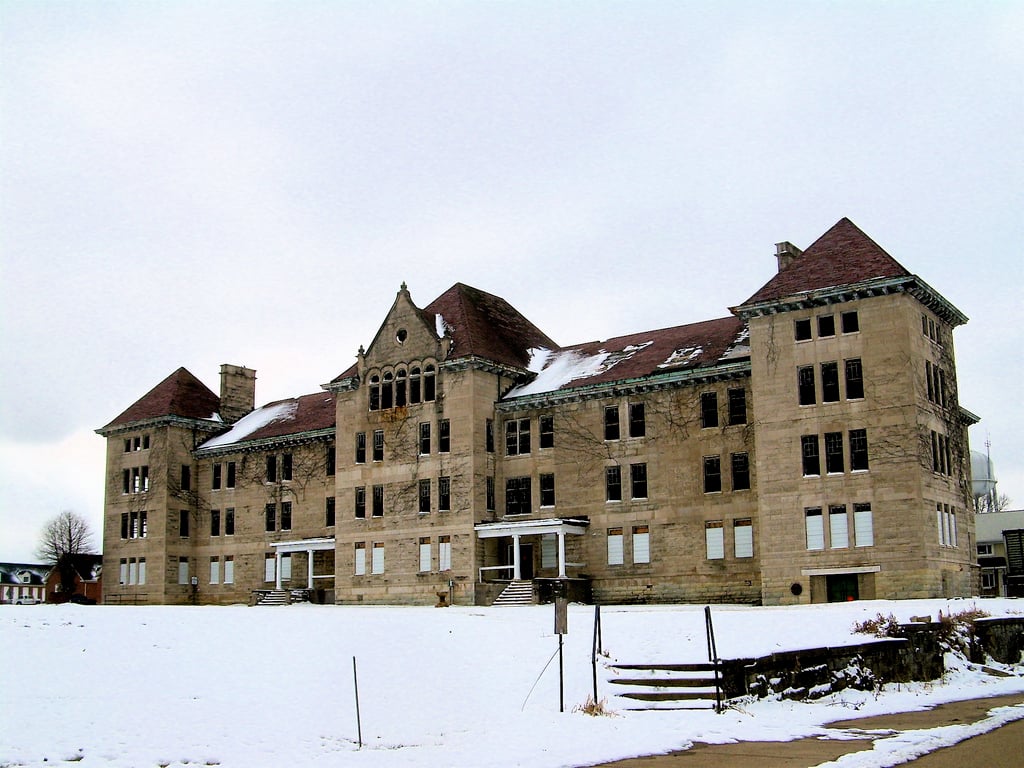
Est. 1869 · Opened 1869 as New York's first dedicated facility for chronic mental patients · More than 50,000 patients admitted over 126-year operation · 427 patient suitcases found in attic at closure; collection at NY State Museum · 5,776-grave hillside cemetery overlooking Seneca Lake · Closed 1995 after deinstitutionalization reduced census
The Willard Asylum for the Chronic Insane was established by the New York State Legislature in 1865 and opened in 1869 on a farm overlooking Seneca Lake in Seneca County. It was conceived explicitly as a low-cost custodial facility: patients transferred from county poorhouses and acute-care hospitals were classified as chronically insane, meaning the state expected them to remain institutionalized for life. The campus grew steadily through the late 19th and early 20th centuries, eventually occupying several hundred acres with its own farm, power plant, and patient workshops.
More than 50,000 patients were admitted over the institution's 126-year history. The facility was renamed successively — from Willard State Hospital to Willard Psychiatric Center — as professional and legislative attitudes toward mental illness shifted. Deinstitutionalization policies sharply reduced the patient population from the 1960s onward, and New York State closed Willard in 1995.
The most resonant discovery came during the closure process: staff found 427 suitcases in the attic of one of the patient buildings, each packed by a patient at the time of admission decades earlier. The suitcases contained clothing, photographs, letters, and personal effects, preserved largely as their owners had left them. The New York State Museum acquired the collection; a traveling exhibit and several published books have brought the suitcases national attention as a material record of individual lives otherwise reduced to case numbers.
A 5,776-grave cemetery on a hillside above Seneca Lake holds patients who died at Willard. Graves are marked with numbered iron stakes — no names, only patient identifiers. The Romulus Historical Society offers annual guided walking tours of the grounds.
Sources
- https://en.wikipedia.org/wiki/Willard_Asylum_for_the_Chronic_Insane
- https://www.fingerlakes.org/blog/willard-asylum-for-the-insane
- https://homeinthefingerlakes.com/upcoming-public-tour-of-willard-asylum-for-the-insane/
Pronounced stillness and unease at hillside cemetery overlookSense of unresolved presence associated with patient suitcase history
The haunted reputation of the Willard Asylum centers less on specific apparitions than on the cumulative weight of its history. The 5,776-grave cemetery on the hillside is the most-visited part of the site: numbered iron stakes in place of named headstones stand as a record of institutional anonymity, and visitors consistently describe an uncomfortable stillness at the overlook above Seneca Lake.
The patient suitcase collection — discovered in the attic after the 1995 closure — has become the site's most emotionally charged artifact. Each case was packed by a patient at the time of their admission, in many cases the last personal act they performed before decades of institutionalization. The contents (Sunday clothes, family photographs, hand-written letters never sent) document individual personalities the institutional record reduced to case numbers. Though housed now at the New York State Museum rather than on the original grounds, the suitcases have deepened the sense that something unresolved remains attached to the Willard site.
No specific named apparitions or paranormal events have been documented at Willard in reliable sources. The site's dark gravity derives from documented history: the scale of involuntary lifelong commitment, the anonymous cemetery, and the material evidence of interrupted lives.
Media Appearances
- The Lives They Left Behind: Suitcases from a State Hospital Attic (book, 2008)
Where this legend is told