19th-Century Railroad Folklore · Brunswick County History · North Carolina Ghost-Light Tradition
On January 4, 1856, conductor Charles Baldwin was riding the Wilmington and Manchester Railroad near Hood's Creek, about eight miles outside Wilmington. The train's water pump only worked while the wheels turned, so the crew uncoupled the engine to run ahead and refill it. Returning in the dark, the engine collided with the standing cars. Baldwin, thrown from an open door, suffered head injuries and died three days later at Oakdale Cemetery. An investigation found he had failed to hang the required signal light on the train's front car — a detail folklore would later invert.
Ninety-two years passed before local historian Louis T. Moore retold the story in the Wilmington Morning Star, merging Baldwin's death with a separate 1867 wreck near Farmer's Turnout involving a conductor whose car had come uncoupled from the train ahead. The composite figure, renamed "Joe Baldwin," was recast as decapitated rather than concussed, searching the tracks by lantern light for his missing head.
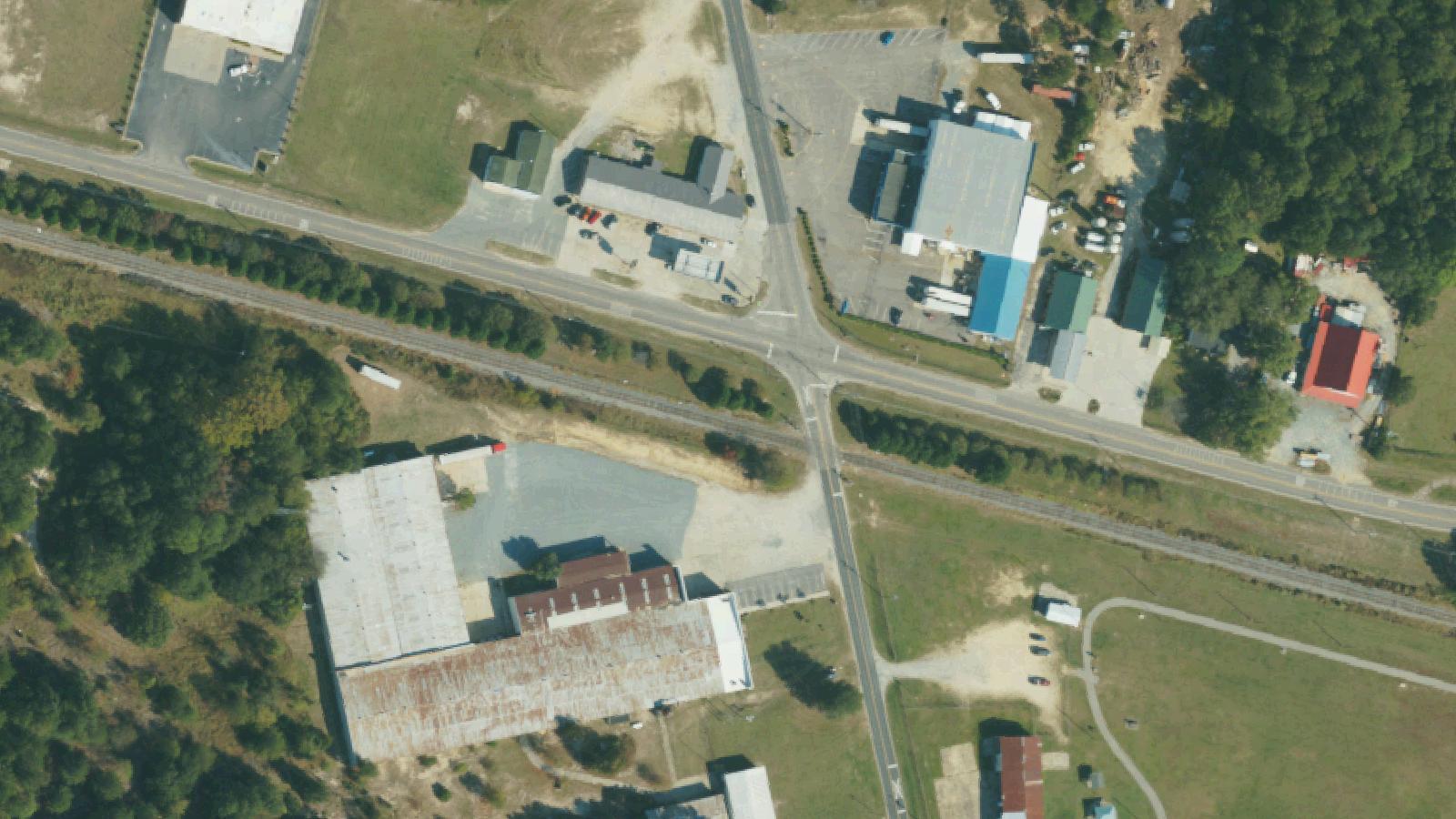
Sightings of a swinging light along the tracks near Maco Station were reported from the 1870s through the mid-20th century — consistently enough that the railroad installed colored signal lights to distinguish the phenomenon from real train signals, and President Grover Cleveland reportedly saw it during an 1889 visit. Paranormal investigator Hans Holzer documented the site in 1964. When the Seaboard Coast Line pulled up the rails through Maco in 1977, the reported light stopped for good. No marker or museum stands at the crossroads today.
Sources
- https://www.ncpedia.org/maco-light
- https://www.dncr.nc.gov/blog/2016/01/04/origins-maco-light-legend-date-1856
- https://en.wikipedia.org/wiki/Maco_light
- https://www.ourstate.com/maco-light/
- https://www.wrrm.org/the-legend-of-joe-baldwin.html
Ghost lightSwinging lantern lightPaired lights on the tracks
The standard account has the light appearing as a single point far down the tracks, growing brighter as it approaches, then vanishing before it reaches the observer — sometimes trailed by a second, fainter light behind it. Railroad workers and Wilmington-area residents described the pattern consistently enough between the 1870s and 1970s that it became a fixture of regional travel writing; Life magazine ran a two-page feature on it in October 1957.
The Wilmington Railroad Museum, which now interprets the Joe Baldwin story as part of its own collection, frames the light as the conductor's lantern, swung as he walks the corridor searching for the head he lost in the wreck. That framing owes more to Louis T. Moore's 1948 retelling than to the 1856 record, which shows Charles Baldwin dying of head trauma, not decapitation.
The Maco Light has not been reported since 1977, when the Seaboard Coast Line removed the tracks and dismantled the trestle associated with the sightings. Visitors today find an ordinary rural crossroads; the surrounding land is private beyond the public right-of-way, and there is nothing left to see.
Notable Entities
Joe Baldwin (folkloric name for conductor Charles Baldwin)
Media Appearances
- Life magazine feature on the Maco Light (magazine, 1957)
- North Carolina Public Radio interview with author Bland Simpson (radio, 2005)