Est. 1882 · Former Rochester State Hospital farm, 1870s-1965 · 1882 sandstone caves hand-dug by State Hospital patients, with poet Thomas Coyne's inscriptions surviving · Cemetery of 2,019 Rochester State Hospital patients (1886-1965), fully documented and restored with individual markers · Rochester State Hospital was one of Minnesota's major psychiatric facilities for over a century
The land now known as Quarry Hill Park was part of the Rochester State Hospital grounds from the hospital's founding in the 1870s. Rochester State Hospital was a major psychiatric facility that operated in Olmsted County for over a century. The hospital farm produced food and employed patient labor in the era of institutional self-sufficiency.
In 1882, a crew of six State Hospital residents — led by patient Thomas Coyne, a poet — excavated a series of caves from the local St. Peter sandstone to store farm produce. Coyne inscribed his name and verse fragments into the cave walls; these inscriptions remain partially visible today. The quarry itself was opened in 1885, with labor provided by hospital employees and patients.
The hospital operated a cemetery on the property beginning in 1886, ultimately burying 2,019 patients there through 1965. Due to the social stigma attached to mental illness at the time, most patients were interred anonymously, their graves marked only with numbers stamped into concrete markers made from coffee cans. By 2004, decades of neglect had returned the cemetery to a meadow state, with frost pushing the can markers out of the ground. Beth Thompson and her husband discovered them while hiking and initiated a restoration project. The Rochester State Hospital Cemetery Recognition Group subsequently installed granite markers bearing each person's name and dates for all 2,019 graves.
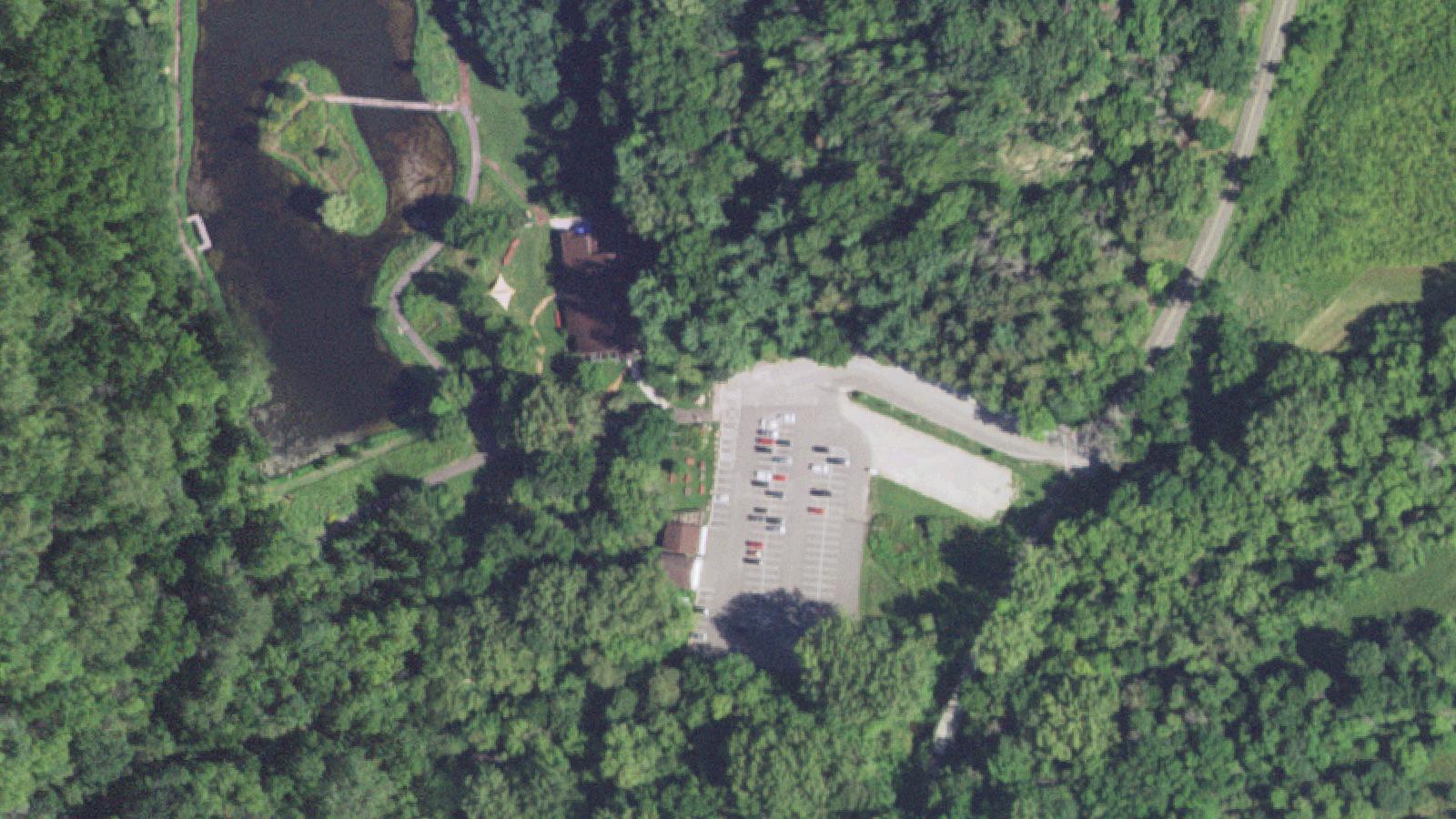
The City of Rochester purchased 212 acres from the state in 1965 for $21,200, converting the land into Quarry Hill Park. The Quarry Hill Nature Center was dedicated in May 1973 under founding director Harry Buck, with expansions in 1990 and 1999. The site received its one millionth visitor in 1999.
Sources
- https://www.qhnc.org/history.html
- https://www.washingtonpost.com/archive/
- https://quickcountry.com/who-exactly-is-buried-at-quarry-hill-cemetery/
- https://www.asylumprojects.org/index.php/Rochester_State_Hospital
Cold spots along cemetery trailFeelings of being watched near gravesApparition-like figures near cave entrancesUnexplained sounds inside or near sealed cavesUnease reported on or near Dead Man's Bridge
According to local lore documented by regional paranormal sources and visitor-submitted accounts, a man hanged himself on the wooden bridge over the quarry sometime in the 1960s, giving rise to the bridge's enduring nickname 'Dead Man's Bridge.' No verified historical record of this incident has been located in newspaper archives or municipal records; the story is treated as a regional legend that may or may not trace to an actual event.
The caves, dug by State Hospital patients in 1882, are among the most consistently cited paranormal locations in the park. Visitors and investigators have reported seeing apparition-like figures near the cave entrances, hearing unexplained sounds, and experiencing sensations of being followed. One cave entrance along the cemetery's edge was historically used to store bodies during winter months when the ground was frozen — a detail that likely contributes to the lore. Several of the caves have since been sealed by the city.
The Rochester State Hospital cemetery generates independent reports of cold spots, feelings of being watched, and visual phenomena along the trails adjacent to the grave markers. The anonymity of the burials — 2,019 individuals, most forgotten for over a century — provides a significant emotional and historical weight to the location.
Paranormal claims at this site are drawn primarily from user-submitted accounts on aggregator sites and do not have independent corroboration from named investigators or regional press at the same level as other Minnesota venues. The historical documentation of the site's human cost is, however, well-established through the Post Bulletin, Washington Times, and Quarry Hill Nature Center's own historical records.
Media Appearances
- Only in Your State — 'The Story Behind Quarry Hill Park in Minnesota Will Give You Chills'
- Washington Times — 'Project marks graves of Rochester State Hospital patients' (2016)
Where this legend is told