Est. 1896 · Maryland 'Second Hospital for the Insane' (1896) · Subject of 1940s Baltimore Sun 'Maryland's Shame' investigative series · Surviving operating state forensic psychiatric facility on historic Victorian campus
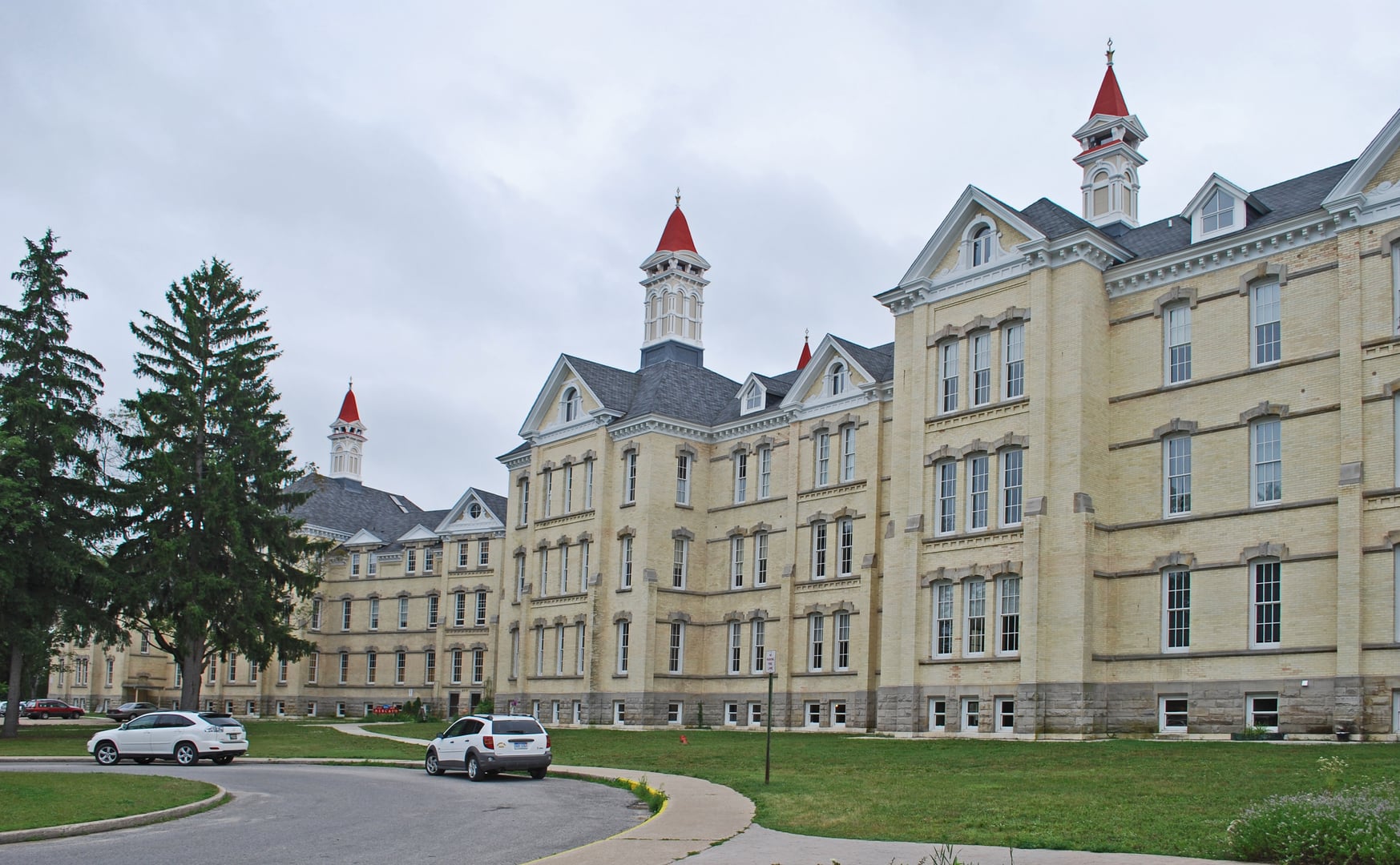
In 1896 the State of Maryland opened a second state psychiatric hospital on a 1,300-acre farm estate in Sykesville, Carroll County. Officially designated The Second Hospital for the Insane of Maryland, the campus was designed on the cottage-plan model then favored over the earlier Kirkbride linear layout: individual residential buildings clustered on a pastoral setting, intended to separate patients by condition and provide a therapeutic environment through farm labor and open air.
Through the early twentieth century the hospital expanded steadily. By the 1930s the campus served several thousand patients; at its maximum capacity it housed close to 4,000. A self-sustaining campus evolved around the core hospital mission — farm buildings, a power plant, staff housing, a chapel, and a cemetery for patients who died without family to claim them.
In the 1940s, Baltimore Sun reporters published a multi-part investigation of the state's psychiatric hospitals under the collective title 'Maryland's Shame.' The series documented overcrowded wards, physical abuse by attendants, inadequate medical care, and patients warehoused for decades without meaningful treatment. The exposés prompted legislative scrutiny and contributed to the reform movement that reshaped American public psychiatry in the postwar decades.
The institution survived deinstitutionalization by transitioning its mission. Today Springfield operates as a forensic psychiatric facility — providing inpatient treatment to individuals referred by Maryland courts — with approximately 250 patients on the historic grounds. Several original Victorian-era buildings remain standing. Each October, the Maryland Department of Health and Mental Hygiene organizes walking tours through the historic sections of the campus, giving the public access to the nineteenth-century architecture without disturbing active operations.
Sources
- https://en.wikipedia.org/wiki/Springfield_Hospital_Center
- https://www.baltimoresun.com/2025/09/21/teen-brings-new-life-to-an-oft-misunderstood-historic-sykesville-hospital/
Shadow figuresDisembodied voicesUnexplained cold spots
The paranormal reputation of Springfield Hospital Center draws directly from its documented history. The 1940s Baltimore Sun 'Maryland's Shame' series confirmed years of institutional neglect and abuse, giving the lore a factual anchor that many asylum haunted sites lack. Regional ghost-tour lists and aggregator sites consistently place Springfield among Maryland's most haunted locations, citing the suffering of patients who died on campus — often without family, in the on-site cemetery.
Reported phenomena, as compiled by regional sources including myfamilytravels.com and Maryland ghost-tourism coverage, include shadow figures observed in the older ward buildings, disembodied voices in corridors, and a general sense of unease attributed to the weight of the institutional history. No single named former patient is consistently cited as an identified presence; the lore is diffuse and tied to the aggregate of the facility's century-plus of patient deaths rather than any specific documented tragedy.
The facility's active status as a forensic psychiatric center limits independent investigation. The October walking tours frame the history educationally rather than as a paranormal attraction. Visitors interested in the lore should treat it as the product of a place with a genuinely difficult history rather than as a packaged ghost-hunt experience.
Where this legend is told