Est. 1860 · One of Louisiana's oldest Protestant congregations, established 1827 · Current Gothic Revival church completed 1860; shelled by Union gunboats August 9, 1863 · Cemetery holds Civil War dead from both Union and Confederate forces · Associated with the 'Day the War Stopped' legend and Union officer John Elliott Hart's 1863 burial · Listed on the National Register of Historic Places (1979)
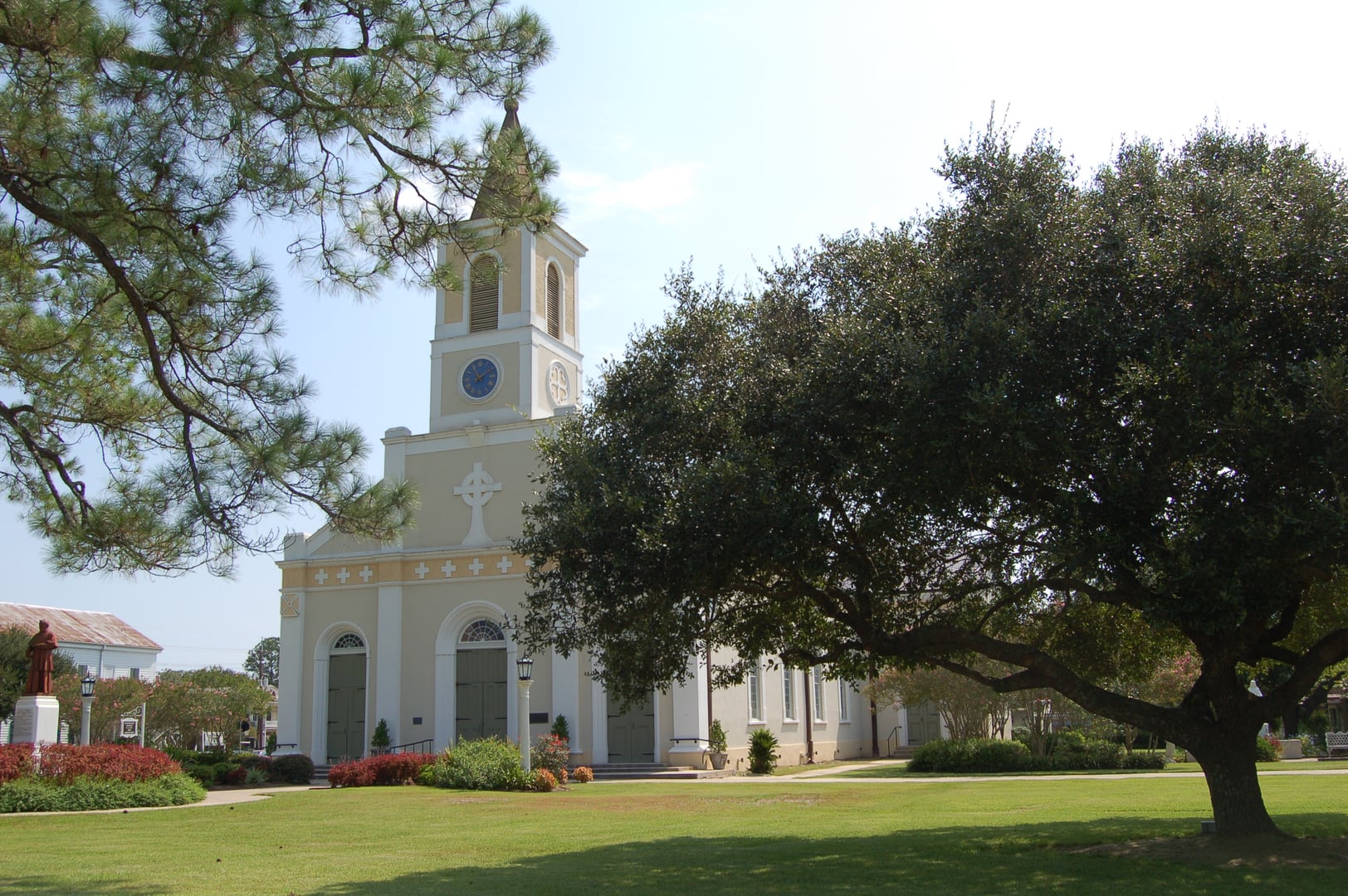
Grace Episcopal Church traces its founding to 1827, making it among the oldest Protestant congregations in Louisiana. The original structure gave way to the current Gothic Revival building, completed in 1860 by local craftsmen under the direction of the vestry. The pointed-arch windows, board-and-batten exterior, and exposed timber interior are characteristic of the rural Gothic Revival style popularized by architect Richard Upjohn's rural church designs in the antebellum period.
On August 9, 1863, Union gunboats operating on the Mississippi River opened fire on St. Francisville after a Confederate sniper shot was attributed to the town. Several shells struck Grace Church, damaging the building and killing at least one civilian. The attack was part of broader Union pressure on the Red River and Feliciana parishes corridor during the 1863 Vicksburg Campaign season.
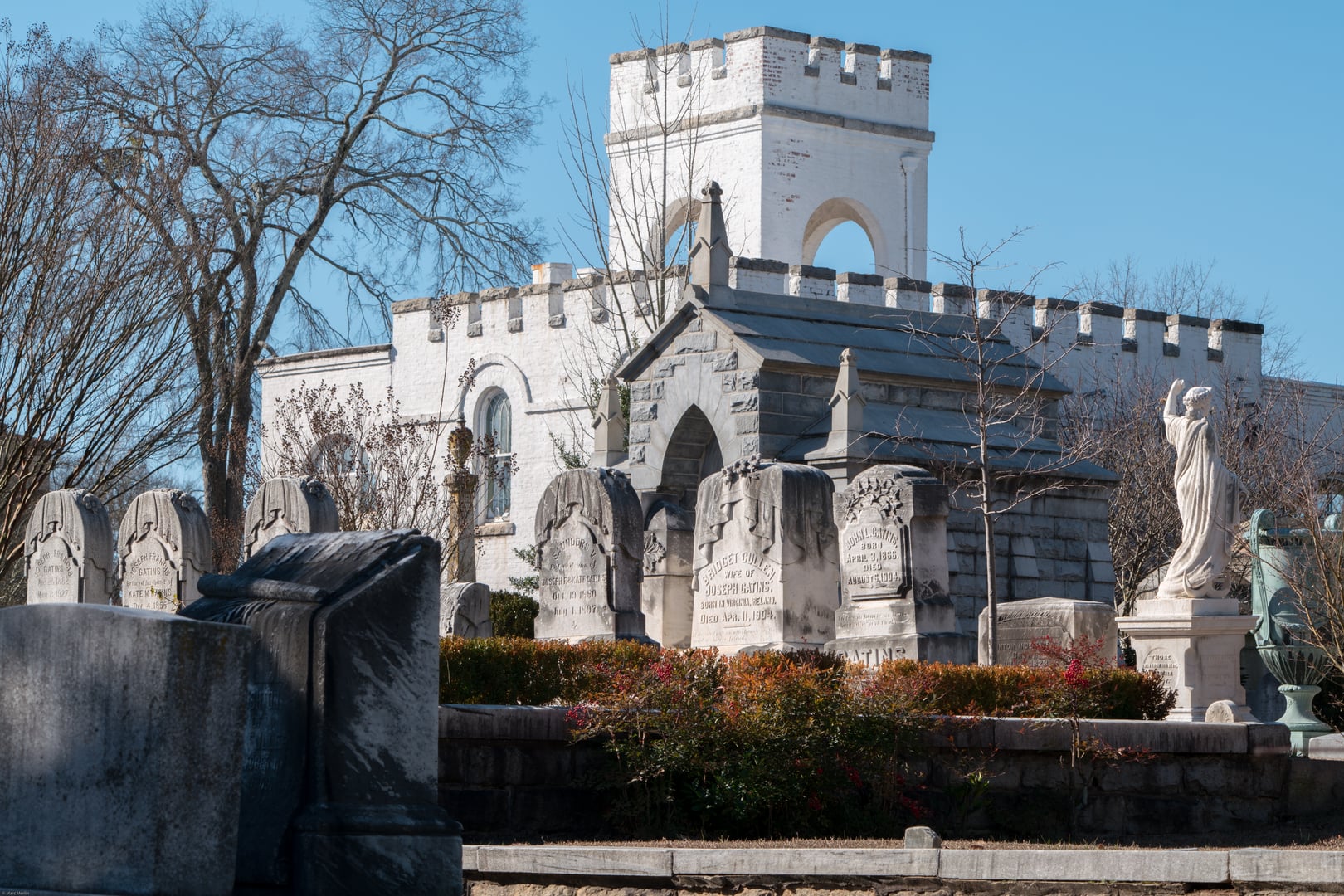
The cemetery predates the current church building and holds graves from the early nineteenth century through the twentieth. Among the notable interments are soldiers from both sides of the Civil War. The most storied burial involves Union Navy officer John Elliott Hart, who died in August 1863 — accounts hold that Confederate soldiers from St. Francisville paused hostilities long enough to give him a proper burial, a gesture commemorated annually as the 'Day the War Stopped' festival.
The church and cemetery were added to the National Register of Historic Places in 1979. The congregation remains active and the property is one of the most-visited historic sites in West Feliciana Parish, drawing visitors interested in antebellum architecture, Civil War history, and the cemetery's atmospheric moss-draped setting.
Sources
- https://en.wikipedia.org/wiki/Grace_Episcopal_Church_(St._Francisville,_Louisiana)
- https://www.theadvocate.com/baton_rouge/news/communities/st_francisville/st-francisville-hauntings-honored-as-place-to-visit-by-website/article_0d8a979a-113a-11ee-be86-e3a3838c0360.html
- https://www.youtube.com/watch?v=Tue07ynPqLg
Apparitions among cemetery monumentsShadow figures photographed under live oaksGeneral atmospheric unease reported by visitors
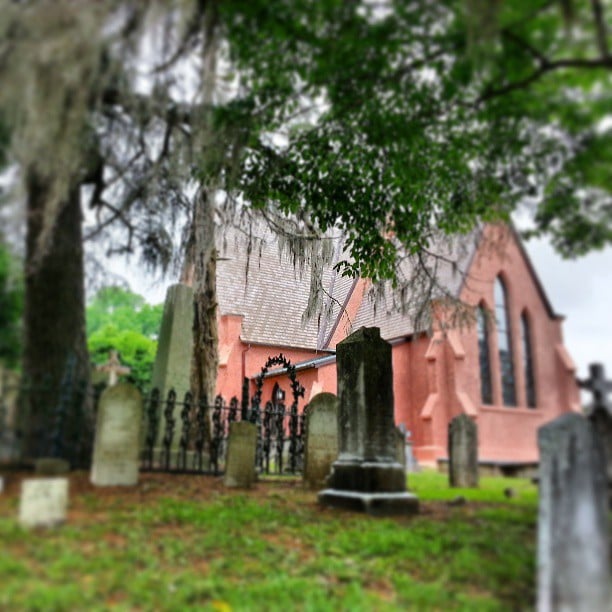
Grace Episcopal's reputation as a haunted site rests largely on the cemetery itself — the dense canopy of live oaks, the Spanish moss, the weathered nineteenth-century headstones, and the knowledge that the ground holds soldiers from a war that passed violently through the town. Regional paranormal resources, including a 2023 recognition from a national haunted-travel website cited in The Advocate, consistently list the church and cemetery among St. Francisville's most-visited dark-history sites.
Specific paranormal claims are not well-documented in primary sources. The most common descriptions involve unease among the graves, shadows at the edges of photographs taken under the oaks, and a general heaviness that visitors interpret as spiritual presence. The cemetery's Civil War layers — Union and Confederate dead interred under the same oaks — give it an emotional weight that sustains the lore.
The 'Day the War Stopped' story, while not paranormal, contributes to the site's atmosphere. Whether the burial of Union officer John Elliott Hart truly paused local hostilities in 1863 is not fully corroborated in the military record, but the story has been commemorated locally for decades and is treated as part of the site's meaning. It is the kind of history — generous, specific, dated — that dark-tourism visitors often find more affecting than invented ghost claims.
Notable Entities
Union Navy officer John Elliott Hart (interred 1863)