Est. 1840 · Founded 1765 by Acadian Exiles — Third Oldest Catholic Church in Louisiana · Priests Buried Beneath Sanctuary Floor (Old-French Tradition) · Grave of Emmeline Labiche — Historical Model for Longfellow's Evangeline · Yellow Fever Epidemic History · Civil War Occupation of St. Martinville · National Register of Historic Places · Acadian History and Grand Dérangement Heritage
When the British expelled the Acadian population from Nova Scotia in 1755 in what the Acadians called the Grand Dérangement, survivors scattered across the Atlantic world. A group of these exiles arrived in the bayou country of what would become St. Martin Parish, Louisiana, and established a settlement at the site that would become St. Martinville. They founded a Catholic mission in 1765 — making St. Martin de Tours one of the earliest Catholic parishes organized by European colonists on the American continent.
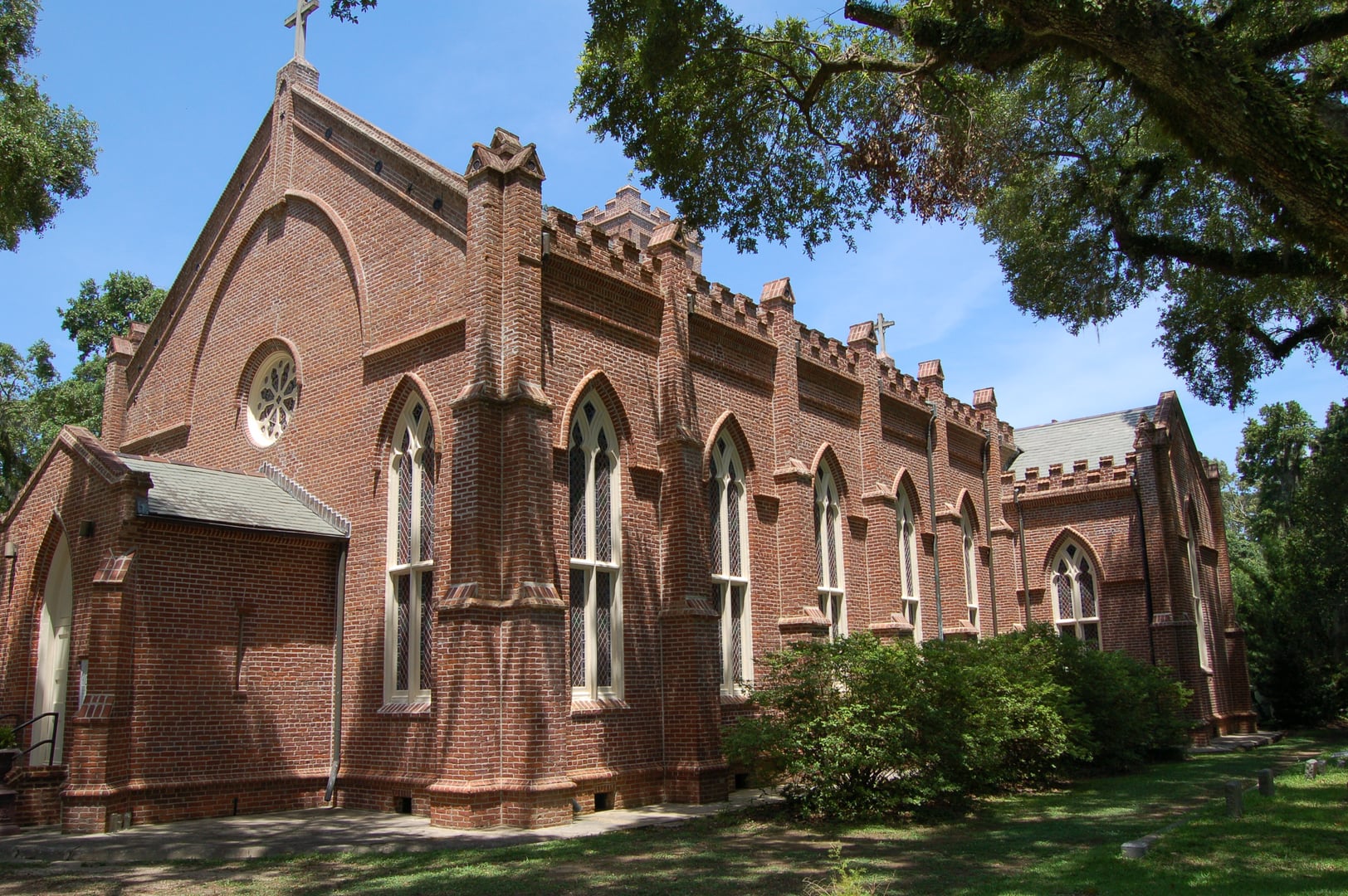
The church has occupied this site continuously since then. The current building was completed in 1840 in a style that blends Greek Revival and colonial Louisiana influences, with modifications over the following decades. The structure is listed on the National Register of Historic Places as part of its historical and architectural significance.
The church retains a practice from old-French Catholic tradition: priests are buried beneath the sanctuary floor. This custom, common in European Catholic churches but rare in American ones, means the building contains interred remains below its floors — a fact that the travel literature associated with the church frequently notes as contributing to its atmospheric weight.
The town of St. Martinville endured multiple yellow fever epidemics during the nineteenth century, which killed significant numbers of residents and would have placed bodies in the adjacent churchyard. The town was also occupied by Union forces during the Civil War, and the church survived that occupation. The churchyard cemetery includes the grave of Emmeline Labiche, identified locally as the historical model for the character Evangeline in Henry Wadsworth Longfellow's 1847 epic poem. A bronze statue of Evangeline, donated by actress Dolores Del Rio in the 1920s, marks the grave.
Sources
- https://en.wikipedia.org/wiki/St._Martin_of_Tours_Catholic_Church_(St._Martinville,_Louisiana)
- https://www.frommers.com/destinations/st-martinville/attractions/st-martin-de-tours-church/
- https://funkytexastraveler.com/ghostly-night-in-st-martinville-old-castillo-hotel/
Atmospheric presenceHistorical weight of burials beneath church floorCemetery visitation
St. Martin de Tours does not carry the same inventory of specific paranormal reports as some Louisiana sites, but its atmospheric and historical weight is considerable. The combination of documented deaths buried beneath and around the building — priests under the floor, yellow-fever victims in the churchyard — with the long weight of Acadian exile and grief makes it a site where darkness is woven into the founding narrative rather than layered on afterward.
The grave of Emmeline Labiche in the churchyard is marked by a bronze Evangeline statue donated by actress Dolores Del Rio in the 1920s. The identification of Labiche as the real-world model for Longfellow's character is a matter of local tradition and has been accepted by St. Martinville's civic identity for over a century, regardless of what academic historians make of the specific claim. Longfellow's Evangeline is a story of exile, separation, and death from grief — and the grave in this churchyard is where that story, in its Louisiana rendering, is said to end.
Travelers who have stayed overnight in the adjacent Old Castillo Hotel describe St. Martinville's overall atmosphere — the church, the cemetery, the oak, the bayou — as producing a feeling of the past pressing close. The specific dark history here is Acadian history: displacement, epidemic, loss of homeland, and the long work of building a community from exile. That history is not ghost-story material in the conventional sense; it is something older and more specifically sad.
Notable Entities
Emmeline Labiche — Historical model for Longfellow's Evangeline; buried in churchyard