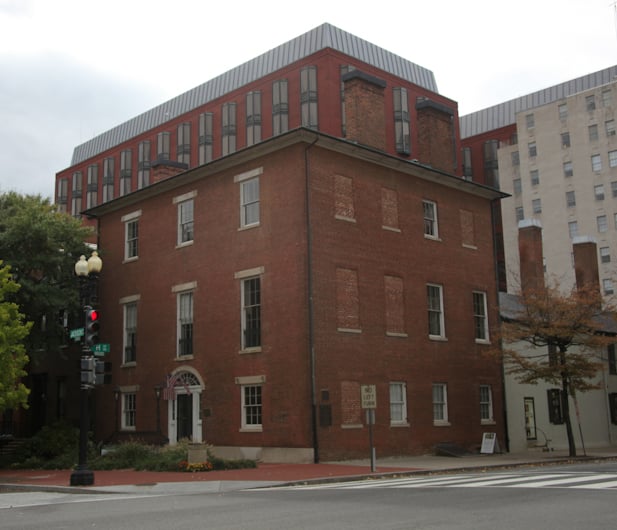
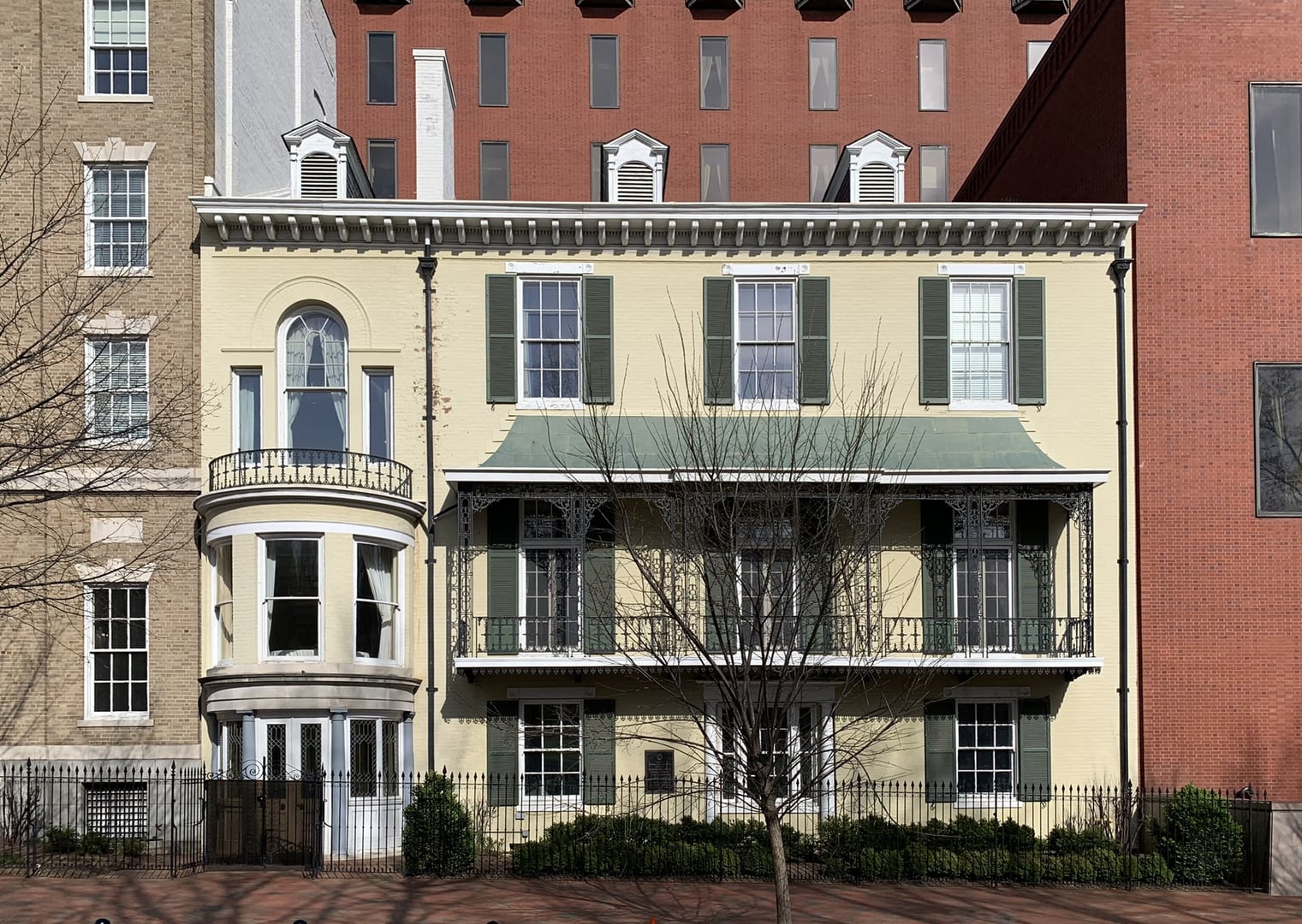
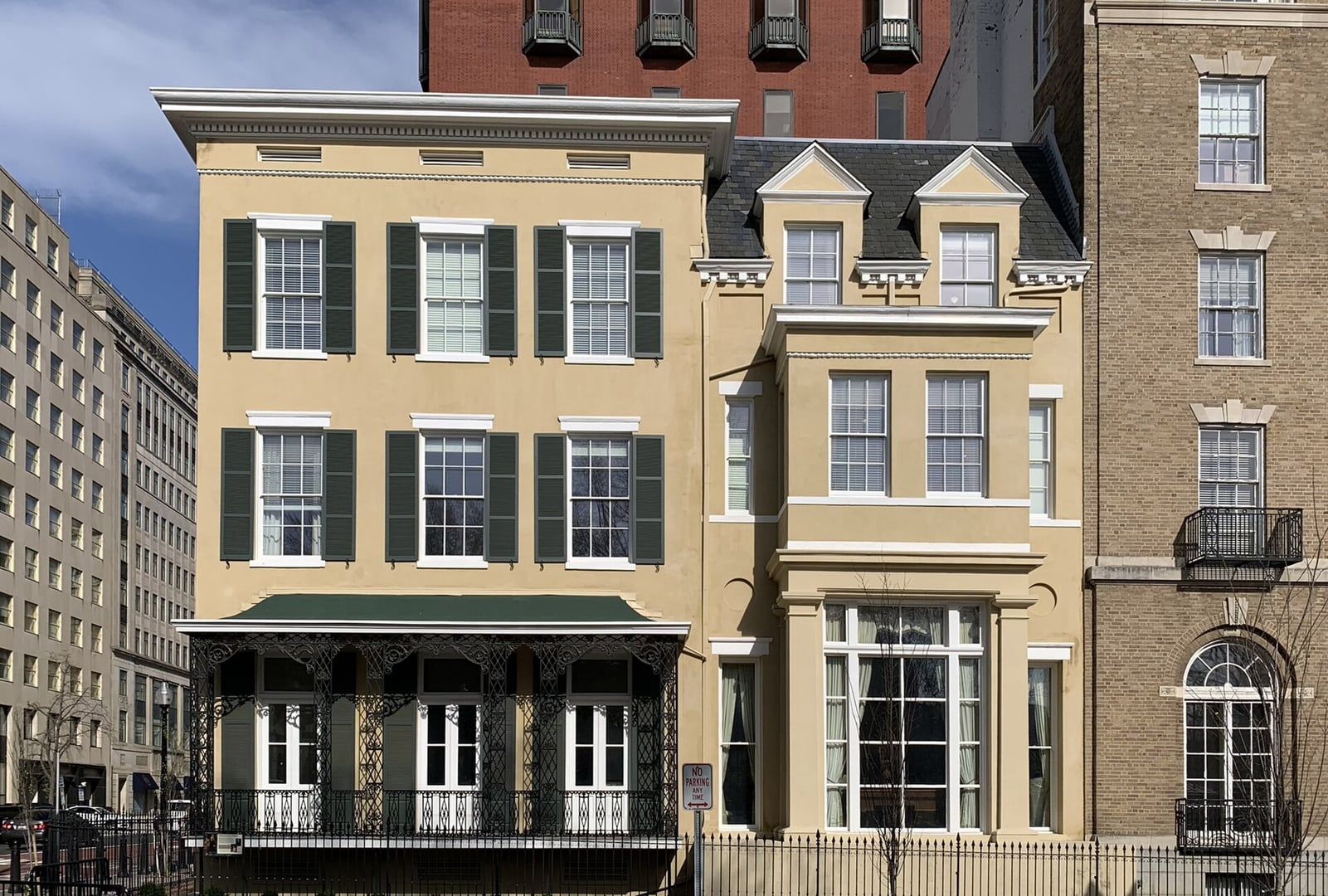
Est. 1804 · Oldest building at the Washington Navy Yard · Residence of first commandant Commodore Thomas Tingey · Now the official residence of the Chief of Naval Operations · National Register of Historic Places
The Washington Navy Yard was established in 1799, and in 1804 the house now known as Tingey House was completed to a design by William Lovering. It is the oldest surviving building on the grounds. The house took its name from Commodore Thomas Tingey, the yard's first superintendent and commandant, who held the post for 28 years and lived in the residence until his death.
During the War of 1812, as British forces advanced on Washington in 1814, Tingey oversaw the burning of much of the Navy Yard to keep it out of enemy hands. The commandant's house survived, and Tingey returned to it afterward. The building sits near the Latrobe Gate, the historic ceremonial entrance to the yard, and is notable as the only major structure partly outside the original yard fortification line.
For more than two centuries the house has served as quarters for the Navy Yard's senior officers. In its current role it is the official residence of the Chief of Naval Operations, the Navy's highest-ranking officer. Because it stands on an active military installation, the house is not open to the public.
The building is listed on the National Register of Historic Places as part of the Washington Navy Yard's protected historic core, and it remains one of the oldest continuously occupied residences in the District.
Sources
- https://en.wikipedia.org/wiki/Tingey_House
- https://dirtamericana.com/2022/10/haunted-history-southeast-washington-dc/
- https://aroundus.com/p/3912873-tingey-house
Figure of Commodore Tingey seen at the upper windowsA dog reacting to an unseen presence (1960 account)
The haunting tradition at Tingey House centers on its first resident. According to Navy Yard folklore recorded on Wikipedia and in regional haunted-history accounts, the ghost of Commodore Thomas Tingey is said to watch the grounds from the upper windows of the house he occupied for nearly three decades.
The earliest reported sighting is dated to 1853, when the daughter of the then-commandant of the Navy Yard reported seeing Tingey's apparition in the house. The most often-retold account comes from August 1960, when Rear Admiral Thomas Robbins, then living in the residence, described his dog, Lucky, barking at an empty chair in the drawing room and refusing to stop. Robbins is said to have addressed the room directly, telling the commodore he and his family were glad to be living in his house, after which the dog settled.
The stories are presented as part of the residence's long oral tradition rather than as investigated cases, and the house's status as an active, secure military residence means the public cannot enter to look for themselves. The lore endures largely because of Tingey's central, founding role at the Navy Yard and the unusual continuity of the house, occupied by the yard's senior officers for more than two hundred years.
Notable Entities
Commodore Thomas Tingey