Drive-By
Exterior View from Lafayette Square
View the Federal-style facade from the H Street and Madison Place sidewalks; pairs with a walk around Lafayette Square's other haunted sites.
- Duration:
- 15 min
HauntBound archive · catalog record
Reported phenomena, as catalogued
1818 Federal townhouse on Lafayette Square that became Dolley Madison's final residence; a rocking chair on her former porch is said to rock by itself, and the rear courtyard now displays the Black Aggie statue. Federal courts building — exterior viewing from the Lafayette Square sidewalk only.
1520 H Street NW, Washington, DC 20005
Research updated September 2026
Age
All Ages
Cost
Free
Exterior viewing free from Lafayette Square; interior is occupied by federal courts and not open to the public.
Access
Wheelchair OK
Public sidewalks around Lafayette Square; exterior viewing only.
Equipment
Photos OK
Est. 1818 · Final residence of former First Lady Dolley Madison · Site of Dolley Madison's death, July 12, 1849 · Contributing structure of the Lafayette Square Historic District (NHL) · Home of the Cosmos Club for the first half of the 20th century · Houses the Black Aggie statue (copy of Adams Memorial) in its rear courtyard
The Cutts-Madison House sits at the southeast corner of Madison Place and H Street, facing Lafayette Square. It was built in 1818-1819 by Richard Cutts, a member of Congress and brother-in-law of James Madison, for himself and his wife Anna Payne Cutts (Dolley Madison's sister). Financial difficulties forced Cutts to sell the property in 1828 to former President James Madison.
After Madison's death at Montpelier in 1836, Dolley Madison moved permanently to the Lafayette Square house. From 1837 to 1849 she made the house a center of Washington society — entertaining presidents, diplomats, and family. She died there of natural causes on July 12, 1849, at the age of 81.
In 1854 the house was sold to U.S. Vice President George M. Dallas, and over the second half of the 19th century it passed through several owners. From the early 20th century until the 1950s it was occupied by the Cosmos Club. In the 1960s the federal government acquired the property and incorporated it into a courts complex along Madison Place. Today the building houses chambers and offices for the U.S. Court of Appeals for the Federal Circuit and the U.S. Court of Federal Claims, with a shared interior courtyard linking it to the adjacent Benjamin Ogle Tayloe House.
The rear courtyard now displays the 'Black Aggie' statue — an unauthorized 1905 bronze copy of Augustus Saint-Gaudens's Adams Memorial, which was once installed in Druid Ridge Cemetery near Baltimore, removed in 1967 due to vandalism and folklore, donated to the Smithsonian, and eventually placed at the Cutts-Madison House courtyard. (The original Adams Memorial remains at Rock Creek Cemetery.)
Sources
Dolley Madison's haunting reputation at the Lafayette Square house is one of the older and more consistently reported Washington legends. According to DC Ghosts, the White House Historical Association, and Wikipedia's compendium of DC haunted locations, sightings began in the late 1800s, when men leaving the Cosmos Club at night reported tipping their hats to a shadowy female figure rocking on the building's west-side porch. The figure was described as smiling and unthreatening, consistent with Dolley Madison's reputation as a hostess. Some accounts describe a single workman from the porch-removal project being scared off when the apparition reportedly turned and looked at him directly.
A related thread of the lore concerns Dolley's rocking chair itself, said to rock on its own indoors. Reports of this kind appear in late-19th-century newspaper coverage of the house and have continued — more sporadically — through the building's federal-government tenancy.
The rear courtyard now displays the 'Black Aggie,' an unauthorized 1905 bronze copy of Saint-Gaudens's Adams Memorial, which collected substantial Baltimore-area folklore during its decades at Druid Ridge Cemetery (alleged eyes glowing red at night, a fraternity-pledge death). After being removed from the cemetery in 1967 due to vandalism and persistent paranormal-seeker traffic, the statue was donated to the Smithsonian, stored unseen for decades, and eventually relocated to the Cutts-Madison House's rear courtyard. While the courtyard is not generally public-accessible, the statue's presence is documented and adds a secondary haunted-object layer to the property.
This venue is a working federal courts building and not open to the public — appreciate from the public sidewalks around Lafayette Square only.
Notable Entities
View the Federal-style facade from the H Street and Madison Place sidewalks; pairs with a walk around Lafayette Square's other haunted sites.
Some links on this page may earn HauntBound a small commission when you book, at no extra cost to you. Our editorial picks are independent. Full disclosure
This Washington tour includes Cutts-Madison House (Dolley Madison House) on its route.
Every HauntBound history is researched from documented sources. We clearly separate verified historical fact from paranormal folklore.
Free Guide
Verified stops across all fifty states, rated for families. Free.
One email to confirm, then the guide link. Unsubscribe anytime.
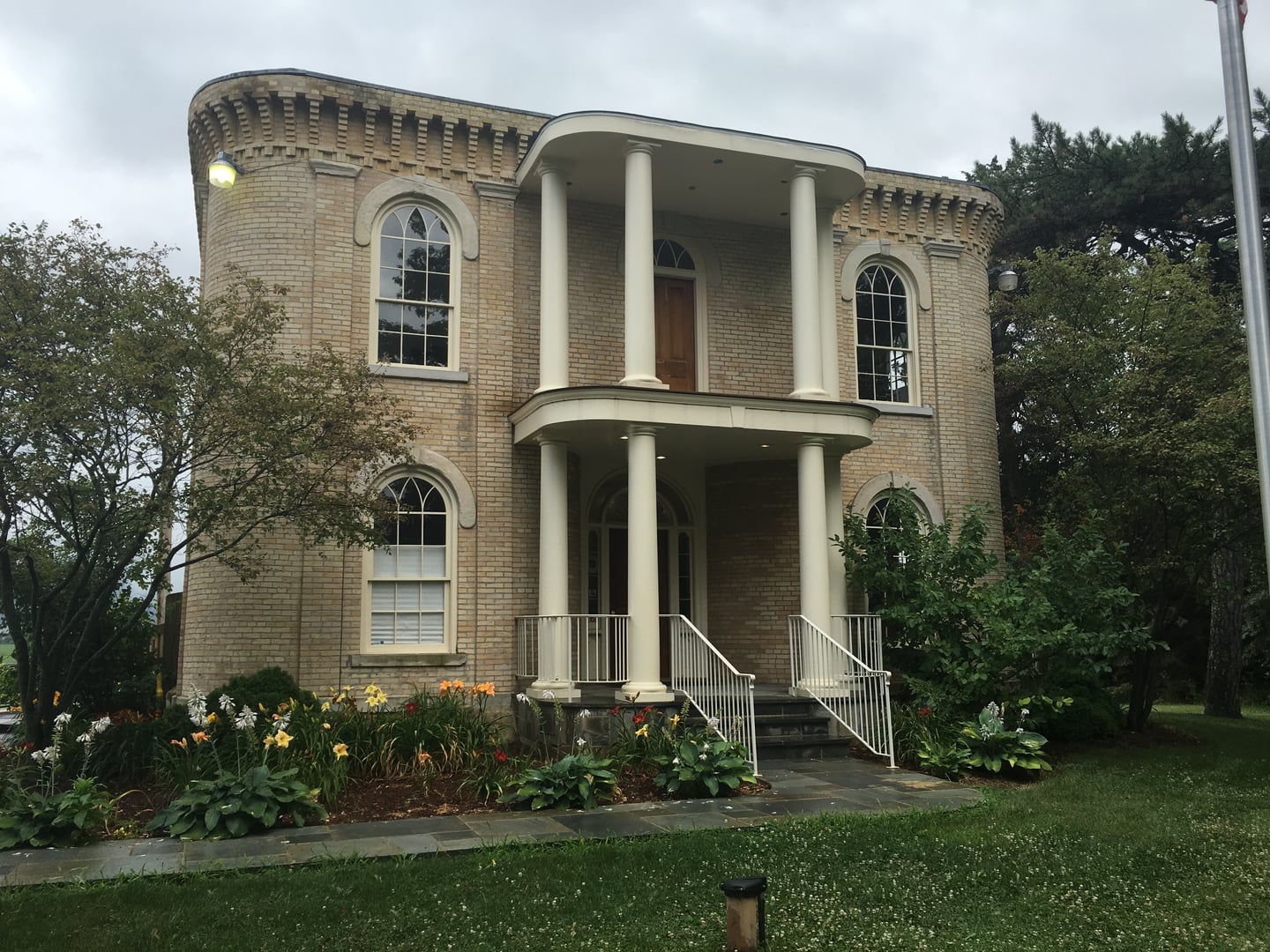
Bull Valley, IL
The George Stickney House is an 1865 stucco-over-frame mansion in Bull Valley, Illinois, built for spiritualists George and Sylvia Stickney. The Stickneys, both practicing mediums, are said to have designed the interior without right angles to ease the movement of spirits during seances. The building has served as the Bull Valley Police Department since 1985 and has been listed on the National Register of Historic Places since 1979.
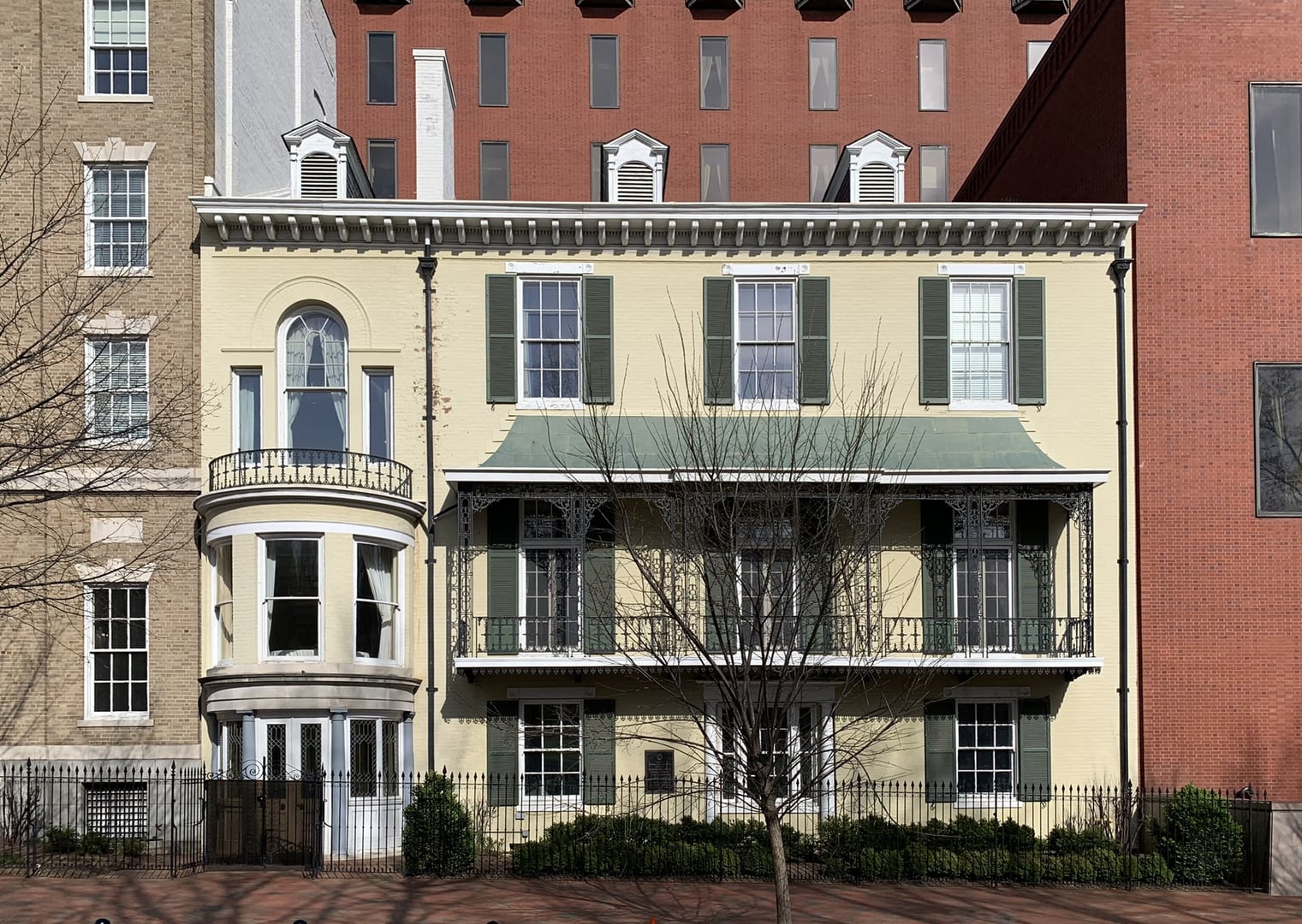
Washington, DC
Built in 1828 on the east side of Lafayette Square, the Benjamin Ogle Tayloe House is best known as the place where Philip Barton Key II was carried to die on February 27, 1859, after Congressman Daniel Sickles shot him in the square. The house later served as a residence and club building and is now part of the federal courts complex on Madison Place.
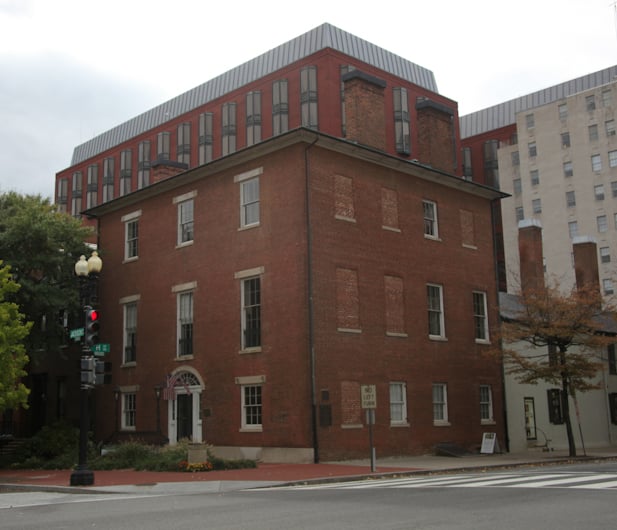
Washington, DC
Designed by Benjamin Henry Latrobe and completed in 1818, Decatur House is one of the oldest surviving homes in Washington and one of three remaining Latrobe-designed houses in the United States. Commodore Stephen Decatur Jr. occupied it for just 14 months before he was mortally wounded in an 1820 duel with Commodore James Barron and died in the house. The property later passed through several political households and operated quarters for enslaved people, including Charlotte Dupuy, who sued Henry Clay for her freedom in 1829. It is now a historic site of the White House Historical Association.