Drive-By
Exterior Photo Stop
Drive-by visit to the historic 1924 Rapp and Rapp facade on Milwaukee's Polonia heritage corridor. Interior access is limited to ticketed events; ownership and operating status have fluctuated.
- Duration:
- 15 min
HauntBound archive · catalog record
Reported phenomena, as catalogued
+ 1 further entry on record
1924 Rapp and Rapp neighborhood movie palace on Milwaukee's South Side, named for Polish stage actress Helena Modjeska; investigators report a top-hatted Balcony Man and a white-clad figure on stage.
1134 W Historic Mitchell St, Milwaukee, WI 53204
Research updated May 2026
Age
All Ages
Cost
$$
Variable by event; check venue directly for current programming and pricing.
Access
Limited Access
Historic 1924 building with main-floor and balcony seating; limited accessibility upgrades.
Equipment
Photos OK
Est. 1924 · Rapp and Rapp Designed Movie Palace · Named for Polish actress Helena Modjeska (1840-1909) · Milwaukee Polonia Heritage Corridor · Continuously surviving 1924 neighborhood movie palace
Madame Helena Modjeska, born in Krakow in 1840, was one of the most celebrated stage actresses of late-19th-century American theater and a particular favorite of Milwaukee's large Polish immigrant community. After her death in 1909, the first Modjeska Theatre opened in 1910 on West Mitchell Street, the commercial spine of Milwaukee's south-side Polonia neighborhood. It operated as a vaudeville house through the 1910s.
In 1920, Milwaukee's Saxe Theatres acquired the property and engaged Chicago's Rapp and Rapp, the leading movie-palace architects of the era, to design a replacement. Rapp and Rapp's portfolio at the time included the Uptown Theatre in Chicago and Loew's Jersey in Jersey City. The new Modjeska, more modestly scaled than the firm's flagships, opened August 2, 1924, with 2,500 seats and a full stage house suitable for combined film-and-vaudeville bookings.
The theater operated continuously as a movie house through midcentury, transitioning to second-run and Spanish-language programming as the surrounding neighborhood demographics shifted. The building has changed hands multiple times since the 1980s and has been used variously as a community theater, special-event venue, and live-music house. Operating status has been fluid in the 2020s. The building remains on Milwaukee's local historic register and contributes to the West Historic Mitchell Street corridor.
Sources
Witness accounts at the Modjeska Theatre are documented across multiple independent sources, including Milwaukee ghost-lore author Anna Lardinois, Paranormal Investigators of Milwaukee, and the local OnMilwaukee feature column. The most-repeated figure is the Balcony Man: witnesses describe a smoky, top-hatted form in the upper gallery who appears to be watching the stage and dissipates when approached. The figure has no identified historical attribution.
According to Anna Lardinois in 'Milwaukee Ghosts and Legends' (Arcadia Publishing/Haunted America series, 2014), 'there seems little doubt that the theater is haunted,' citing the Balcony Man as the site's most consistently reported presence. This book-length treatment of Milwaukee's paranormal tradition independently corroborates the Modjeska's haunting reputation beyond web aggregators.
A second account describes a white-clad female apparition seen briefly on stage during off-hours walk-throughs and event setups. The figure is sometimes loosely associated with Helena Modjeska, the theater's namesake, but no documented account places Modjeska herself in the 1924 building (which postdates her 1909 death by fifteen years). Investigators frame the white-clad figure as an unidentified presence rather than confirmed Modjeska attribution.
Paranormal Investigators of Milwaukee logs intermittent investigations at the property, generally reporting cold spots in the balcony and EMF anomalies near the booth. The Modjeska was also featured on a panel titled 'Yow! My Business is Haunted!' at the Milwaukee Paranormal Conference, where a theater representative discussed the legacy of ghost stories in the building. Operating status has been fluid enough that public access is irregular.
Notable Entities
Media Appearances
Drive-by visit to the historic 1924 Rapp and Rapp facade on Milwaukee's Polonia heritage corridor. Interior access is limited to ticketed events; ownership and operating status have fluctuated.
Some links on this page may earn HauntBound a small commission when you book, at no extra cost to you. Our editorial picks are independent. Full disclosure
Every HauntBound history is researched from documented sources. We clearly separate verified historical fact from paranormal folklore.
Free Guide
11 verified stops, rated for families, mapped in order. Free.
One email to confirm, then the guide link. Unsubscribe anytime.
Redlands, CA
The Redlands Fox Theatre was built in 1927 and opened December 28, 1928, as a 1,505-seat Mission Revival picture house designed by Lewis A. Smith for the West Coast Theatres chain. After West Coast merged with Fox Theatres in 1929 it became the Fox West Coast Redlands. The building reopened in 2009 as the Fox Event Center.
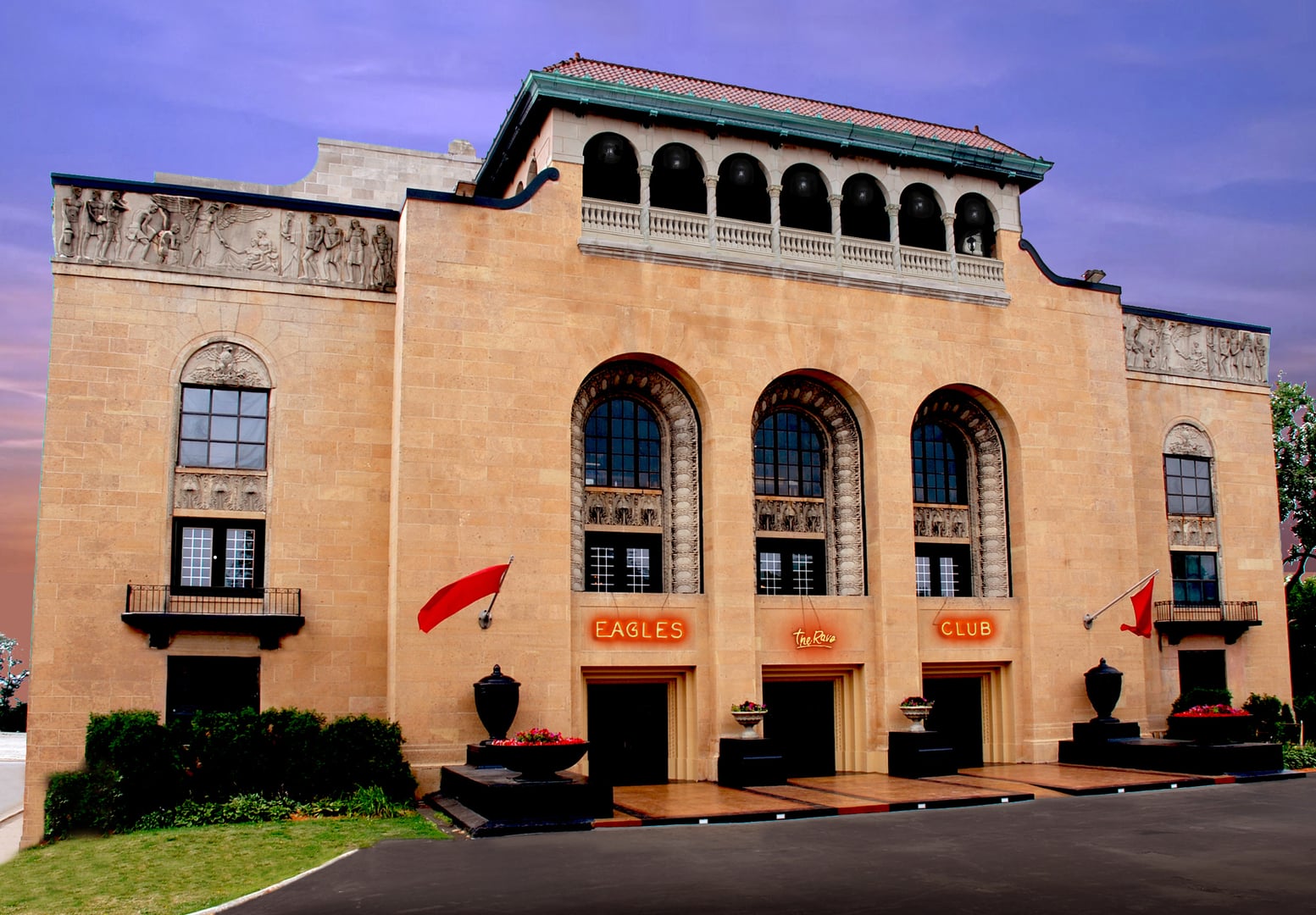
Milwaukee, WI
The Eagles Club opened on September 13, 1927, as the Milwaukee headquarters of the Fraternal Order of Eagles. Designed as a civic social club, the 180,000-square-foot, seven-level granite block structure originally contained a grand ballroom, barbershop, bowling alley, and swimming pool. Three days before opening, 15-year-old Francis Wren drowned in the basement pool — the event that anchors the building's paranormal reputation. In 1991, the building became The Rave, a concert venue.
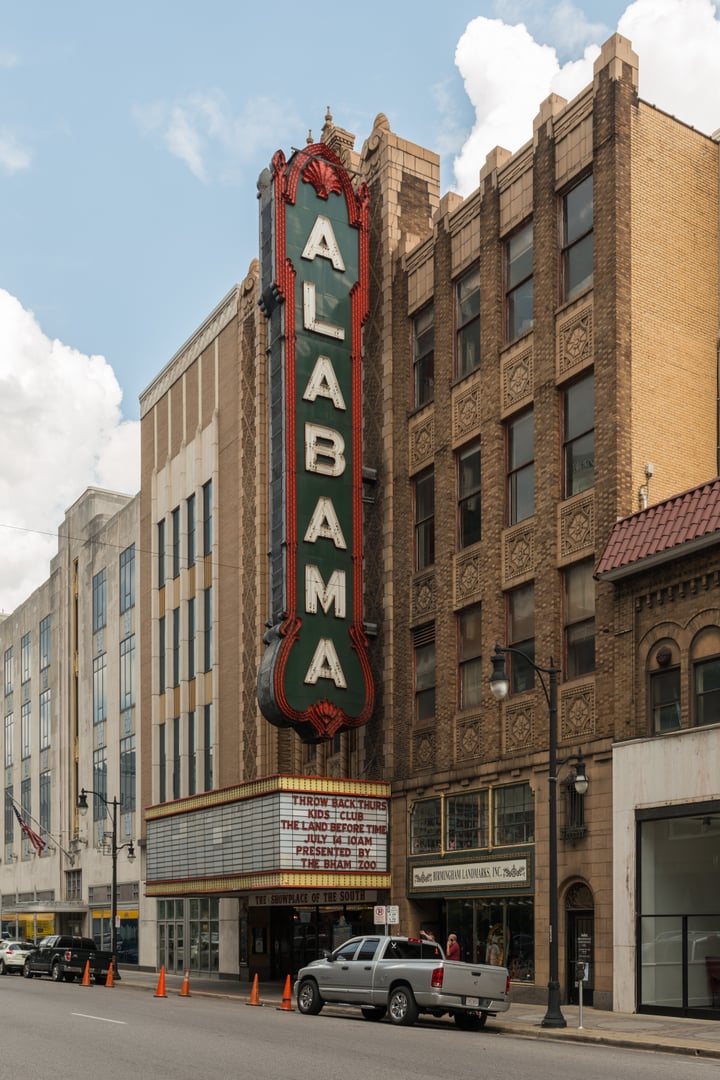
Birmingham, AL
The Alabama Theatre is a 1927 Paramount-Publix movie palace in downtown Birmingham, designed by the Chicago firm Graven & Mayger in a Spanish-Moorish style. The theatre houses one of the country's surviving Wurlitzer pipe organs (the 'Mighty Wurlitzer') installed at construction. It is operated today as a live-performance venue by Birmingham Landmarks, Inc., the same nonprofit that operates the nearby Lyric Theatre.