Est. 1850 · National Register of Historic Places (1980, Forest Home Cemetery and Chapel) · Laid out by naturalist Increase A. Lapham (1850) · Two Indigenous burial mounds, about AD 500 to 1100 · Graves of brewers Frederick Pabst and Jacob Best; memorial to Joseph Schlitz · Harley-Davidson co-founders Arthur and Walter Davidson; typewriter inventor Christopher Latham Sholes · First crematory in the Upper Midwest (1896) · ArbNet-accredited arboretum
Members of St. Paul's Episcopal Church formed a committee in 1847 to establish a cemetery for the growing city, bought 72 acres outside the city limits in 1849, and opened Forest Home in 1850. They engaged Increase Allen Lapham, Wisconsin's leading naturalist and surveyor, to lay out the grounds on the rural-garden model pioneered at Mount Auburn in Cambridge, Massachusetts, with curving carriage roads and naturalistic plantings. The cemetery now covers 189 acres.
Two conical mounds in sections 15 and 19 are far older than the cemetery. Built by Indigenous mound-building peoples between about AD 500 and 1100, they were noted by Lapham in 1850 and re-identified in 2024 by archaeologists working with the Ho-Chunk Nation's Tribal Historic Preservation Officer. The cemetery asks visitors to walk around the mounds, not across them, and to treat them with the same care as every other grave.
Forest Home became the principal burial place of Milwaukee's brewing, industrial and political families. Graves include those of brewer Frederick Pabst, Best brewery founder Jacob Best, typewriter inventor Christopher Latham Sholes, and Harley-Davidson co-founders Arthur and Walter Davidson. A memorial honors brewer Joseph Schlitz, who was lost at sea in 1875.
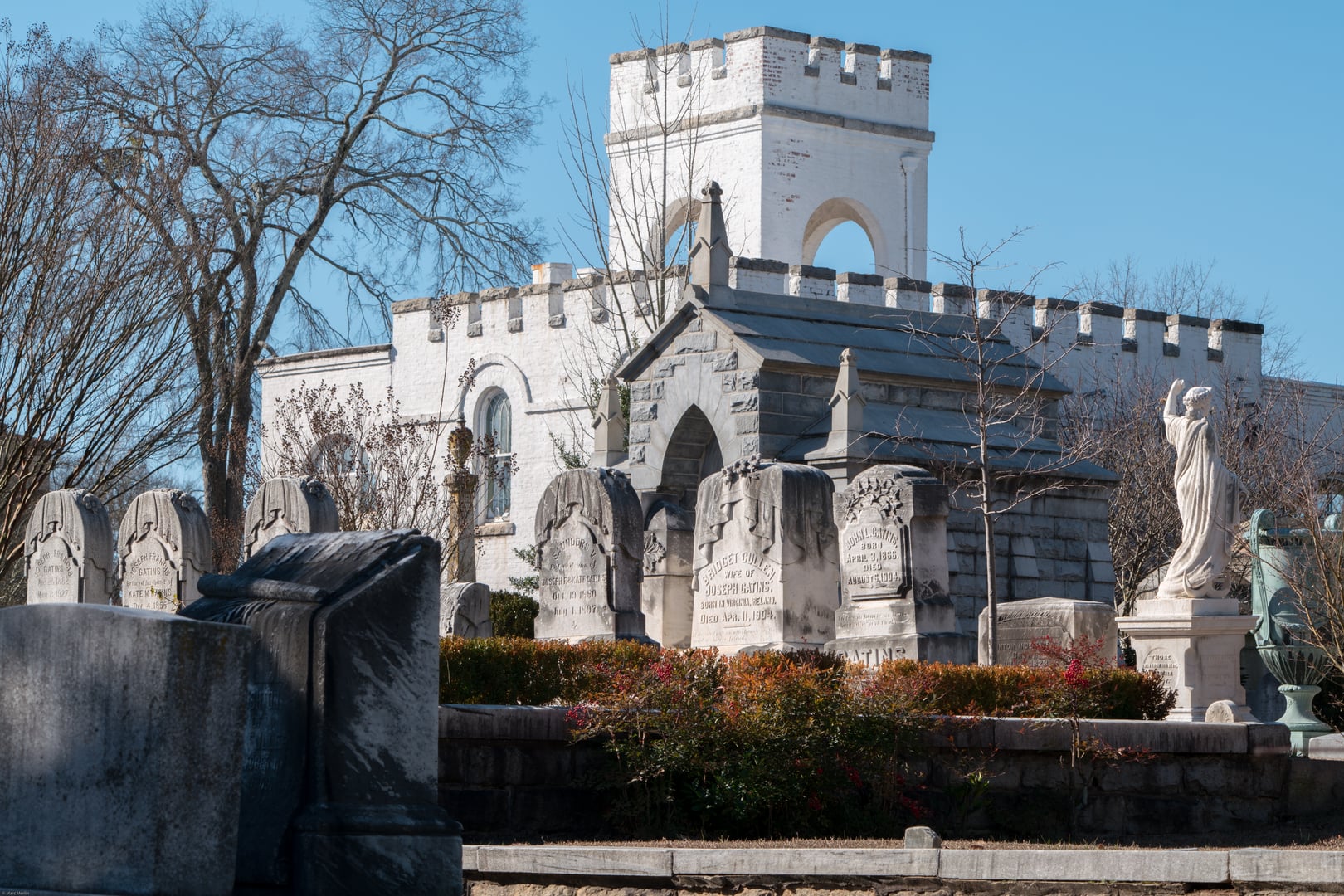
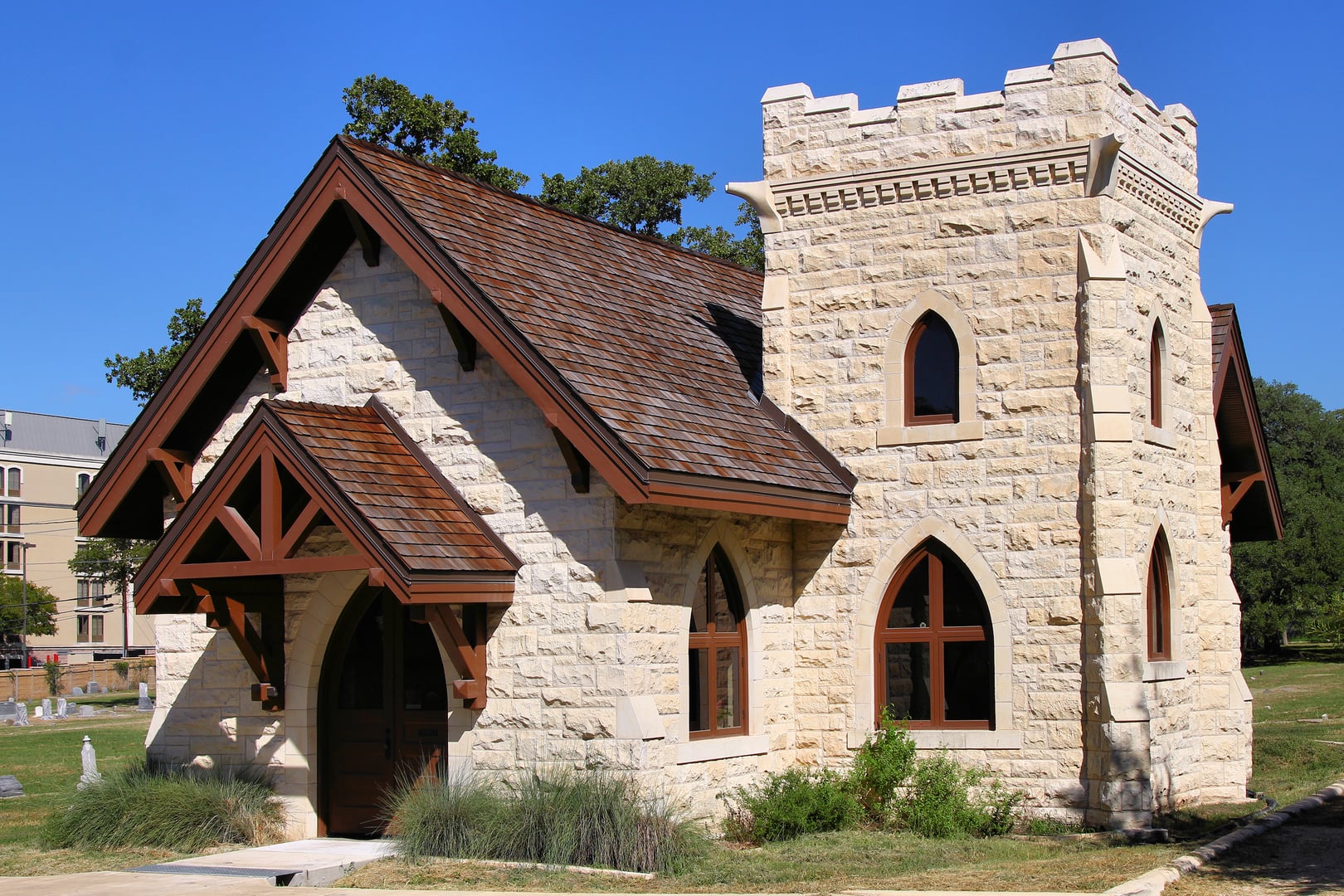
In 1890 the cemetery commissioned the Milwaukee firm of George Ferry and Alfred Clas to design the Gothic Revival Landmark Chapel, built of Lake Superior sandstone and completed in 1892. In 1896 Forest Home installed the first crematory in the Upper Midwest in the chapel's basement. The cemetery and chapel were listed on the National Register of Historic Places in 1980, and the grounds are an ArbNet-accredited arboretum.
The Forest Home Historic Preservation Association, founded in 1984, raises funds to preserve and share the cemetery's history. The cemetery runs public tours and events through the year, including art and symbolism tours, a Memorial Day program with historical interpreters, and a Día de los Muertos 5K and festival. Its after-dark theatrical tour, Spirits of the Silent City, produced with Caper Company, last ran in October 2024.
Sources
- https://foresthomecemetery.com/history/
- https://foresthomecemetery.com/mounds/
- https://foresthomecemetery.com/visit/public-tours/
- https://foresthomecemetery.com/forest-home-historic-preservation-association-inc/
- https://en.wikipedia.org/wiki/Forest_Home_Cemetery
- https://www.wuwm.com/2024-10-16/spirits-of-the-silent-city-brings-the-dead-to-life-at-milwaukees-forest-home-cemetery
- https://www.huffpost.com/entry/haunted-travel-forest-hom_b_5394631
Feelings of sickness or fear on the hill by the reflecting pond (one 2014 report)
Forest Home appears on many lists of haunted Wisconsin cemeteries, but few specific accounts stand behind the reputation. The most cited, a 2014 HuffPost contributor piece, describes a hill beside the reflecting pond on the north side of the cemetery, downhill from the main offices and mausoleums, that is said to leave some visitors feeling sick and fearful. The same piece notes that accounts of paranormal events at Forest Home are elusive, and that the writer experienced nothing unusual on a few short visits.
The cemetery does not present itself as a haunted site. It is an active, non-denominational cemetery and arboretum whose programs center on history, art and Milwaukee's cultural heritage.
Media Appearances
- HuffPost - Haunted Travel: Forest Home Cemetery, Milwaukee (2014)
- WUWM 89.7 - Spirits of the Silent City coverage (2024)
- TMJ4 Morning Blend - Spirits of Notable Milwaukee Natives