Drive-By
Exterior and Grounds Viewing
Walk the grounds and view the 1895 Châteauesque courthouse from W Broadway Avenue; the building's tower and turrets are visible from much of downtown Spokane.
- Duration:
- 25 min
HauntBound archive · catalog record
Reported phenomena, as catalogued
An 1895 French Renaissance Châteauesque masterpiece by architect Willis A. Ritchie that has drawn comparisons to the Loire Valley châteaux; site of multiple late-19th-century legal executions and associated ghost lore.
1116 W Broadway Ave, Spokane, WA 99260
Research updated June 2026
Age
All Ages
Cost
Free
Free public access to grounds and public areas of the courthouse; security screening required to enter.
Access
Wheelchair OK
Accessible entrances; security screening at all visitor entrances.
Equipment
No Photos
Est. 1895 · Designed by Willis A. Ritchie in French Renaissance Châteauesque style · Added to the National Register of Historic Places, 1974 · Site of Spokane County's first official execution (Charles Brooks, Sept. 6, 1892, on prior grounds) · Continuous seat of Spokane County government for more than 130 years
In 1893 the Spokane County Board of Commissioners held a design competition for a fireproof masonry courthouse not to exceed $250,000 in construction cost. The winning entry came from 29-year-old architect Willis A. Ritchie, an Ohio-born professional who had already designed county courthouses elsewhere in Washington. Ritchie's compensation was set at five percent of construction cost.
Construction began in spring 1894 under contractor David B. Fotheringham. The building combines French Renaissance and Romanesque Revival elements with Châteauesque towers, drawing direct visual comparison to the Loire Valley châteaux — particularly the Château d'Azay-le-Rideau and the Château de Chambord. Construction was interrupted in March 1895 by a dispute between Ritchie and the on-site construction superintendent but resumed and was completed in time for the building to open on November 20, 1895.
The courthouse hosted multiple executions on its grounds in the late 19th and early 20th centuries before Washington centralized capital punishment. Charles Brooks was hanged on the courthouse grounds on September 6, 1892, before approximately 1,000 spectators, for the killing of his wife in what is now Riverfront Park — Spokane County's first official execution. George Webster was hanged in the courthouse courtyard on March 30, 1900.
The building was added to the National Register of Historic Places in 1974 and continues to serve as the seat of Spokane County government, housing administrative offices and superior court functions.
Sources
Per KREM's 'Haunted Fridays: What lies beneath the Spokane Co. Courthouse,' Spokane Historical, and Spokesman-Review historical coverage, the courthouse carries multiple intersecting ghost narratives anchored in its execution history. Charles Brooks — convicted of killing his wife in what is now Riverfront Park — was hanged on Spokane County grounds on September 6, 1892 in front of approximately 1,000 spectators. Local lore holds that three months after the hanging, Brooks's apparition returned to the auditor's office to haunt clerks, with reports of a figure clutching at his own neck as if on the scaffold.
A second documented hanging at the courthouse — George Webster on March 30, 1900 — is also referenced in the lore but does not generate as specific a ghost narrative in published sources. KREM's segment additionally references shadow figures seen in the courthouse tower windows after dark and rumors of tunnels beneath the courthouse parking area, used historically to transport prisoners.
The paranormal coverage is well-anchored in primary historical record (the executions are documented in period newspapers and Spokane Historical entries) but the modern apparition reports are largely community lore relayed through ghost-tour and newscast coverage rather than from courthouse staff on the record.
Notable Entities
Walk the grounds and view the 1895 Châteauesque courthouse from W Broadway Avenue; the building's tower and turrets are visible from much of downtown Spokane.
Some links on this page may earn HauntBound a small commission when you book, at no extra cost to you. Our editorial picks are independent. Full disclosure
Every HauntBound history is researched from documented sources. We clearly separate verified historical fact from paranormal folklore.
Free Guide
10 verified stops, rated for families, mapped in order. Free.
One email to confirm, then the guide link. Unsubscribe anytime.
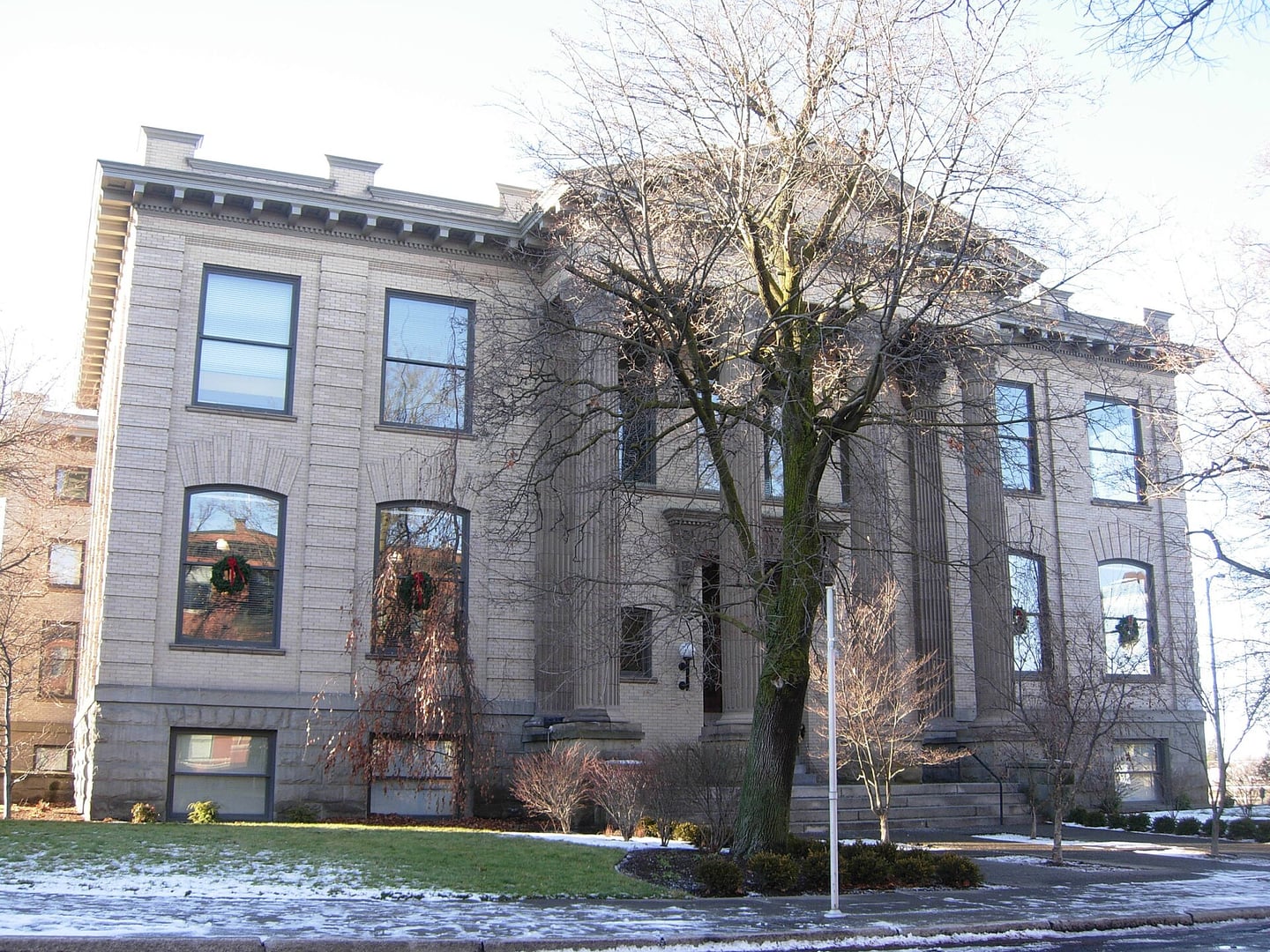
Spokane, WA
Spokane's first dedicated library building, designed by architects Herman Preusse and Julius Zittel; cornerstone placed September 1904 and the building opened in 1905. Construction cost $100,000, with $85,000 from Andrew Carnegie's library philanthropy. Listed on the National Register of Historic Places in 1982; renovated in the 1990s for Integrus Architecture's primary office.
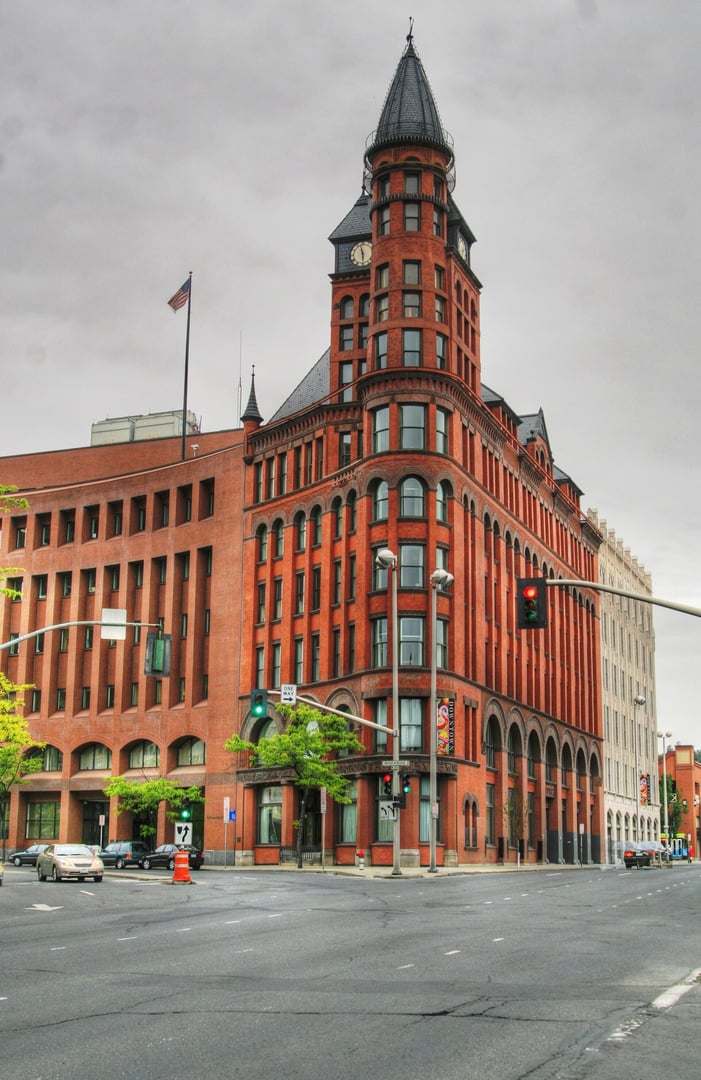
Spokane, WA
Begun March 1890 and completed October 1891 for the Spokane Falls Review newspaper. Designed by Alabama-born architect Chauncey B. Seaton in Romanesque-eclectic style with red pressed brick, Montana granite, and a 146-foot candle-snuffer tower. W.H. Cowles acquired the paper in 1893; the Cowles family has continuously published The Spokesman-Review from the building since.
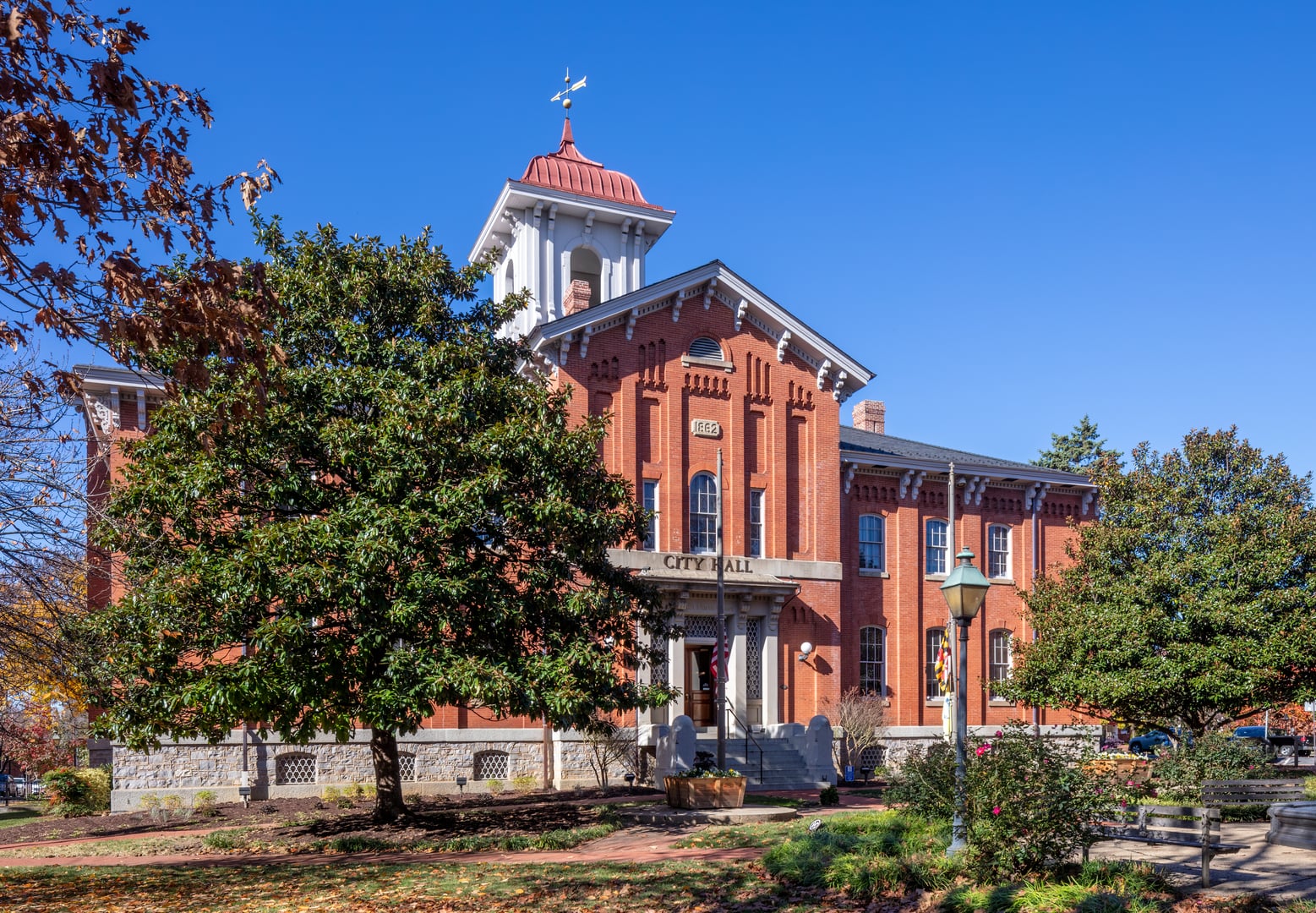
Frederick, MD
The current Greek Revival building at 101 North Court Street was constructed 1862-1864 by Thomas Dixon as the Frederick County Courthouse, replacing a 1785 Georgian courthouse destroyed by fire in 1861. The site has hosted Stamp Act protests in 1765, Revolutionary War Tory executions in 1781, and county judicial business through 1985, when a new county courthouse was built and the building became Frederick City Hall.