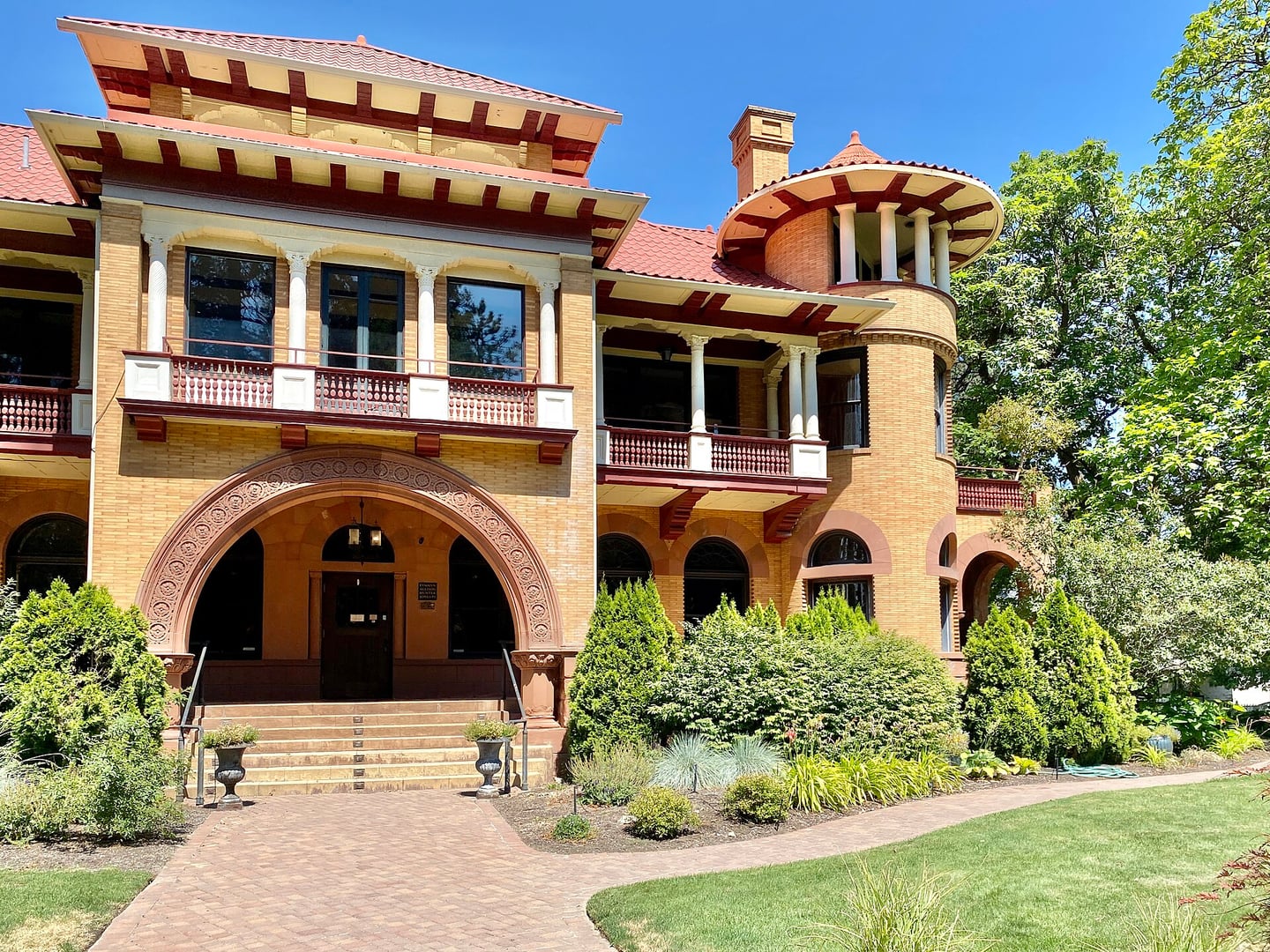
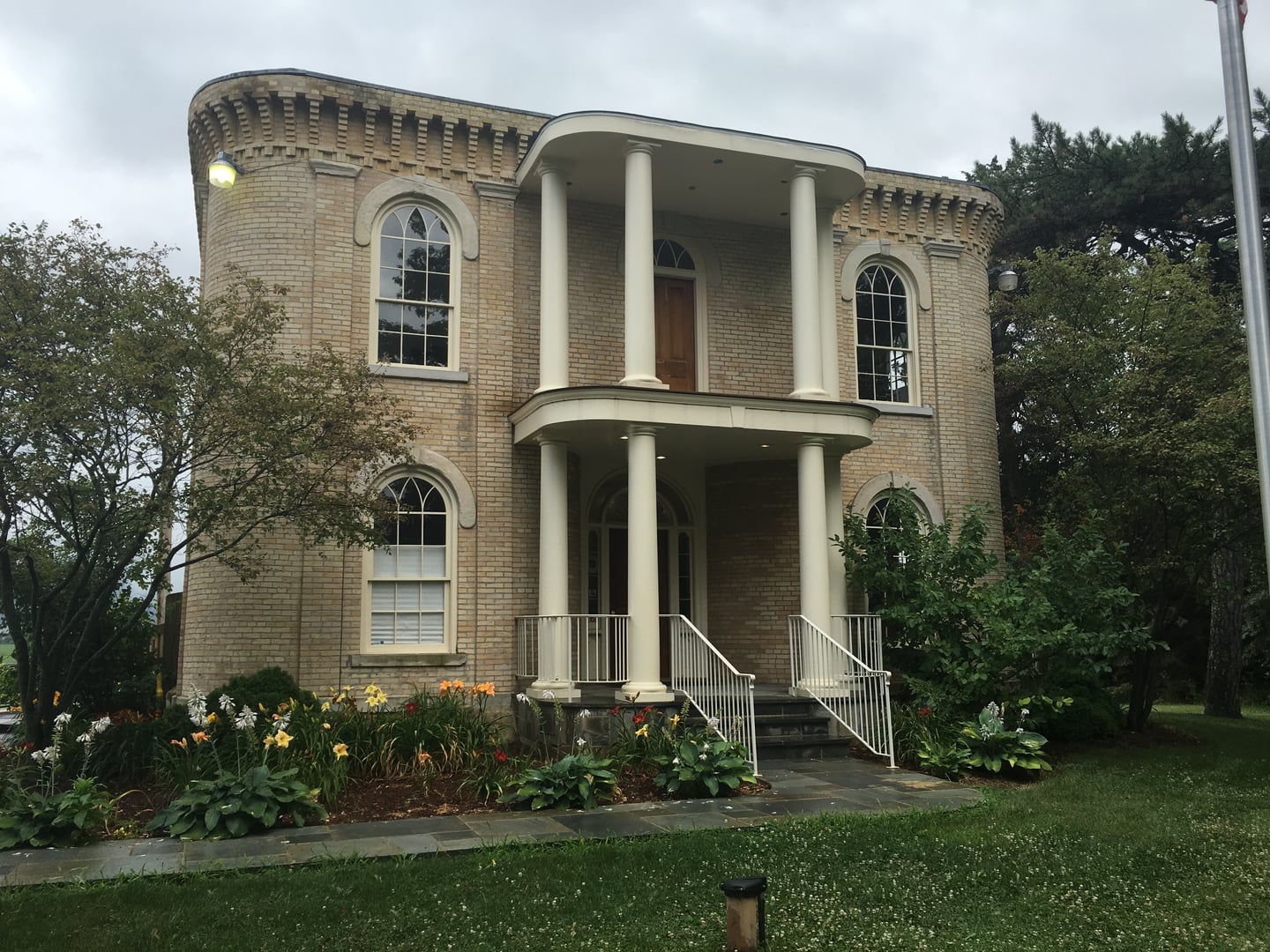
Est. 1888 · Designed by noted Northwest architect Kirtland Cutter, 1888 · Built for James N. Glover, credited founder of Spokane · Survived the Spokane fire of 1889 · Listed on the National Register of Historic Places, 1973
The Glover Mansion was built in 1888 in the Cliff/Cannon neighborhood of Spokane, designed by the architect Kirtland Cutter for James N. Glover, the developer widely credited as the founder of the city in 1873. The English Tudor Revival house, reported at roughly 12,000 square feet, survived the Spokane fire of 1889 and has remained standing through the city's growth.
Glover's fortunes turned during the Panic of 1893; the mansion, which had cost about $100,000 to build, was sold for roughly $30,000 as financial hardship forced him to give it up. Over the following century the building served multiple roles, including a period as home to Spokane's Unitarian Universalist congregation.
The mansion was added to the National Register of Historic Places on August 14, 1973, and to the Spokane Register of Historic Places in 1995. For about two decades Red Rock Catering ran it as a wedding and events venue and staged occasional ticketed public programs, including immersive theatrical and dance performances in its period rooms. In 2026 Red Rock sold the mansion to a Seattle-Tacoma area law firm, with booked events honored through that fall, leaving the building's public use in transition.
Sources
- https://en.wikipedia.org/wiki/Glover_Mansion
- https://spokanehistorical.org/items/show/732
- https://www.krem.com/article/news/local/spokane-glover-mansion-sold/293-95f6094b-43e1-47e8-b269-abb2e1bec21f
Doors reported slamming on their ownSudden temperature changesSounds described as a child on the stairsA woman's figure associated with the halls
The Glover Mansion's ghost story is inseparable from the documented and difficult history of Susan Glover, James Glover's first wife. After the couple separated and divorced, Susan was committed to Eastern State Hospital, where she lived for the final years of her life and was buried in an unmarked grave in 1921. Spokane Historical and the mansion's own histories record her institutionalization and the way her story was largely erased from the public record.
From that history grew a tradition, repeated on Spokane ghost tours and in a KREM news segment, that a woman moves through the halls of the house she once called home. Accounts attached to the mansion's events-venue years describe slamming doors, sharp temperature changes, and the sound of a child on the stairs, with some retellings citing a clergy blessing of the house in the 1970s.
These phenomena are anecdotal and come largely through tour and television sources rather than formal investigation. The most substantiated part of the story is the historical record of a woman confined and forgotten; the entry treats Susan Glover's life with that weight rather than as a haunted-house caricature.
Notable Entities
Susan Glover, first wife of James Glover