Est. 1914 · Early-20th-Century Funerary Monument · Cronquist Family Memorial · Cache Valley Landmark
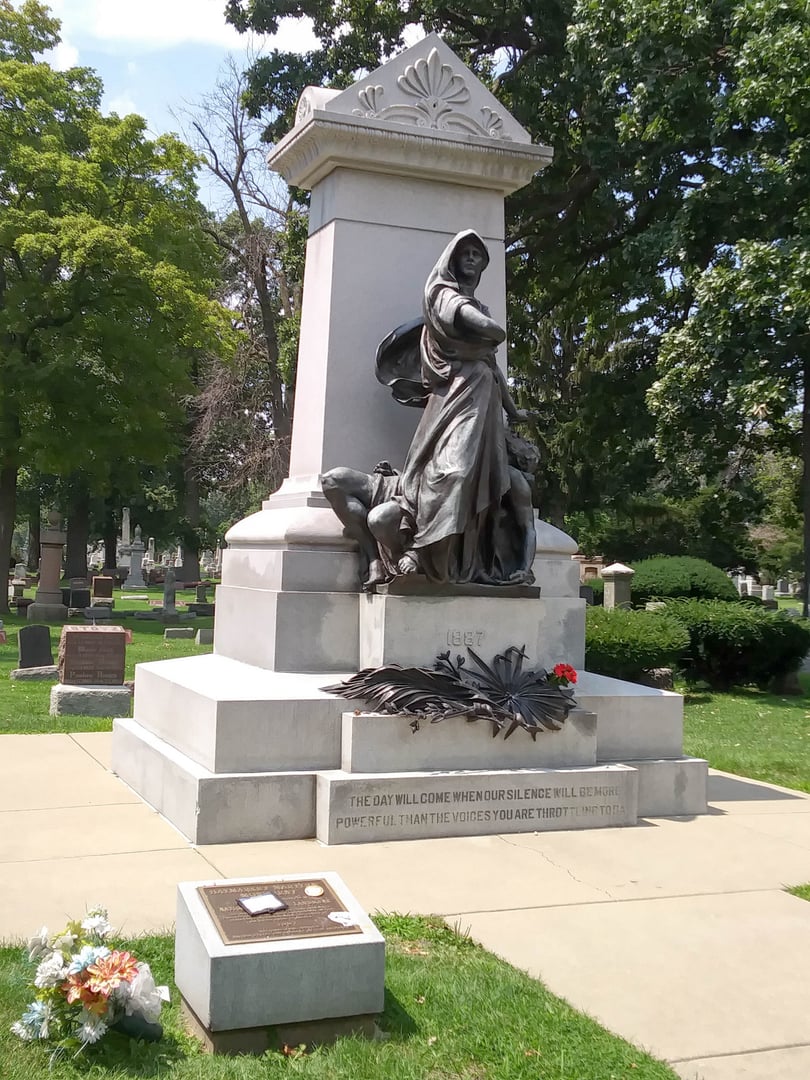
Logan City Cemetery, on the east bench above the city, holds a draped female statue placed in 1914 to mark the Cronquist family plot. The monument stands among the cemetery's older graves and has long drawn attention for both its form and its history.
The family it commemorates suffered repeated loss. Accounts of the plot record that the Cronquists buried five of their eight children over a period of roughly twelve years, a sequence of deaths that was not unusual in an era of high child mortality but that left a profound mark on the family and is the reason a memorial of this kind was raised.
The statue's mourning posture, common to early-20th-century funerary art, reads as a mother's grief and helped fix the monument in local memory. Over the following century it became one of the most recognized markers in the cemetery.
The family's losses are treated here as documented family history rather than spectacle. The Logan City Cemetery remains an active municipal burial ground, and the Cronquist plot is one of its enduring landmarks, written into both Cache Valley folklore and Utah's tourism coverage of the region's older cemeteries.
Sources
- https://usustatesman.com/the-chilling-locations-of-cache-valleys-haunted-history/
- https://film.utah.gov/spooky-rural/
Statue said to appear to weep under a full moonEffect tied to a chanted phraseLegend-tripping at night
Like many older cemeteries with a striking statue, Logan City Cemetery has gathered a legend around its Cronquist monument, widely known as the Weeping Woman. The most repeated version says that if visitors come at night under a full moon and chant a phrase such as 'weep woman, weep,' the figure will seem to weep in response.
The legend draws directly on the monument's mourning pose and on the documented grief of the Cronquist family, whose repeated child losses gave the statue its emotional weight. The pairing of a real, sorrowful history with a dramatic visual is a common engine for cemetery folklore, and it has made the monument a recurring stop in local legend-tripping.
The weeping-woman story appears in Cache Valley folklore coverage and in Utah tourism writing about the region's spooky rural sites, which keeps it in circulation among students and visitors. As with similar tales, the reported effect is best understood as the product of low light, expectation, and the suggestion built into the chant rather than a verified phenomenon.
Visitors should remember that the monument marks a real family's grave. The legend can be appreciated without disturbing the plot or treating the family's loss as entertainment.
Notable Entities
The Weeping Woman (cemetery statue legend)