Self-Guided Visit
Weeping Lady Statue Visit
Find the kneeling statue of Laura Ferreday in the cemetery grounds—a poignant Victorian memorial with century-old water stains that feed the weeping legend.
- Duration:
- 30 min
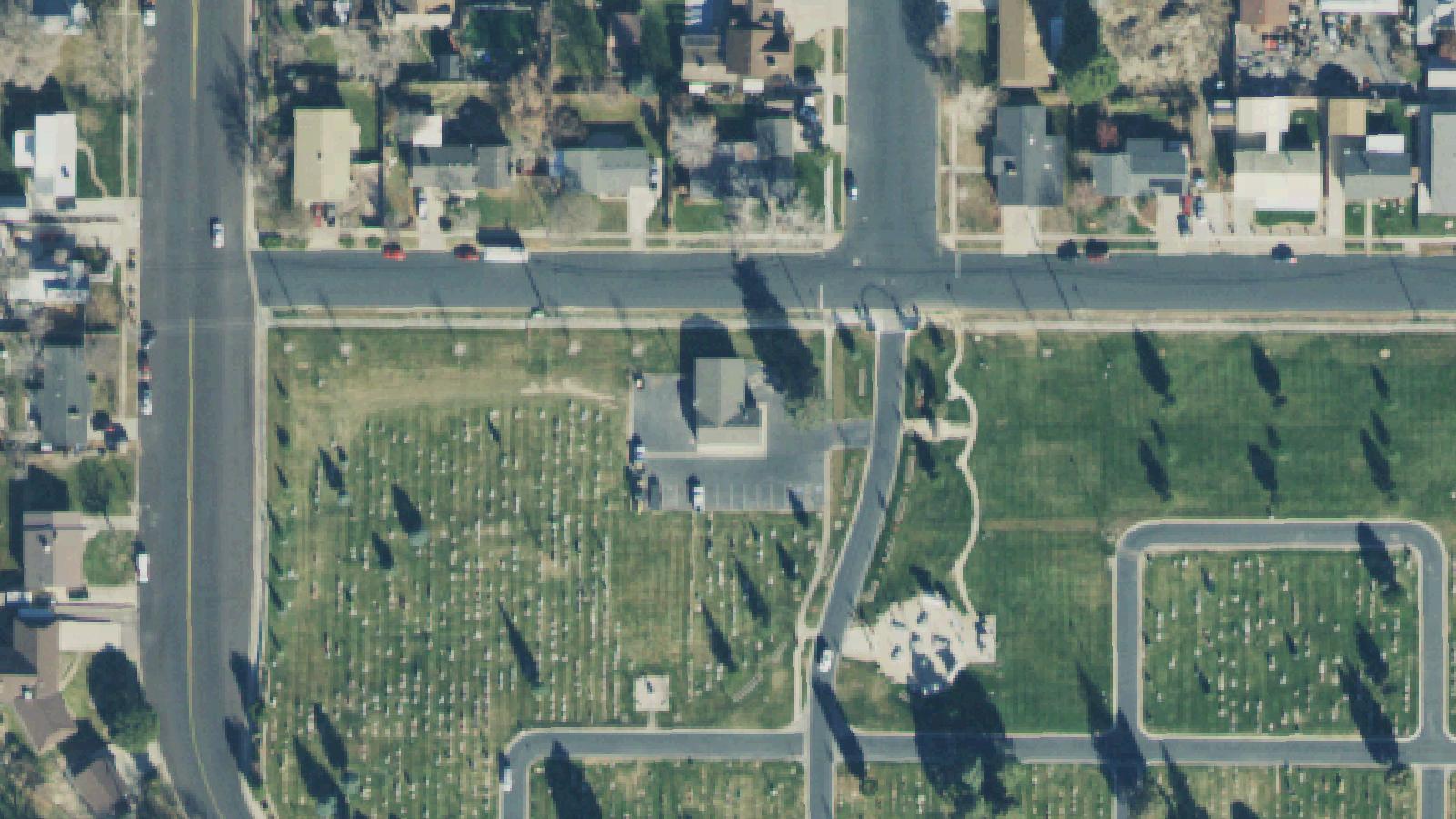 Aerial survey · USDA NAIP · public domain
A 32-acre Utah County cemetery established in 1853, home to the Weeping Lady statue memorializing Laura Ferreday, said by local legend to cry real tears after dark.
420 S 400 E, Spanish Fork, UT 84660
Research updated May 2026
Age
All Ages
Cost
Free
Free public cemetery
Access
Wheelchair OK
Paved paths throughout the 32-acre grounds
Equipment
Photos OK
Est. 1853 · One of Utah County's oldest continuously operating municipal cemeteries, established 1853/1868 · Ferreday statue is a local landmark cited in Deseret News and regional folklore collections · Over 12,000 interments representing pioneer-era through modern Utah County residents
Spanish Fork City Cemetery was established in 1868 and has been the primary municipal burial ground for Spanish Fork, Utah County, since the first interment in 1853. The 32-acre property is maintained by the city's Parks and Recreation Department and holds more than 12,000 headstones representing generations of the local community.
The cemetery's most celebrated monument is the kneeling stone figure over the grave of Laura Daniels Ferreday of Payson. Laura died in Provo in 1929 at age 32 from an infectious tumor. Her husband Horace Ferreday, a well-known plumber in Spanish Fork during the 1920s, commissioned the striking statue in her memory. The sculpture depicts a woman kneeling with one hand pressed against a wall and her face buried in her other arm. Horace had a poem inscribed beneath the figure—'Warm summer sun shine kindly here / Gentle breeze blow softly here / Mother earth above lie light, lie light / Goodnight sweetheart, goodnight'—words drawn from a poem by 19th-century poet Robert Richardson and adapted by Mark Twain for his own daughter's headstone.
Horace Ferreday was laid to rest beside his wife in 1972, reuniting the couple the statue had long symbolized. The cemetery remains in active municipal operation under Spanish Fork City, with updated records accessible through the city's online Cemetery Lookup portal.
Sources
The legend of the Weeping Lady of Spanish Fork Cemetery has circulated in Utah County for generations. According to the tradition—documented by the Deseret News (2005) and the BYU student magazine Stowaway (2020)—visitors who approach the Ferreday statue after dark may see tears streaming down the figure's stone face. Old water stains on the statue's cheeks are often cited by believers as physical evidence of the phenomenon, though these are also consistent with decades of natural weathering.
One version of the legend holds that if visitors walk around the cemetery with eyes closed, they can hear the statue weeping. Some tellings add that the statue cries out for her baby, a detail not supported by the documented history of the memorial: Laura Ferreday's statue was commissioned by her grieving husband Horace as an expression of marital loss, not maternal bereavement. The 'baby' element appears to be an accretion of folk narrative over time.
A longtime resident who had lived across from the cemetery for 44 years told the Deseret News he had walked every street in the cemetery during the day and never experienced anything unusual, providing a skeptical counterpoint to the legend. The statue's actual inscription—a grief poem adapted by Mark Twain for his own daughter's grave—lends a genuine pathos to the monument that likely sustains the legend's emotional resonance regardless of paranormal claims.
Notable Entities
Find the kneeling statue of Laura Ferreday in the cemetery grounds—a poignant Victorian memorial with century-old water stains that feed the weeping legend.
Some links on this page may earn HauntBound a small commission when you book, at no extra cost to you. Our editorial picks are independent. Full disclosure
Every HauntBound history is researched from documented sources. We clearly separate verified historical fact from paranormal folklore.
Free Guide
11 verified stops, rated for families, mapped in order. Free.
One email to confirm, then the guide link. Unsubscribe anytime.
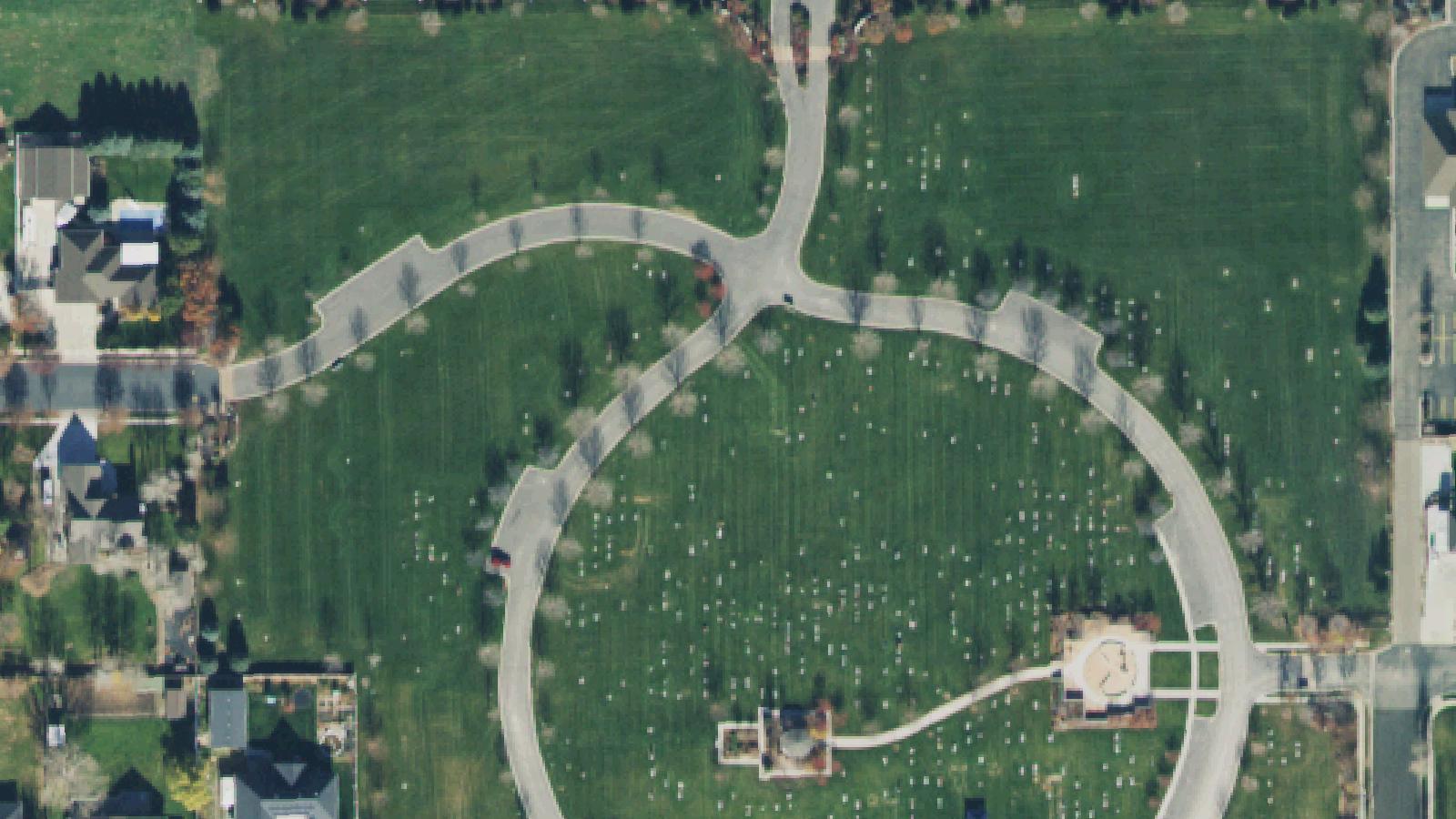 Aerial survey · USDA NAIP
Highland, UT
Highland City Cemetery in Highland, Utah County, is a municipally operated burial ground with approximately 450 interments, the earliest dating to 1965. The cemetery is managed by the City of Highland and contains primarily modern grave markers.
Atlanta, GA
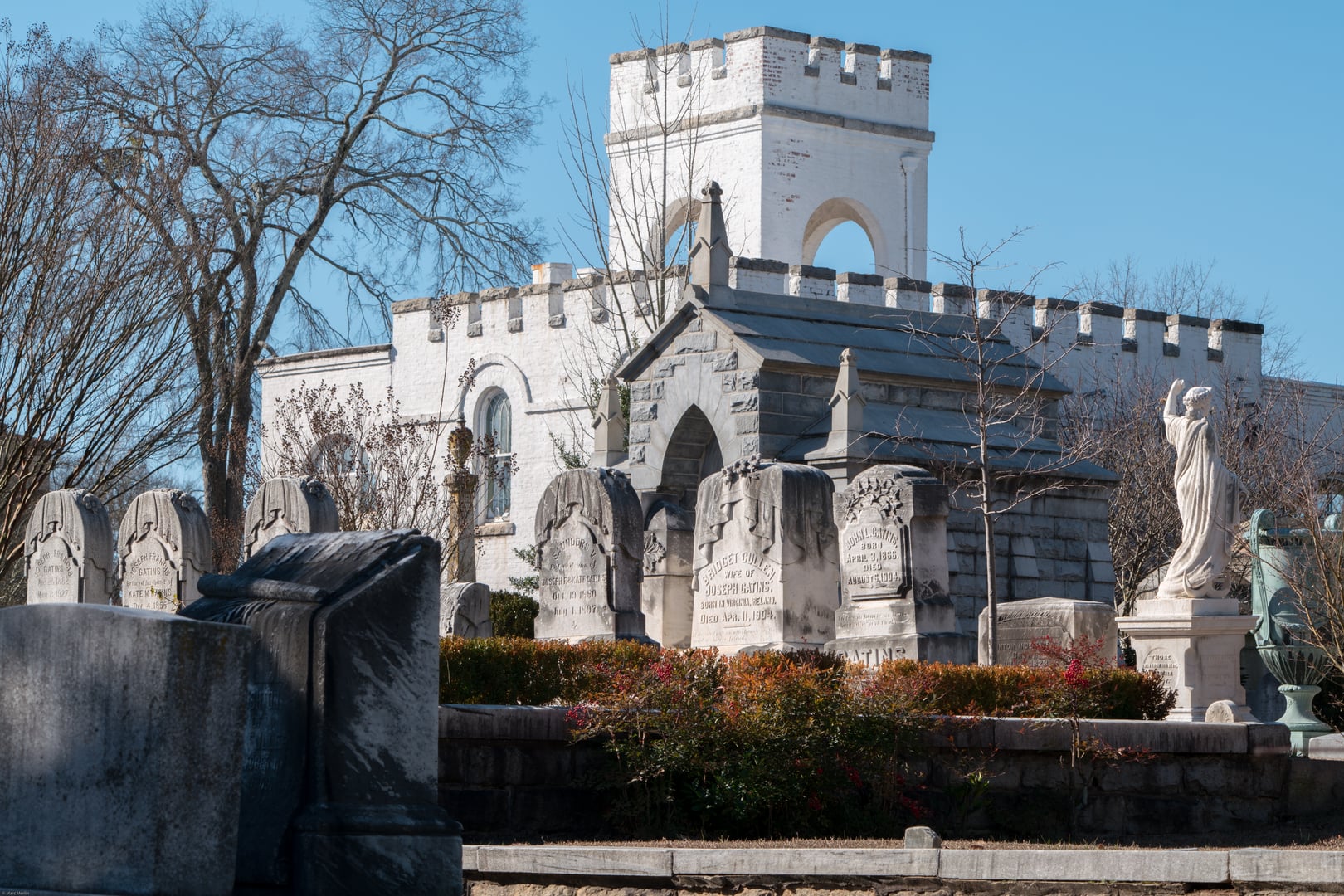
Historic Oakland Cemetery was chartered in 1850 as the six-acre 'Atlanta Cemetery,' renamed Oakland in 1872, and expanded to 48 acres. Approximately 70,000 people are interred, including roughly 6,900 Confederate soldiers (3,000 unidentified), four Confederate generals, six Georgia governors, 27 Atlanta mayors, Margaret Mitchell, golfer Bobby Jones, and Maynard Jackson, Atlanta's first African American mayor. The cemetery was listed on the National Register of Historic Places on April 28, 1976.
Forest Park, IL
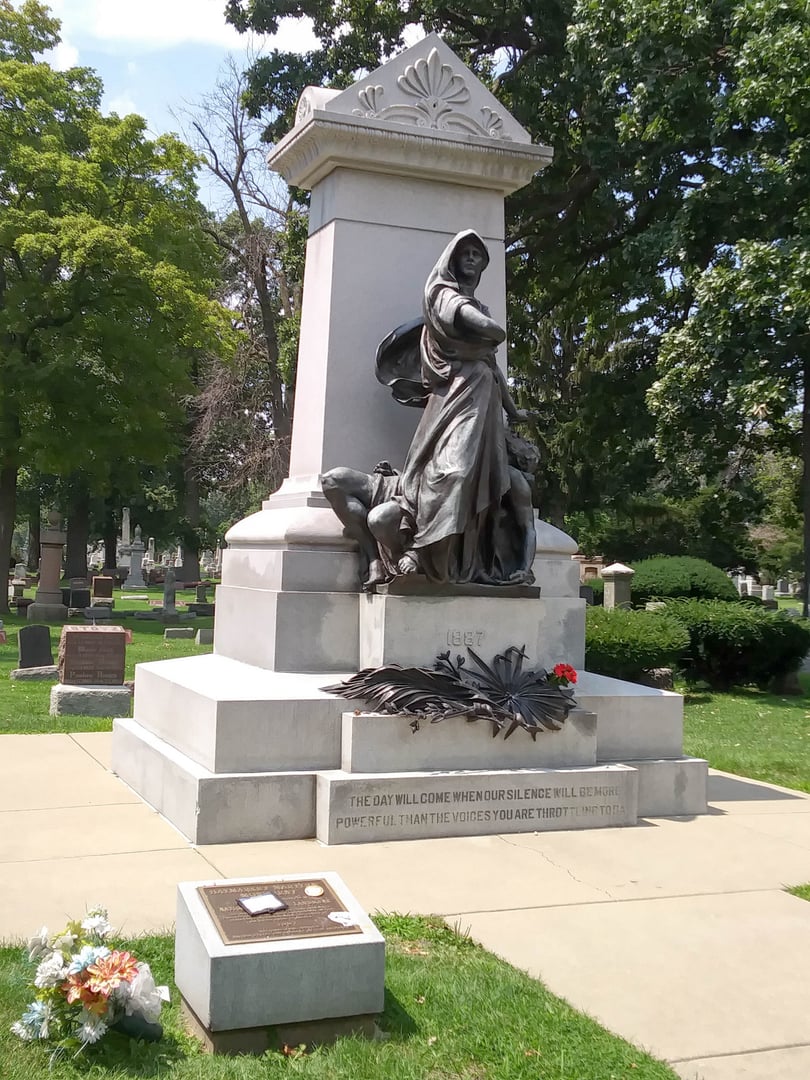
Forest Home Cemetery in Forest Park, Illinois, grew from two adjacent cemeteries — German Waldheim (established 1873) and Forest Home (1876) — which merged in February 1969. The 220-acre site was chosen as a non-denominational burial ground, a policy that made it the only Chicago-area cemetery willing to accept the bodies of the Haymarket defendants in 1887.