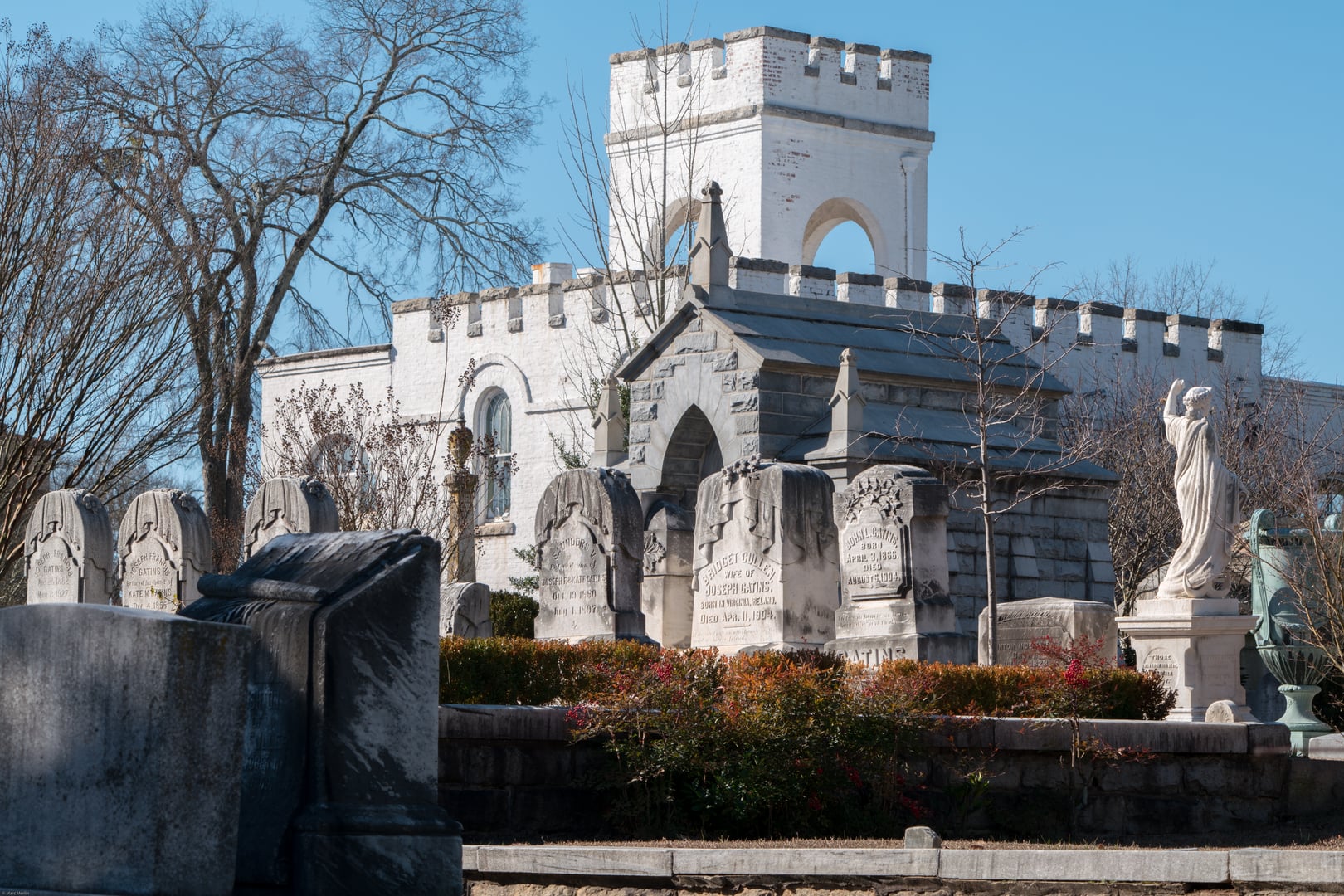
One of Parkersburg's oldest cemeteries, started by the Cook family · Burial place of WV governors Jacob B. Jackson and William E. Stevenson and Senator Peter G. Van Winkle · Part of the Julia-Ann Historic District since 1977
Riverview Cemetery is among the oldest burial grounds in Parkersburg. It began as a family cemetery started by the Cook family on land that was part of their farm, then grew into one of the city's principal historic cemeteries as Parkersburg expanded around it.
The graves read as a roll of early West Virginia public life. Two state governors are buried here: Jacob B. Jackson and William E. Stevenson. So is U.S. Senator Peter G. Van Winkle, remembered for casting the deciding vote against impeaching President Andrew Johnson in 1868 — a stand later recognized by President John F. Kennedy in his book Profiles in Courage. Early Parkersburg families including the Dils, Dudleys, and Thompsons are buried in the cemetery as well.
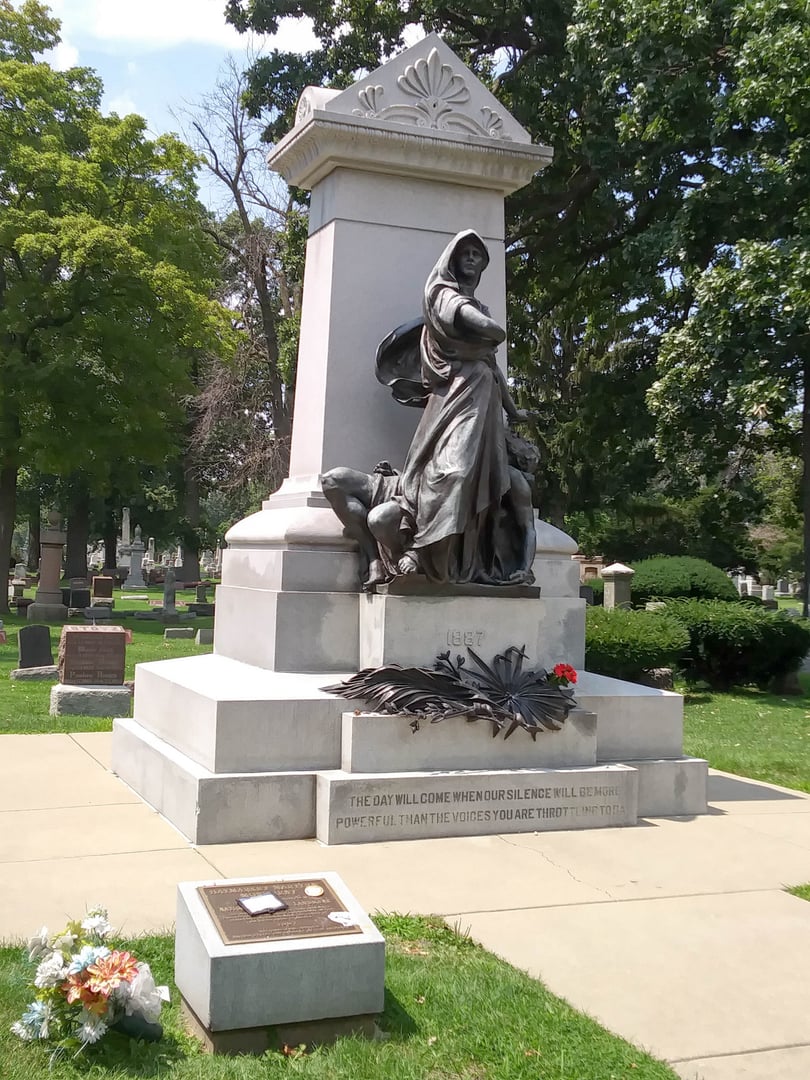
The cemetery became part of the Julia-Ann Historic District in 1977, tying it to the city's historic core. Its most photographed feature is the Weeping Woman statue at the Jackson family plot, carved in the late 1800s — a veiled, bowed figure in the Victorian mourning style that was common on family monuments of the era.
Local coverage by the Parkersburg News and Sentinel and local historians frame Riverview first as a documented historic site and only secondarily as a place of legend, noting there is no evidence behind the supernatural stories that have grown up around the statue.
Sources
- https://www.newsandsentinel.com/news/community-news/2025/10/from-governors-to-ghosts-hauntings-and-history-meet-at-parkersburgs-riverview-cemetery/
Statue said to weep under moonlight (local legend)Legend of wishes granted to respectful visitors
The Weeping Woman is Riverview's best-known story. The late-1800s statue at the Jackson family plot, with its bowed head and sorrowful expression, has gathered a body of local legend over the decades. The familiar version holds that the figure weeps under the full moon, grants wishes to visitors who treat her with respect, and turns on those who come to mock her.
The statue's appearance does the work that mourning sculpture was designed to do — Victorian-era monuments often took the form of grieving veiled women — and that intent likely seeded the stories. Atlas Obscura and roadside-attraction guides catalog the Weeping Woman among the region's notable cemetery oddities.
The Parkersburg News and Sentinel's coverage is careful to note that local historians find no evidence of the supernatural, and we present the legend on those terms: an atmospheric piece of folklore attached to a striking piece of cemetery art, set against a cemetery whose real significance is the people buried in it. Visitors come during daylight to see the statue and the historic graves; the moonlight version is a story, not a claim.
Notable Entities
The Weeping Woman (Jackson Monument statue)
Where this legend is told