Est. 1875 · Carrera Marble Gothic Revival Mausoleum (1875) · Bradley County Victorian Funerary Architecture · Persistent Crimson Staining on Marble Exterior · Craigmiles Family Tragedy History
John H. Craigmiles arrived in Cleveland, Tennessee, in the years following the Civil War and built a successful business career in the region. In September 1871, his seven-year-old daughter Nina Craigmiles was riding in a buggy near a railroad crossing in downtown Cleveland when a locomotive struck the vehicle. She died from her injuries. She was the only child of John and his wife Adelia.
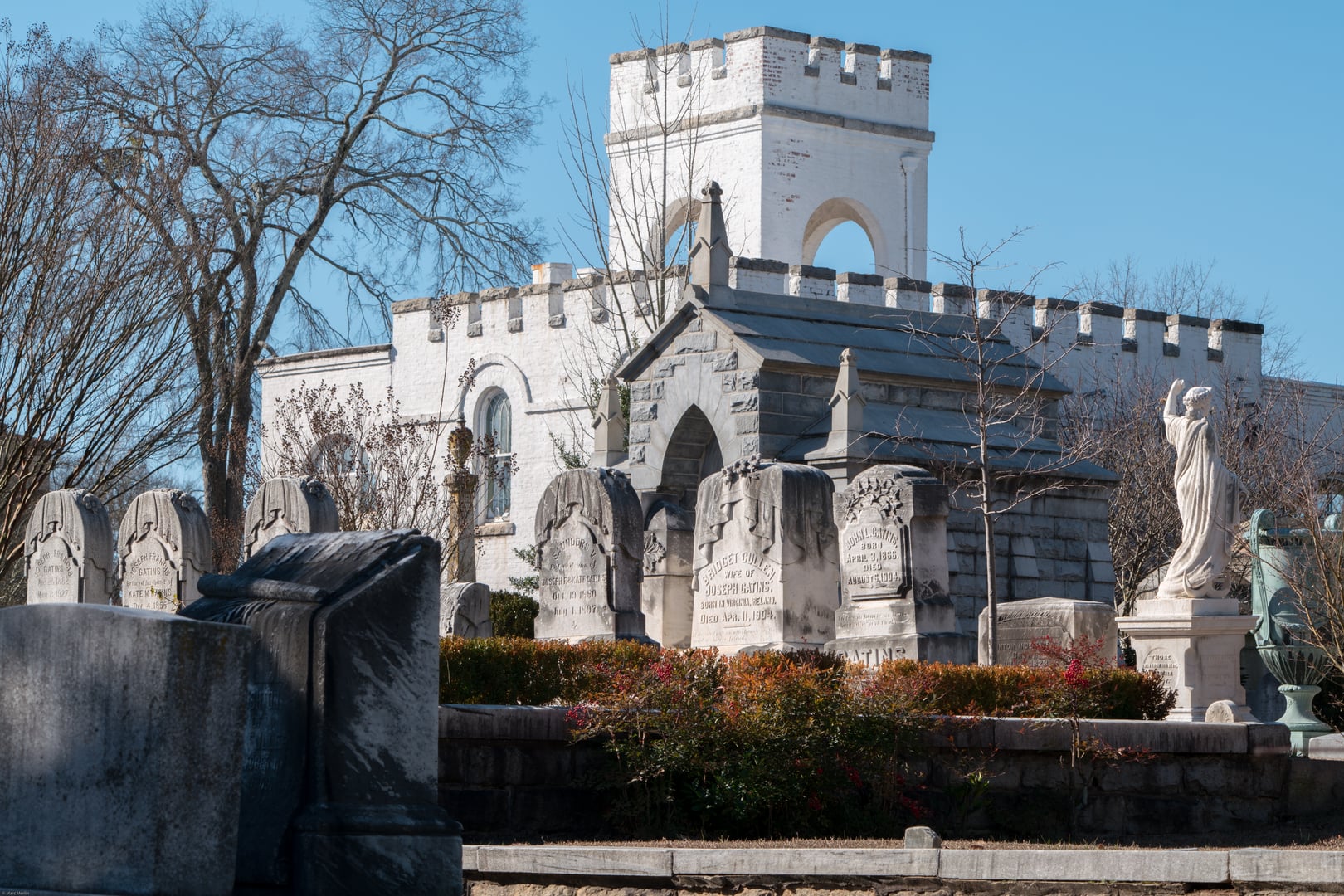
In response, John Craigmiles funded the construction of a mausoleum on the grounds of St. Luke's Episcopal Church — the congregation the family attended. The structure cost an estimated $20,000, a substantial sum in the 1870s. It was built from white Carrera marble in the Gothic Revival style, featuring a pointed arch entrance, carved crosses, and ornate stonework. The mausoleum was completed in 1875, four years after Nina's death.
Not long after the structure was finished, reddish-brown stains appeared in the marble near the cross above the doorway and along the seams of the stone. The stains could not be removed by cleaning and persisted through the decades. Local accounts attributed them to the marble's composition, but the discoloration did not match standard iron oxidation patterns and never faded.
The Craigmiles family was struck by further losses after the mausoleum was built. Adelia Craigmiles died in 1899. A son-in-law in the family was killed in a railroad accident on the same stretch of tracks where Nina had died. John Craigmiles outlived both his daughter and his wife and was eventually interred in the mausoleum alongside Nina and Adelia. Roadside America documented the site extensively in the 2000s, and local Cleveland television station WBIR covered the mausoleum's history and the crimson stain legend in a segment titled 'Cleveland's Bloody Mausoleum.'
Sources
- https://www.roadsideamerica.com/story/12300
- https://www.wbir.com/article/news/history/clevelands-bloody-mausoleum/51-9d593a6e-2069-4307-831e-82b72c862971
Unexplained crimson staining on marbleSense of presence or sadness near the mausoleum
The core legend of the Nina Craigmiles Mausoleum centers on the crimson-brown staining that appeared on the white Carrera marble not long after the structure was completed in 1875. Various cleanings over the decades failed to remove the discoloration. Local accounts describe the stains as intensifying after each successive Craigmiles family death — Nina's mother Adelia in 1899, and others in the family — though no systematic before-and-after documentation exists to confirm this claim.
The staining is described as most visible around the carved cross above the entrance and along the door surround, areas where one might expect water infiltration or iron leaching from the stone, but the discoloration's persistence across more than a century and its resistance to cleaning have kept the legend active. Southern Gothic Media covered the site in a 2018 podcast episode focusing on the intersection of the physical evidence and the family history.
Visitors report the mausoleum has an atmosphere distinct from the rest of the churchyard — some describe a sense of sadness concentrated around the structure rather than diffuse paranormal claims. No entities are consistently reported; the weight of the site rests primarily on the documented facts: a child's violent death, a father's enormous expenditure of grief, and stains that won't come clean.
Notable Entities
Nina Craigmiles (1864–1871)
Media Appearances
- Little Nina's Bleeding Mausoleum (podcast, 2018)
Where this legend is told