Est. 1835 · Listed on the Tennessee Civil War Trails · Used as a hospital by both Union and Confederate armies, 1863–1864 · Site of Longstreet's 25,000-soldier winter encampment, December 1863 – February 1864 · Retains original cannonball damage and iron tie-rod repair from Civil War era · Cemetery holds approximately 82 unknown Union and Confederate soldiers
Bethesda Presbyterian Church is one of the oldest congregations in the Morristown area of Hamblen County, East Tennessee. It was organized in 1832 by Dr. John McCampbell, drawing its founding membership from Hopewell Presbyterian Church near Dandridge. The congregation erected its brick building in 1835, incorporating features — including high-backed pews and an enclosed pulpit — that remain largely intact today.
The church's most historically significant period was the Civil War. Its location on what was then a major road corridor made it a natural field-hospital site. Both Union and Confederate forces used the building to treat their wounded; the church also served as an isolation facility for smallpox patients, a common secondary use for rural buildings commandeered by wartime medical services.
Following the Battle of Bean's Station on December 14, 1863 — a Confederate rear-guard action during General Longstreet's withdrawal from the Knoxville siege — Longstreet arrived at the Bethesda area with approximately 25,000 soldiers, many ill-clad and suffering from the harsh winter. His force remained in the surrounding area through February 1864. The church saw significant use during this period.
Perhaps the most dramatic physical evidence of the war's passage is a cannonball scar in the east wall of the church, sustained during 'Gillem's Stampede' — a Union cavalry action in the area. The ball passed through the entire building, weakening the sidewalls so severely that large iron tie-rods were installed to anchor the north and south walls; they remain visible today.
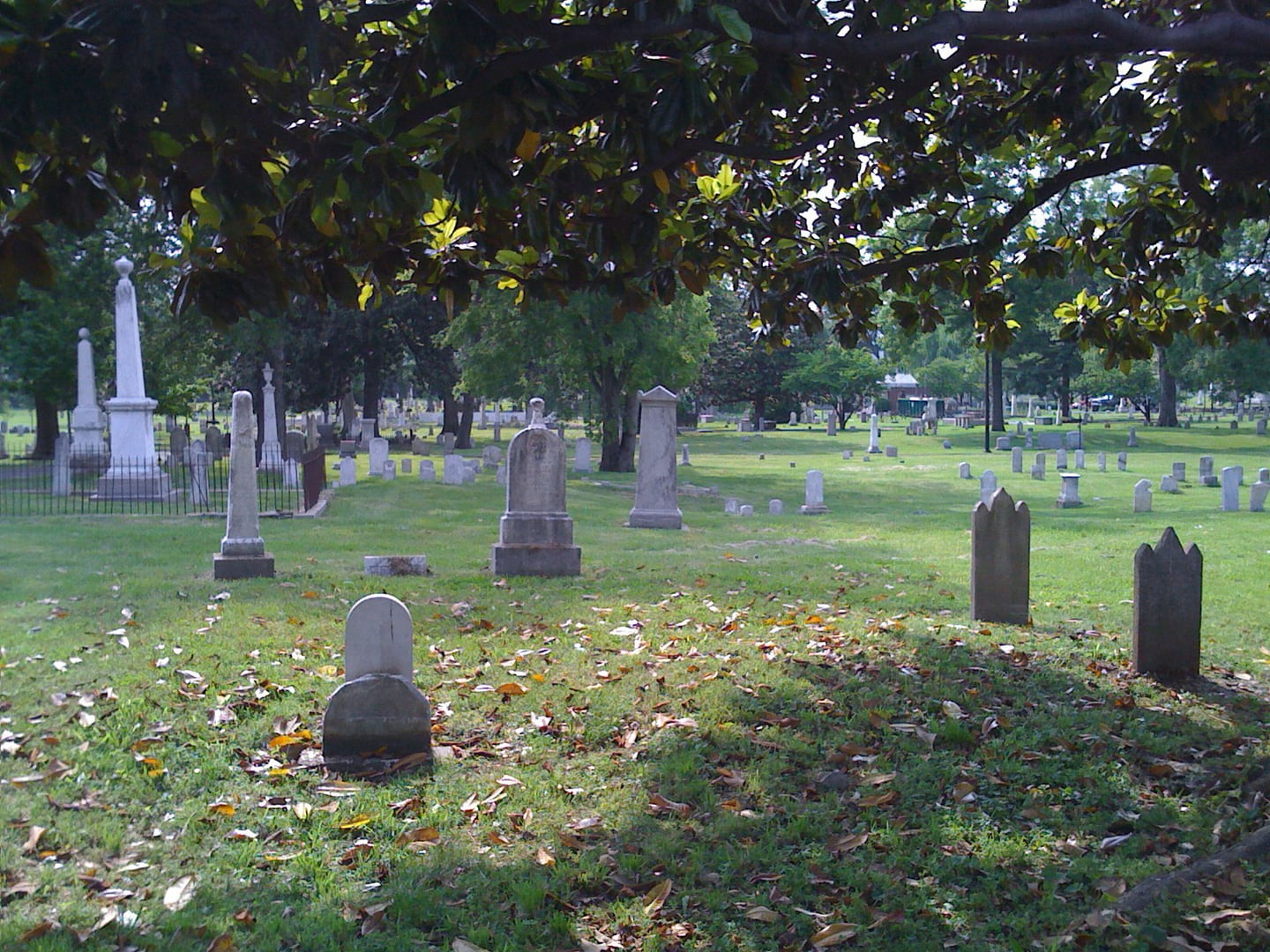
The cemetery contains approximately 82 unknown soldiers, their graves marked by a monument placed jointly by the Disabled American Veterans and the Daughters of the Confederacy. Bethesda Church is designated as a stop on the Tennessee Civil War Trails and is listed in the Tennessee Vacation Civil War places registry.
Sources
- https://visitmorristowntn.com/attractions/bethesda-church-cemetery/
- https://classic.tnvacation.com/civil-war/place/2098/bethesda-church-and-cemetery/
- https://longstreetmuseum.com/museum/bethesda-church/
- https://historicalmarkerproject.com/markers/HMNU1_bethesda-presbyterian-church_Morristown-TN.html
- https://www.tennesseehauntedhouses.com/real-haunt/bethesda-church-cemetery.html
Apparitions of Confederate soldiers in the church nave and churchyardApparition of a weeping woman in the cemetery's older sectionPhantom cannon-fire sounds near the east wallAuditory phenomena described as screaming or battle sounds after darkSensation of reactive or agitated presences in the church interior
Bethesda Church's paranormal reputation flows directly from its documented Civil War history. With at least 82 unknown soldiers interred in the cemetery and the building itself having served as a hospital and smallpox ward, the site has attracted paranormal investigators since at least the 2010s.
The most persistent reports describe aggressive or agitated presences associated with the Confederate soldiers, according to multiple investigators and visitor accounts documented on tennesseehauntedhouses.com and in published investigation logs. Witnesses describe being aware of presences in the nave and churchyard that are described as reactive to speech and movement rather than passive.
A second recurring report involves the apparition of a weeping woman in the far portion of the cemetery. This figure is not associated with any identified individual in available accounts; investigators have speculated she may be connected to one of the family plots in the older section of the burial ground. The family of a child whose grave contains an infant burial plot is particularly noted by investigators as an area of concentrated activity.
Several investigators report auditory phenomena: a distant cannon report, sometimes followed by sounds described as screaming, heard from the direction of the church's east wall — the same wall that still bears the Civil War cannonball damage. Whether these reports reflect the power of suggestion amplified by the known history or a genuinely recurring phenomenon, they are consistently noted across independent investigation accounts. Paranormal investigation groups in the Knoxville and Morristown areas have documented multiple visits to the site.
Notable Entities
Confederate soldiers (unnamed, ~82 unknown interred in cemetery)Weeping woman apparition (unidentified, associated with older family plots)