Est. 1868 · Historic 1868 covered bridge over Elk Creek, an Erie County landmark for 140 years · Destroyed by arson in November 2008 · Subject of one of northwestern Pennsylvania's best-known folk legends
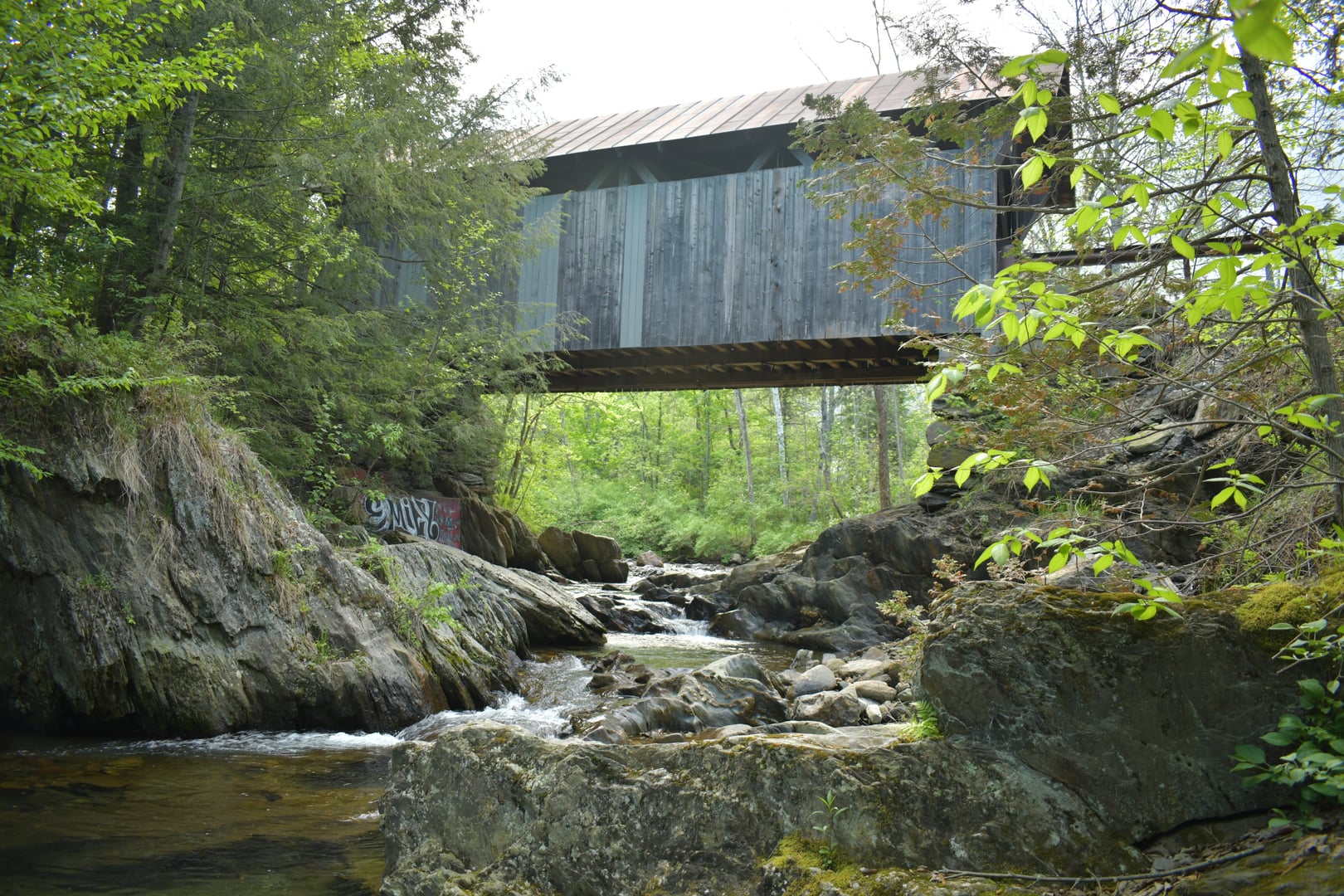
The Gudgeonville Covered Bridge spanned Elk Creek in Girard Township, Erie County, in northwestern Pennsylvania. Built in 1868, the roughly 84-foot wooden covered bridge served the rural community along what is now Gudgeonville Road for 140 years.
The bridge's unusual name comes from a folk story dated to around 1855, before the bridge itself was built, when the spot was a small tavern stop. According to the most widely repeated version, a Kentucky drover named Obadiah Will was leading a mule named Gudgeon toward Meadville. As they reached the crossing, canal or river traffic nearby was playing 'My Old Kentucky Home.' In one telling the homesick mule dropped dead of fright; in another it froze and refused to move, and Will beat it to death in frustration. Either way, the animal was buried near the west bank and the name 'Gudgeonville' was painted on the bridge portals in its memory.
For generations the bridge was a beloved local landmark and a magnet for ghost-story seekers. On the night of November 8, 2008, the historic covered bridge was destroyed by fire, ruled an act of arson. The crossing itself, the creek, and the steep white shale cliffs nearby — known locally as the Devil's Backbone — still draw visitors, and the legends now attach to the land rather than the lost structure.
Sources
- http://hauntsandhistory.blogspot.com/2007/11/gudgeonville-bridge.html
- https://www.eriereader.com/article/erie-ghost-stories-good-vs-evil
- https://lolauncovers.substack.com/p/the-legend-of-gudgeonville-bridge
Phantom mule hoofbeats and brayingApparition of a pale woman/girl at the Devil's Backbone cliffsSensed presence in the ravine
Two intertwined legends give the site its haunted reputation. The first is the mule of Gudgeon: locals say that on certain still nights you can hear the steady clop of hoofbeats and the braying of the homesick animal said to have died at the crossing around 1855, as recounted by regional storytellers and the Erie Reader's roundup of local ghost lore.
The second concerns a young girl said to have fallen to her death from the white shale cliffs called the Devil's Backbone, in accounts placing the event around the 1940s or 1950s. According to the tradition, an apparition of a pale figure in a dress appears at the top of the cliff, seems to fall, and disappears into the air. Other visitors have reported general feelings of presence and unease in the wooded ravine.
These stories are folklore passed down locally and through regional ghost-story collections rather than documented events; HauntBound presents them as the area's living oral tradition. With the bridge itself lost to arson in 2008, the legends now belong to the surviving creek crossing and cliffs.
Notable Entities
Gudgeon the muleThe girl of the Devil's Backbone
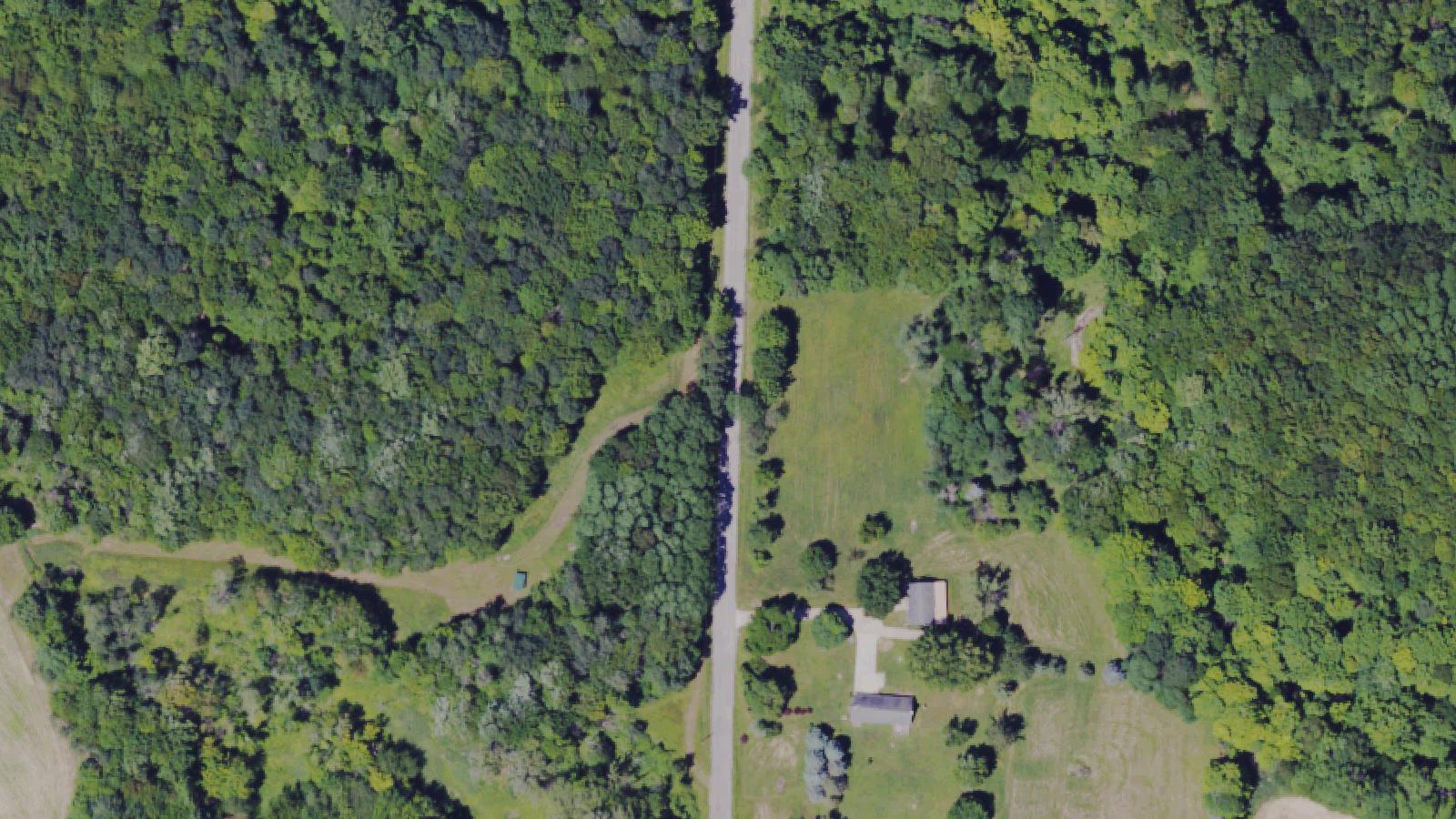
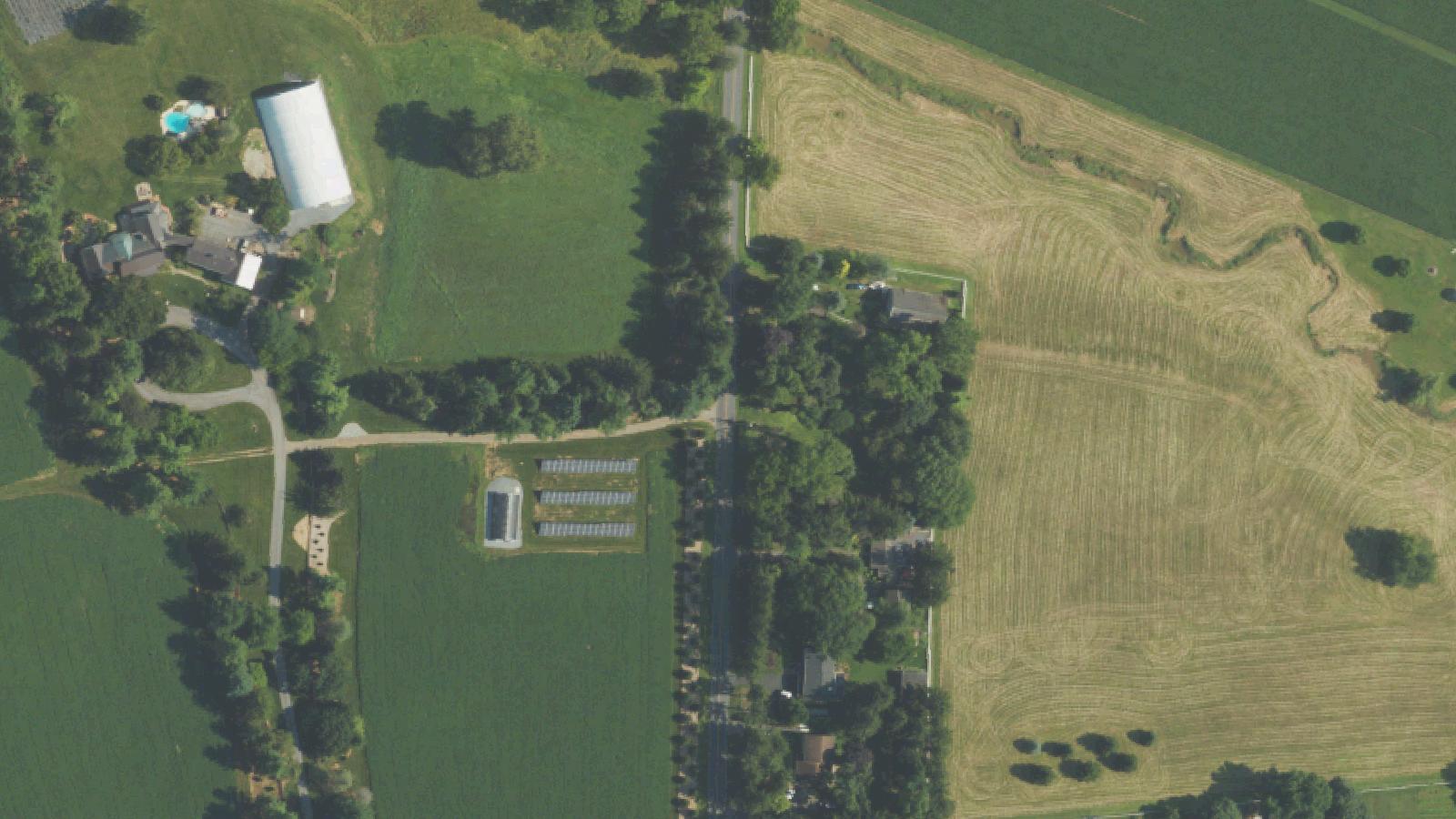
 Aerial survey · USDA NAIP