Self-Guided Visit
Visit the Mission Ruins and Cemeteries
Self-guided daylight visit to the Sacred Heart Mission site to see surviving structures and foundations and the Benedictine monks' and Mercy sisters' cemeteries.
- Duration:
- 45 min
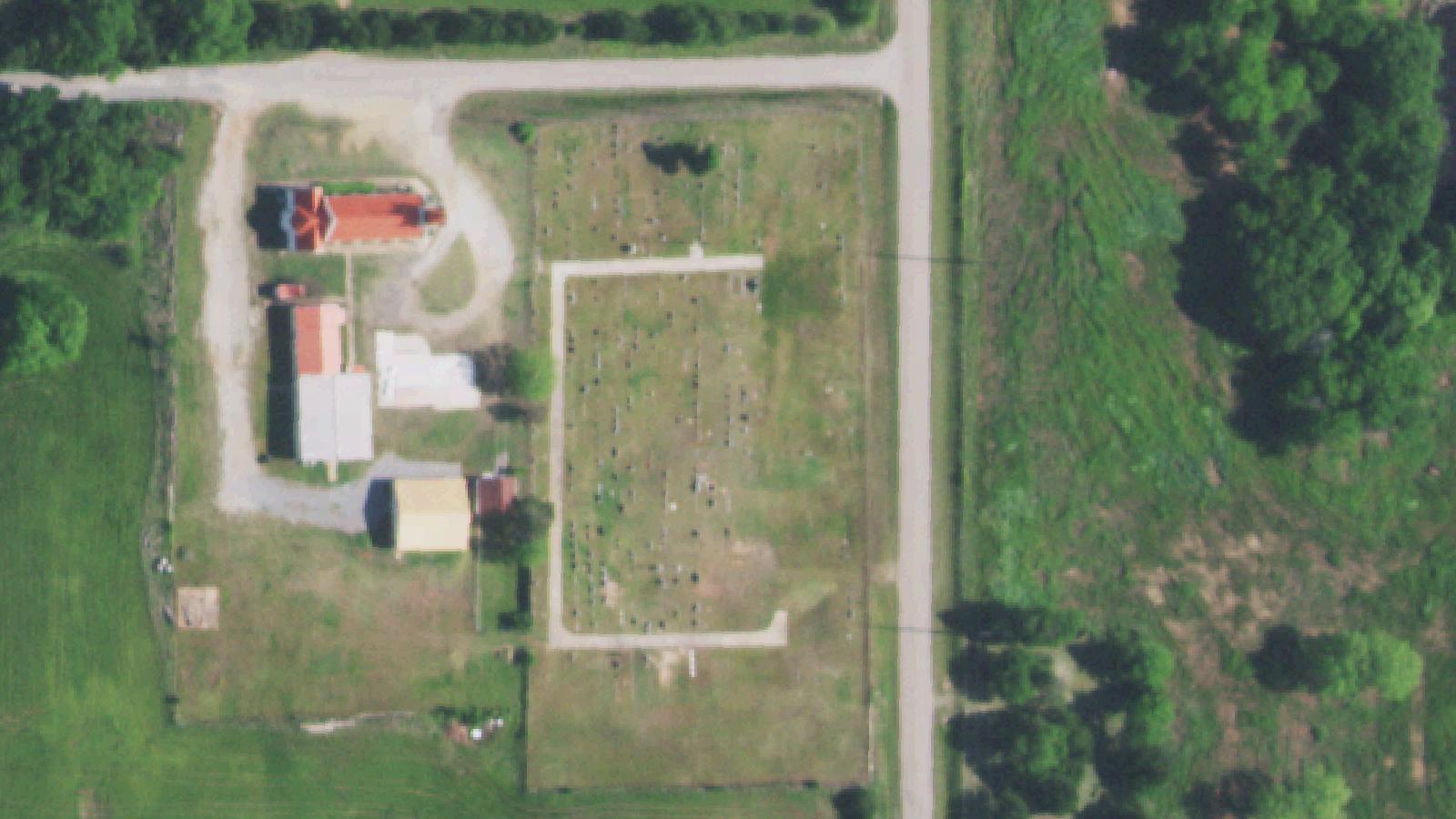 Aerial survey · USDA NAIP · public domain
The ruins and cemetery of Oklahoma's first Benedictine abbey near Konawa, destroyed by fire in 1901, where visitors report apparitions of monks and priests, growling unseen animals, and strange lights and voices around the graves.
Sacred Heart Road, Konawa, OK 74849
Research updated May 2026
Age
All Ages
Cost
Free
The historic mission site and cemetery are free to visit during daylight hours. A working Catholic church operates just outside the old mission grounds; treat the cemeteries respectfully.
Access
Limited Access
Rural site about 3.5 miles northwest of Konawa off Highway 39; gravel roads, open ground, uneven cemetery turf, and scattered ruins and foundations.
Equipment
Photos OK
Est. 1877 · Oklahoma's first Benedictine abbey and a founding site of the Catholic Church in the state · Founded 1877 by Father Isidore Robot, O.S.B., among the Citizen Band Potawatomi · Included schools, a seminary, a technical institute, and St. Mary's Academy run by the Sisters of Mercy · Largely destroyed by the fire of January 14-15, 1901 · Community relocated to Shawnee (St. Gregory's, 1915; abbey seat 1929); priory closed 1955
Sacred Heart Mission sits about 3.5 miles northwest of Konawa, in the southeast corner of Pottawatomie County, Oklahoma. It was founded in 1877 by Father Isidore Robot, O.S.B., a monk of the French monastery of Notre Dame de la Pierre-qui-Vire who, with Brother Dominic Lambert, had entered Indian Territory in 1875 and settled among the Citizen Band Potawatomi. Robot is remembered as a founding figure of the Catholic Church in Oklahoma, and Sacred Heart is often called the 'cradle' of that church in the state.
The mission grew quickly. By 1880 Robot had built a monastery, schools for Native American boys and girls, a technical institute, and a seminary, and the Sisters of Mercy operated St. Mary's Academy for girls. A model farm, formal gardens, and a bakery served the community. A large church was completed in 1892, and the mission was raised to abbey status in 1896. From Sacred Heart the Benedictines established dozens of parishes and missions across the Oklahoma and Indian Territories.
Disaster came on the cold night of January 14-15, 1901, when fire swept through the complex of frame buildings, destroying the monastery, schools, convent, and church. The community rebuilt, but the site's distance from rail and transportation increasingly limited it. The monks founded St. Gregory's College at Shawnee in 1915, and the abbey seat formally transferred to Shawnee in 1929. Sacred Heart Priory closed in 1955 and most of its buildings were razed.
Today the original mission site is a recognized historic landmark. The only original building widely reported as still standing is the bakery; ruins and foundations remain across the grounds, and the cemeteries of the Benedictine monks and the Mercy sisters draw visitors. A newer Catholic church operates just outside the old mission grounds.
Sources
The ruins and cemeteries of Sacred Heart have become one of the better-known haunted sites in central Oklahoma, written up by regional outlets including OnlyInYourState, the Lawton radio site Z94, Mega 99.3, and ghost-tourism directories. The most consistent reports describe the apparitions of monks and priests - figures in religious habit, long dead, seen walking among the ruins and the monks' cemetery.
Visitors also describe animals that make strange growling or eerie noises at night and appear to vanish, ghostly voices, and strange lights that float around the graveyard. Some accounts add a shadowy figure said to haunt a basement, reported to cry and breathe heavily, and stories of ghost children associated in folklore with the children lost or affected by the 1901 fire.
These are anonymous folkloric reports rather than documented investigations, and we present them as the local tradition around a real and historically significant site. The mission's verified history - a Benedictine community of monks and Mercy sisters, a fire that destroyed it in a single January night, and the cemeteries where its members are buried - is the substance here; the ghost stories are the folklore that has gathered over more than a century around those graves and ruins. The site is treated with respect as an active cemetery and a place of religious history.
Notable Entities
Media Appearances
Self-guided daylight visit to the Sacred Heart Mission site to see surviving structures and foundations and the Benedictine monks' and Mercy sisters' cemeteries.
Some links on this page may earn HauntBound a small commission when you book, at no extra cost to you. Our editorial picks are independent. Full disclosure
Every HauntBound history is researched from documented sources. We clearly separate verified historical fact from paranormal folklore.
Free Guide
9 verified stops, rated for families, mapped in order. Free.
One email to confirm, then the guide link. Unsubscribe anytime.
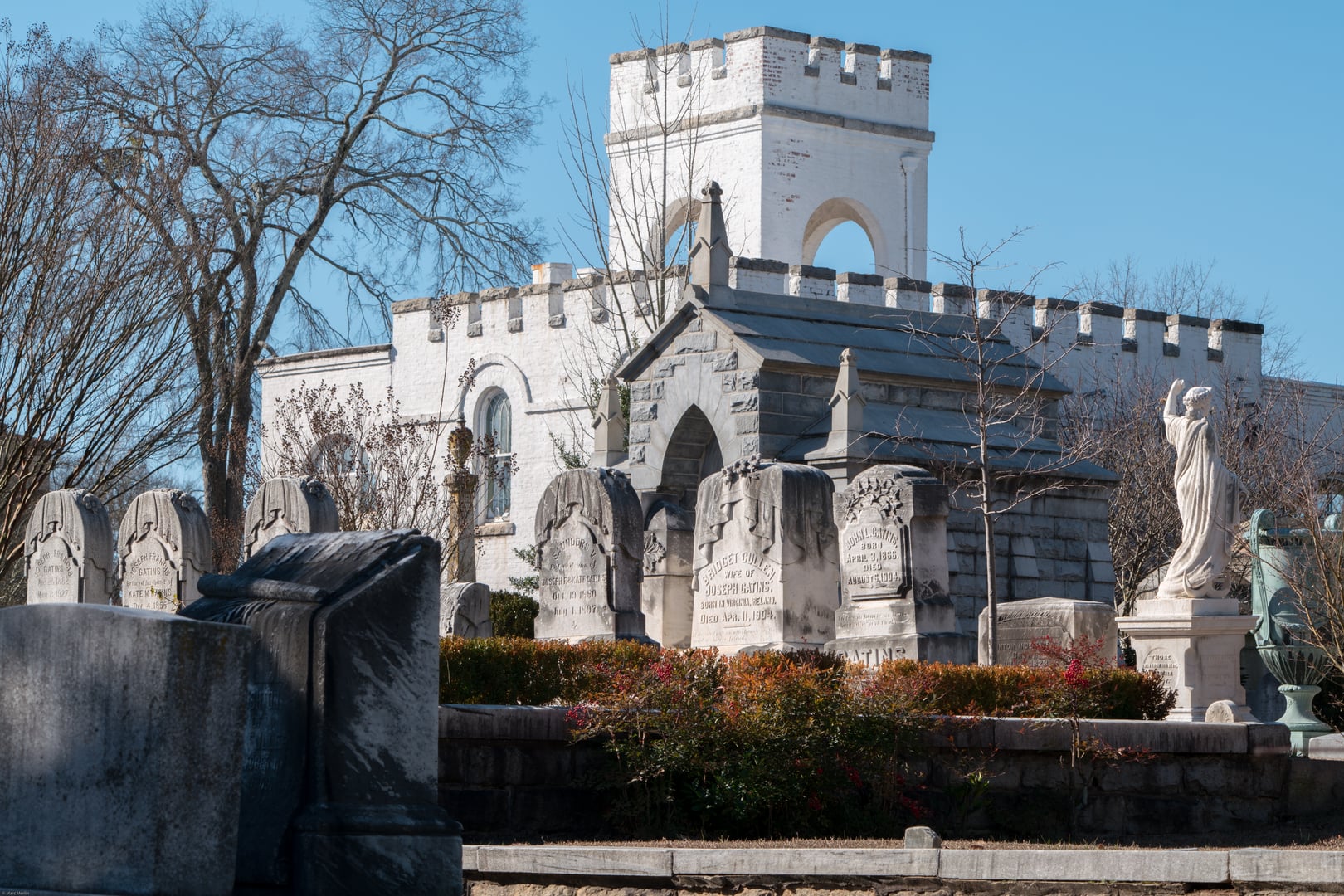
Atlanta, GA
Historic Oakland Cemetery was chartered in 1850 as the six-acre 'Atlanta Cemetery,' renamed Oakland in 1872, and expanded to 48 acres. Approximately 70,000 people are interred, including roughly 6,900 Confederate soldiers (3,000 unidentified), four Confederate generals, six Georgia governors, 27 Atlanta mayors, Margaret Mitchell, golfer Bobby Jones, and Maynard Jackson, Atlanta's first African American mayor. The cemetery was listed on the National Register of Historic Places on April 28, 1976.
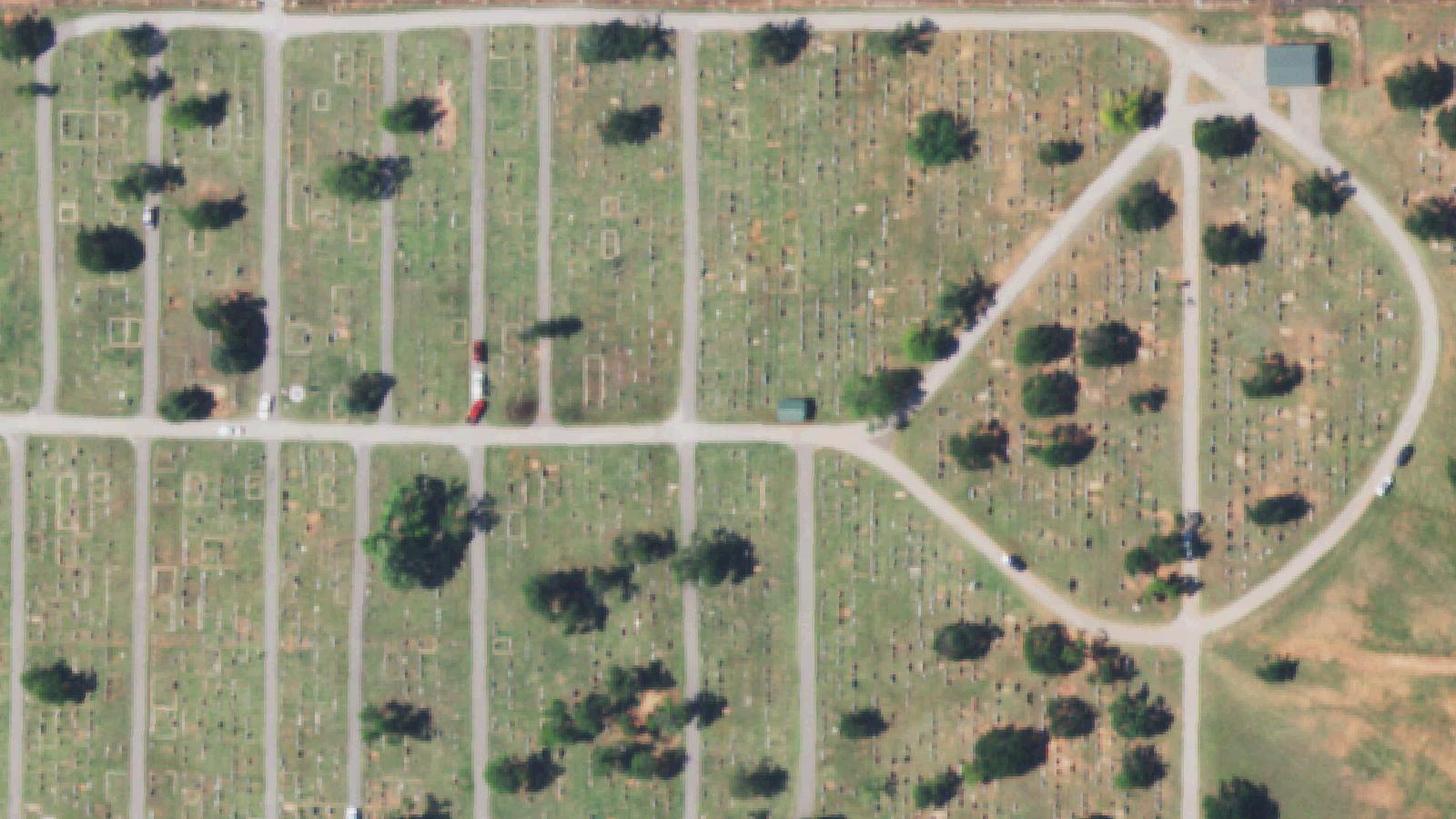 Aerial survey · USDA NAIP
Blanchard, OK
Blanchard Cemetery was established in 1917 on a roughly twenty-acre lot just off State Highway 76 in Blanchard, McClain County, Oklahoma. It remains an active cemetery with monthly business meetings, ongoing maintenance, and new burials. Despite ranking on numerous lists of Oklahoma's most haunted places, there is no documented historical tragedy or origin event tied to its paranormal reputation — it appears to have simply served as the resting place for nearby town residents.
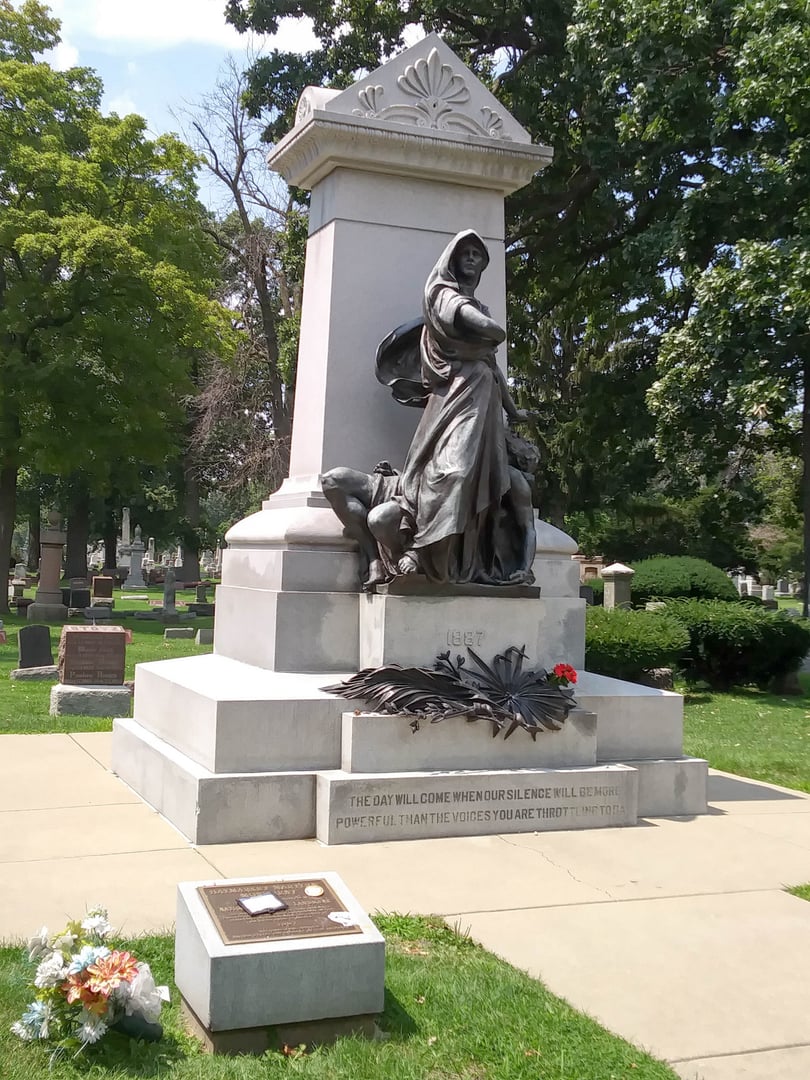
Forest Park, IL
Forest Home Cemetery in Forest Park, Illinois, grew from two adjacent cemeteries — German Waldheim (established 1873) and Forest Home (1876) — which merged in February 1969. The 220-acre site was chosen as a non-denominational burial ground, a policy that made it the only Chicago-area cemetery willing to accept the bodies of the Haymarket defendants in 1887.