Est. 1748 · Oldest surviving building in the Bronx (1748) · George Washington's headquarters during multiple Revolutionary War campaigns · Occupied by both American and British/Hessian forces during the Revolution · Van Cortlandt family residence 1749–1823 · Managed by NYC Historic House Trust
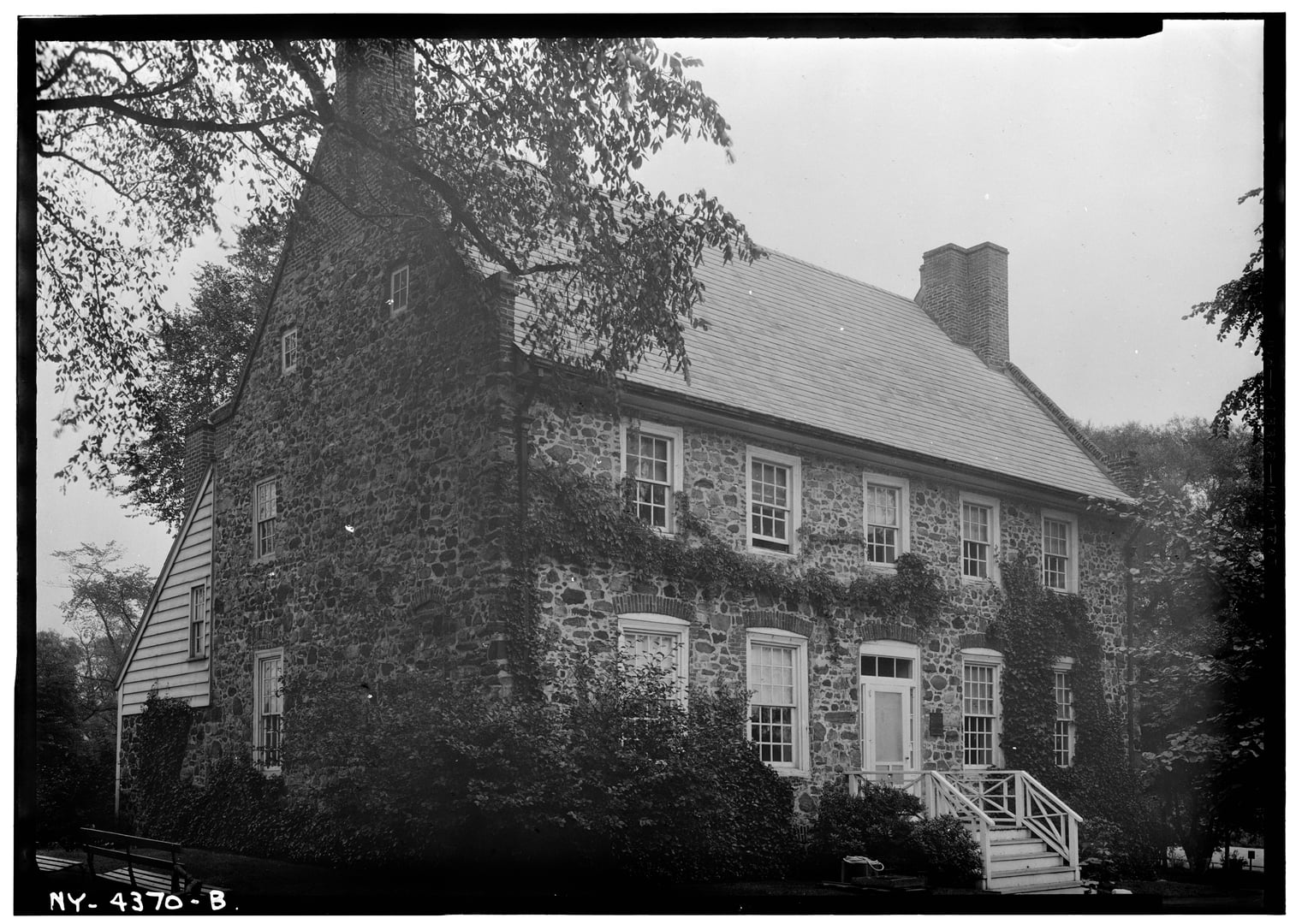
The Van Cortlandt House is a two-story fieldstone Georgian mansion set on a rise in what is now Van Cortlandt Park in the Kingsbridge neighborhood of the Bronx. Frederick Van Cortlandt began construction in 1748 and the house was completed the same year — it is the oldest known surviving structure in the Bronx, and one of the oldest Georgian fieldstone houses remaining in New York City.
The house served strategic purposes during the Revolutionary War to both sides. General George Washington used it as a headquarters at several points during the conflict; it was here, according to the museum, that Washington and French General Rochambeau coordinated strategy in the campaign's later stages. British and Hessian forces also occupied the house during their periods of control of the region. The war's passage through the house left it as a site of documented military death: a British officer, known in most sources as Captain Rowe, was seriously wounded in a battle in the vicinity in 1780. He was brought to the Van Cortlandt house, where he died in an upstairs bedroom — his fiancée, the daughter of a prominent Harlem tavern owner, arrived at his side just before he died.
The Van Cortlandt family continued in residence until 1823, making their occupation span the house's first 75 years. The National Society of Colonial Dames of America acquired the house in 1896 and undertook restoration; it is now part of the NYC Historic House Trust. The museum focuses on the family's history from 1749 to 1823 and the house's decorative arts collection.
Sources
- https://en.wikipedia.org/wiki/Van_Cortlandt_House
- https://historichousetrust.org/houses/van-cortlandt-house-museum/
- https://www.vchm.org/
Apparition of Captain Rowe in upstairs bedroom (reportedly on anniversary of his death)Spinning wheel in attic rotating without thread or visible causeApparition associated with scullery maidDoors closing without draftDisembodied voices in empty rooms
The Van Cortlandt House ghost lore is unusually well-documented for a historic house museum — the Riverdale Press covered the haunting claims in a feature article, and multiple paranormal aggregators (including True Ghost Tales) have collected staff and visitor accounts. The captain's death in 1780 is a documented historical event; the ghost tradition attached to it is that Rowe (or Rau, in a variant that casts him as Hessian rather than British) returns to the upstairs bedroom on the anniversary of his death each year. Museum staff have cited this as the most reliable source of unexplained experiences in the building.
The spinning wheel story is specific to the attic, where a wheel catalogued as a museum piece and confirmed to have no thread attached has been observed turning by staff and visitors. It is associated in the ghost-tour tradition with a scullery maid who allegedly stole silver from the Van Cortlandt household and whose restless presence is blamed for the wheel's movement. No documentary record of such a theft has been cited in sources reviewed.
The house has also generated reports of doors closing without drafts, disembodied voices audible in rooms where no one is present, and occasional apparitions near the upper floor. The Kings River Life compendium of Van Cortlandt Park haunts and the New York Haunted Houses database both collect these claims. No formal paranormal investigation has been conducted at the museum.
Notable Entities
Captain Rowe (British officer, died in house 1780)
Where this legend is told