Est. 1827 · One of the oldest surviving residential buildings on Gay Street, built c. 1827 · Mayor Jimmy Walker's residence for his mistress Betty Compton in the 1920s · Site where puppeteer Frank Paris created the original Howdy Doody puppet, c. 1947 · Subject of paranormal investigation by Hans Holzer, documented in 1966
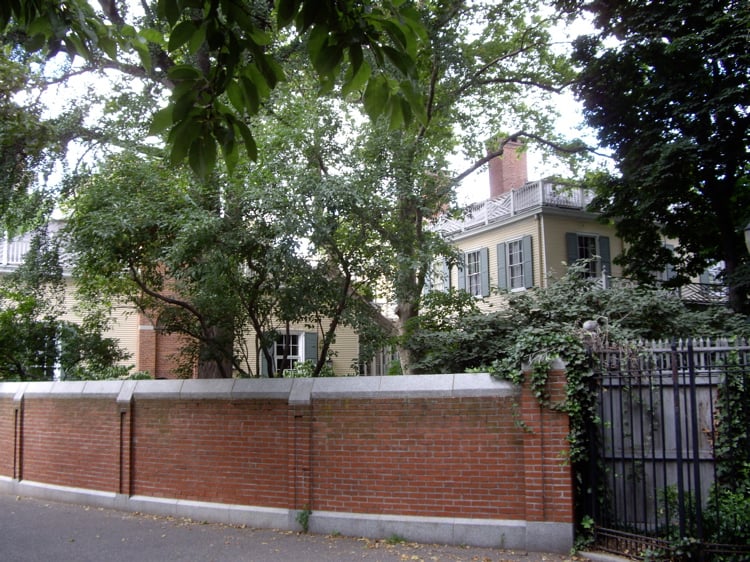
Gay Street — a narrow, curved block between Christopher Street and Waverly Place — developed in the 1820s from horse stables serving wealthy residents on Waverly Place. Number 12 was built around 1827 as modest housing; the street in that era was populated largely by Black and working-class residents, a different demographic from the surrounding Village.
Mayor Jimmy Walker, who served as New York City's mayor from 1926 to 1932, acquired the building and installed Betty Compton there. Compton was an English-born actress and singer who had performed in Broadway productions including the original Funny Face (1927) with Fred and Adele Astaire, and who was a member of the Ziegfeld Follies. Walker and Compton married in Cannes in 1933 after Walker resigned from the mayoralty under pressure from Governor Franklin D. Roosevelt over corruption charges. The marriage ended in divorce in 1941. Whether the building served as a speakeasy called the Pirate's Den before or during Compton's residence is not definitively established by primary sources, though the account circulates consistently in downtown Manhattan history.
Puppeteer and illustrator Frank Paris lived in the building's basement in the 1940s, where he created the original Howdy Doody puppet before the character appeared on NBC television in 1947. The building remained residential through the 20th century and continues as private housing.
Sources
- https://en.wikipedia.org/wiki/Betty_Compton
- https://en.wikipedia.org/wiki/Jimmy_Walker
- https://www.boweryboyshistory.com/2009/06/mistresses-and-misnomers-story-of-gay.html
Figure in top hat and opera cloak seen through upper-floor windowsUnexplained screeching sounds on stairsPhantom cooking smellsFlapper-era apparitions reported in the street
The earliest published documentation of the Gay Street Phantom appears in Hans Holzer's 1966 book Yankee Ghosts, which compiled ghost investigations Holzer conducted in New York and New England. The building at 12 Gay Street had been the subject of reported sightings only a few months before Holzer investigated — a figure described as wearing an opera cloak and top hat, seen through the windows of the upper floors.
Holzer brought in two mediums during separate sessions. The first, Betty Ritter, reported contact with a restless presence she identified as connected to the Prohibition era. The second, Ethel Meyers, claimed contact with a figure who described being tortured and identified himself as a French diplomat. These accounts remain in the category of paranormal investigation rather than documented evidence.
The phantom's physical description — top hat, formal attire — prompted an unusual secondary claim. Pulp fiction writer Walter Gibson, who had lived at 12 Gay Street earlier in his career and who created the character The Shadow for Street & Smith Publications in 1930, read accounts of the sightings and stated publicly that the description matched his fictional character. Gibson published this suggestion roughly nine years after Holzer's investigation.
Ghost tour operators covering Greenwich Village have since attached additional accounts to the address — descriptions of flapper-era figures seen in the street, screeching stairs, and cooking smells in an empty building. These layers accumulated after Holzer's documentation and are not attributed to named witnesses.
Notable Entities
The Gay Street Phantom (unidentified figure in formal attire; described in Hans Holzer, Yankee Ghosts, 1966)
Media Appearances
- Yankee Ghosts (book, 1966)