Est. 1923 · John W. Campbell's private salon and office, 1923–1957 · Site of private musical recitals hosted by Campbell for approximately 50-60 guests · Repurposed as MTA police storage and jail after Campbell's death · Restored as cocktail bar in 1999; currently operating as The Campbell
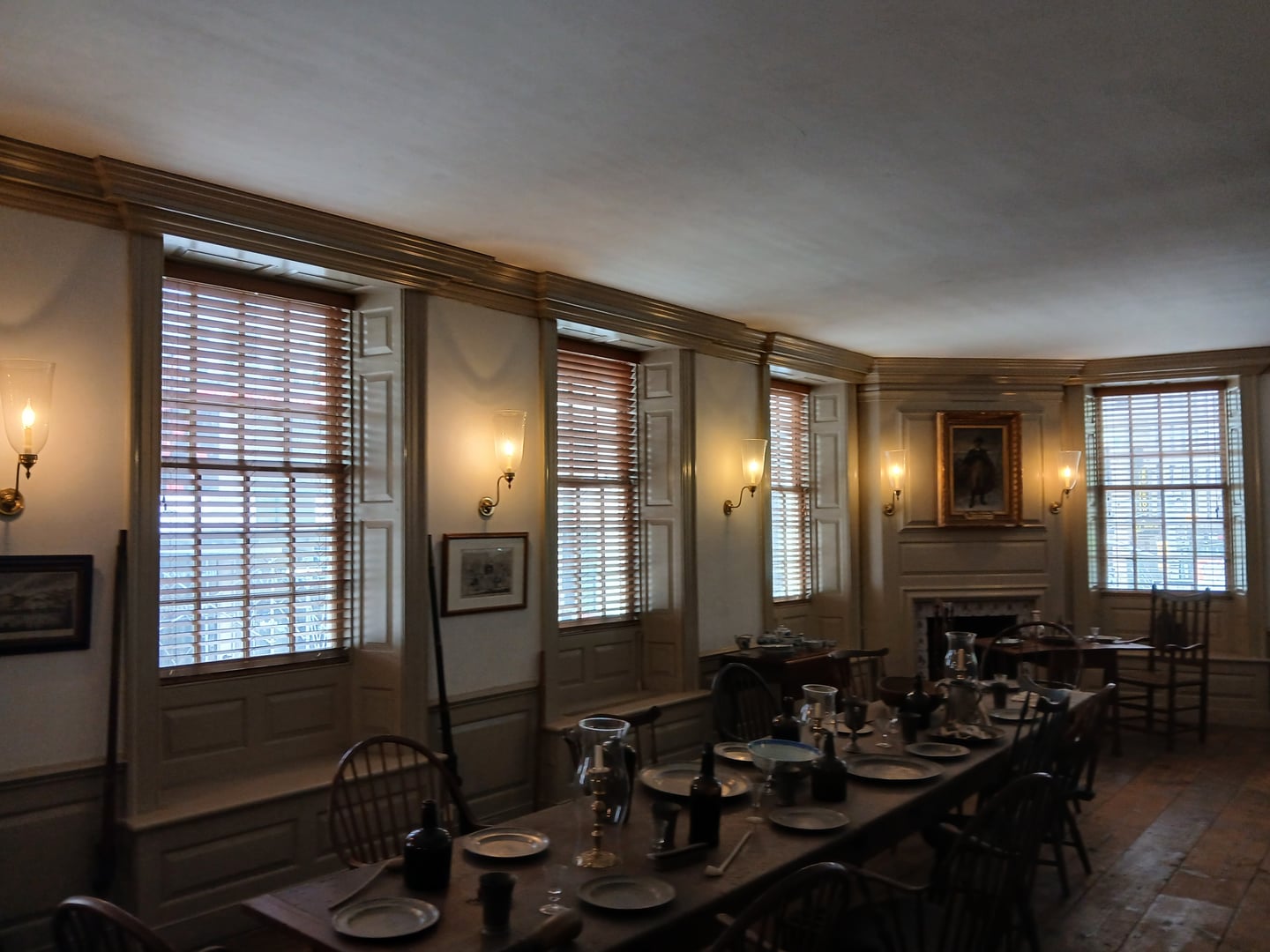
John W. Campbell leased the room from William Kissam Vanderbilt II in 1923, commissioning architect Augustus N. Allen to redesign it in the style of a 13th-century Florentine palace. The result was an ornate space with a hand-painted plaster ceiling, stained-glass windows, a mahogany balcony, a piano, and a pipe organ. A Persian carpet reportedly cost $300,000 — roughly $3.5 million in today's dollars. Campbell used the space as a private office by day and an entertainment venue by night, hosting recitals for 50 to 60 guests at a time.
Campbell died in 1957. After his death the furnishings were removed, and the room deteriorated over the following decades, serving as an MTA police weapons storage facility and a small holding jail before being used briefly as a CBS studio. The space underwent a $1.5 million restoration in 1999 and reopened as a cocktail bar, later renovated again in 2006. It closed in July 2016 following a lease dispute and reopened in May 2017 under new management as The Campbell.
The bar's address is technically 15 Vanderbilt Avenue — a side entrance off the terminal's lower level — placing it in Midtown Manhattan's Vanderbilt corridor above 42nd Street.
Sources
- https://en.wikipedia.org/wiki/Campbell_Apartment
- https://en.wikipedia.org/wiki/John_W._Campbell_(financier)
- https://www.thecampbellnyc.com
Cold air gusts on mezzanine staircaseStaff feeling a hand on their back with no one presentNames called by disembodied voice when aloneAfter-hours couple sighted on mezzanine who could not be locatedPatron who entered restroom and was not found when door was opened
Over roughly eight months following the bar's reopening under its current management, multiple staff members reported specific and recurring phenomena. Bartenders heard their names called by a voice with no one else in the building. Waitresses felt a hand on their back while working, with no one behind them. Employees on the mezzanine staircase encountered sudden cold gusts in a fully interior space. One patron entered the single restroom and never emerged; when staff had a locksmith open the door, the room was empty — with no secondary exit.
Bar manager Elpidio Hernandez told CBS News: 'Always when you are here, you feel like someone is watching you.' Owner Mark Grossich confirmed the incidents to CBS, saying: 'We have some otherworldly visitors and I'm not bullsh*tting you here.'
The Eastern Paranormal Investigation Center conducted a documented overnight investigation using cameras, infrared video, sound recorders, and electromagnetic equipment. Their investigative psychic, Jasmine, reported a strong male presence in the upstairs restroom — specifically an older man she described as preoccupied with reviewing financial figures. The EPIC team captured an unexplained rumbling sound from the former office space. Their general conclusion was that the building is haunted, with John W. Campbell himself the most likely candidate.
Campbell died in 1957 and left no known record of the space or its contents. Whether that makes him a plausible candidate for a ghost is a matter of opinion. What the CBS investigation documented are specific, named staff members reporting specific, consistent incidents over a defined period.
Notable Entities
John W. Campbell (1880–1957; financier and New York Central Railroad board member; original occupant)
Where this legend is told