Guided Tour Booking Required
Auditorium Theatre Exterior Visit
View the 1928-1930 Masonic Temple facade. Interior access is limited to ticketed performances.
- Duration:
- 30 min
HauntBound archive · catalog record
Reported phenomena, as catalogued
+ 1 further entry on record
The 3,000-seat former Masonic Temple of Rochester, dedicated in 1930 and acquired by RBTL in 2004, is where cast and crew have reported an elderly apparition backstage and a 'lady in a red coat' in the lobby.
885 East Main Street, Rochester, NY 14605
Research updated June 2026
Age
All Ages
Cost
$$$
Cost varies by Broadway tour and event; tickets per show.
Access
Wheelchair OK
Indoor theater with ADA accessible seating areas.
Equipment
No Photos
Est. 1930 · Built 1928-1930 as the Masonic Temple of Rochester · Houses original Wurlitzer 4/23 theater organ with 1,619 pipes · Purchased by Rochester Broadway Theatre League (2004) · Adjoining Auditorium Center acquired by RBTL (2023)
The Masonic Temple of Rochester was built at a reported cost of $2,225,000, with its cornerstone laid in 1928 and the completed building dedicated on May 24, 1930. The complex housed multiple ceremonial meeting rooms and offices for the Masonic order, plus the centerpiece 3,000-seat Auditorium Theatre. A magnificent Wurlitzer 4/23 theater organ with 1,619 pipes — including trumpets, clarinet, saxophone, drums, strings, and marimbas — was built into the proscenium arch and remains a featured architectural element.
Ornamental plasterers added a distinctive whimsy during construction: small images of squirrels and acorns are hidden throughout the ceiling and trim work, an inside joke that has become part of the building's identity.
The building was sold by the Masonic order to a privately owned entity in 1989 and was converted to a mix of office space, meeting rooms, and banquet halls. The portion containing the theatre was purchased by the Rochester Broadway Theatre League (RBTL) in 2004, which since then has operated it as a top live-entertainment destination, hosting touring Broadway productions, concerts, and special events. In 2023, RBTL acquired the adjoining Auditorium Center portion of the building, consolidating control of the complex. The venue is now branded as the West Herr Auditorium Theatre under a naming-rights agreement.
Sources
Per HauntedPlaces.org, the theater is described as 'a haven for ghosts, with witnesses having noticed things moving backstage and spotted an apparition of an elderly man.' The same source notes 'ethereal figures, including an elderly gentleman and a lady in a red coat' have been described by visitors, with the elderly gentleman 'often hanging around backstage' and reportedly moving objects.
GhostQuest.net's Rochester roundup cites the venue among the city's most-reported haunted properties, and the listing notes disembodied voices and footsteps heard during rehearsals when the auditorium would otherwise be empty. The Masonic-era origin of the building, with its many ceremonial spaces above and around the auditorium, is invoked in regional folklore as a source of the activity, though no specific person is named in primary sources.
Notable Entities
View the 1928-1930 Masonic Temple facade. Interior access is limited to ticketed performances.
Some links on this page may earn HauntBound a small commission when you book, at no extra cost to you. Our editorial picks are independent. Full disclosure
Every HauntBound history is researched from documented sources. We clearly separate verified historical fact from paranormal folklore.
Free Guide
10 verified stops, rated for families, mapped in order. Free.
One email to confirm, then the guide link. Unsubscribe anytime.
Yankton, SD
The Dakota Theatre opened in 1902 in downtown Yankton, one of the oldest cities in South Dakota and the former capital of Dakota Territory. The building has served as a performance venue across more than a century, including periods as a vaudeville house and a movie theater, and now operates as a community theater. Staff and performers have long associated the building with reports of resident spirits.
Cripple Creek, CO
The Butte Theater on Bennett Avenue is a historic Cripple Creek opera house rebuilt after the April 1896 fires that devastated the city. Associated with the Imperial Casino, it has operated as a performance venue for more than a century and is reportedly haunted by a ghost named Jack, linked to the nearby fire department.
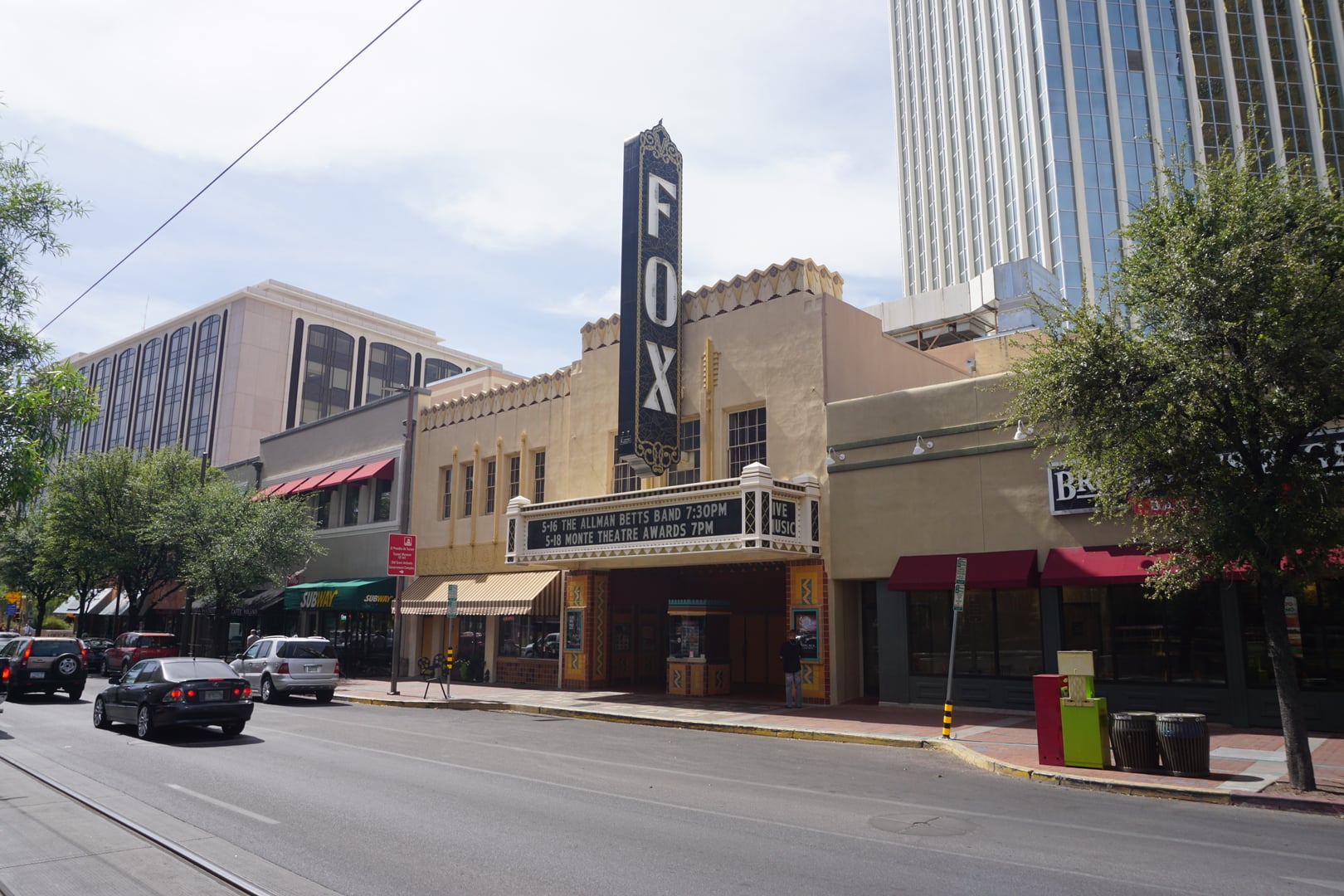
Tucson, AZ
The Fox Tucson Theatre opened on April 11, 1930, as a combined vaudeville and movie house. After closing in 1974 and standing vacant for 25 years, the building was purchased in 1999 by the non-profit Fox Tucson Theatre Foundation for $250,000 and reopened in 2006 following a multi-year, multi-million-dollar restoration.