Est. 1693 · Established 1693 under royal charter to Frederick Philipse I · Operated with enslaved labor: 23 enslaved people documented in 1750 probate inventory · National Historic Landmark, November 5, 1961 · Operated by Historic Hudson Valley with mission centered on enslaved workers' histories · Adjacent to landscape of Washington Irving's The Legend of Sleepy Hollow
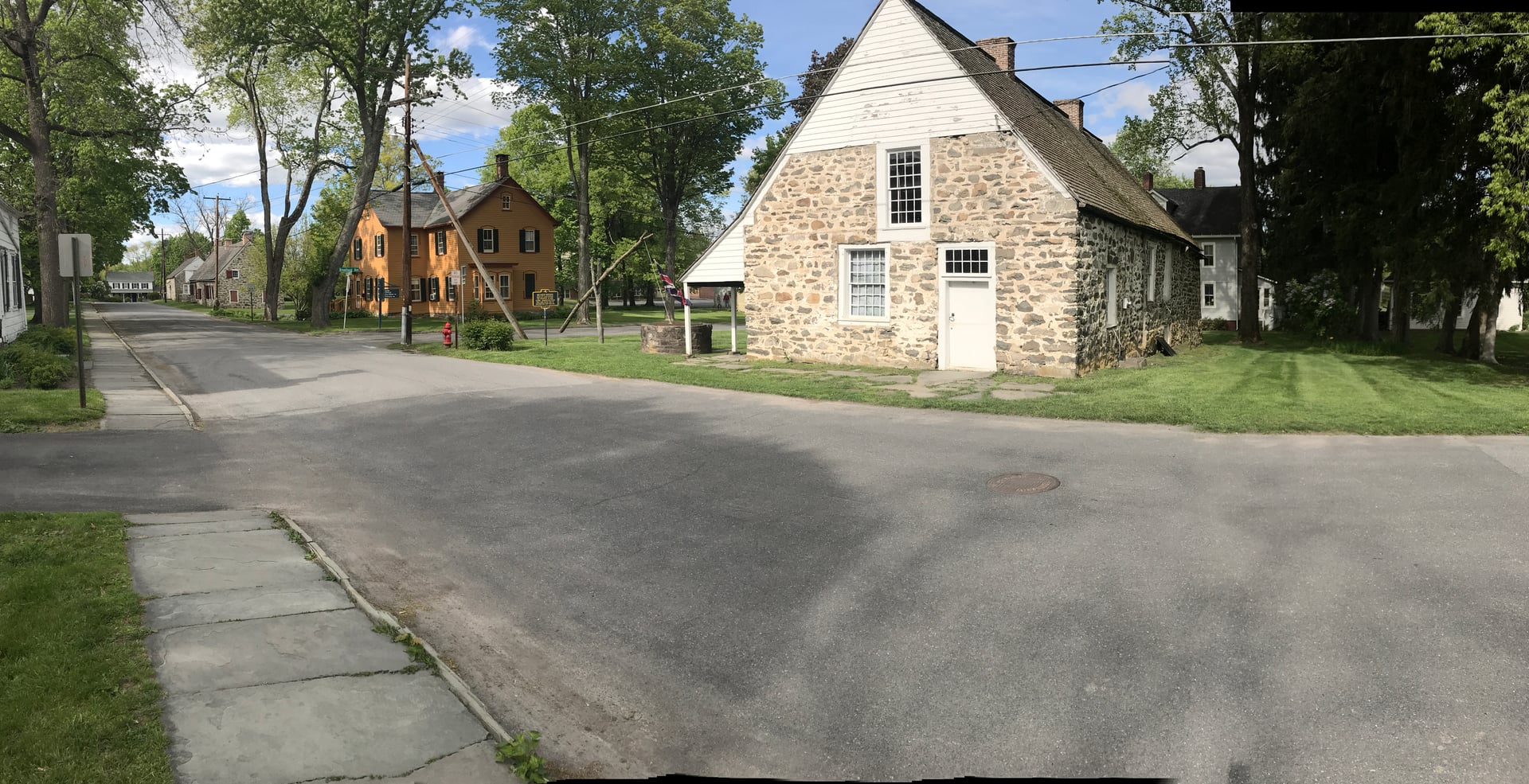
The site now known as Philipsburg Manor sits on land granted to merchant Frederick Philipse I under a royal charter in 1693. Philipse, who had arrived from Holland as a carpenter and built himself into the wealthiest merchant in colonial New York, used the grant to establish a commercial farming and milling operation on the Pocantico River, a tributary of the Hudson.
The operation was built on and maintained by enslaved labor. For more than thirty years, Frederick and his first wife Margaret Hardenbroeck — one of colonial America's most successful merchants herself — shipped hundreds of enslaved African men, women, and children across the Atlantic. By the time Frederick's son Adolphus died in 1750, twenty-three enslaved men, women, and children were living and working at the manor. Adolphus's probate inventory listed them as the most valuable property on the estate. The enslaved workers operated the gristmill, worked the fields and wharf, maintained the household, and slept in shifts in a cramped room in the manor basement.
The Philipse family's support of the British during the Revolution led to the confiscation of the estate. Frederick Philipse III, the third lord of the manor, was exiled to England in 1783. The property passed through several owners and periods of use before Historic Hudson Valley — the nonprofit founded by John D. Rockefeller Jr. — acquired it in the 1940s and began archaeological and interpretive work.
Philipsburg Manor was designated a National Historic Landmark on November 5, 1961. The site's interpretive mission, significantly expanded in recent decades, now centers explicitly on the enslaved workers: their documented names where the historical record preserves them, their labor, their living conditions, and the northern American context of plantation-scale slavery that the Philipse operation exemplified.
Sources
- https://en.wikipedia.org/wiki/Philipsburg_Manor_House
- https://hudsonvalley.org/historic-sites/philipsburg-manor/
The interpretive approach at Philipsburg Manor distinguishes it from most haunted-history sites: the disturbing history here is a matter of documented record, not legend. The basement of the manor house contains a small room where enslaved workers slept in shifts — two or three people rotating through a space not designed for comfortable habitation. The 1750 probate inventory of Adolphus Philipse is a primary document listing their names and valuation as property.
Historic Hudson Valley's curatorial team has spent decades recovering the names, origins, and stories of the enslaved people at Philipsburg. Specific individuals are documented in wills, inventories, and account books. The interpretive programming — particularly the living history tours — treats this as the central story of the site.
The broader geography ties Philipsburg to the Irving tradition. The Baltus Van Tassel farmhouse in The Legend of Sleepy Hollow has sometimes been linked to the Philipsburg landscape. October's 'Headless Horseman Files' experience uses the surrounding terrain and the Sleepy Hollow whodunit tradition as a framework, placing the supernatural in a landscape saturated with documented history.
Philipsburg Manor does not market itself as a haunted house and the site's mission explicitly centers the enslaved workers rather than ghost lore. The dark-tourism interest here is grounded in the actual history — the moral weight of a northern plantation whose records survive.
Where this legend is told