Est. 1677 · One of the oldest intact early-American streets in North America · Seven original 18th-century stone houses built by Huguenot refugees · National Historic Landmark, designated 1965 · Includes original Huguenot burying ground from the 1670s
The Huguenots who settled New Paltz were French Protestants who fled France following the 1685 revocation of the Edict of Nantes, which had guaranteed Protestant religious freedom for nearly a century. Many traveled through the German Palatinate before emigrating; a group of twelve men, the Duzine, received a patent for land along the Wallkill River in 1677 from Governor Edmund Andros and established the settlement of New Paltz.
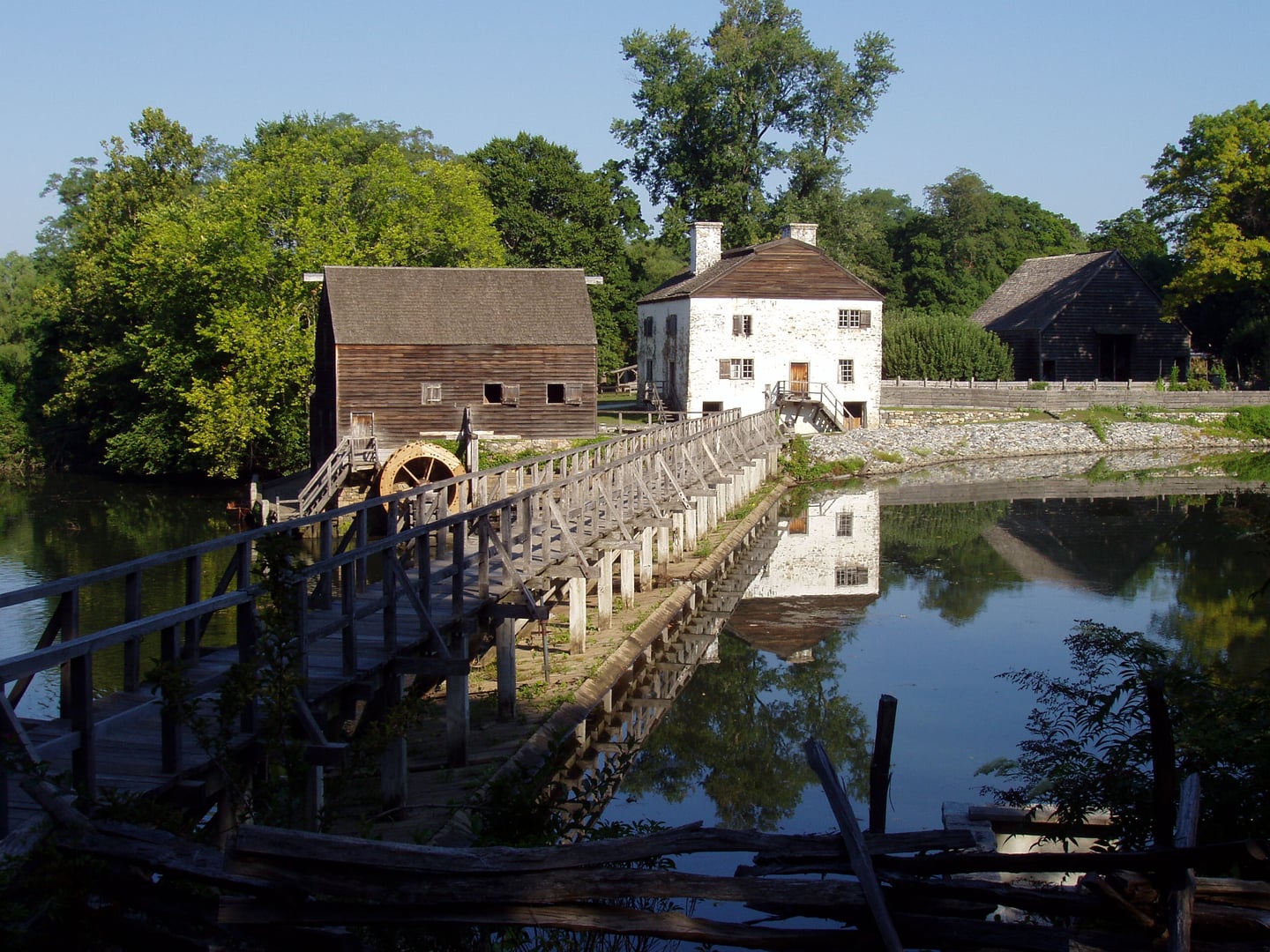
The stone houses that survive on Huguenot Street were built primarily between 1692 and the mid-18th century. Seven original structures remain: the Jean Hasbrouck House (c. 1712), the Abraham Hasbrouck House (c. 1717), the Bevier House (c. 1698), the Deyo House (c. 1692), the DuBois Fort (1705), the Freer-Low House (c. 1720), and the LeFevre House (c. 1709). The street also includes the original Huguenot burying ground, a replica of the 1717 French Church, and a reconstruction of a Munsee Lenape wigwam representing the Indigenous community that occupied this land before European settlement.
The Hasbrouck family papers include a diary kept by Abraham Hasbrouck that documents the death of his daughter Catherine from tuberculosis, among other family events. This primary source material has been incorporated into the organization's ghost tour programming. The district was declared a National Historic Landmark in 1965 and is administered by the Historic Huguenot Street nonprofit.
Sources
- https://www.huguenotstreet.org/calendar-of-events/ghost-ball
- https://oracle.newpaltz.edu/horror-hauntings-and-history/
- https://oracle.newpaltz.edu/huguenot-street-gets-spooky-just-in-time-for-halloween/
Theatrical ghost encounters based on documented diary accountsDeyo House curse in local tradition
The supernatural tradition at Huguenot Street is grounded in documented primary sources rather than invented lore — a distinction the organizers emphasize. Abraham Hasbrouck kept a family diary that survives and records the death of his daughter Catherine from tuberculosis; that documented death, in the house that still stands on the street, forms the basis of one of the event's central narratives.
The Deyo House (c. 1692), one of the oldest surviving structures on the street, carries a long-fabled curse in local tradition. The nature and origin of the curse are described in the tour programming but not detailed in publicly available accounts.
The Haunted Huguenot Street event has been presented by the Historic Huguenot Street organization for multiple years and has sold out on multiple occasions. The format involves small groups (maximum 20 visitors) moving through the historic street after dark with theatrical performers portraying former residents. The event draws on actual diaries, burial records, and oral histories of the Hasbrouck, Deyo, DuBois, and other founding families.
The street also includes the original Huguenot burying ground, which predates the stone houses and holds the earliest Huguenot settlers.
Notable Entities
Catherine Hasbrouck — death from tuberculosis documented in her father Abraham's diaryHuguenot founding families: Hasbrouck, Deyo, DuBois, Freer, Bevier, LeFevre
Where this legend is told