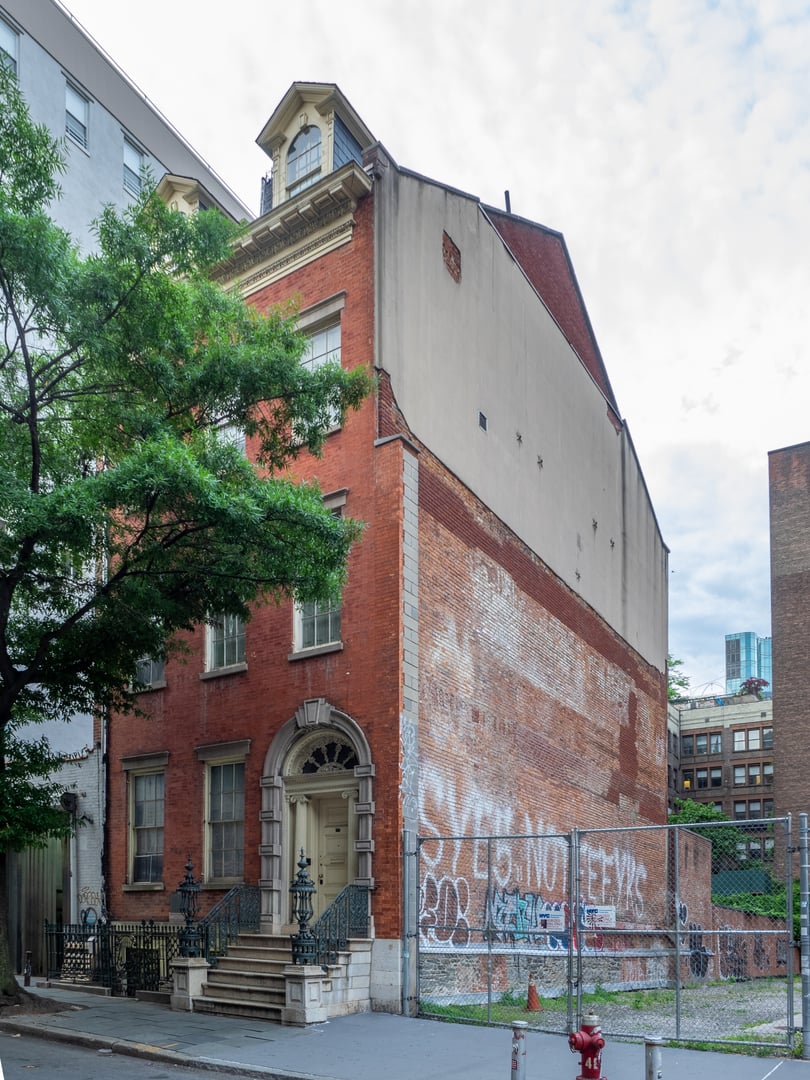
Est. 1699 · Site of rear-guard action by approximately 256 Maryland soldiers during Battle of Long Island (August 27, 1776) · Mass grave of Maryland soldiers believed to be at 3rd Ave and 7th–8th Streets, nearby · Original house demolished 1897; reconstruction 1933–34 using recovered original materials · New York City landmark and National Historic Landmark · Free public museum; exhibits on Battle of Brooklyn and Brooklyn Dodgers history
The land on which the Old Stone House stands was part of the Gowanus lowlands claimed by Dutch settlers in the mid-17th century. The Vechte family built a stone farmhouse on the site around 1699, and by 1776 the house was occupied by a branch of the Cortelyou family — hence the dual name.
On August 27, 1776, the Battle of Long Island — the first major engagement of the Revolutionary War after the Declaration of Independence — played out across Brooklyn. British and Hessian forces had outflanked American positions and were driving toward Washington's lines at Brooklyn Heights. The Vechte-Cortelyou House, positioned at the edge of the Gowanus marsh, was a key defensive chokepoint. Approximately 260–270 Maryland soldiers under Major Mordecai Gist were ordered to hold the position long enough for Washington's main force to retreat. They mounted at least six charges against an entrenched British force that outnumbered them severely. Washington, watching from a fortified rise, reportedly said: 'Good God, what brave fellows I must this day lose.' An estimated 256 of the Maryland soldiers died in the assaults. The British used the captured house as an artillery position for the remainder of the day.
The dead soldiers were buried by the British in a mass grave on the nearby farm of Adrian Van Brunt, believed to be near the southwest corner of what is now 3rd Avenue between 7th and 8th Streets. The original farmhouse changed hands repeatedly after the Revolution, serving as a tavern, private residence, and recreational building before being demolished in 1897. In 1933, workers excavating the site for a playground found original foundation stones, and the City of New York undertook a faithful reconstruction in 1933–34 using recovered original materials. The rebuilt house was designated a New York City landmark and a National Historic Landmark. Today it operates as the Old Stone House Historic Interpretive Center, run by a not-for-profit organization, with free admission and exhibits on the battle, the Dutch colonial period, and the Brooklyn Dodgers' history at the adjacent Washington Park.
Sources
- https://en.wikipedia.org/wiki/Old_Stone_House_(Brooklyn)
- https://theoldstonehouse.org/about/
- https://nylandmarks.org/explore-ny/the-old-stone-house-the-battle-of-brooklyn/
Unspecified apparitions associated with Battle of Brooklyn dead in local ghost-tour literature
The Old Stone House appears in Brooklyn haunted-places roundups primarily because of the scale of death associated with its grounds during the 1776 battle and the documented presence of a mass grave of Maryland soldiers nearby. The site is mentioned in cursory ghost-tour literature and local lists, but no specific paranormal investigation has produced documented first-person accounts attached to named witnesses.
The historical weight is real: approximately 256 men died in repeated charges on a single day across a small patch of ground. Their remains were buried in a field that was later built over, and the precise grave location is only approximately known. In battle-site dark tourism, this category of loss — unnamed and partially located — tends to generate persistent lore even in the absence of specific accounts. The museum itself does not promote paranormal claims; its interpretive focus is on the military history and the Dutch colonial period.
For visitors drawn to Revolutionary War dark history, the more documented engagement is the site itself: the reconstruction stands on the ground where the charges occurred, and the approximate mass grave location a few blocks north is publicly identifiable.
Notable Entities
Maryland 400 (approximately 256 soldiers who died in rear-guard charges)
Where this legend is told