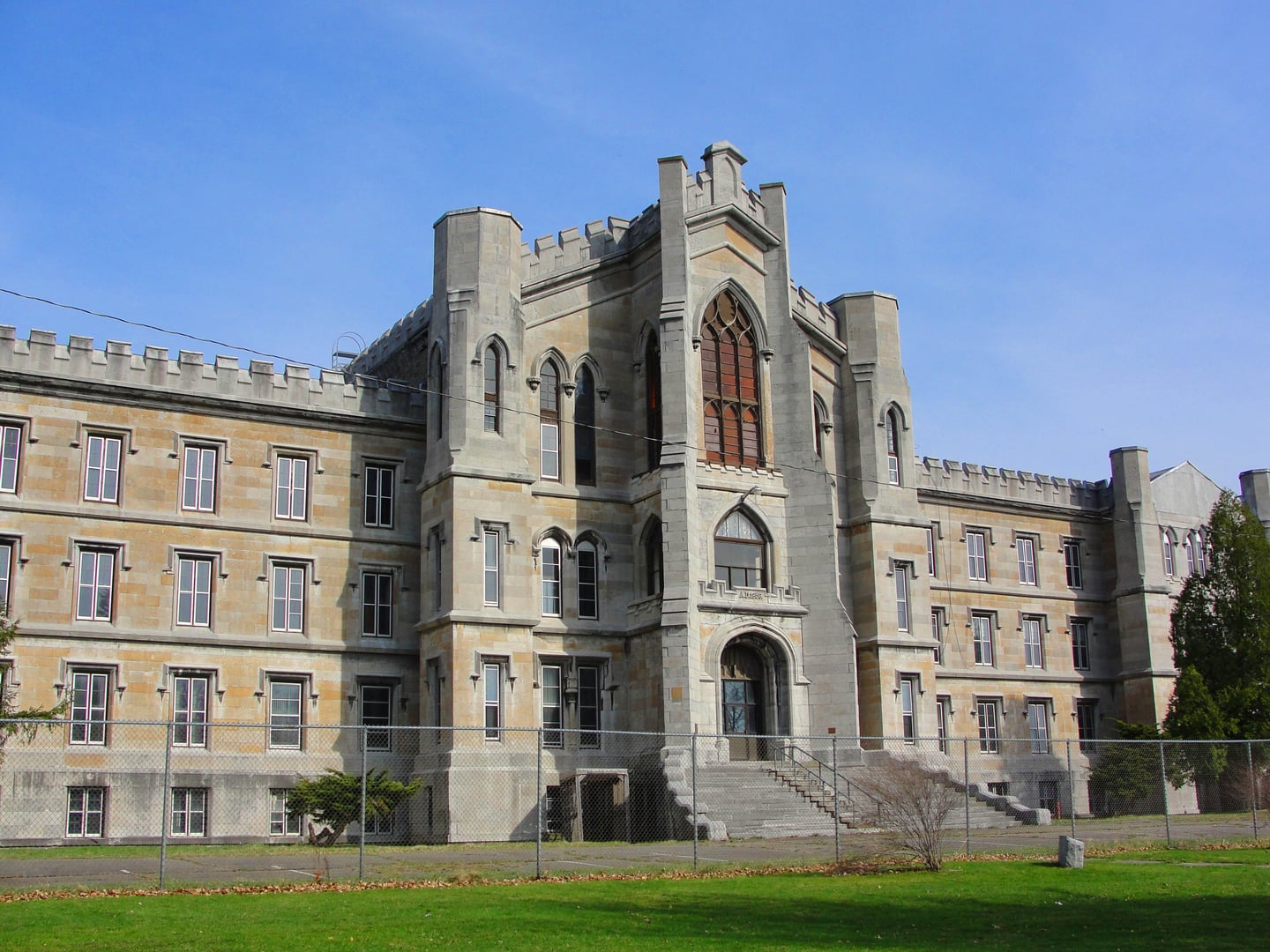
Est. 1911 · One of New York State's largest 20th-century institutions for people with disabilities · Site of early human polio vaccine trials in the 1950s · More than 800 residents buried in an on-site potter's field · Geraldo Rivera's 1972 reporting on conditions here helped catalyze national mental health reform · Closed 1996 after decades of documented abuse and neglect
Letchworth Village was established in 1911 on roughly 2,300 acres in Thiells, Rockland County, envisioned as a progressive 'garden city' for individuals deemed mentally or physically disabled. Modeled in part on Thomas Jefferson's Monticello and inspired by the English town of Letchworth, the campus originally comprised more than 130 buildings arranged along curving streets to create a self-sufficient farming community. In its early years it was regarded as an enlightened departure from the grim custodial wards of earlier institutions.
Reality diverged sharply from vision. The facility quickly became overcrowded, eventually housing more than 4,000 residents despite a design capacity far smaller. Staffing shortages, inadequate funding, and institutional indifference produced conditions that investigators later described as 'backward and cruel.' Residents — the majority of them children — endured malnutrition, neglect, inadequate clothing, and a lack of basic supervision.
Letchworth Village was the site of some of the first human trials of the polio vaccine in the early 1950s, using residents as test subjects. Brain specimens were harvested from deceased residents and preserved in formaldehyde. A potter's field cemetery on the property holds more than 800 burials, many originally marked only by numbered stakes; a memorial monument was later erected to honor those individuals by name.
In 1972, journalist Geraldo Rivera brought national attention to conditions at New York's state institutions, including Letchworth Village, in reporting that contributed to widespread reform of the mental health system. The facility was finally closed in 1996 after years of legal battles and advocacy. Today the grounds are managed by the town of Haverstraw; a portion has been converted into Patriot Hills Golf Course and Veterans Memorial Park, while dozens of derelict buildings remain standing along the original tree-lined campus roads.
Sources
- https://en.wikipedia.org/wiki/Letchworth_Village
- https://www.untappedcities.com/inside-abandoned-letchworth-village-a-former-mental-institution-in-rockland-county-ny/
- https://hvmag.com/life-style/letchworth-village-thiells/
- https://owlcation.com/humanities/letchworth-village-abandoned-insane-asylums
Disembodied voices and whispers from empty buildingsShadow figures visible through boarded windowsApparitions of children and adults on campus groundsSense of being watched or followedEVP recordings captured by investigators
The abandoned campus of Letchworth Village has attracted paranormal investigators since at least the early 2000s. Ghost Adventures (Travel Channel, Season 6) filmed an episode here, bringing national attention to reported phenomena. Investigators and casual visitors alike have described hearing whispers, crying, and laughter from within the derelict buildings. Shadowy figures have been reported moving past boarded windows, and several accounts describe a pervasive sense of being observed or followed while walking the grounds.
According to the paranormal investigation group PIRC-NY, which has conducted sessions on-site, the experiences cluster around the former dormitory buildings and the area near the cemetery. EVP recordings have reportedly captured voices, though none have been independently verified by scientific methods.
Paranormal claims here are interpreted through the lens of the documented history: the suffering of thousands of residents, the unmarked graves, and the abuses carried out over eight decades. Whether or not one accepts a supernatural explanation, the emotional and historical weight of the site is felt by nearly all who visit.
Media Appearances
- Ghost Adventures (Travel Channel) — Season 6 episode filmed on site