Est. 1931 · One of the Largest U.S. Psychiatric Hospitals by Census · Lobotomy and Insulin Shock Therapy History · Allen Ginsberg and Beat Literature Connection · New York State Deinstitutionalization
Rockland State Hospital was authorized by the New York State Legislature in 1926 and opened in 1931 on a 600-acre former farm site in Orangeburg, designed in the cottage-plan style then preferred for large state psychiatric facilities. The campus was built to be largely self-sufficient — it included working farms, greenhouses, a powerhouse, and separate residential buildings for different patient populations.
The hospital grew rapidly in the post-World War II period. By 1959 the patient census reached approximately 9,000, making it one of the largest psychiatric institutions in the country. During the 1940s and 1950s, treatments included insulin shock therapy, electroconvulsive therapy, and lobotomies. These procedures were phased out by the late 1960s as pharmacological treatments replaced them, but their history at the site is well documented.
Allen Ginsberg's landmark 1956 poem 'Howl' was partly inspired by Carl Solomon, a patient Ginsberg met at Columbia Presbyterian Psychiatric Institute — but the poem's famous dedication 'for Carl Solomon' and its imagery of institutional confinement has been widely associated with Rockland, and Solomon himself was later committed to Rockland State Hospital. The opening lines — 'I saw the best minds of my generation destroyed by madness' — gave the institution a place in American literary history.
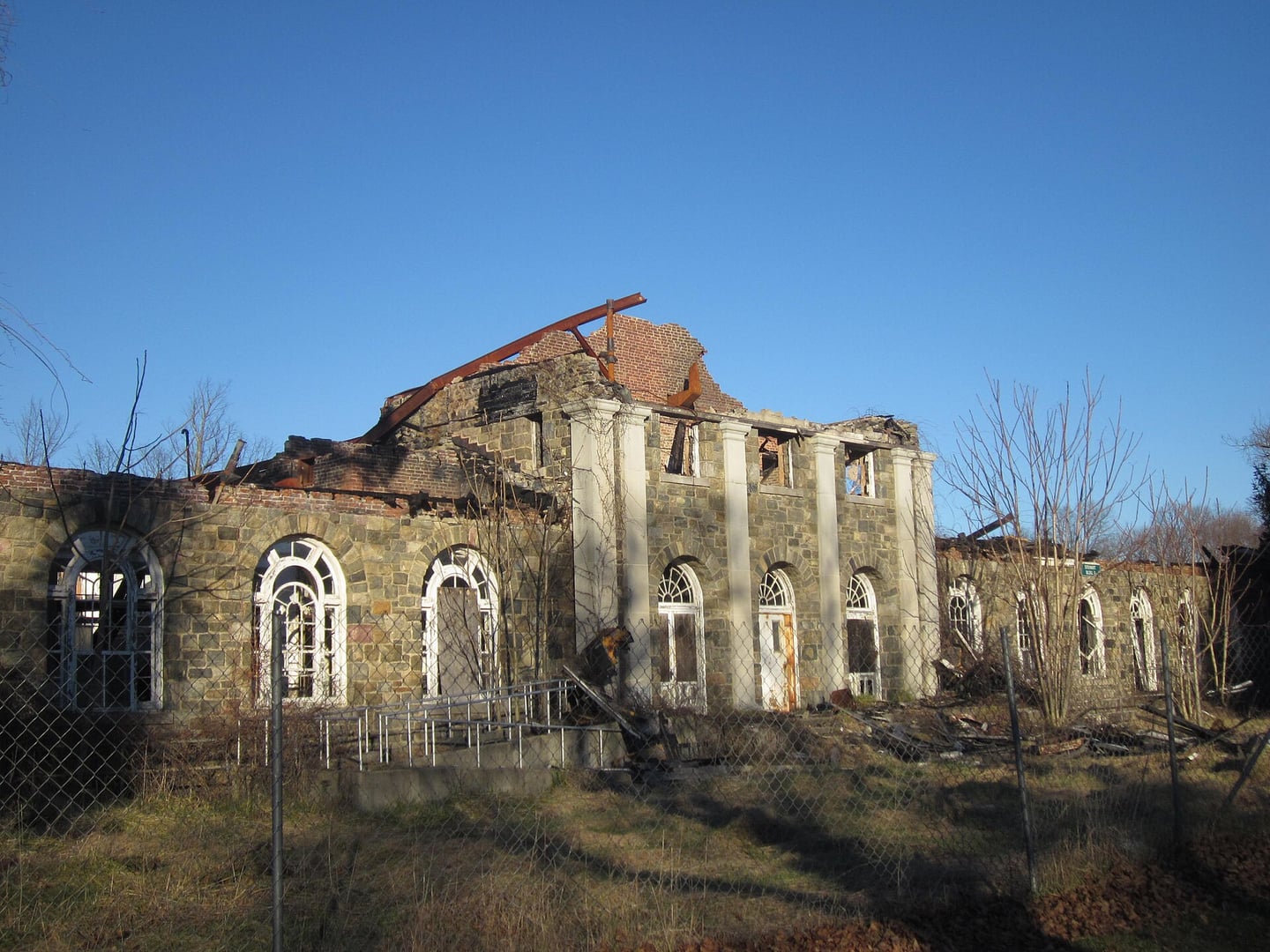
New York State's deinstitutionalization policies beginning in the 1960s dramatically reduced Rockland's census. By the 1970s and 1980s much of the original campus had been vacated. Dozens of the historic buildings were left to decay while a smaller, modernized facility continued operating under the New York State Office of Mental Health. The historic structures on the abandoned sections of the campus deteriorated progressively, documented by photographers and urban explorers through the 2000s and 2010s.
Sources
- https://en.wikipedia.org/wiki/Rockland_Psychiatric_Center
- https://www.untappedcities.com/once-a-bustling-state-hospital-the-abandoned-rockland-psychiatric-center-is-now-the-stuff-of-nightmares/
- https://classicnewyorkhistory.com/rockland-state-psychiatric-center-history-old-buildings-new-hope/
Voices in empty ward corridorsShadow movement on upper floorsUnexplained sounds in basement tunnels
Rockland State Hospital's abandoned sections have been documented by urban explorers since the 1990s, when the scale of the decay — intact wards with furniture, equipment, and records left in place — became apparent. Untapped Cities and Classic New York History have both published extensive photographic surveys of the deteriorating interior spaces, which as of the mid-2010s included operating rooms, patient dormitories, and administrative offices largely intact from the peak era.
Paranormal accounts attached to the site are consistent with the broader abandoned-asylum genre: voices or conversation sounds heard in empty corridors, shadows moving on upper floors visible from the exterior through broken windows, and unexplained sounds from basement levels where the tunnel connections between buildings run. The reports circulate primarily in urban exploration and paranormal enthusiast communities; no formal paranormal investigations with published results appear in our sourcing.
The site's operational history — nine thousand patients at peak, decades of treatments now considered abusive, and a patient population that included individuals committed involuntarily and held for years or decades — provides the historical weight from which its paranormal reputation draws. Carl Solomon, the real person whose suffering partly inspired 'Howl,' was a patient here; his later years at Rockland are documented in Ginsberg's correspondence and in accounts of the Beat period.