Est. 1719 · George Washington's Farewell Address to Officers, December 4, 1783 · Sons of Liberty Meeting Place · Samuel Fraunces Served as Washington's Household Steward · Fraunces Tavern Museum — opened 1907 · Site of 1799 Basement Murder-Suicide
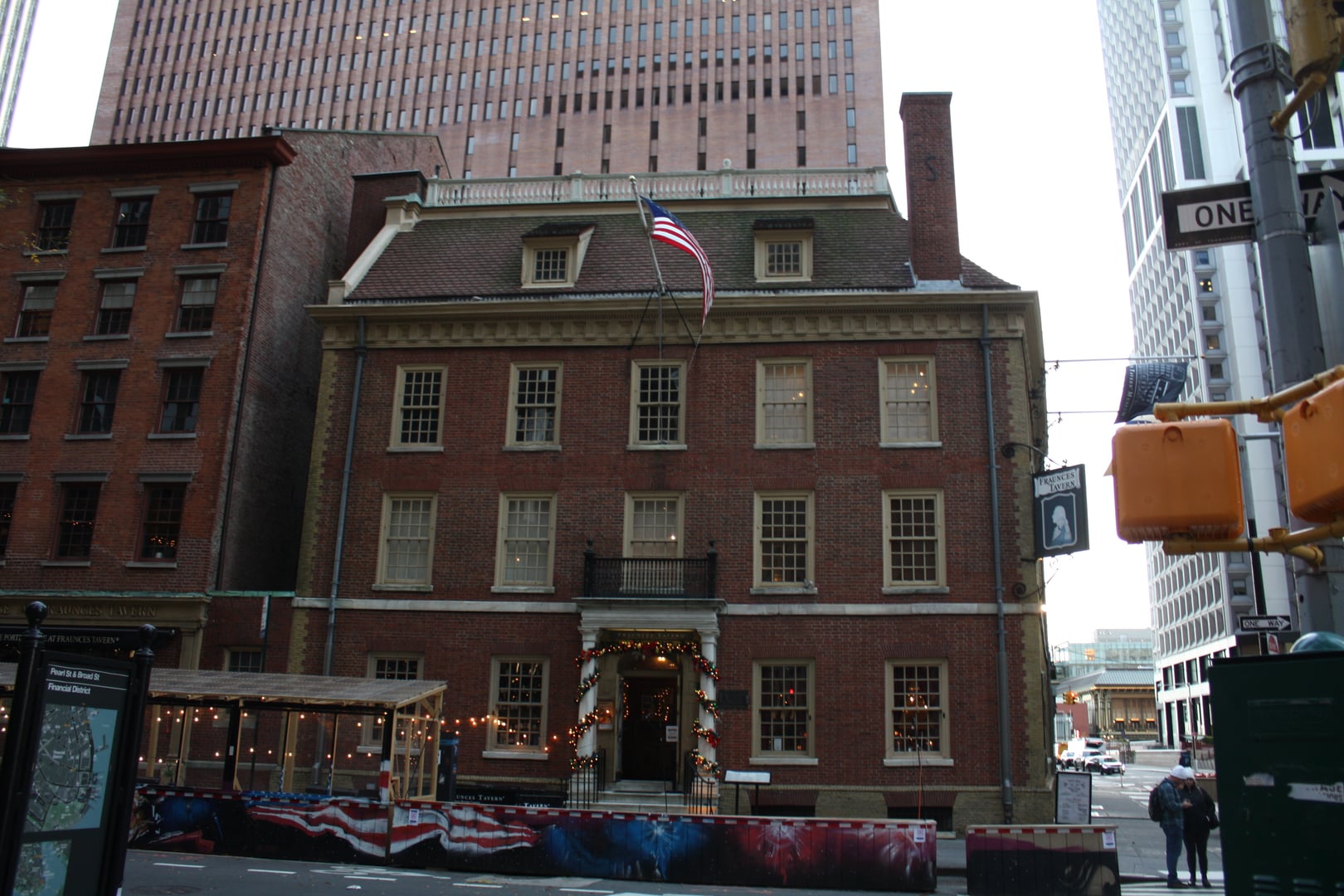
The building at 54 Pearl Street was constructed in 1719 as a private residence for Stephen Delancey. In 1762, Samuel Fraunces purchased the property and opened it as the Queen's Head Tavern, which became one of the most prominent public houses in colonial New York. The tavern served as a meeting place for the Sons of Liberty in the years before the Revolution, and during the war it was used by the Continental Army for intelligence and supply operations.
On December 4, 1783, General George Washington assembled his officers in the second-floor Long Room at Fraunces Tavern for a farewell dinner. The British had evacuated New York on November 25, and Washington was departing to resign his commission before Congress in Annapolis. The farewell was an intensely emotional occasion; by contemporary accounts, many of the officers wept. Washington left New York from the Whitehall Ferry the same day.
In 1785, Fraunces himself was appointed steward of the President's household when Washington was inaugurated as the first president. The original tavern building deteriorated through the 19th century and was substantially altered.
In 1904, the Sons of the Revolution — a patriotic organization — purchased the property and undertook a major restoration and reconstruction, returning the building to an approximated colonial form. The reconstructed building opened as the Fraunces Tavern Museum in 1907 and has operated continuously since. The museum holds four floors of galleries focused on the Revolutionary period and early American history. A working restaurant occupies the ground floor.
A documented event in the building's history involves a murder-suicide in the basement in 1799. According to reporting by NY1 and paranormal accounts citing the event, a husband killed his wife — identified in some accounts as a ballerina named Anna Gardy — in the basement before taking his own life. This event, and not the Revolutionary War history, is the primary anchor of the building's haunting lore.
Sources
- https://en.wikipedia.org/wiki/Fraunces_Tavern
- https://www.frauncestavernmuseum.org/history
- https://ny1.com/nyc/all-boroughs/human-interest/2024/10/31/manhattan-tavern-embraces-revolutionary-past-and-ghostly-encounters
Heavy atmosphere of sadness in the basementUnexplained footsteps on upper floorsCreaking doors in empty roomsSense of presence in the Long Room
Fraunces Tavern's paranormal reputation has two distinct threads. The first is the Revolutionary War association: the building's role as a Sons of Liberty meeting place, wartime operations hub, and the site of Washington's farewell has accumulated decades of atmospheric reports, particularly in the Long Room on the second floor. Visitors and staff describe a sense of presence, creaking floorboards without explanation, and rare accounts of a figure in 18th-century attire seen briefly in the upper floors.
The second and more specific thread is the 1799 basement murder-suicide. A NY1 news report from October 2024 documented staff accounts describing a heavy atmosphere of sadness in the basement near the location of the killing. The murder has been cited consistently in paranormal coverage of the tavern as the anchor for the basement-specific reports.
The building's general ghost reputation was documented in the NY1 report, which quoted staff describing the experiences as an accepted part of working in the building. The reports are low-key — footsteps on upper floors when the building is otherwise empty, the sense of being watched in the back staircase — rather than dramatic apparitions.
Because the 1799 murder involves named individuals, we have treated it with editorial care. The victim is identified in some sources as Anna Gardy; these accounts are unverified against primary historical records. We have described the event factually as a documented murder-suicide without elaborating on unverified biographical details of the victim.
Notable Entities
Colonial-era figure attributed to Washington or officers (folkloric)
Where this legend is told