Est. 1750 · c. 1750 construction; one of the earliest preserved Long Island farmhouses · David Conklin imprisoned by British 1777 for aiding Revolutionary War rebels · George Washington's 1790 Long Island tour table preserved inside · Donated 1911; one of Long Island's earliest public historic house museums
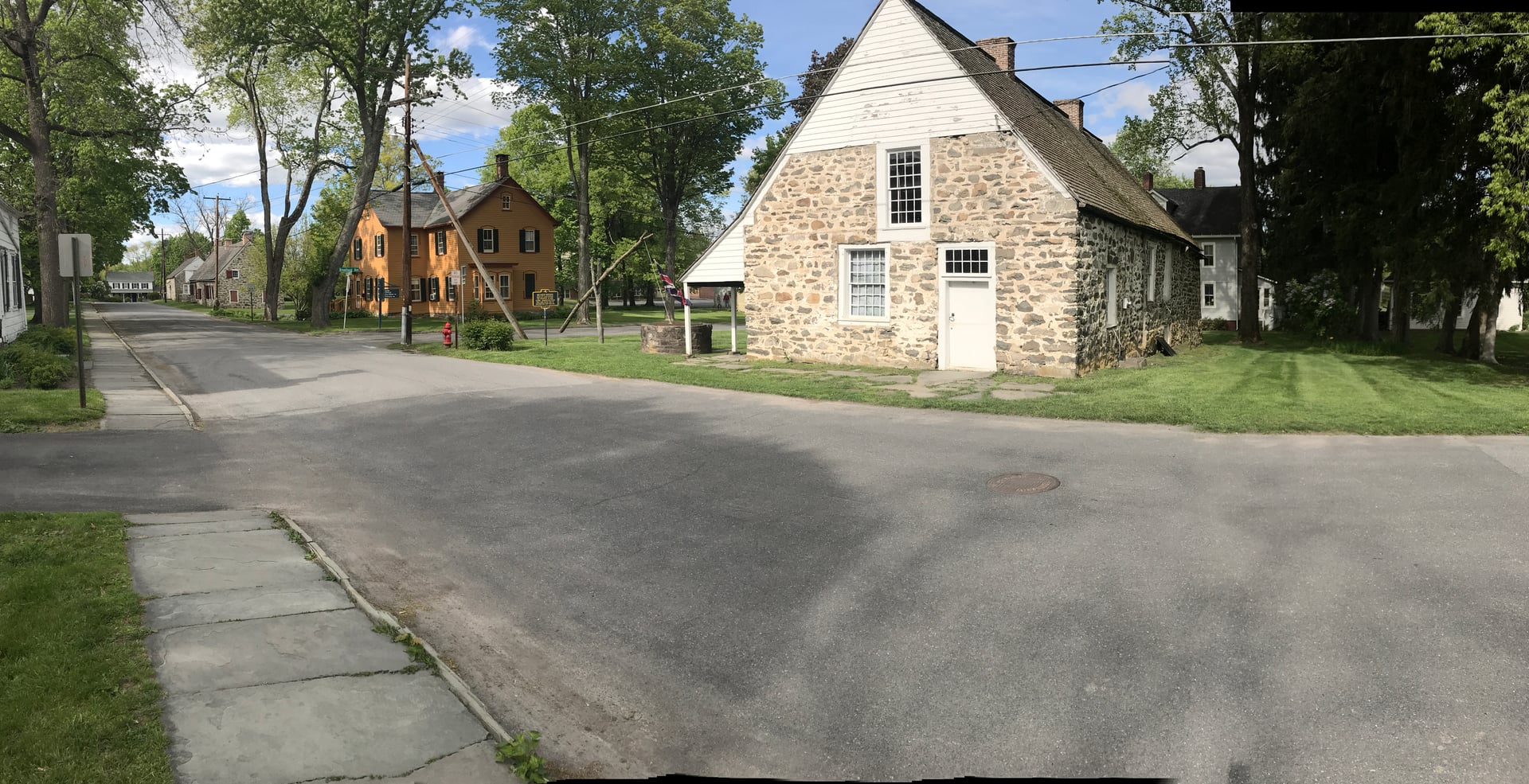
The original wing of the Conklin Farmhouse was constructed around 1750 and sat on High Street in what was then the center of Huntington Village. The house displays the Colonial, Federal, and Victorian periods through successive architectural phases and surviving furnishings, making it an unusually intact record of Long Island domestic life across more than a century.
David Conklin, an owner during the Revolutionary War, was captured and imprisoned by British forces in 1777 for aiding rebel efforts. During his imprisonment, his wife Sybel Conklin and their children maintained the property. The house displays a table and a chair that George Washington used during his documented 1790 tour of Long Island — artifacts substantiated by the Society's records.
The Conklin family occupied the house for over 150 years before Ella Conklin Hurd deeded it to the Huntington Historical Society in 1911. The Society opened it as a museum, making it one of the earliest public historic house museums on Long Island. A barn relocated from Laurel Hollow in 1830 now serves the Society as an event space.
The farmhouse is staffed by volunteer docents on Sunday afternoons. The basement is described in the Society's documentation as having an 'oppressive, chilling mood,' a phrase that has circulated separately in accounts of the building's ghost lore.
Sources
- https://huntingtonhistoricalsociety.org/for-your-visit/our-properties/conklin-property/
- https://www.huntingtonny.gov/filestorage/13747/99540/16499/David_Conklin_Farm_House.pdf
- https://www.gothichorrorstories.com/journal/a-field-guide-to-ghosts-on-long-islands-north-shore-where-you-find-more-hauntings-per-mile-than-about-anywhere-else/
Sense of being watched and followed (staff and visitors)Invisible hands on shouldersChild-like presence near bedroom doorwayOppressive, chilling mood in the basement
The Conklin Farmhouse's paranormal reputation is largely staff-generated rather than event-specific. Volunteers and docents have described feeling watched from behind, a sensation of hands touching their shoulders, and an uneasy sense that someone is in the room when no one is visible. One account describes a child-like presence observed near a bedroom doorway before vanishing.
The basement carries the strongest association. Multiple accounts use the phrase 'oppressive, chilling mood' to characterize it, and the Gothic Horror Stories North Shore field guide notes the environment as notable even by the standards of historic house museums. Whether this atmospheric quality has a structural explanation — a common earthen-floor basement environment — or something else has not been documented.
The most dramatic piece of local lore involves a museum volunteer who allegedly disappeared, with the Conklin Farmhouse named as the last place she was seen and speculation circulating that she is buried in the basement. This account appears in Long Island folklore documentation but has not been corroborated by any news reporting or historical society records, and should be understood as folk narrative rather than documented incident.
Local author Kerriann Flanagan Brosky, who has written on Long Island hauntings, has cited the Conklin Farmhouse as an example of locations where 'a lot of leftover energy' accumulates from generations living and dying in the same structure.
Where this legend is told