Est. 1690 · Dutch Colonial cottage built 1690s, remodeled 1844 in Gothic Revival style · Home of Alice Austen (1866–1952), pioneering documentary photographer · 8,000+ glass-plate negatives documenting NYC life 1880–1930 · National Historic Landmark (1993) · NYC Landmark (1971)
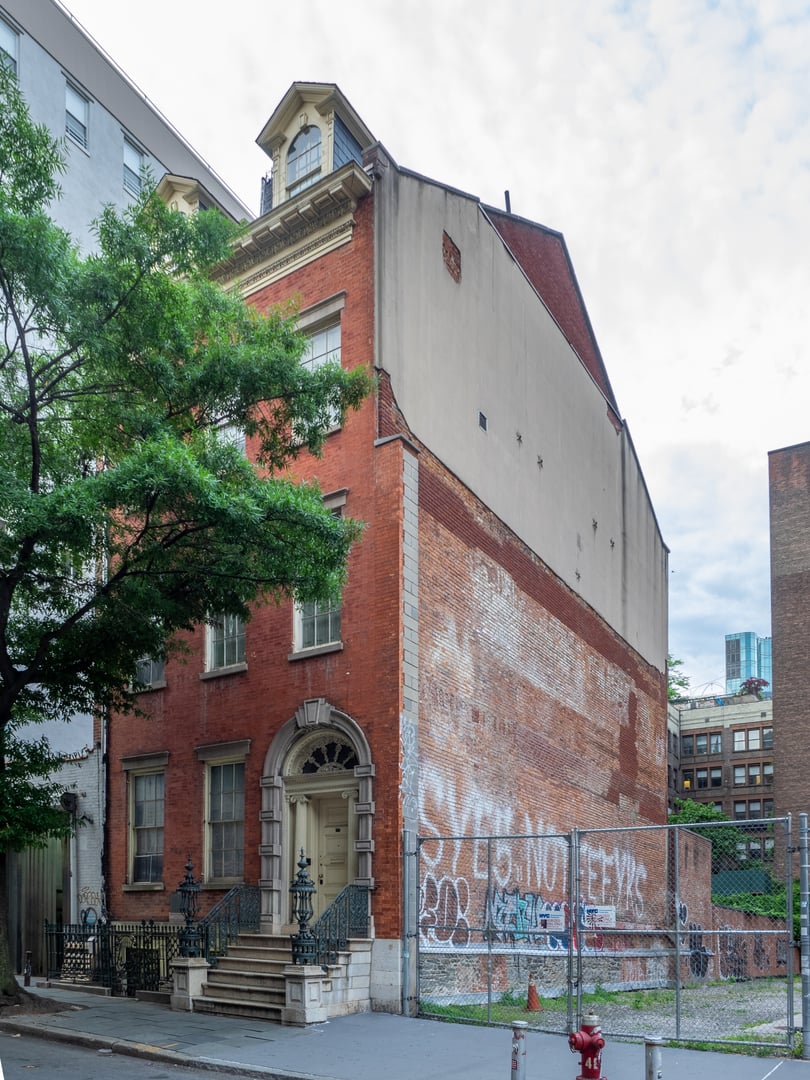
Clear Comfort began as a small Dutch Colonial farmhouse on the Rosebank bluffs of Staten Island, constructed in the 1690s. The structure overlooked the Narrows, the passage connecting Upper and Lower New York Bay, with views of Brooklyn and the future site of the Verrazzano Bridge. Alice Austen's grandfather, John Haggerty Austen, purchased the property in 1844 and had it extensively remodeled in the Gothic Revival style popular in mid-19th-century suburban houses. Alice was born in 1866 and grew up in the house; her aunt Julia gave her a camera around age 10, and she photographed Staten Island and Manhattan obsessively for the next six decades.
Austen's archive — more than 8,000 glass-plate negatives documenting street life, immigrant neighborhoods, domestic scenes, and social outcasts in New York from roughly 1880 to 1930 — was nearly lost. By the 1940s her investments had failed, and she was forced to sell most of her furniture to pay debts. In 1945, at age 79 and unable to care for herself, she was placed in the Staten Island Farm Colony (the former poorhouse on Brielle Avenue). The plates were sold at auction for almost nothing and rescued by curators.
In 1951, the Staten Island Historical Society mounted an exhibition of her work, and Life magazine published a feature. Public donations raised $7,000, enough to move Austen from the Farm Colony into a private nursing home; she died on June 9, 1952, at 85. The house was added to the National Register of Historic Places in 1970, designated a New York City Landmark in 1971, and declared a National Historic Landmark in 1993. It is operated by the Alice Austen House Museum and maintained by the NYC Historic House Trust.
Sources
- https://en.wikipedia.org/wiki/Alice_Austen_House
- https://aliceausten.org/home-and-museum/
- https://www.archives.nyc/blog/2026/1/23/alice-austen-house-staten-island-landmark
Boot-steps crossing upstairs floor (attributed to Revolutionary War-era British soldier)Photographic equipment found thrown to floorSound of rattling chains in cellar (older neighborhood tradition)
The Alice Austen House has not permitted any formal paranormal investigation, so the haunting accounts are entirely anecdotal — first-person staff reports and oral neighborhood tradition collected by paranormal writers. The two main traditions operate on different timescales.
The older legend involves a British soldier who allegedly committed suicide in the house — which at the time belonged to a different family — during the Revolutionary War. The cause is given as unrequited love rather than combat. Multiple sources describe residents hearing the sound of boots crossing the upper floor and attribute the sound to this unnamed soldier. Alice Austen herself reportedly believed the house was haunted and considered this soldier its ghost.
The more recent tradition centers on Austen's own posthumous presence. Staff members follow a practice of verbally acknowledging Alice when working in the house — the logic being that her connection to the building was so deep that she returned to it. One account in the paranormal literature describes a caretaker who dismissed the practice; that first night, he was woken by loud crashing sounds and found photographic equipment — appropriate to the context of Austen's life work — had been thrown from its position to the floor. The blog account treats this as an oral history rather than documented record, and the museum has not officially endorsed the story. A separate, older neighborhood tradition holds that the sounds of rattling chains in the cellar were attributed to enslaved individuals held there during the Revolutionary era.
Notable Entities
Alice Austen (1866–1952) — photographer and longtime resident
Where this legend is told