Est. 1769 · Completed 1769 as the communal residence and workshop for unmarried Moravian men at Salem · One of the oldest surviving buildings at Old Salem and among the best-preserved Moravian communal structures in North America · Andreas Kremser's 1786 death documented in Moravian congregation records · Part of Old Salem Museums & Gardens, the most intact Moravian settlement in America · Listed on the National Register of Historic Places as part of the Old Salem Historic District
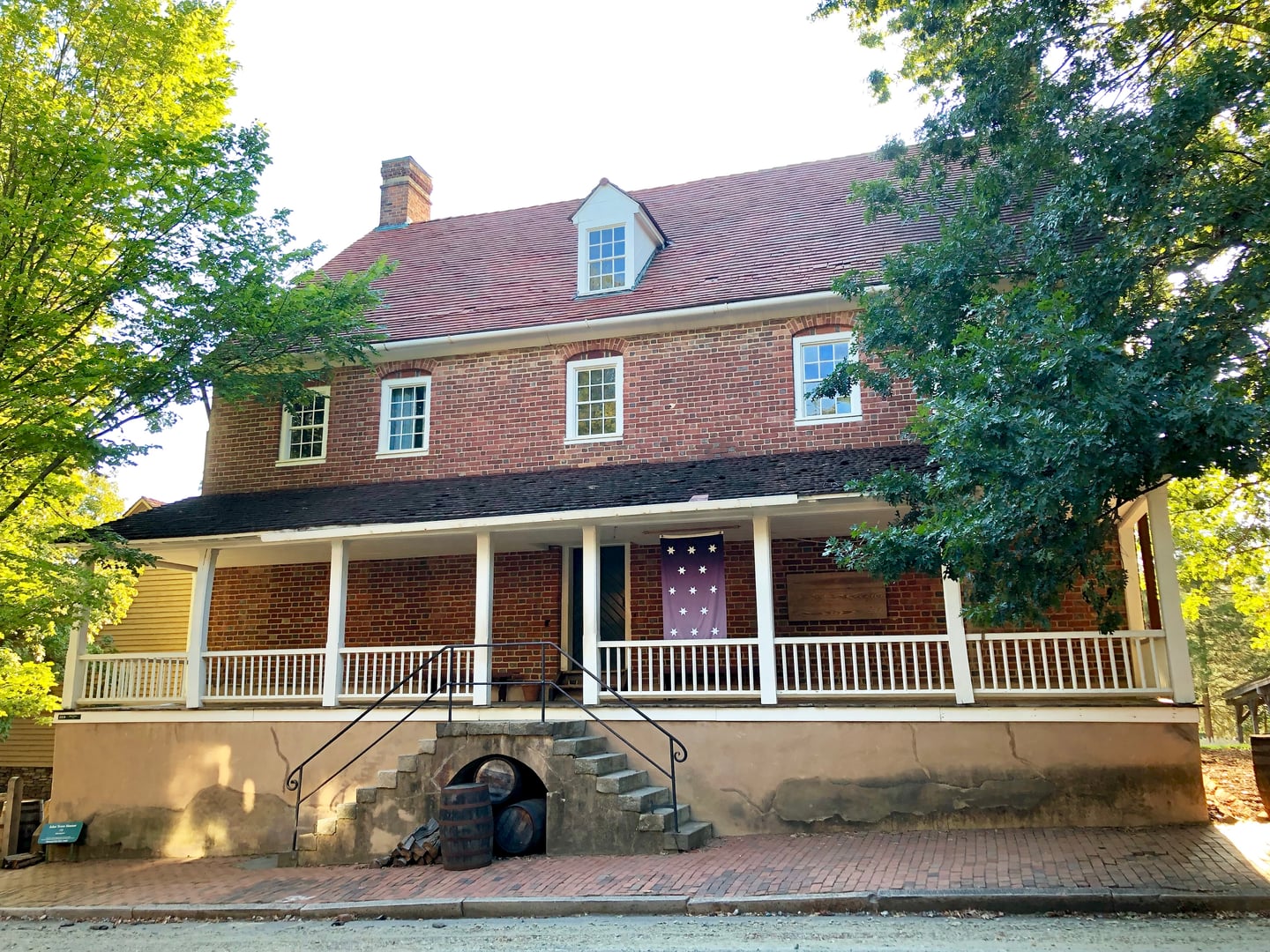
The Moravian congregation that established Salem in 1766 organized its community along strict communal lines, with different buildings assigned to different demographic groups: married couples in family homes, widows in the Widows' House, unmarried women in the Single Sisters' House, and unmarried men in the Single Brothers' House. The Single Brothers House was completed in 1769 as a combined residence, dining hall, and workshop where the unmarried men of the congregation lived and practiced their assigned trades under congregation oversight.
The building is a substantial two-story structure of half-timber construction, reflecting the Germanic architectural traditions the Moravians brought from Europe. Craftsmen worked in dedicated trade rooms on the ground floor — shoemaking, tailoring, pottery, and carpentry among them. The structure stands today as one of the oldest surviving buildings in Old Salem and one of the better-preserved examples of Moravian communal architecture in North America.
In 1786, a shoemaker named Andreas Kremser died at the Single Brothers House when a cellar collapsed on him. He was buried at God's Acre, the Moravian cemetery nearby, as was the congregation's practice. His death is documented in Moravian congregation records, making him one of the better-attested historical figures in Old Salem's ghost tradition.
Old Salem was preserved through a major restoration effort beginning in the mid-twentieth century and now operates as Old Salem Museums & Gardens, one of the largest living history museums in the American South. The Single Brothers House is fully restored with period furnishings and trade demonstrations.
Sources
- https://myfox8.com/miniseries/hauntings-in-the-piedmont/who-is-the-little-red-man-that-haunts-old-salem/
- https://www.visitwinstonsalem.com/blog/winston-salems-most-haunted-sites
- https://www.oldsalem.org/halloween-2025/
- https://northcarolinaghosts.com/piedmont/the-little-red-man/
Shoemaker's hammer heard in the empty shoe room after hoursApparition of a small man in a red coat in corridors and stairwellsSightings documented from the 1780s through the 1950s
The ghost known as the Little Red Man has been part of Old Salem's oral tradition for more than two centuries, making him one of the most enduring and well-documented figures in North Carolina ghost lore. The legend begins with a verifiable fact: shoemaker Andreas Kremser died in 1786 when a cellar collapsed on him at the Single Brothers House. He was buried in God's Acre, Salem's Moravian cemetery, as congregation records confirm.
Shortly after Kremser's death, residents of the Single Brothers House reported hearing a shoemaker's hammer at work in the empty shoe room at odd hours. Then sightings began: a small man in a red coat — the red associated with the shoemakers' guild — appearing in corridors, workshops, and stairwells. The description remained consistent across sightings separated by generations: small in stature, red coat, an air of purposeful movement.
Sightings of the Little Red Man continued well into the twentieth century. The most recent confirmed accounts date from the 1950s, during or shortly after the beginning of Old Salem's restoration efforts. After that point, documented sightings become sparse, leading to speculation that the restoration process — which involved significant physical changes to the building — may have disturbed or dispersed whatever presence had occupied it.
The official tourism bureau of Winston-Salem names the Single Brothers House as the city's most haunted site, and the Little Red Man is the centerpiece of Old Salem's Night Watchman ghost tours, run annually in the fall. The story is unusual in the ghost canon for having a confirmed historical identity — Andreas Kremser, his trade, and his year of death are documented in Moravian records.
Notable Entities
Andreas Kremser (shoemaker, died 1786 in cellar collapse; buried at God's Acre — identity documented in Moravian congregation records)