Guided Tour Booking Required
Winston-Salem Ghost Tour (includes Salem College)
Guided walking tours through Old Salem and surrounding areas cover Salem College's ghost traditions including the Babcock portrait legend.
- Duration:
- 1.5 hr
HauntBound archive · catalog record
Reported phenomena, as catalogued
At America's oldest women's college, founded 1772, a portrait of Mary Reynolds Babcock in Babcock Dormitory is said to follow students with its eyes — and has been blamed for bad weather, minor accidents, and the general misfortunes of campus life.
601 S Church St, Winston-Salem, NC 27101
Research updated August 2026
Age
All Ages
Cost
Free
Salem College campus and public areas are accessible at no charge. Babcock Dormitory is a residential building; interior access limited to invited guests.
Access
Wheelchair OK
Historic college campus adjacent to Old Salem; level grounds with historic brick buildings.
Equipment
Photos OK
Est. 1772 · Salem College founded 1772 by the Moravian Church — oldest women's college in the United States · Babcock Dormitory named for philanthropist Mary Reynolds Babcock (1908–1953), daughter of R.J. Reynolds Jr. · Campus retains 18th- and 19th-century Moravian architecture adjacent to Old Salem historic district · Mary Reynolds Babcock Foundation, established by the portrait subject, remains active in the American South
Salem College traces its founding to 1772, when the Moravian Church established a school for girls in the newly planned settlement of Salem, North Carolina. The school predates the American republic and the first university systems in the country, making it the oldest continuously operating women's college in the United States — a status that gives the institution a particular kind of historical weight among American educational institutions.
The college occupies a campus directly adjacent to the Old Salem Museums & Gardens historic district, with several buildings dating from the eighteenth and nineteenth centuries alongside later academic construction. The architecture reflects the Moravian congregation's tradition of careful, long-lasting construction in brick and stone.
Babcock Dormitory is named for Mary Reynolds Babcock, who lived from 1908 to 1953. Mary was the daughter of Richard Joshua Reynolds Jr., the son of the tobacco magnate R.J. Reynolds Sr. She was a significant philanthropist, and the Mary Reynolds Babcock Foundation — which she established — continues as an active grant-making organization in the American South. Her connection to Salem College and the dormitory that bears her name reflects the Reynolds family's long relationship with Winston-Salem institutions.
A formal portrait of Mary Reynolds Babcock hangs in a corridor of Babcock Dormitory. Students at Salem College have maintained a tradition of greeting the portrait when passing and bidding it farewell when leaving for breaks — a practice that reflects the portrait's place in campus culture as much as genuine belief in its supernatural properties.
Sources
The central legend at Salem College involves a portrait in Babcock Dormitory depicting Mary Reynolds Babcock, the dormitory's namesake. Students describe the portrait's eyes as appearing to follow them as they walk the hallway — a classic animated-portrait tradition that appears in haunted institutions across the country, but at Salem College has developed a structured set of associated rules and customs.
The primary custom documented in the 2011 blog post by Salem Paranormal and corroborated by ghost-tour coverage is the greeting ritual: students are expected to acknowledge Mary's portrait when entering the dormitory and to bid the portrait farewell when leaving for extended periods such as semester breaks. Students who skip the greeting are said to experience an increase in misfortune: bad weather that disrupts plans, unexplained stumbles or minor injuries, poor academic results on tests or papers, and other campus mishaps that accumulate into a pattern attributed to Mary's displeasure.
The Salem Paranormal blog documented this tradition in 2011 as part of a broader survey of ghost customs at the college, noting that the Mary portrait tradition had been passed between generations of students for long enough that its precise origin could not be identified. Because Mary Reynolds Babcock is a documented historical figure — her philanthropic work is a matter of public record — any attribution of present-day phenomena to her spirit is presented here as campus tradition, not documented fact.
Notable Entities
Guided walking tours through Old Salem and surrounding areas cover Salem College's ghost traditions including the Babcock portrait legend.
Some links on this page may earn HauntBound a small commission when you book, at no extra cost to you. Our editorial picks are independent. Full disclosure
This Winston-Salem tour includes Salem College — Babcock Dormitory on its route.
Every HauntBound history is researched from documented sources. We clearly separate verified historical fact from paranormal folklore.
Free Guide
10 verified stops, rated for families, mapped in order. Free.
One email to confirm, then the guide link. Unsubscribe anytime.
Winston-Salem, NC
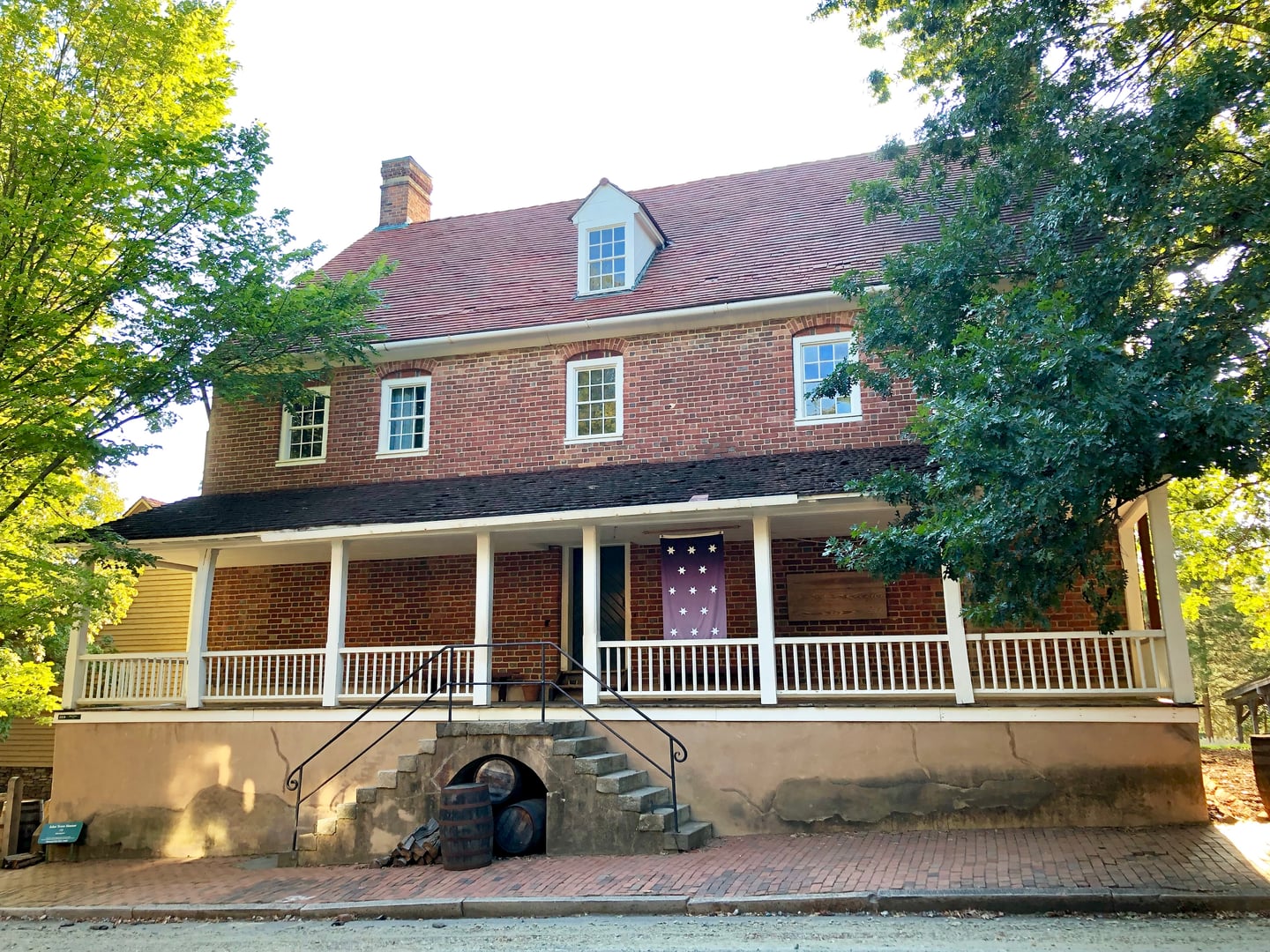
The Salem Tavern was built in 1784 to serve travelers stopping in the Moravian settlement at Salem, North Carolina. The Moravian congregation built and operated the tavern — a common enterprise in Moravian settlements — as a source of revenue and a place of hospitality for outsiders. President George Washington lodged here in May 1791 during his Southern Tour, an event documented in his own diary.
Winston-Salem, NC
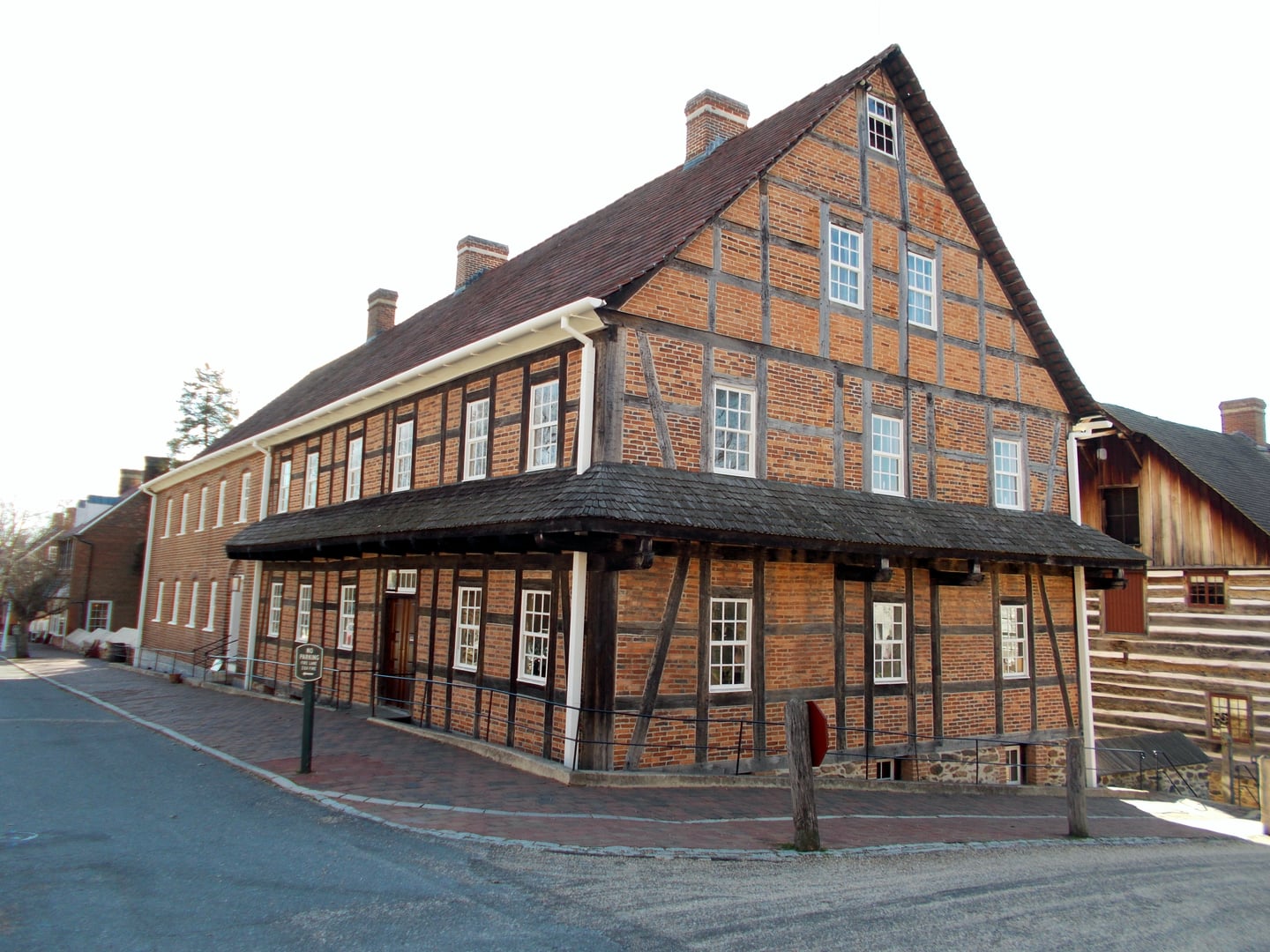
The Single Brothers House was built in 1769 as the communal residence and workshop for unmarried men of the Moravian congregation at Salem, North Carolina. The Moravians operated the house as a combined living quarters and craft training facility, with individual brothers assigned to trades including shoemaking, tailoring, and carpentry. The building is part of Old Salem Museums & Gardens, the most intact surviving Moravian settlement in America.
Yuma, AZ
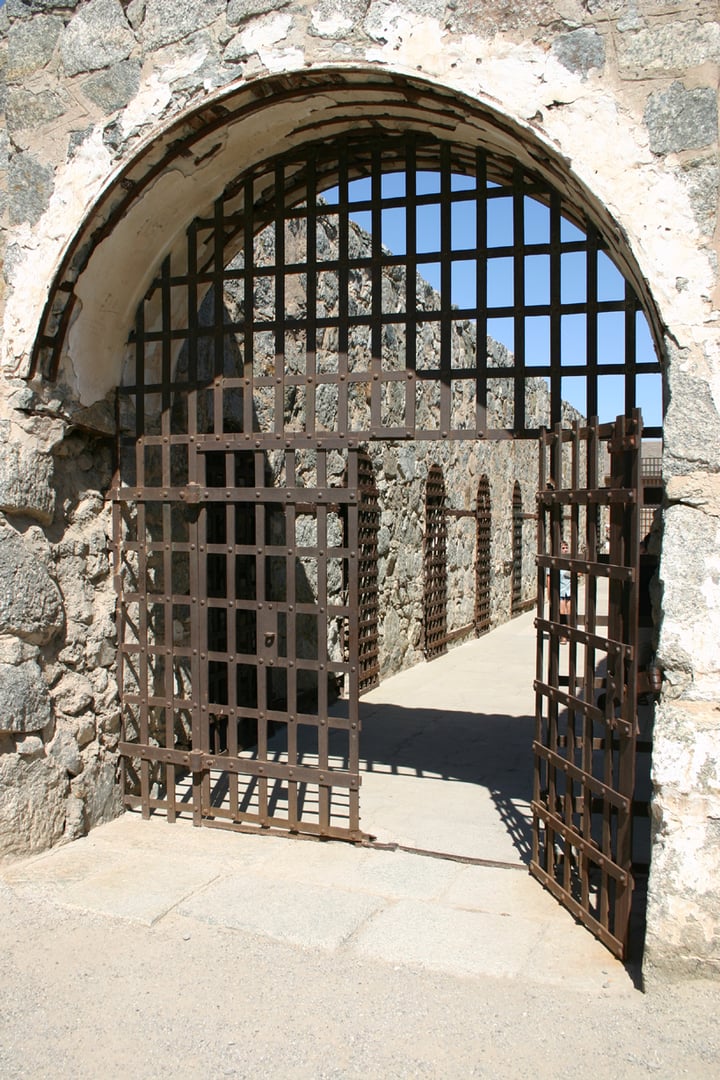
Yuma Territorial Prison operated from 1876 to 1909 on a bluff overlooking the Colorado River in Yuma, Arizona. It held 3,069 prisoners during its 33-year operation, including 29 women. The facility became a state historic park and has been voted by USA Today readers as the Best Haunted Destination in the nation.