Drive-By
Self-Guided Exterior Visit
View the 1925-era firehouse facade from West 5th Street. The building served as the Charlotte Firefighters Museum from 2002 to 2009 and is now adaptive-reuse commercial space.
- Duration:
- 15 min
HauntBound archive · catalog record
Reported phenomena, as catalogued
1925-era historic Charlotte firehouse where firefighter Pruett L. Black fell to his death through the pole opening on April 1, 1934 — subsequent occupants report cigar smoke, a hallway figure, and a protective presence.
420 W 5th Street, Charlotte, NC 28202
Research updated May 2026
Age
All Ages
Cost
Free
Building now houses commercial tenants; exterior is publicly viewable from West 5th Street. Ghost-tour stops at the exterior may charge separately.
Access
Wheelchair OK
Sidewalk access along West 5th Street; flat Uptown grade.
Equipment
Photos OK
Est. 1925 · Mecklenburg County Historic Landmark · Documented 1934 Line-of-Duty Death of Firefighter Pruett L. Black · Former Charlotte Firefighters Museum (2002-2009) · Early-20th-Century Municipal Firehouse
Charlotte Fire Station No. 4 was constructed in the 1925 era and operated as an active Charlotte Fire Department station for several decades. The building is recognized by the Mecklenburg County Historic Landmarks Commission as a designated historic landmark documenting the early-twentieth-century professionalization of municipal firefighting in Charlotte.
On April 1, 1934, firefighter Pruett Livingston Black (born February 6, 1906) was on duty at Station No. 4. At 7:40 AM an alarm sounded; the on-duty crew, sleeping on the second-floor dormitory, dressed hurriedly to reach the brass pole leading to the apparatus floor below. Black lost his footing at the pole opening, became tangled in his bunker pants, and fell headfirst approximately 14 feet to the concrete floor. He was transported to St. Peter's Hospital, where he died of his injuries roughly three hours later. He had joined the Charlotte Fire Department on March 15, 1928 and had been a member for just over six years. He is buried locally; his Find a Grave memorial records his life.
The station continued to operate as an active firehouse for decades and was later decommissioned. From 2002 to 2009 the building housed the Charlotte Firefighters Museum, which closed in 2009 for reasons related to rent. The building has since been used as adaptive-reuse commercial space.
The story of Pruett Black has been substantially documented by Charlotte historian Lewis Powell IV on the Southern Spirit Guide blog and in regional ghost-tour coverage, with verifiable detail drawn from period press accounts, the Charlotte Fire Department's published history, and family records.
Sources
The paranormal reports tied to Old Fire Station No. 4 cluster tightly around the documented 1934 death of Pruett Black. Subsequent commercial occupants of the building — including operators during and after the Charlotte Firefighters Museum era — describe the recurring smell of cigar smoke when no smoker is present, a male figure walking the upper-floor halls identified as the fallen firefighter, and a protective sensed presence as if someone were watching over the building.
The most-cited specific account, preserved on Southern Spirit Guide and in Queen City Ghosts coverage, involves a shop owner who researched the building after experiencing what he interpreted as encounters with a male apparition. The owner located a historical photograph of Pruett Black and recognized the figure he had seen. He subsequently adopted the practice of greeting Black on arriving at the shop and saying goodbye on leaving — a practice the owner felt the presence welcomed.
Unlike many haunted-building narratives, Old Fire Station No. 4's lore is built on a fully documented, archivable real-world death and a single named, identifiable individual. The Southern Spirit Guide post 'The Man Behind the Ghost' is the canonical biographical sourcing on Pruett Black and is the basis on which Charlotte ghost-tour operators present the case.
Notable Entities
Media Appearances
View the 1925-era firehouse facade from West 5th Street. The building served as the Charlotte Firefighters Museum from 2002 to 2009 and is now adaptive-reuse commercial space.
Some links on this page may earn HauntBound a small commission when you book, at no extra cost to you. Our editorial picks are independent. Full disclosure
This Charlotte tour includes Old Fire Station No. 4 on its route.
Every HauntBound history is researched from documented sources. We clearly separate verified historical fact from paranormal folklore.
Free Guide
10 verified stops, rated for families, mapped in order. Free.
One email to confirm, then the guide link. Unsubscribe anytime.
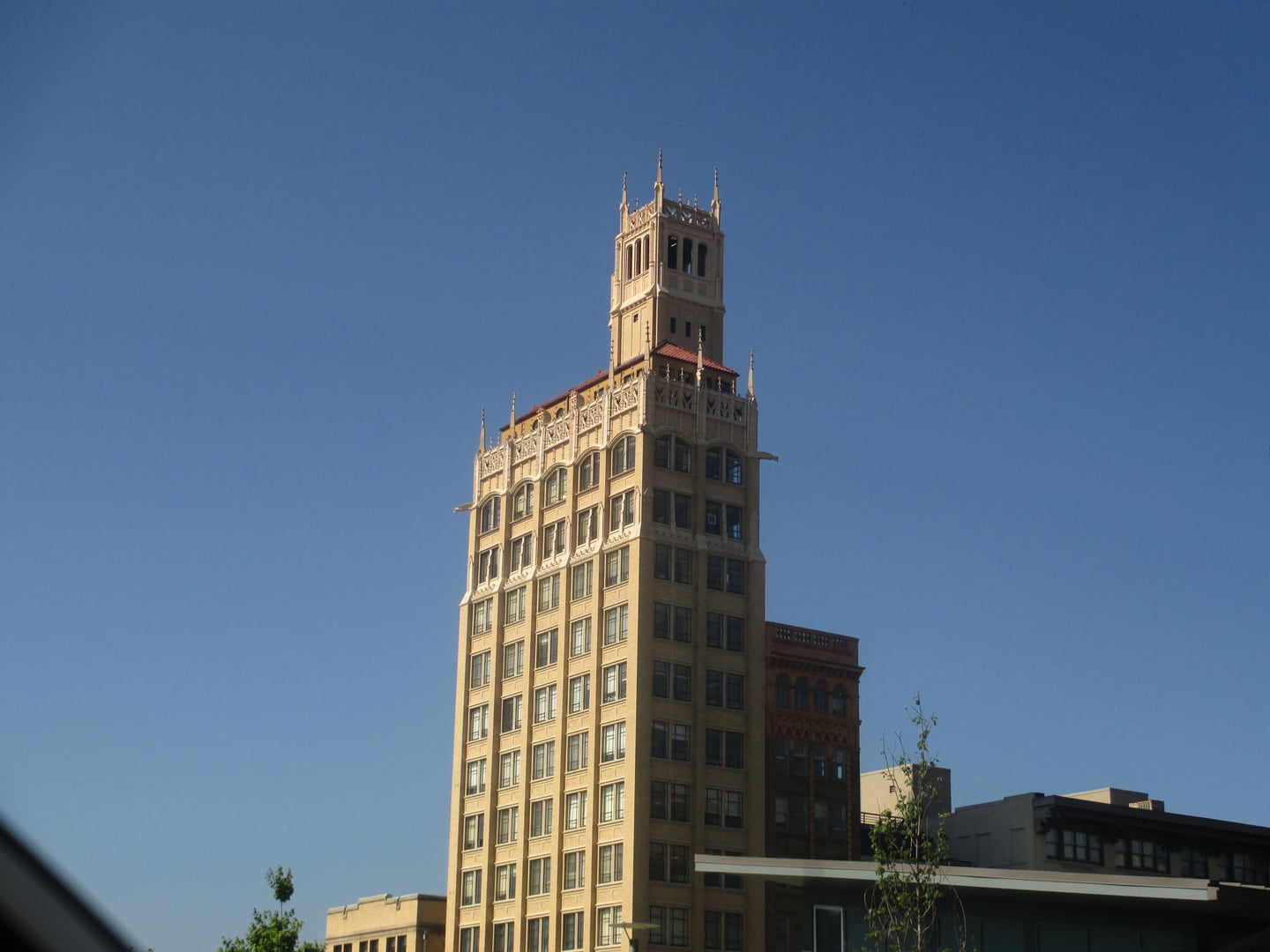
Asheville, NC
The Jackson Building is a 15-story, 140-foot neo-Gothic skyscraper completed in 1924 on Pack Square, the first skyscraper in Western North Carolina. Developer Lynwood B. Jackson commissioned architect Ronald Greene to design it on a 27-by-60-foot lot previously occupied by Thomas Wolfe's father's tombstone business.
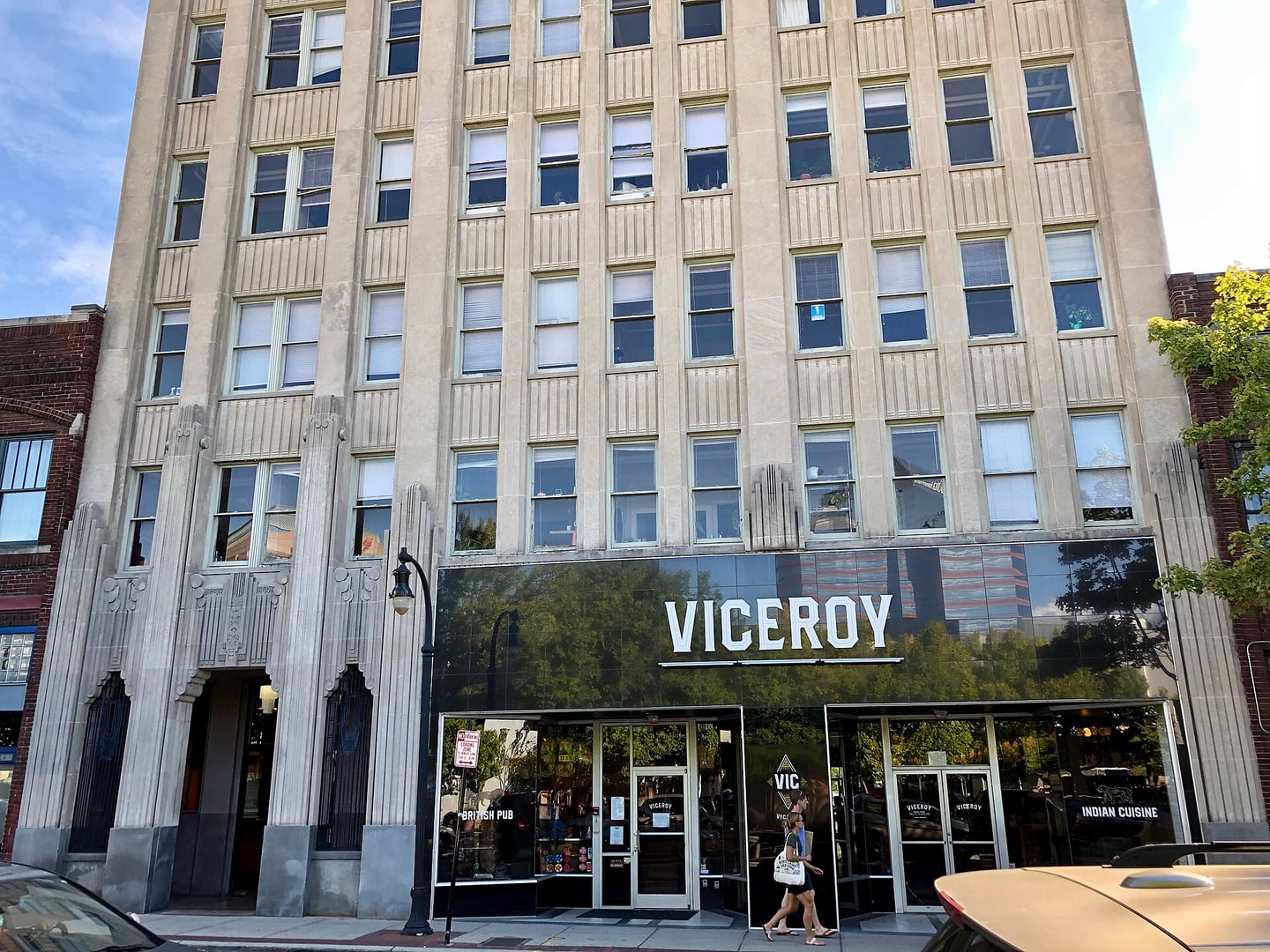
Durham, NC
Completed in 1930 and designed by Durham architect George Watts Carr Sr. with George W. Kane as general contractor, the Snow Building is considered — alongside the Kress Building — one of Durham's two most elaborate Art Deco buildings. It was developed by Anna Exum Snow on family land gifted to her as a wedding present and continues to function as offices, retail, and a rooftop penthouse.
Russellville, AR
Witherspoon Hall houses the Department of Music at Arkansas Tech University in Russellville, Arkansas. The hall is named for Gene "Chief" Witherspoon, who served as director of bands at the university from 1950 to 1979, and contains practice rooms, classrooms, and an auditorium recently renovated by the university.