Est. 1837 · Greek Revival Architecture · Columbus Pilgrimage · Antebellum Mississippi History
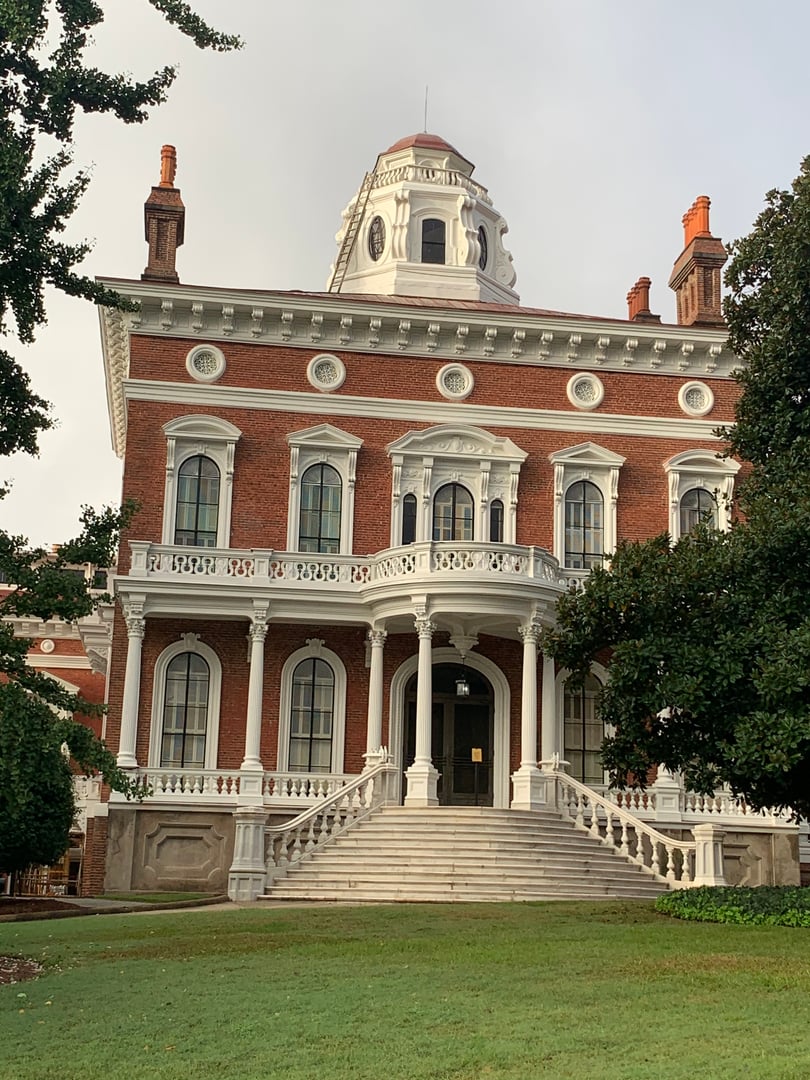
Temple Heights was completed in 1837 for General Richard T. Brownrigg on a prominent lot in Columbus's antebellum residential district. The four-story structure is distinguished by 14 Doric columns across its full facade—an uncommonly grand treatment even by the standards of Mississippi Greek Revival construction of the era.
In 1887, the property passed to the Kennebrew family, who maintained it through successive generations. Elizabeth Kennebrew, who lived in the house and died without marrying, became the most-cited figure in the home's later reputation. Accounts recorded by tour guides describe her as eccentric in her later years and deeply attached to the house.
Columbus's annual Pilgrimage, which has been operating since the early 1940s, includes Temple Heights as one of its featured antebellum properties. The tour program gives visitors access to the main hall, parlors, and upper floors. The mansion remains in private ownership but opens for Pilgrimage visits each spring.
Lowndes County, where Columbus sits, was one of Mississippi's more prosperous antebellum cotton counties, and the concentration of Greek Revival architecture along 9th Street reflects that pre-Civil War prosperity. Temple Heights is recognized in local historic preservation records as one of the best-preserved examples of its period and scale in the region.
Sources
- https://www.visitcolumbusms.org/
- https://hauntedhouses.com/mississippi/temple-heights-mansion/
ApparitionsPhantom soundsDisembodied voicesBreaking glass sounds
The most consistently reported presence at Temple Heights is attributed to Elizabeth Kennebrew, a lifelong occupant who died unmarried and was known for eccentric behavior in her later years. Tour guides and visitors over the decades have described seeing a female figure on the upper floors and in the main hall, and multiple sources reference two additional female presences in the house without identifying them specifically.
The auditory phenomena are what distinguishes Temple Heights from most antebellum-home haunting accounts. Witnesses report the sound of breaking glass from rooms found intact, heavy crashes from unoccupied floors, and murmured voices just below audible intelligibility. These reports come from both tour visitors and, in some accounts, family members during the Kennebrew occupancy.
The claims are aggregator-documented rather than independently newspaper-verified, but the consistency across multiple regional ghost-history sources and the long span of the Pilgrimage tour tradition give them more standing than typical one-off claims. No investigation reports or physical evidence are on record.
Notable Entities
Elizabeth Kennebrew