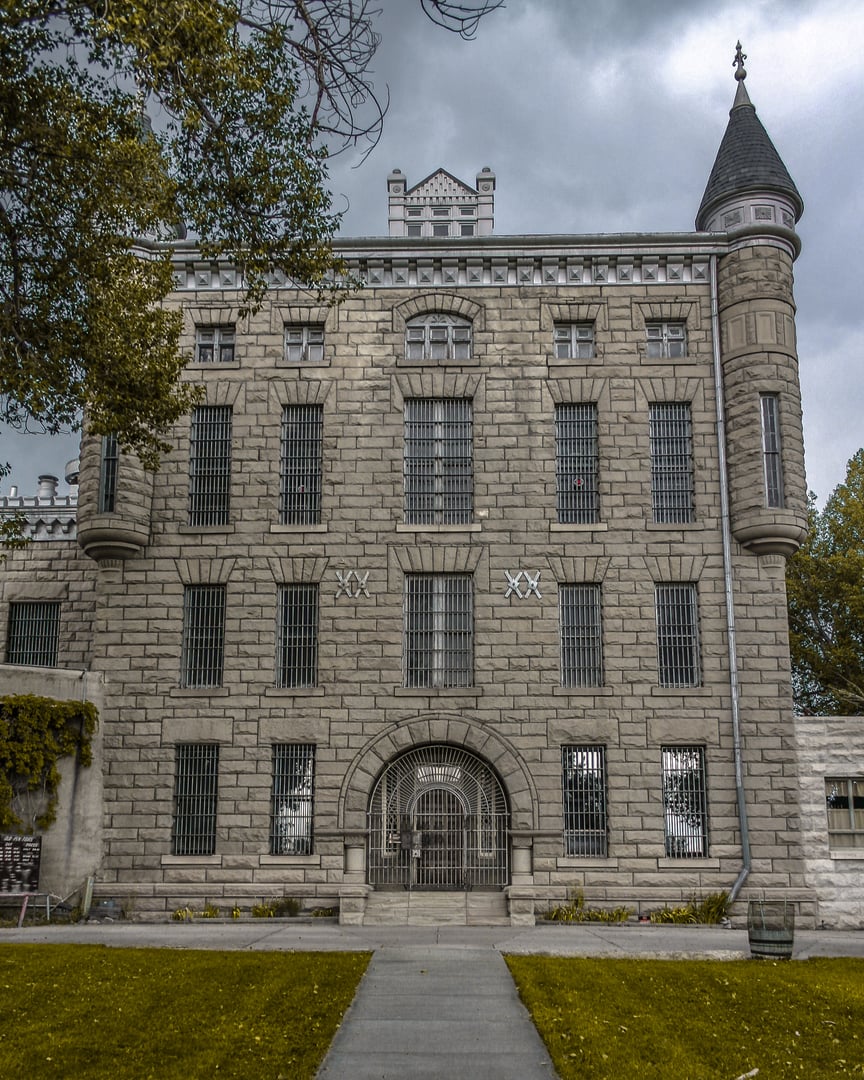
Est. 1848 · Missouri's Oldest Continuously Used County Jail · Enslaved Labor Construction and Holding Site · Site of Missouri's Last Major County Public Execution · Frank James Incarceration 1884 · Federal Court Eighth Amendment Ruling 1978
The Old Cooper County Jail at 614 East Morgan Street was constructed in 1848 using limestone quarried from local bluffs, a process that involved enslaved labor. The ground floor of the building held enslaved people awaiting sale — a function that predated any criminal justice use and that the Friends of Historic Boonville now interpret as a central part of the site's history.
The jail operated continuously as Cooper County's primary detention facility for 130 years, making it Missouri's longest-running county jail. Its inmate roster included Frank James, who was held here in 1884 following his surrender to Missouri Governor Thomas Crittenden (whose family would later figure in the Governor's Mansion haunting accounts in Jefferson City). In 1978, a federal court found the jail's conditions violated the Eighth Amendment prohibition on cruel and unusual punishment, ending its operational life.
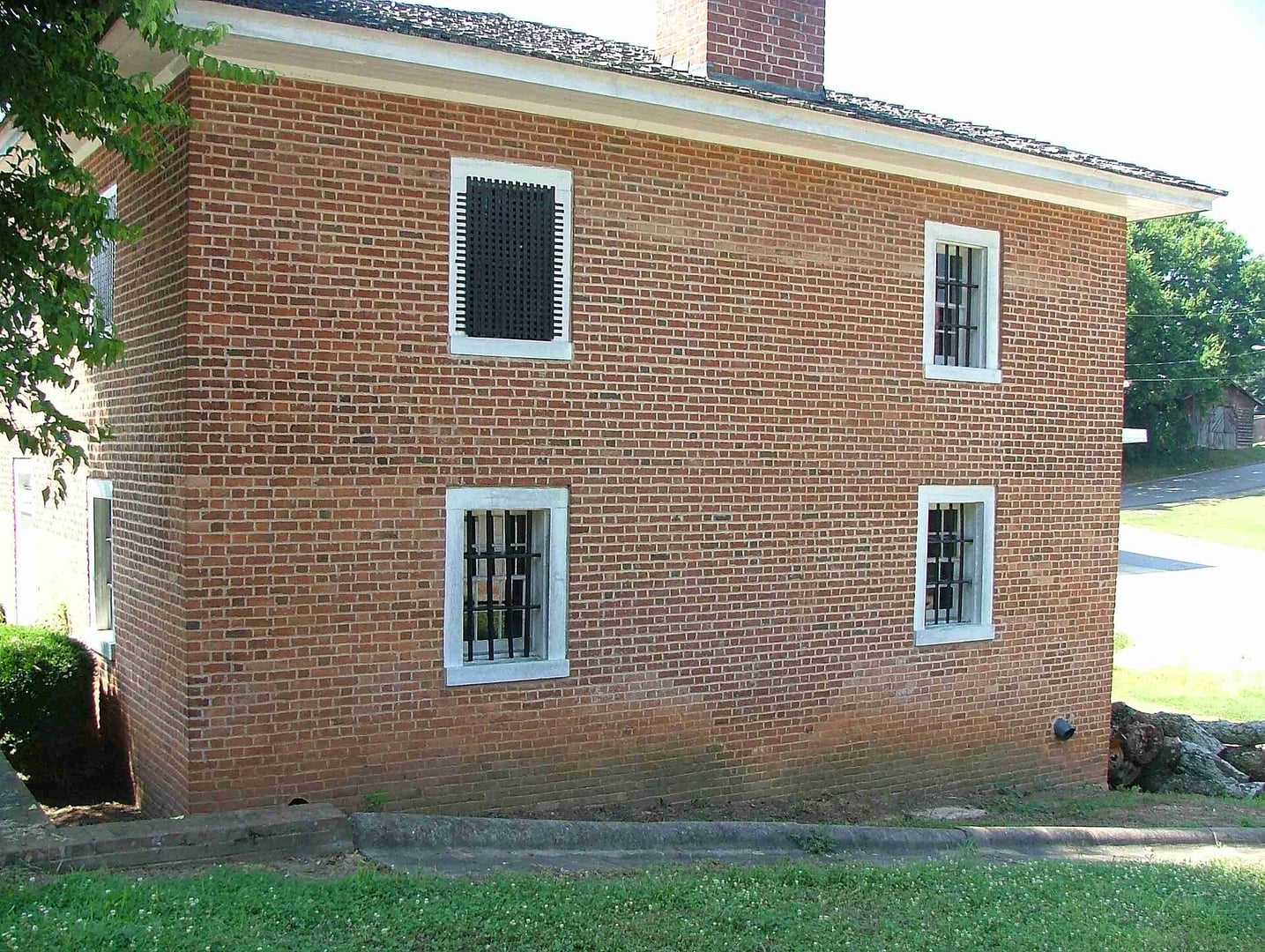
The hanging barn adjacent to the main building was the site of Lawrence Mabry's execution on January 31, 1930 — identified in multiple sources as the last major county public hanging in Missouri. Mabry had been convicted of murder in Cooper County. Public executions had by then become rare in Missouri, and this one drew significant local and regional press coverage.
The Friends of Historic Boonville acquired the property and operate it as a historic attraction. Tours cover the cell blocks, the ground-floor slavery holding area, and the hanging barn.
Sources
- https://friendsofhistoricboonvillemo.org/old-cooper-county-jail/
- https://goboonville.com/old-jail-and-hanging-barn/
- https://www.kcghosts.com/coopercojail
Shadow FiguresUnexplained KnockingEVP ActivityCold Spots in Cell Block
The paranormal accounts associated with the Old Cooper County Jail center on Cell 3, where a prisoner died by suicide during the jail's operational period. The date and identity of the prisoner are not well-documented in the public record, which makes verification against the historical record impossible with currently available sources — investigators should treat specific claims about this individual as unconfirmed.
Paranormal investigators who have documented sessions inside the jail report shadow figures in the cell corridors and knocking sounds that cannot be attributed to the building's structure, particularly in the lower stone block. The age and materiality of the building — bare limestone walls, iron-bar cells, minimal modern renovation — create acoustic and atmospheric conditions that produce strong psychological responses in visitors regardless of their prior beliefs.
The hanging barn presents a parallel set of accounts. The documented fact of a public execution in that space on January 31, 1930 — within living memory when the building became a historic site — gives the physical space a weight that local investigators have consistently described as distinct from the cell block. KC Ghosts has published the most detailed investigation documentation for this site.